Friday, September 11, 2026
HomeSpace & ScienceSpaceStrange things in space and mysterious satellites

Strange things in space and mysterious satellites

The Universe’s Unsolved Cases: Cosmic Mysteries That Defy All Explanation

Look up. Go ahead, on the next clear night, just look up. What do you see? A handful of stars? The Moon? A silent, black emptiness?

You’re looking at the biggest crime scene of all time. An arena of unsolved mysteries stretching for billions of light-years in every direction. For every pinprick of light we can explain, there are a million shadows that hide secrets that bend the very rules of physics and reality. We send our probes. We point our most powerful telescopes. We crunch the numbers. And every time we think we have an answer, the universe just smirks and asks us a dozen more questions. Harder questions.

Forget tidy explanations and neat little boxes. We’re going off the star map today. We’re venturing into the cosmic twilight zone to look at the anomalies, the outliers, the things that just… shouldn’t be there. From planets wandering the eternal night alone to comets that are impostors in their own solar system, these are the cold cases that keep astronomers awake at night. These are the stories that whisper of a universe far stranger, and perhaps far more populated, than we have ever dared to imagine.

Strap in. It’s going to be a strange ride.

The Cosmic Orphans: Are Rogue Planets Hiding in the Dark?

Our understanding of the universe is simple, right? Planets orbit stars. Moons orbit planets. It’s a neat, gravitational dance. A cosmic ballet.

Wrong.

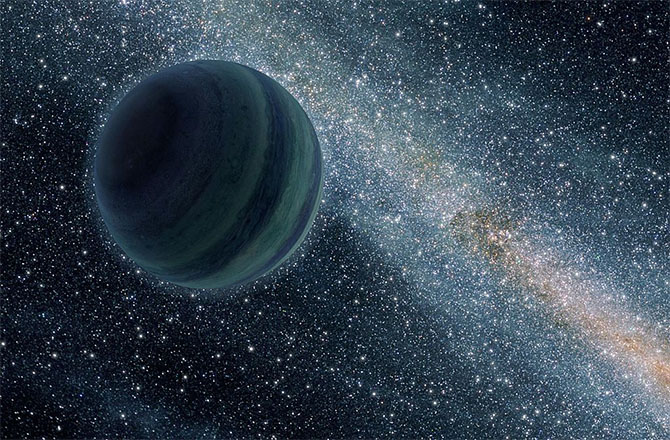
Out there, in the crushing, absolute darkness between the stars, something else is moving. Worlds without a sun. Planets cast out from their homes, doomed to wander the void for eternity. They call them rogue planets. Orphan planets. I call them the galaxy’s ghosts.

For decades, they were just a theory. A spooky campfire story for astrophysicists. But in recent years, we’ve started to find them. Not by seeing them—they have no light of their own—but by catching their shadows. Using a technique called gravitational microlensing, astronomers watch distant stars, and sometimes, just for a moment, the star’s light will bend and magnify. It’s a tell-tale sign that something massive, yet dark, just drifted in front of it. A planetary ghost just passed by.

Deep Dive: Where Do These Wanderers Come From?

The official story comes in two flavors. Both are violent.

The first, and most popular theory, is the “ejection” scenario. Imagine our own solar system in its infancy. It wasn’t the calm, orderly place it is today. It was a chaotic shooting gallery of planetesimals, protoplanets, and gravitational bullies like Jupiter and Saturn. In this cosmic mosh pit, a smaller, Earth-sized planet could easily get too close to a gas giant. In a gravitational sling-shot of unimaginable power, that young world would be flung out of the system entirely, shot into interstellar space at millions of miles per hour. A permanent exile.

The second theory is even lonelier. What if they were never part of a solar system at all? Some scientists believe that smaller gas clouds, not quite big enough to ignite into a star, could collapse directly into a planet-sized object. Born alone in the dark. A world that has never known the warmth of a sun.

The numbers are staggering. Some estimates suggest there could be more rogue planets in the Milky Way than there are stars. Billions. Maybe even trillions. Our galaxy could be teeming with these dark, wandering worlds. A hidden population of cosmic drifters.

Could a Rogue Planet Harbor Life?

Here’s where it gets really mind-bending. The immediate answer is no. Without a star, the surface of these planets would be frozen solid, hundreds of degrees below zero. A barren, dead wasteland.

But what about beneath the ice? A large, rocky rogue planet could still have a molten core, just like Earth. That internal heat, generated by radioactive decay, could be enough to sustain a liquid water ocean beneath a miles-thick crust of ice. Think of Jupiter’s moon Europa, but on a planetary scale and adrift in the void. In that dark, sunless ocean, heated by volcanic vents on the seafloor, could life emerge? Could entire ecosystems thrive, completely oblivious to the galaxy outside their icy shell? It’s a chilling, and thrilling, possibility.

The Manx Comet: An Impostor in Our Own Backyard

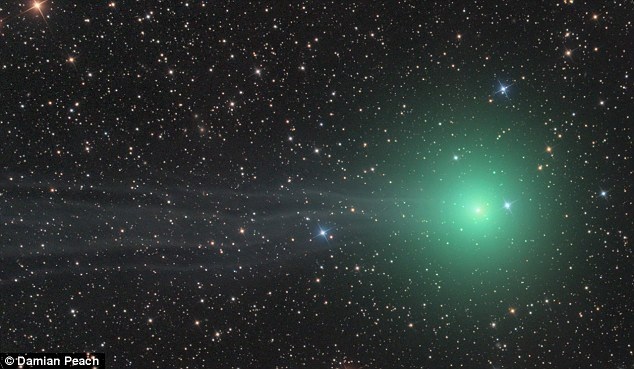
We think we know our own neighborhood. We’ve got the rocky planets on the inside, the gas giants on the outside, and a big, icy debris field called the Oort Cloud way, way out in the cheap seats. Comets come from the Oort Cloud. They are dirty snowballs, chunks of ice and dust left over from the formation of the solar system. When they get nudged toward the sun, the ice heats up, creating a spectacular tail. Simple.

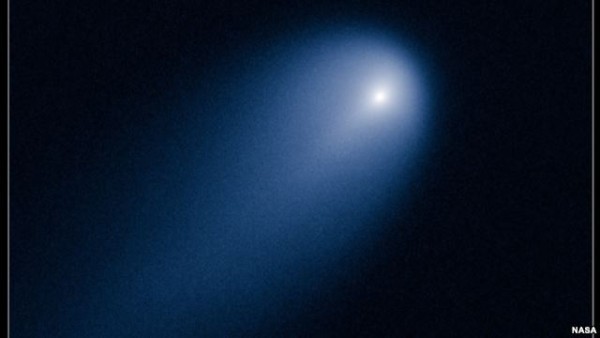
Except C/2014 S3 wasn’t simple. When this object swung by the inner solar system in 2014, astronomers pointed their instruments at it, expecting the usual show. But something was wrong. Terribly wrong.

It had no tail.

Comet-ISON-C2012-e1368252402283

Scientists nicknamed it the “Manx Comet,” after the tailless cat. Its orbit was that of a classic long-period comet, originating from the freezing depths of the Oort Cloud. But its physical body? Analysis showed it wasn’t made of ice. It was made of rock. It was physically an asteroid, the kind of object you’d expect to find in the asteroid belt between Mars and Jupiter.

So what was a rocky, inner-solar-system object doing with an icy, outer-solar-system orbit? It’s like finding a polar bear in the Sahara desert. It doesn’t belong. It’s a celestial impostor.

The “Solar System Billiards” Hypothesis

The only explanation is a story of incredible violence from our own past. The leading theory suggests this Manx Comet was born right here, in the same neighborhood as Earth, billions of years ago. It’s a piece of the same raw material that formed our own planet. But, like the rogue planets, it fell victim to the chaos of the early solar system. A close pass with a giant planet likely booted it out of the inner system, flinging it on a journey of millions of years into the cold, dark Oort Cloud.

For billions of years, it sat there in a deep freeze, perfectly preserved. Then, a tiny gravitational nudge from a passing star sent it on a long trip home. This “comet” isn’t a comet at all. It’s a messenger from the time of Earth’s birth, returning to its birthplace after a 4.5-billion-year exile. It’s a fossil, not of life, but of a planet-that-never-was, and it carries the original chemical recipe of our own world within its rocky heart.

The TRAPPIST-1 Enigma: A Solar System of Nightmares or Dreams?

What if I told you that just 40 light-years away—a stone’s throw in cosmic terms—there’s a solar system that breaks all the rules? A system that could be our single greatest hope for finding extraterrestrial life. Or our greatest warning.

Meet TRAPPIST-1. It’s not a star like our sun. It’s an ultra-cool red dwarf. Barely a star at all. It’s tiny, dim, and not much bigger than the planet Jupiter. And orbiting this faint, red ember are not one, not two, but seven Earth-sized, rocky planets. All of them are huddled so close to their star that the entire system could fit comfortably inside the orbit of Mercury.

And here’s the kicker. At least three, possibly four, of these planets orbit within the so-called “habitable zone”—the gentle region where temperatures are just right for liquid water to exist on a planet’s surface. Seven rocky worlds. Three potential ocean worlds. All right next door.

It sounds perfect, doesn’t it?

image22

A Paradise with a Temper

There’s a dark side to this idyllic picture. Because the planets of TRAPPIST-1 are so close to their star, they are almost certainly tidally locked. This means the same side of the planet always faces the star. Imagine a world with one hemisphere locked in permanent, scorching daylight, and the other in eternal, frozen night. Life might only be possible in the “terminator zone,” the thin sliver of perpetual twilight between these two extremes.

But the bigger problem is the star itself. Red dwarfs are notoriously angry. They are prone to violent, unpredictable flares, blasting their nearby planets with lethal doses of X-rays and charged particles. These flares could strip a planet of its atmosphere and boil its oceans away in an instant. The very star that gives these worlds a chance at life could also be their executioner.

The James Webb Space Telescope is now peering at these worlds, trying to see if they have atmospheres at all. Is TRAPPIST-1 a system of seven thriving water worlds? Or is it a graveyard of seven sterilized, airless rocks? The answer will change everything we think we know about the search for life in the universe.

Titan’s Methane Paradox: Is Something Alive in the Seas of Saturn’s Moon?

Let’s come a little closer to home. To the majestic rings of Saturn and its largest moon, Titan. From a distance, it looks eerily like a young Earth. It has a thick, nitrogen-rich atmosphere, clouds, wind, and rain. It has rivers that carve canyons, and it has vast, placid seas.

But on Titan, it’s far too cold for water. The temperature hovers around -290°F (-179°C). The rivers and seas aren’t filled with water, but with liquid hydrocarbons: methane and ethane.

And within this bizarre, freezing-cold chemistry lies a profound mystery. The sun’s ultraviolet light is constantly hitting Titan’s upper atmosphere, breaking down methane (CH4) and converting it into more complex hydrocarbons, primarily ethane (C2H6). This process is irreversible. Over billions of years, this should mean that Titan’s seas are dominated by ethane, with very little methane left.

But they aren’t. When the Cassini spacecraft used its radar to probe the depths of Ligeia Mare, Titan’s second-largest sea, it found something baffling. The sea was almost pure methane.

So, two giant questions loom. One: where did all the ethane go? And two: what is replenishing all the methane? It should be long gone by now.

A Biological Hypothesis?

There are mainstream explanations, of course. Perhaps there’s a “methane cycle” we don’t understand, with methane rain replenishing the seas from a vast, unseen underground reservoir, maybe through cryovolcanoes that erupt slushy methane instead of lava. Maybe the ethane sinks to the bottom of the sea or forms a solid crust we can’t detect.

But there’s another, far more provocative idea. One that some scientists have whispered about for years. What if something is *consuming* the ethane? And what if something is *producing* the methane?

On Earth, we have microorganisms called methanogens that do something similar. They live in oxygen-free environments and, in a simplified sense, consume hydrogen and carbon dioxide to produce methane as a waste product. Could a completely alien form of life exist on Titan? A life form that doesn’t need water or oxygen? One that lives in liquid methane, breathes hydrogen, and eats ethane? Is the strange chemistry of Titan’s seas a sign of geology… or biology?

Pluto’s Glowing Scars: A Message From the Underworld?

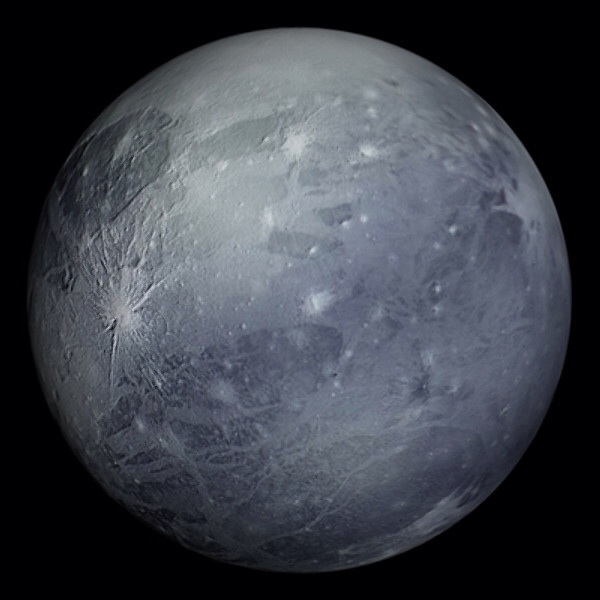
For decades, Pluto was just a fuzzy dot. A tiny, forgotten ice ball at the edge of the solar system. We assumed it was a dead, cratered, inactive world. Then, in 2015, the New Horizons spacecraft flew by and gave us our first close-up look.

And it blew our minds.

Pluto was alive. It had vast, smooth plains of frozen nitrogen that were geologically young. It had towering mountains made of solid water ice. It had a thin blue atmosphere. This was not a dead world. This was a complex, dynamic, and deeply mysterious place.

image19

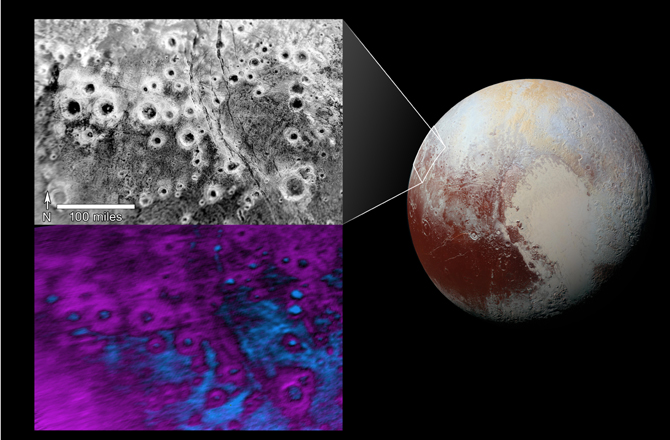
And across its surface, particularly in a dark, ancient region named Vega Terra, New Horizons spotted something truly bizarre. Dozens of craters, but not just any craters. These scars on the landscape had bright, glowing white rims and walls. They looked like halos against the dark, reddish terrain.

The Cold Case of the Methane Halos

Analysis revealed these bright halos are made of almost pure methane ice. The dark terrain surrounding them is covered in complex organic molecules called tholins, which are created when sunlight irradiates simpler molecules like methane. This makes a certain kind of sense: the dark stuff is old, sun-baked methane.

But why are the craters bright? Methane ice on Pluto is incredibly volatile. In the dwarf planet’s thin atmosphere and faint sunlight, it should sublimate—turn directly from a solid into a gas—and disappear over geological time. For these halos to still be there, they must be incredibly young. Or something must be actively creating them.

image-5

One theory is that impacts are punching through the dark surface layer and excavating fresh, bright methane ice from just underneath. This would mean Pluto has a layered geology, like a cake with dark frosting and a bright, icy filling.

Another, more exciting idea, relates to Pluto’s extreme seasons. Its long, looping orbit gives it a wild climate. Perhaps during certain seasons, methane that was in the atmosphere freezes and falls like snow, accumulating in the colder microclimates offered by the crater walls and rims. The glowing halos might not be scars, but seasonal frost, a sign that Pluto has a weather cycle, however alien it may be.

These halos are a puzzle. They show us that even at the coldest, darkest edge of our solar system, there are active, ongoing processes that we are only just beginning to comprehend. Pluto isn’t dead. It’s just sleeping.

The Clues Are Out There

From the lonely darkness between the stars to the methane shores of Titan, the universe is leaving us clues. It’s showing us that our neat little models and our comfortable assumptions are just a starting point. Every new discovery reveals a deeper, more profound level of strangeness. These aren’t just academic puzzles; they are fundamental questions about our place in the cosmos.

Are we alone? Is our solar system normal, or a bizarre exception? Could life exist in places we’ve written off as impossibly hostile? The answers are out there, waiting in the silence. We just have to keep looking up. And keep asking the questions that make us uncomfortable.

Arindam Mukherjee
Arindam Mukherjee
Arindam loves aliens, mysteries and pursing his interest in the area of hacking as a technical writer at 'Planet wank'. You can catch him at his social profiles anytime.
RELATED ARTICLES
- Advertisment -

Most Popular

Recent Comments

Warren Pan Abbott on The legend of the Devil Monkey !
chris davies on The McPherson Tape Mystery
Reed Reedly on ET has Internet!
Bea Houseoffashion on Proof Of Time Travellers – Gallery
Marcus2012 on ET has Internet!
Reed Reedly on ET has Internet!
LaughsAtConspiracyNuts on The 9/11 Conspiracy – Myths and Facts
Alex Sliverman on Did the ancients fly?
Doctor Wholigan on Time Traveler in 1938 film
chris davies on The McPherson Tape Mystery
Archie1954 on 10 secret UFO hideouts
chris davies on Ghosts of flight 401
Marcus2012 on ET has Internet!
jason Macdonald on Proof of Time Travel? – China
chris davies on Long-Lost Pyramids Found?
Reed Reedly on ET has Internet!
Milkman on Connected Universe
Tenmiles on Baigong Pipes Mystery
Simon Foster on Sirius – The Documentary
From the 1st April on 2013 – Alien Contact date ?
SkyWatcher on Is ET ignoring us?
I Come From The Future on Obama to make UFO Alien disclouser soon ?
Just another person on 2013 – Alien Contact date ?
Malcolm Windowcleaner on The strange case of Rudolph Fentz
Mason Servio on Strange Things on Mars
Marke Wisdom Seeker on What will we find as arctic melts?
Andrea A Elisabeth Levyne on Aliens Captured in Varginha, Brazil
Mitch Grouyeki on Amazing Space Shuttle pictures