The 800-Year-Old Mystery That Still Haunts England
Imagine the sound. Not the clash of swords. Not the roar of battle.
The sound of sucking mud.
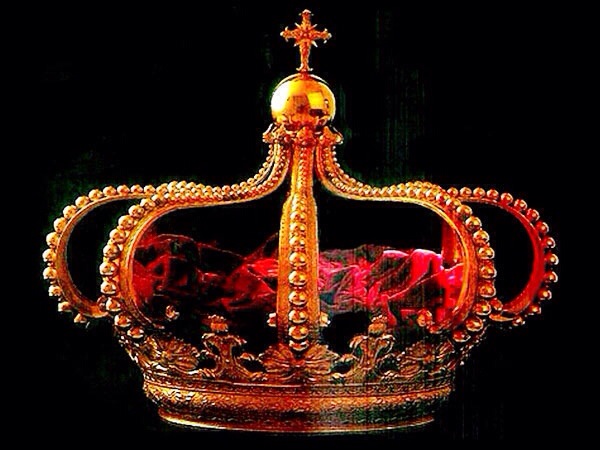
It’s October 1216. A cold, grey mist hangs over the east coast of England. A massive train of heavy wagons is creaking across the wet sands. They are carrying everything. Gold. Silver. Swords encrusted with rubies. The actual crown of the King of England.
Then, the tide turns.
Water rushes in. Fast. Faster than a horse can gallop. The wheels sink. Panic. Men scream. Horses thrash in the rising brine. And within minutes, it’s gone. All of it. Swallowed by the earth.
This isn’t a fairy tale. This is the story of King John’s lost treasure. The greatest “cold case” in history. We are talking about a hoard that would be worth over $70,000,000 today. Maybe more. And it is still out there. Waiting.
Who Was King John and Why Was He So Rich?
You know him. Even if you think you don’t, you do.
Remember the bad lion in Disney’s Robin Hood? The thumb-sucking, taxes-obsessed neurotic? That’s him. King John “The Bad.” History has not been kind to this man. And for good reason.
John was a hoarder. A tyrant. A man obsessed with wealth in a way that makes modern billionaires look modest. He didn’t just collect taxes; he stripped the country bare. He loved collecting jewellery, gold plates, and coins. But he didn’t trust banks. He didn’t trust castles. He didn’t trust anyone.
So, he took it with him.
Everywhere. When the King moved, the treasury moved. Imagine travelling with your entire bank account in the trunk of your car, but your bank account is gold goblets and your car is a wooden cart stuck in the mud.
By 1216, England was on fire. The barons had rebelled. They forced John to sign the Magna Carta in 1215, but John—being John—immediately tried to back out of it. Civil war erupted. The French invaded. John was on the run, zigzagging across the countryside, burning farms and stealing church silver to pay his mercenaries.
He was a desperate man. Sick. Paranoid. And heavily loaded with loot.
The Fatal Mistake: October 12, 1216
Let’s freeze the frame on the day of the disaster.
King John is in Bishop’s Lynn (now King’s Lynn) in Norfolk. He is dying. Literally. He has contracted dysentery. (Back then, they called it the “bloody flux”—nasty stuff). He needs to get to Lincolnshire. To safety.
Between him and safety lies “The Wash.”
Today, The Wash is a calm estuary. Farmers grow potatoes there. But in the 13th century? It was a monster. A vast, shifting landscape of quicksand, tidal creeks, and mudflats. At low tide, you could walk across it. It was a shortcut.
But at high tide? It became a violent sea.
John, sick and weak, decided he couldn’t handle the rough ride across the mud. He took the long way around on solid ground. Smart move.
But his baggage train? The carts carrying his wardrobe? His mobile chapel? And—most importantly—the carts carrying the Crown Jewels? They were ordered to take the shortcut.
The order was given. “Go across the sands. Meet me on the other side.”
They never arrived.
What Exactly Was Lost? (The Inventory of Greed)
We aren’t just talking about a bag of coins here. The inventory of what vanished into the muck is mind-blowing. Historians have pieced together lists based on what John had before the crossing and what he didn’t have after.
Here is what is sitting under a potato field somewhere in England right now:
- The Crown Jewels of England: Not the ones you see in the Tower of London today (those are replacements). These were the originals. Ancient. Irreplaceable.
- The Regalia of the Empress of Germany: John’s grandmother brought these over. Heavy, solid gold.
- The Sword of Tristram: A legendary weapon from Arthurian myth (or at least, John claimed it was).
- A Golden Wand with a Dove: Used in coronations.
- Gold and Silver Goblets: Dozens of them.
- Chests of Gold Coins: To pay the soldiers.
Current Estimated Value: $70,000,000+
But the historical value? Priceless. You cannot put a price tag on the sword of a King or the crown worn by his ancestors. It is the holy grail of British treasure hunting.
The Wash: The Perfect Trap
How do you lose an entire caravan of wagons?
The Wash is deceptive. The tide there doesn’t comes in like a bathtub filling up. It comes in faster than a man can run. The water rushes through deep, invisible channels first, cutting off retreat.
The wagon train would have been miles long. The lead wagons might have been fine. But the heavy ones—the ones laden with gold—would have been slower. The wheels dug into the soft sand. The horses struggled.
Then the fog rolled in.
Imagine the panic. You are a wagon driver. The water is rising around your ankles. You can’t see the shore. The heavy cart is stuck. You have to make a choice: save the King’s gold, or save yourself?
Most likely, the men drowned alongside the horses. The weight of the gold pulled them down into the silt. The “quicksand” effect of the local mud acts like cement. Once it grabs you, it doesn’t let go. The wagons were sucked down, buried deep, and then covered by layers of sediment as the tides rushed over them for centuries.
King John died a few days later, on October 18, 1216. Some say he died of dysentery. Others say he died of a broken heart, knowing he had lost his power, his kingdom, and his precious gold.
Theory #1: The Inside Job?
Here is where things get spicy. What if the treasure wasn’t lost?
We have to look at the alternative history. Some historians and conspiracy theorists scream “Fraud!”
Think about it. The country is in chaos. The King is dying. The soldiers guarding the treasure haven’t been paid in months. They are crossing a foggy, dangerous marsh. Who would know if they just… turned left?
The Heist Theory: Did the baggage train captains fake the disaster? Did they drive the wagons to a secret location, bury the loot, and claim “the tide took it”? It’s the perfect crime. No bodies to find (they washed away). No gold to recover (it sank).
There are local legends in the nearby Fenland villages of sudden, unexplained wealth appearing in the years after 1216. Strange, right?
Theory #2: The Knights Templar Connection
You can’t have a good treasure mystery without the Knights Templar. King John had pawned jewels to the Templars in the past. He owed them money. Lots of it.
Some suggest the Templars shadowed the caravan. When the chaos of the rising tide hit, did they swoop in? Did they recover the chests before the mud claimed them? It is a wild theory, but in the chaos of war, anything is possible.
Modern Science vs. Ancient Mud
For centuries, people went out with shovels. They found nothing. They died trying. The tides were too dangerous.
But today? We have lasers.
LiDAR (Light Detection and Ranging) has changed the game completely. We don’t need to dig blindly anymore. We can strip away the vegetation and see the earth beneath.
A recent survey has dropped a bombshell. The landscape has changed. Radically.
Historian and archaeologist Ben Robinson has been leading the charge. He points out a massive problem with previous searches: We have been looking in the wrong place.
“These images show in remarkable detail the way the landscape has changed radically since King John’s time,” says Mr Robinson. “Our view now of straight roads and rectangular fields in the fens is not reflective of the landscape the king had to travel through.”
The coastline of 1216 is not the coastline of 2024. The sea has retreated. The “ocean” where the treasure drowned is now dry land. It’s likely under a cabbage patch or a farmhouse.
The river courses have shifted miles to the east or west. The treasure hunters of the Victorian era were digging in spots that would have been dry land back then. The LiDAR data suggests the fatal crossing point is somewhere nobody has ever looked before.
Why Haven’t We Found It Yet?
If it’s under a field, why don’t we just dig it up?
1. The Depth: The sedimentation rate in The Wash is aggressive. The treasure could be 20, 30, or even 50 feet down. That’s deep.
2. The Water Table: Even though it’s land now, it’s a marsh. You dig a hole, it fills with water instantly. You need massive industrial pumps and cofferdams to excavate.
3. The Area: We are talking about dozens of square miles. Without an X on the map, it’s a needle in a haystack. A golden needle in a muddy haystack.
The Haunting of Sutton Bridge
Locals will tell you the story isn’t over. Near Sutton Bridge, where the disaster likely happened, people report strange things.
On foggy nights, when the wind blows from the sea, they say you can hear it. The screaming of horses. The shouting of men in an ancient dialect. The creaking of wooden wheels.
Is it the wind? Or is it the restless spirits of King John’s guard, still trying to push the heavy gold carts out of the sucking mud?
The Verdict
So, is the treasure still there?
Almost certainly. Gold doesn’t rot. Gems don’t corrode. The wooden carts have long since dissolved, but the metal chests? The crowns? The goblets? They are waiting.
Somewhere beneath the quiet, flat fields of Lincolnshire, a king’s ransom is sleeping in the dark. It is the ultimate time capsule. And one day, a farmer plowing his field a little too deep, or a construction crew laying a new pipeline, is going to hit something hard.
They will wipe away the dirt. They will see the glint of gold.
And history will change forever.
Originally posted 2016-08-22 05:49:09. Republished by Blog Post Promoter