Home Unexplained Mysteries Ancient Mysteries Humans and Dinosaurs Together – Proof!

Humans and Dinosaurs Together – Proof!

0
55

The Footprints That Erase History: Did Humans Hunt Dinosaurs?

Forget your textbooks. Forget the neatly organized timelines they forced you to memorize in school. And forget everything you think you know about the dawn of humanity.

Because history, the real history, isn’t written in books. It’s written in stone. And sometimes, that stone tells a story so explosive, so utterly world-shattering, that the so-called “experts” will do anything to ignore it. They have to.

They don’t want you to see it.

But we’re going to look anyway.

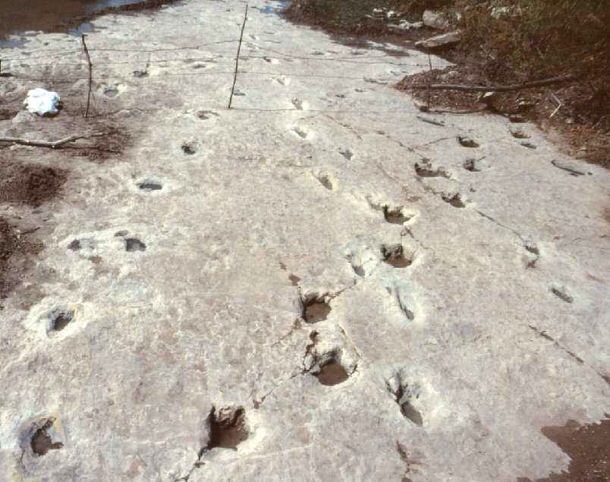
We’re going to a dusty, unassuming riverbed in Texas. A place where the official story of our past crumbles into dust. A place where impossible footprints are baked into the ancient mud, side-by-side. One, a massive, three-toed monster. The other… impossibly human.

This isn’t a theory. It’s a crime scene. One that’s 140 million years old.

The Paluxy River Crime Scene

They call it the “Texas Dinosaur Track Controversy.” What a sterile, academic name for something so profound. This is no mere controversy. This is a complete dismantling of the accepted historical record.

The place is Glen Rose, Texas. The Paluxy River runs through it, and when the water is low, the riverbed reveals its secrets. For decades, locals knew about the dinosaur tracks. They were a curiosity. A tourist attraction. Giant, three-toed prints of what paleontologists identified as Acrocanthosaurus, a fearsome predator that roamed the land during the Early Cretaceous period. No surprise there. That fits the narrative.

But then, they saw the other prints.

At first, people dismissed them. Odd erosions. Carvings. Fakes. Anything but the truth.

Because right there, in the same 140-million-year-old limestone layer, were footprints that looked eerily, undeniably human. Not just one. Dozens.

A trail of them.

20140226-175225.webp

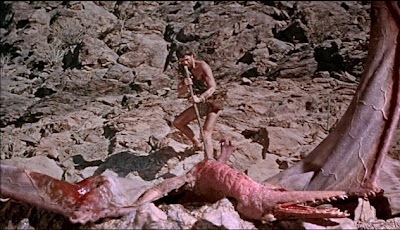
A Hunter and His Prey?

Let’s paint a picture. The mainstream version of history wants you to believe that 140 million years ago, the dominant life forms were reptiles the size of buses. Our earliest mammalian ancestors were tiny, shrew-like creatures, hiding in burrows, terrified of being stepped on. Humans? They wouldn’t even begin their evolutionary journey for another 138 million years. That’s the story.

The Paluxy River tracks tell a different tale.

A terrifying one.

The footprints don’t just exist in the same rock layer. They interact. In several documented series of tracks, the human-like prints follow the dinosaur prints. They are spaced apart in a running gait. The stride is long. The impressions are deep. This wasn’t a casual stroll in the park. This was a pursuit.

Think about that. A human being, or something very much like a human being, was actively tracking a dinosaur. Stalking it.

Suddenly, the timeline shatters. The neat little boxes of “Jurassic Period” and “Cretaceous Period” become meaningless. We have a scene that shouldn’t be possible. Yet, the evidence is baked into the Earth itself.

In the 1930s, famed paleontologist Roland T. Bird of the American Museum of Natural History came to investigate the dinosaur tracks. He ended up documenting the human-like ones as well, calling them “puzzling” and “a mystery.” He saw them with his own eyes. While he ultimately concluded they were likely carved or misidentified prints of a different dinosaur, his initial bewilderment speaks volumes. The prints were convincing enough to shake one of the top men in his field.

Of course, the official explanations flooded in. They’re just metatarsal dinosaur tracks, where a dinosaur walked on its “heels,” creating an elongated print that vaguely resembles a human foot. Or they are natural erosion patterns. Or they are all elaborate hoaxes carved during the Great Depression to fool tourists.

Some of them may have been. The area became a cottage industry for forgeries. But what about the ones found *in situ*? The ones excavated from under layers of solid rock? What about the tracks where the human print *overlaps* the dinosaur print, proving it was made afterward?

The gatekeepers of science have an answer for that: silence. They simply refuse to engage. They’ll tell you the case is closed, that it’s all been debunked. They do this because the alternative is too terrifying for them to consider. It would mean their entire careers, their life’s work, their precious theories… are all wrong.

The Utah Sandal and the Squashed Trilobite

If the Texas tracks crack the foundation of history, a discovery in Utah reduces it to rubble. This one is so far outside the accepted timeline that it sounds like science fiction. But again, the evidence is set in stone.

In June 1968, a fossil hunter and amateur paleontologist named William J. Meister was digging for trilobite fossils in a place called Antelope Spring. Trilobites, for those who don’t know, are extinct marine arthropods. Little armored sea bugs. They are a hallmark of the Cambrian period, dying out hundreds of millions of years before the dinosaurs even showed up. We’re talking 300 to 600 million years ago.

Meister cracked open a slab of shale. It split apart like a book. He stared, completely stunned.

There, embedded in the rock, was what looked for all the world like the print of a sandal. A modern shoe. It was about 10.5 inches long. You could see the clear outline of the right side of the shoe being more worn down than the left, just like a real shoe. You could see the distinct shape of a heel.

And under that heel, squashed into the mud, were the fossilized remains of two trilobites.

Let’s be perfectly clear about what this means.

This is a shoeprint. From a time before fish had jaws. Before plants had colonized the land. Before the first amphibians crawled out of the sea. This is a 400-500 million-year-old shoeprint with an extinct sea creature crushed beneath it.

20140226-175830.webp

The “Meister Print”: An Impossible Artifact

The “Meister Print,” as it came to be known, is the ultimate Out-of-Place-Artifact (OOPArt). It shouldn’t exist. It breaks every rule in the book.

The scientific establishment, naturally, scrambled for an explanation. Their go-to dismissal? It’s not a footprint. It’s a natural geological formation called a concretion. Just a piece of the rock that flaked off in a coincidental, shoe-like shape.

Really?

Does a natural rock formation have a clearly defined heel, a right-side wear pattern, and a smooth, compressed surface? Do rocks naturally flake off in a way that perfectly encapsulates, and crushes, fossils *within* its outline? The trilobites aren’t just on the same slab; they are physically squashed by the object that made the print. One is clearly flattened under the heel. The chances of this happening by coincidence are not just astronomical; they are laughable.

One geologist who examined the print admitted, “The rock breaks around the fossil, so it’s not a carving. The print had to be made in the mud before the rock was formed.”

Yet the official story remains: It’s just a rock. Nothing to see here. Move along.

They have to say that. Because if the Meister Print is real, then what? Were there time travelers on a prehistoric safari? Was there a previously unknown, globe-spanning advanced civilization millions of years ago that rose and fell, leaving behind almost no trace except a single, fossilized footprint?

Either possibility is more staggering than the last.

A Pattern of Suppression

These are not isolated incidents. Once you start looking, you see them everywhere. Whispers. Forgotten reports. Evidence that was conveniently “lost.”

In 1983, the newspaper *Moscow News* reported that Soviet scientists had discovered human-like footprints alongside a three-toed dinosaur track in 150-million-year-old Jurassic rock in the mountains of Turkmenistan. The report stated the prints were “indisputably” human. What happened to this research? Where are the follow-up studies? Crickets. The story vanished, buried by the weight of accepted dogma.

In the 1930s, giant, 15-inch human-like tracks were found in rock strata near White Sands, New Mexico. The tracks were examined by a geologist from the Smithsonian, who was reportedly baffled. The evidence then disappeared into the institutional void, never to be seen again.

Why?

Why is there such a ferocious, coordinated effort to debunk, dismiss, and bury this evidence? It’s not about science. True science follows the evidence wherever it leads, no matter how uncomfortable the destination. No, this is about something else.

This is about protecting a narrative.

Who Are the Gatekeepers of History?

The story of human evolution is one of the most fiercely guarded territories in all of science. It’s a fragile house of cards, built on a handful of fossil fragments and a mountain of assumptions. It underpins entire philosophies and worldviews. To admit that humans—or something very much like us—walked the Earth with dinosaurs and trilobites isn’t just a small correction. It’s a complete demolition of the entire structure.

It means we don’t know who we are. We don’t know where we came from. And we don’t know how long we’ve been here.

An entire academic and scientific industry is built on the current timeline. Think of the museums, the university departments, the grant money, the television specials, the textbooks. It’s a multi-billion dollar enterprise. Admitting that the fundamental premise is wrong would be catastrophic for them.

So, the evidence gets labeled “pseudo-archaeology.” The people who investigate it are called “cranks” or “creationists” to instantly discredit them without ever having to engage with the physical proof they present.

They control the peer-review process. They control the major publications. They control the museum exhibits. They are the gatekeepers. And they have locked the door on our true history.

What If The Official Story Is The Real Conspiracy?

Let’s entertain the impossible for a moment. What if the prints are real? All of them. What does that world look like?

Scenario 1: Ancient Humanity. Perhaps humanity is far, far older than we imagine. Not millions, but hundreds of millions of years old. A civilization could have risen, spread across the globe, and been wiped out by some cataclysm—like the asteroid that killed the dinosaurs—leaving behind only the faintest traces. A few footprints in mud that turned to stone. A lost tool. A buried structure. It would explain so many other OOPArts, from the Antikythera Mechanism to the Baghdad Battery. We aren’t the first. We’re just the latest.

Scenario 2: Time Travel. Is it possible that humans from our future have been visiting the past? It sounds crazy, until you look at the Meister Print. A sandal. Crushing a trilobite. It’s almost the exact scenario from Ray Bradbury’s classic story “A Sound of Thunder,” where a time traveler accidentally steps on a butterfly in the past and alters the future. Did some tourist from the 25th century get careless on their prehistoric safari?

Scenario 3: Non-Human Visitors. The Paluxy tracks are described as “human-like.” The Meister print looks like a sandal. But what if they were made by beings who just happen to be bipedal and wear something on their feet? Beings who visited this planet long ago, walking among the primeval creatures. This opens up a whole other can of worms, but in a universe of infinite possibilities, can we really rule it out?

Whichever scenario you lean toward, the conclusion is the same: the official history of our planet is, at best, incomplete. At worst, it’s a deliberate lie.

The evidence is there, etched in the bedrock of our world. It doesn’t scream. It whispers. It waits patiently for people with open eyes and curious minds. It waits for people brave enough to ask the forbidden question: What if we’ve been wrong about everything?

The footprints are real. The timelines are broken. The only thing left to decide is what you’re going to believe. The comfortable story they tell you? Or the impossible truth written in stone?

Originally posted 2016-04-29 08:28:07. Republished by Blog Post Promoter