The Phantom Drones of France: Who is Watching Our Nuclear Reactors?
It starts with a whisper. A flicker in the night sky. Something that doesn’t belong.
Imagine you’re a security guard on a cold October night in rural France. The air is still. The only sound is the low, constant hum of the nuclear giant you protect. Your job, for the most part, is about routine. About boredom. But tonight is different. High above the cooling towers, a pair of small, silent lights move with impossible precision. They are not a plane. Not a helicopter. They are something else.
They are watching.
This isn’t a scene from a movie. This was the chilling reality for security personnel across France in late 2014 and early 2015. A coordinated, silent, and deeply unsettling wave of mysterious drone flights over the country’s most sensitive locations. Its nuclear power plants. And years later, after official investigations, military scrambles, and a storm of public speculation, we are left with one terrifying question: Who was behind it?
The answer is still a complete, deafening silence.
The Invasion Begins: A Coordinated Mystery
It wasn’t just one incident. That would have been easy to dismiss. A prank. A reckless hobbyist. But this was something else entirely. This was organized.
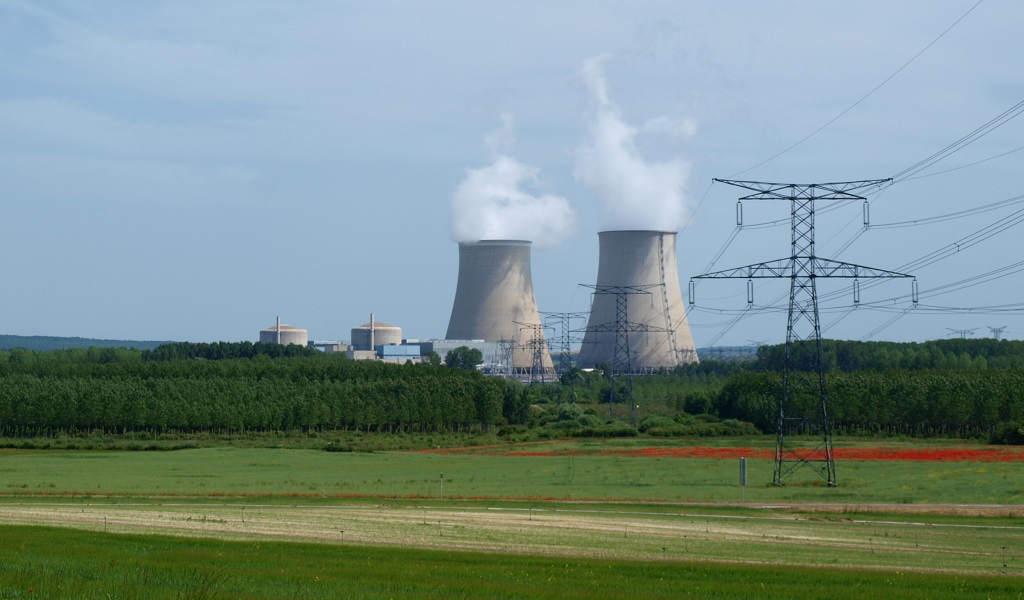
Between October 5th and October 20th, 2014, a ghost fleet of unidentified aircraft materialized over at least seven separate nuclear sites. These facilities, run by the state-owned power company EDF, are the heart of France. They provide an astonishing 75% of the nation’s electricity. They are fortresses of modern technology, symbols of national power. And they were suddenly, inexplicably, vulnerable.
The list of targeted plants reads like a strategic map:
- Chooz, near the Belgian border.
- Cattenom, home to four powerful reactors.
- Gravelines, one of the largest nuclear stations in the world.
- Nogent-sur-Seine, chillingly close to Paris.
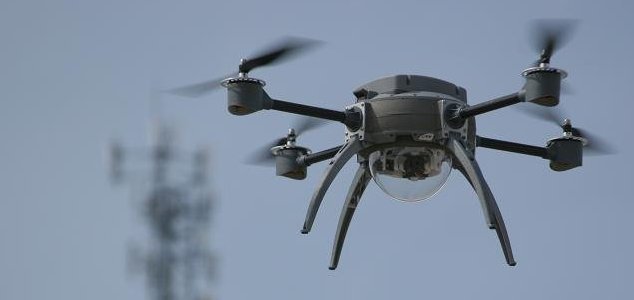
And more. Night after night, the reports flooded in. Small, unmanned aerial vehicles, often flying in pairs, mapping the layouts of these critical sites. They hovered, they maneuvered, and then they vanished into the darkness before anyone could react. This wasn’t random. This was a statement.

The implications are bone-chilling. French law is crystal clear: it is illegal to fly any aircraft within a 5-kilometer radius and below 1,000 meters of a nuclear plant. This is restricted airspace for a very, very good reason. These aren’t just power stations; they are potential dirty bombs of unimaginable scale. And someone was flying cheap, untraceable drones right over their heads, and no one could stop them.
Deep Dive: Why France’s Nuclear Heart is So Vital
To understand the panic, you have to understand France’s relationship with the atom. After the 1973 oil crisis, France went all-in on nuclear power to secure its energy independence. They built a nuclear empire of 19 sites and 58 reactors. It’s the backbone of their economy, their industry, their very way of life. An attack on one of these plants wouldn’t just be a national disaster; it would be a continental catastrophe.
The security is, supposedly, immense. We’re talking anti-aircraft missile systems, elite police tactical units, and layers of physical protection designed to withstand a direct airliner crash. Yet, these defenses are all pointed outwards and upwards, looking for big threats. A missile. A jet. They weren’t looking for a small, plastic quadcopter you could buy online.
The operators of these mystery drones found a gaping hole in the armor of a superpower. And they exploited it. Repeatedly.
The Suspects: A Lineup of Shadows
When something this brazen happens, the finger-pointing starts immediately. The authorities, scrambling for answers, looked at a few key possibilities. But none of them quite fit.
Suspect #1: The Activists
The first name on everyone’s lips was Greenpeace. The environmental group has a long and colorful history of non-violent stunts to protest nuclear power. They’ve broken into plants, scaled cooling towers, and launched fireworks. Using drones to highlight security flaws sounds exactly like something they would do. Right?
Wrong. Greenpeace vehemently denied any involvement. And their denials held weight. Typically, the group is quick to claim responsibility for their actions to maximize media attention. Their goal is publicity. This operation was the opposite. It was silent, stealthy, and anonymous. It didn’t feel like a protest; it felt like reconnaissance.
Suspect #2: The Foreign Power
If not activists, then who? The next logical jump is espionage. A foreign government testing France’s defenses, mapping its critical infrastructure. In the murky world of intelligence, this makes a lot of sense. Who would benefit from having a detailed blueprint of France’s nuclear grid? The list is long.
Could it be a rival nation-state? A non-allied power looking for weaknesses in NATO’s European core? The problem with this theory is the equipment. Official statements from the French air force, like the one from Col. Jean-Pascal Breton, tried to downplay the threat, describing the drones as “small commercially available devices.”
But does that track? Would a major intelligence agency use off-the-shelf drones for such a high-stakes mission? Maybe. Using commercial tech is a great way to maintain plausible deniability. If one gets captured, it can’t be traced back to a specific government. It’s a low-risk, high-reward probe. A way of knocking on the door to see who’s home, and if they have any guns.
Suspect #3: The Terrorist Cell
This is the theory that keeps security experts up at night. The idea that these flights weren’t just a test. They were a dry run. A terrorist organization methodically gathering data for a future attack. Imagine a drone, not just with a camera, but with a small explosive charge. Or worse, a device designed to interfere with a plant’s electronics.
The official line was that these small drones “posed no threat.” A statement that feels dangerously naive. A small charge, delivered to a critical, unprotected node on the exterior of a power plant—a transformer, a power line junction—could potentially trigger a sequence of events leading to a shutdown or, in a nightmare scenario, a meltdown. The drones weren’t the weapon; they were the delivery system. The scouts mapping out the target for a later, more devastating attack.
The Official Story Crumbles
The French government tried to project an image of calm. “We are in control.” “They are just toys.” But their actions told a different story. The military was mobilized. Jets were scrambled. Advanced detection systems were deployed. And yet, they caught no one. Not a single operator was ever identified or arrested in connection with the main wave of flights.
Think about that. Dozens of illegal flights over the most heavily guarded sites in the country, and the full might of the French state was powerless. How is that possible?
This is where the official story begins to fray. The “commercial drones” explanation doesn’t account for the skill of the pilots. They operated at night, in restricted airspace, and evaded all detection. This wasn’t some kid in a nearby field. These operators were skilled, disciplined, and well-resourced.
And then the sightings got weirder.
The Mystery Deepens: The Paris Phantoms
Just when everyone thought the phenomenon had faded, it came back with a vengeance. In January 2015, the drones reappeared. But this time, their target wasn’t a remote nuclear plant. It was the heart of Paris.
A drone was spotted buzzing over the presidential palace. Another near the US Embassy. More were seen over iconic landmarks. The message was clear: We can go anywhere. We can see anything. You cannot stop us.
The Paris sightings changed the game. It was no longer just about nuclear security. It was a direct challenge to the authority of the French state itself. The government offered a 1 million euro reward for information. The public was on high alert. Still nothing. The phantoms operated with impunity and then melted away.
Modern Theories: What the Internet Thinks
Years have passed, and the case remains ice cold. With no official answers, the internet has done what it does best: speculate. And some of the theories are more compelling than the official narrative.
Theory A: It Was France All Along
One of the most persistent theories online is that this was a “red team” exercise. In military speak, a red team is a group tasked with playing the role of the enemy to test an organization’s defenses. What if the French military or intelligence services staged the entire thing themselves?
It makes a strange kind of sense. It would explain the pilots’ skill and their incredible ability to evade capture. They knew exactly how to exploit the weaknesses in the system because they *were* the system. Perhaps a high-level official got worried about drone security and authorized a top-secret “live drill” to scare the government into upgrading its defenses. It’s a shocking thought, but in the world of black ops, it’s far from impossible.
Theory B: A Secret Technology
What if these weren’t “commercially available” drones at all? Some reports from eyewitnesses described aircraft that were larger, faster, and more silent than any consumer model. This leads to the possibility that a corporation or a secret military contractor was testing a new generation of stealth drone technology, using France’s nuclear plants as the perfect real-world training ground.
Theory C: Something Else Entirely…
And then there’s the fringe. The idea that we aren’t talking about drones. Not in the way we understand them. The complete lack of evidence, the phantom-like appearances and disappearances, the impossible evasiveness… some researchers now quietly categorize the French nuclear sightings within the broader, fast-evolving phenomenon of UAPs (Unidentified Aerial Phenomena).
Could these objects have been something beyond our current technological understanding? It sounds like fiction, but in a world where the US Navy has officially released videos of tic-tac-shaped objects defying the laws of physics, is any possibility truly off the table?
The Enduring Silence
Ultimately, we are left with nothing but questions. The phantom drones of France represent one of the most baffling security breaches of the 21st century. It was a silent, bloodless invasion that exposed the vulnerabilities of a modern nation in the most terrifying way imaginable.
They came from nowhere. They saw everything. And they left without a trace.
The official files may be closed, but the mystery is very much alive. It’s a stark reminder that in our high-tech world, the biggest threats can come in the smallest packages. And that sometimes, when you look up into the night sky, something might be looking back.