China’s Silent Metropolis: The Shocking Truth Behind the Ghost City of Chenggong
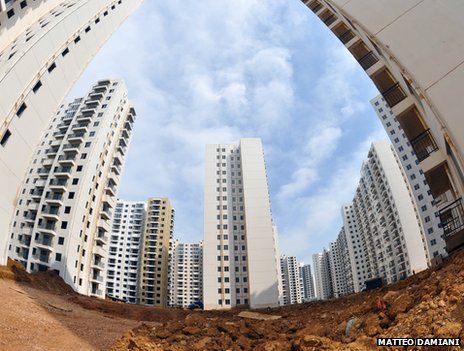
Picture this. You’re standing on a twelve-lane boulevard, clean and perfectly paved, stretching toward a horizon of gleaming skyscrapers. The sun beats down on a massive, state-of-the-art stadium to your left and a sprawling, modern shopping mall to your right. Everything is here. The buildings. The roads. The parks. Everything… except the people.
The silence is the first thing that hits you. It’s not a peaceful quiet. It’s a heavy, unnatural silence. A silence that screams. The only sound is the wind, a lonely howl whipping through the canyons of empty apartment blocks.
This isn’t a scene from a post-apocalyptic movie. This is real.
This is Chenggong.
A brand-new city in China’s Yunnan province, built to house over a million souls. A city with more than 100,000 brand-new apartments. A city that, for years, has stood as one of the largest, most baffling ghost towns on planet Earth. Why was it built? And where is everybody?

The Grand Plan That Forgot People
On paper, the idea was brilliant. A masterstroke of central planning. Nearby Kunming, the ancient and beautiful “Spring City,” was bursting at the seams. With a population pushing past six million, its streets were clogged, its housing was strained, and its future growth was choked.
The solution? A satellite city. A magnificent, modern overspill point built from scratch just a few miles away. This new district, Chenggong, would be a beacon of 21st-century urban living. It would have wide-open spaces, cutting-edge infrastructure, and beautiful homes for the hundreds of thousands who would flock there for a better life. The government poured billions into the project. Construction crews worked around the clock, and a forest of steel and glass erupted from the farmland with breathtaking speed.
They built it all.
Massive government administrative centers. Several complete university campuses. A world-class sports complex capable of hosting international events. Row upon row, block upon block of high-rise residential towers, their windows reflecting the empty sky like a thousand vacant eyes.
They built the city. But they forgot one small detail.
The residents.
A Walking Tour Through the Void
Journalists and urban explorers who have ventured into Chenggong over the years paint a surreal picture. Imagine walking for hours and seeing almost no one. Matteo Damiani, a journalist who documented the city’s emptiness, described a landscape that was both finished and abandoned at the same time.
Think about the sheer scale of it.
The shopping malls are not just empty storefronts; they are architectural marvels of glass and steel, with escalators frozen in place and food courts that have never served a single meal. The grand central plaza, designed for festivals and public gatherings, is a concrete desert where the only movement is the dance of dust devils in the wind. Even an entire district of luxury villas, with ornate gates and sprawling gardens, stands completely deserted, a monument to a wealth that never arrived.
The residential towers are perhaps the most unsettling. From a distance, they look like any other modern city. But as you get closer, you notice the details. There are no lights on at night. No laundry hanging from balconies. No children playing in the courtyards. Just a profound, chilling emptiness. It’s a city holding its breath, waiting for a life that never came.
The Conspiracy Corner: Three Theories Why a Million-Person City Stands Empty
So, what went wrong? How does a government spend billions building a metropolis that nobody wants to live in? The official story is one of miscalculation, of a project that was simply ahead of its time. But when you look deeper, other, more disturbing possibilities begin to emerge.
Theory #1: The Ultimate “Field of Dreams” Failure
The simplest explanation is often the most likely. This is the story of a colossal planning blunder. The Chinese government operated on a “build it, and they will come” philosophy that had worked during its explosive economic growth. For decades, they built new roads, new factories, new cities, and the people and prosperity followed.
But Chenggong might be where that magic formula stopped working. The planners built the physical city—the hardware. They failed, however, to build the “software” that makes a city a home. There were few private-sector jobs, limited entertainment options, and a complete lack of the social fabric—the small shops, the neighborhood restaurants, the community centers—that creates a sense of place. The city was a sterile collection of buildings, not a living, breathing community. The commute back to Kunming for work and life was just too far, too inconvenient. The dream they built was a logistical nightmare.
Theory #2: A Ghostly Pyramid Scheme
This is where things get interesting. What if Chenggong was never truly meant to be a city for living? What if, instead, it was a massive, concrete investment scheme?
For years, the safest investment for the average Chinese family wasn’t the stock market; it was property. Real estate was seen as a guaranteed path to wealth. This created a speculative frenzy. People bought apartments not to live in, but as a place to park their money, betting that the value would skyrocket. Developers, fueled by easy loans from state-owned banks, built entire cities to meet this insatiable demand for investment properties.
From this perspective, Chenggong isn’t a failed city. It’s a successful, if terrifying, symptom of a speculative bubble. The apartments *are* owned. They just sit empty, dark boxes in the sky, serving as entries on a balance sheet rather than homes for families. The “ghost city” phenomenon, seen all across China in places like Ordos Kangbashi, isn’t about a lack of people. It’s about an excess of capital being poured into concrete assets with no underlying residential demand. Is Chenggong just one of the biggest and most visible examples of a house of cards that could bring the whole economy down?
Theory #3: The Strategic Reserve City
Now we venture into the deep end. Some observers have floated a far more calculated, long-term theory. What if the Chinese government knows something we don’t? What if these empty cities are not mistakes at all, but deliberate, strategic projects?
Think about it. China has faced massive internal migration, natural disasters, and the constant threat of geopolitical instability. Could these ghost cities be prefabricated relocation centers, ready to absorb millions of people in the event of a national crisis? Are they designed to house populations displaced by a catastrophic earthquake, a devastating flood of the Yangtze River, or even a military conflict?
It sounds like science fiction. But the sheer scale and expense of these projects make you wonder. Building a dozen fully-equipped cities and leaving them empty seems like an insane waste of money—unless they are serving a hidden, long-term purpose. Are these silent metropolises an insurance policy, waiting for a disaster we can’t yet imagine?
An Update From the Void: The Re-Animation of Chenggong
The original stories of Chenggong’s eerie silence are now over a decade old. So what has happened since? Has the ghost finally given up the city? The answer is… complicated.
The Chinese government, not one to admit to a multi-billion-dollar mistake, has been desperately trying to breathe life into its concrete giant. They took drastic measures. The primary one was force. They physically relocated Kunming’s municipal government offices to Chenggong, forcing thousands of civil servants to either move or face an agonizing daily commute. More significantly, they moved the campuses of several major universities, bringing in a captive population of over 100,000 students and faculty.
So, is Chenggong bustling now? Not exactly. It has been upgraded from a “ghost city” to what some now call a “zombie city.”
There is life here now. You can see students on the streets, and some of the smaller shops and restaurants near the university campuses are open for business. A high-speed metro line now connects the district to Kunming, making the journey easier. But the atmosphere remains bizarrely fractured. The areas around the campuses have a pulse, but walk ten minutes in any direction, and you are right back in the silent world of empty towers and deserted boulevards.
The students who live here often describe a strange, transient existence. The district is their weekday dorm, but on weekends, there’s a mass exodus as they flee to the life and energy of old Kunming. Chenggong still lacks a soul. It’s a place people are *in*, but not a place they are *from*.
More Than Just One Ghost: A National Epidemic
It is vital to understand that Chenggong is not an isolated case. It’s just the poster child for a nationwide phenomenon. Ordos Kangbashi in Inner Mongolia is perhaps even more famous—a futuristic metropolis built for a million people in the middle of the desert, which for years housed only a few thousand.
From the Yujiapu Financial District (designed to be a new Manhattan) to the vast, empty suburbs around dozens of second and third-tier cities, China is littered with these spectacular, unsettling voids. This pattern points to a systemic issue within the country’s development model, one that prioritizes top-down construction and GDP figures over the organic needs of actual human beings.
These cities are the physical manifestation of an economic model fueled by debt and speculation. They are a warning sign. A silent, sprawling testament to a boom that may have been hollow all along.
A Monument to What Exactly?
So, we are left staring at the silent towers of Chenggong, and the questions remain. Is this a monument to a spectacular failure of urban planning? A chilling warning about what happens when a real estate market completely detaches from reality? Or is it a patient, strategic gambit, a city waiting for a future only its builders can foresee?
Perhaps it is all of these things at once.
The story of Chenggong is not over. The effort to pump life into its concrete heart continues. But for now, it stands as a profound and unsettling mystery. A place of immense scale and even greater emptiness. A city built for a million dreams, still waiting for the dreamers to arrive.