
The Day the World Didn’t End… Or Did It? A Deep Dive Into the 2012 Apocalypse That Still Haunts Us
Remember it? That strange, electric feeling in the air as December 21st, 2012, crept closer.
The internet was a wildfire of panic and morbid excitement. News channels ran non-stop specials. Hollywood cashed in with blockbuster disaster flicks. All because an ancient civilization, the Maya, had a calendar that was about to… well, *end*.
The date came and went. The world kept spinning. We all had a nervous laugh, filed it away as a silly bit of global hysteria, and moved on.
But what if we were wrong? What if the “end of the world” wasn’t about fire and brimstone, but something far, far stranger? What if the apocalypse happened, and most of us simply didn’t notice?
We’re going back. We’re re-opening the case file on the greatest doomsday that never was. Forget what the mainstream media told you. We’re going to look at the terrifying scenarios they said could have happened, from silent killers in the dark of space to the planet itself turning against us. And then, we’re going to explore the chilling theory that whispers across the internet today: that the world *did* change on that fateful December day, and we’re all living in the bizarre aftermath.
Strap in. This gets weird.
What Did the Maya Actually Say? Decoding the Cosmic Clock
First, let’s get one thing straight. The Maya were brilliant. They were master astronomers, mathematicians, and architects. Their understanding of celestial cycles was so advanced it continues to baffle experts today. They weren’t a primitive culture predicting a fiery armageddon.
They were clockmakers. And their clock was the cosmos.
The “Mayan Prophecy” was a massive misunderstanding of their Long Count calendar. Think of it like the odometer on an old car. When it hits 999,999, it doesn’t mean the car explodes. It simply rolls over to all zeros and starts a new count. December 21st, 2012, was just that: a cosmic odometer rollover. It marked the end of the 13th B’ak’tun—a grand cycle lasting approximately 5,125 years. For the Maya, this was a time for celebration and renewal, the dawn of a new age, not the end of all things.
But human nature loves a good disaster story. The idea of a “prophecy” took hold, and our imaginations ran wild, painting a dozen different pictures of our own destruction.
The Hollywood Endings: A Rogue’s Gallery of Cataclysms
While the prophecy itself was a myth, the fear was very real. And that fear was fueled by scientists and theorists who, when asked how the world *could* end on a specific Friday, offered up some truly terrifying possibilities. These weren’t ancient predictions; these were modern-day nightmares grounded in cold, hard science.
The Silent Killer from the Void: Planet Nibiru
Long before 2012, whispers of a phantom planet echoed through the hidden corners of the internet. They called it Nibiru. Planet X. A rogue world, far beyond Pluto, trapped in a massive, elliptical orbit that brought it swinging through the inner solar system every few thousand years. And its next pass was scheduled for 2012.
The theory, popularized by authors like Zecharia Sitchin, claimed Nibiru was the home of an advanced alien race and its gravitational pull was responsible for ancient cataclysms on Earth. As it approached, believers said, we would see chaos. Earthquakes. Superstorms. A polar shift that would flip the planet on its axis. The final act? Either a direct collision or a gravitational scouring so intense it would rip the crust from the Earth’s surface.
Astronomers, of course, called it nonsense. They pointed out that an object that large would have been detected decades away. Its gravitational influence would be tugging on other planets, a cosmic disturbance impossible to hide. If it were truly coming, you’d be able to walk outside and see it with your own eyes.
But the lack of evidence did nothing to stop the theory’s momentum. For thousands, Nibiru was the prime suspect for our impending doom. A dark, unseen force on a collision course with destiny.
Death from Above: The Dark Comet
If not a rogue planet, then what? How about something smaller, faster, and much, much harder to see?
Astrophysicist Professor Jocelyn Bell Burnell, the woman who discovered pulsars, offered a more plausible—and in some ways, more frightening—scenario. Forget the bright, icy comets we see in the sky. She warned of a “dark comet.”
Imagine a stealth bomber of the solar system. A comet is usually a big, dusty snowball. Its ice and snow catch the sunlight, giving it a visible tail. But a dark comet is different. It’s mostly dust and rock, with very little ice. It absorbs light instead of reflecting it. It’s a black rock hurtling through the blackness of space at unimaginable speeds. Almost impossible to spot until it’s too late.
The impact would be unimaginable. An object just a few miles wide would strike with the force of millions of nuclear bombs, vaporizing a city, a state, a small country in a fraction of a second. But that’s not the real killer.
For everyone outside the initial blast zone, the end would be slow and agonizing. The collision would throw trillions of tons of superheated dust and debris into the atmosphere, shrouding the entire planet in a thick, dark veil. Sunlight would be choked off. Temperatures would plummet. An “eternal winter” would descend upon the Earth.
Crops would fail globally. Photosynthesis would grind to a halt. Mass famine would follow. It’s the exact scenario that wiped out the dinosaurs 65 million years ago. After ruling the planet for 165 million years, they were undone by a single bad day. We’ve only been around for a few hundred thousand. What chance would we stand?
The Earth’s Fury Unleashed: The Supervolcano Threat
Maybe the threat wasn’t from the sky. Maybe it was waiting, silent and powerful, right beneath our feet.
Dr. Dave Rothery, a volcanologist, pointed to a different kind of apocalypse: the eruption of a supervolcano. We’re not talking about a regular volcano like Mount St. Helens. A supervolcano is a planetary time bomb. Lurking under places like Yellowstone National Park is a massive caldera, a collapsed chamber filled with enough magma to reshape a continent.

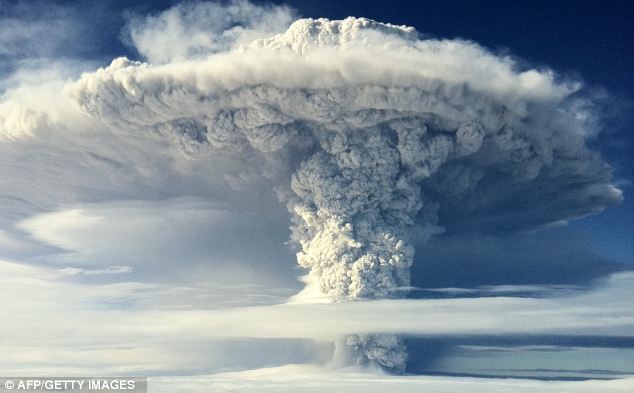
An eruption would be an extinction-level event. It would blast over 240 cubic miles of molten rock, ash, and sulfur dioxide into the sky. The initial explosion would obliterate everything for hundreds of miles. But again, the real devastation would be global. That cloud of volcanic ash would do the same thing as the comet dust. It would block the sun.
Dr. Rothery warned that photosynthesis could completely break down. We have a historical precedent. In 1816, the eruption of Mount Tambora in Indonesia was so massive it caused “the year without a summer.” Snow fell in June in New England. Crops failed across Europe. It was a global catastrophe from a single, regular-sized volcano. A supervolcano would be a thousand times worse. It would be a permanent winter, a choking grey sky, and a slow, cold death for billions.
The Ghost in the Machine: Catastrophic Climate Shift
Then there was the slow burn. The doomsday you wouldn’t even see coming until it was too late.
Bryan Lovell, a former president of the Geological Society, proposed a scenario involving a vast, sudden release of methane gas from the ocean floor. See, trapped in the cold, high-pressure depths of the ocean are massive deposits of frozen methane, a substance called methane hydrate. It’s a greenhouse gas over 20 times more potent than carbon dioxide.
Lovell’s doomsday involved a massive undersea landslide. This could destabilize these frozen deposits, causing a gigantic “burp” of methane to bubble up into the atmosphere. A sudden, colossal release would trigger a runaway greenhouse effect far beyond anything man-made climate change could produce. Global temperatures would skyrocket. Weather systems would become hyper-violent. Sea levels would rise catastrophically. It would be a fever the planet couldn’t break, leading to total climate collapse “not too many Fridays from now.”
The Glitch in the Matrix: Did We All Shift Timelines?
So, the fireballs didn’t rain down. The ground didn’t split open. We woke up on December 22nd, 2012, and the world was… the same.
Or was it?
This is where the story takes a sharp turn away from science and into the strange world of modern conspiracy. A powerful new theory has emerged online, one that suggests the apocalypse *did* happen. Just not in the way anyone expected.
The theory goes like this: On or around December 21st, 2012, a catastrophic event was indeed on a collision course with our reality. But at the last second, *something* happened. Some say humanity’s collective consciousness “chose” a different path. Others point to a more technological culprit: CERN and the Large Hadron Collider.
Think about it. In 2012, CERN was running at full power, smashing particles together in an attempt to find the Higgs boson—the so-called “God particle.” Conspiracy forums lit up with theories that they were doing more than that. That they were punching holes in reality. Messing with dimensions. Playing God in a way they didn’t understand.
The “Timeline Shift” theory posits that the original world, our world, *was* destroyed. But we, our consciousness, were shunted into a nearly identical parallel reality to save us. We slid into the timeline next door.
Sound crazy? Maybe. But ask yourself this: doesn’t the world feel… *off* since 2012? A little stranger? A little more chaotic and unpredictable? Politics became more polarized than ever before. The fabric of reality itself seems to have gotten a little flimsy.
This is where believers point to the “Mandela Effect.” It’s the phenomenon where large groups of people have a shared, specific memory of something that never happened in this reality.
- Everyone remembers the children’s book series as the “Berenst*e*in Bears,” but in this reality, it’s always been “Berenst*a*in.”
- Many people vividly recall a 90s movie called “Shazaam” starring the comedian Sinbad as a genie. The movie never existed.
- Darth Vader never said, “Luke, I am your father.” He said, “No, I am your father.”
Are these just simple misrememberings? Or are they “glitches”? Faint, residual memories from the timeline we left behind? Proponents of the 2012 shift theory believe these are the psychic scars of a reality-wide jump. That we are all living in a world that isn’t quite our own, and these little inconsistencies are the proof.
So, We Survived. Now What?
Whether you believe in timeline shifts or simply see 2012 as a case of mass delusion, the phenomenon left a permanent mark on our culture. It was a global dress rehearsal for the end of the world. It showed our collective fascination with our own demise, a strange, primal need to stare into the abyss.
Perhaps the Mayan “prophecy” wasn’t wrong, but merely mistranslated. It wasn’t the end of the world, but the end of the world *as we knew it*. A turning point. A marker before things got… weird.
Looking at the world today, with its accelerating pace of change, its political turmoil, and the very real threats of climate change and technological disruption, you have to wonder. Maybe the apocalypse isn’t a single, explosive event. Maybe it’s a slow-motion process. Maybe the 2012 phenomenon was just a warning shot.
The Mayan calendar has reset and started a new 5,125-year cycle. But our own clock is still ticking. The threats of supervolcanoes, asteroids, and climate collapse haven’t gone away. And if the fringe theories are right, who knows what other realities are bumping up against our own?
The question is no longer *if* the world will end. The question is, what are we going to do before the next great cycle begins?









