Home Films & Documentaries Ancient Mysteries: The Lost Ark

Ancient Mysteries: The Lost Ark

0
62

The Lost Ark of the Covenant: A Divine Weapon, an Alien Artifact, or History’s Greatest Hoax?

Forget what you think you know. Forget the dusty museum pieces and the Sunday school stories. We’re talking about an object so powerful it could topple cities. So sacred it could strike a man dead for a single unauthorized touch. So mysterious that it vanished from the face of the Earth over two and a half millennia ago, leaving behind a power vacuum that haunts us to this day.

The Ark of the Covenant.

It wasn’t just a box. It was a weapon. A communication device. A direct line to a being of immense, terrifying power. Some call that being God. Others… others whisper of a different origin entirely. An origin not from the heavens, but from the stars.

For centuries, kings, crusaders, archaeologists, and madmen have hunted for it. They’ve dug in the deserts of Egypt, scoured the tunnels beneath Jerusalem, and followed whispers to the highlands of Ethiopia. They’re all chasing the same ghost. A golden box that holds the key to understanding humanity’s past, and maybe, its future.

So, buckle up. We’re going on a deep dive into the heart of one of history’s most explosive mysteries. The rules of accepted history don’t apply here. We’re following the evidence, the legends, and the whispers in the dark, wherever they may lead.

The Blueprint from Beyond: What Exactly Was the Ark?

To understand what was lost, we have to know what it was. And the instructions were… specific. Frighteningly so. This wasn’t something cobbled together in a desert tent. According to the Book of Exodus, this was a device built from a divine schematic, handed down to Moses on the summit of a thunderous Mount Sinai.

Think about the sheer strangeness of it. The Israelites are wandering the desert, and their leader receives a detailed engineering plan for an object of incredible complexity.

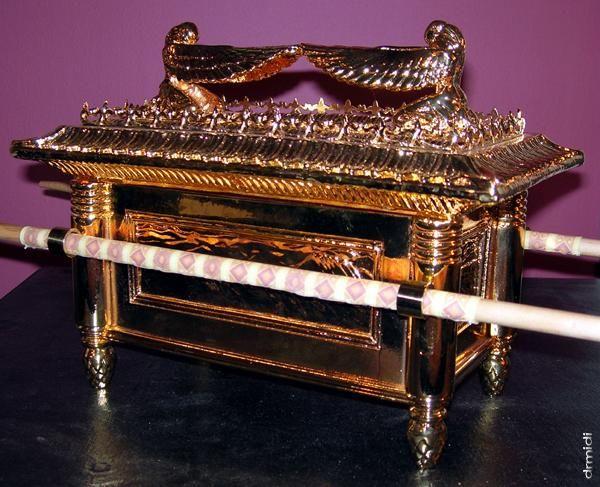
The core was a chest, about four feet long, two feet wide, and two feet high. The wood had to be acacia, a dense, durable wood common to the desert. But that was just the skeleton. This wooden box was to be completely, seamlessly overlaid with the purest gold. Inside and out. A golden crown, or molding, was to encircle the top.

But the real action was on the lid. Known as the “Mercy Seat,” it was to be fashioned from a single, solid piece of pure gold. And from this seat, two magnificent figures were to be hammered out of the same piece of gold—two Cherubim, angelic beings with massive wings, facing each other, their wings arching over the space between them. It was in that space, between the wings of the Cherubim, that God’s presence was said to manifest. A focused point of contact between the mortal and the divine.

What Was Inside This Thing?

The contents were just as significant as the container. The Ark was built to house three specific sacred items:

  • The Tablets of the Law: Two stone tablets, inscribed with the Ten Commandments by the very “finger of God.” The foundation of their entire legal and moral code.
  • A Pot of Manna: A golden jar containing the mysterious, miraculous food that sustained the Israelites in the desert. A reminder of divine providence.
  • Aaron’s Rod: The staff of Moses’s brother, which had miraculously budded with almond blossoms to prove his authority as High Priest. A symbol of power and legitimacy.

On the surface, it’s a collection of holy relics. But look closer. A moral code from a higher power. A strange food source. A symbol of absolute authority. This wasn’t just a memory box; it was the embodiment of a new civilization and its covenant with its powerful, unseen patron.

Ancient Mysteries: The Lost Ark

A Weapon of God, Or Something Else?

This is where the story takes a sharp, terrifying turn. The Ark was no passive religious ornament. It was active. It was dangerous. The ancient texts are littered with more than 200 references to its awesome, and often lethal, power. This was a device that you did not mess with.

The Fall of Jericho

The first major demonstration of its power was legendary. The Israelites, led by Joshua, arrive at the impenetrable city of Jericho. Their orders? Not to attack. Instead, for six days, the army was to circle the city in total silence, following the priests who carried the Ark of the Covenant. On the seventh day, they were to circle seven times, the priests would blow their trumpets, and the army would shout. The result? The massive stone walls of Jericho crumbled to dust. A sonic weapon? A focused vibration? Or a miracle? The text is clear: the power came from the Ark.

The Curse of the Philistines

Later, during a disastrous battle, the Ark was captured by the Philistines. They saw it as the ultimate war trophy, the captured god of their enemies. They were so wrong. They paraded it into their city and placed it in the temple of their own god, Dagon. The next morning, the statue of Dagon was found toppled over, prostrate before the Ark. They set it back up. The next day, it was toppled again, this time with its head and hands broken off.

Then came the plague. The Philistine city was struck with a horrifying outbreak of tumors. Panic set in. They moved the Ark to another city, Gath. The same plague of tumors erupted there. Terrified, they moved it again, to Ekron. The people of Ekron screamed, “They have brought the ark of the God of Israel to us, to kill us and our people!” After seven months of death and disease, the terrified Philistines put the Ark on a cart pulled by two cows and sent it away, desperate to be rid of it. Was this divine retribution, or was the Ark emitting some form of radiation, causing sickness and death to those who got too close?

Do Not Touch

Even for the Israelites, the Ark was terrifyingly dangerous. The story of Uzzah is a chilling example. As King David was bringing the Ark to Jerusalem, the oxen pulling the cart stumbled. Uzzah, a man walking beside it, reached out his hand instinctively to steady the Ark. The moment his fingers touched the golden surface, he was struck dead. Instantly. It wasn’t a punishment for bad intentions—he was trying to help! It was more like touching a live, high-voltage power line. An automatic, lethal reaction. What kind of holy object does that?

The Ancient Astronaut Hypothesis: A Divine Machine?

This is the question that opens the door to a radical, mind-bending theory. What if the “God” who gave the instructions on Mount Sinai wasn’t a supernatural being, but a highly advanced technological one? What if the Ark of the Covenant wasn’t a magical box, but a piece of alien technology?

It sounds like science fiction. But look at the evidence through a technological lens. Suddenly, things start to make a frightening amount of sense.

The Great Capacitor Theory

Electrical engineers have pointed out for decades that the Ark’s construction is eerily similar to a modern electrical capacitor. It has two conductive plates (the gold on the inside and the gold on the outside) separated by an insulator (the acacia wood). This is the basic design for a device that can store a massive electrical charge.

Could the Ark have been drawing static electricity from the dry desert air, or even from the Earth itself, and storing it? This would explain the brilliant flashes of light described, the “voice of God” (which could be electrical crackling or a speaker system), and its lethal touch. Uzzah wasn’t struck down by an angry deity; he grounded a massive capacitor with his body and was instantly electrocuted. The priests, who were given very specific instructions on how to carry and handle it (using long, gold-covered wooden poles, keeping them insulated), knew how to manage the machine. The Philistines didn’t, and they suffered the effects of what could be interpreted as radiation sickness.

A Direct Line to the “Gods”?

What about the Mercy Seat, with its two Cherubim? The text says the voice of God would speak from between them. In this theory, the Cherubim weren’t angels; they were antennae. Or perhaps electrodes, creating a spark gap for a transmitter/receiver. Was the Ark a communication device—a “celestial radio”—allowing Moses and the High Priests to speak directly with an off-planet intelligence orbiting the Earth? It’s a wild idea, but it fits the description of a direct, audible voice coming from a specific point on a complex device far better than a mystical whisper from the air.

The Vanishing Act: Top Theories on Where the Ark is Hidden

For nearly 400 years, the Ark sat in the heart of Judaism, the Holy of Holies in King Solomon’s magnificent Temple in Jerusalem. It was the center of the world. And then, in 587 BC, the Babylonian king Nebuchadnezzar II sacked Jerusalem, burned the Temple to the ground, and dragged the Israelites into captivity.

The historical record lists in excruciating detail all the golden shields, the bronze pillars, the silver trumpets that the Babylonians plundered. Every last cup and basin is accounted for. But there is one glaring omission. Not a single mention of the Ark of the Covenant. The most important object in the entire temple. It was gone. It had vanished, leaving behind a silence that has screamed for over 2,500 years.

So where did it go?

Theory 1: Melted Down in Babylon (The “Official” Story)

This is the simple, boring, academic answer. The Babylonians took it, didn’t understand its religious significance, and simply melted it down for its hundreds of pounds of gold. End of story. But for treasure hunters and believers, this explanation is unthinkable. Why would the meticulous Babylonian scribes, who listed every other item, fail to mention their greatest prize? It doesn’t add up.

Theory 2: Hidden Beneath the Temple Mount

This is a powerful and persistent theory. Did the priests, seeing the Babylonian invasion as inevitable, have a contingency plan? The Temple of Solomon was said to be built over a labyrinth of tunnels and chambers. The theory goes that the priests secreted the Ark away into a hidden chamber deep beneath the Temple Mount, where it remains to this day. This idea fueled the Knights Templar, who spent nine years excavating under the ruins of the Temple during the Crusades. Did they find it? Some say they found something—holy relics, secret knowledge—that made them the most powerful and feared group in Europe. Today, the Temple Mount is one of the most politically and religiously sensitive spots on Earth, making any real archaeological excavation impossible. What secrets might be sleeping just a few feet below?

Theory 3: The Ethiopian Enigma

This is perhaps the most compelling and romantic of all the theories. It’s a national epic in Ethiopia, believed as historical fact by millions. The story claims that the Queen of Sheba, during her famous visit to King Solomon, had a son with him named Menelik. Years later, a grown Menelik traveled to Jerusalem to meet his father. When he returned home, he—either by theft or with Solomon’s secret blessing—brought the true Ark of the Covenant with him for safekeeping.

According to Ethiopian tradition, it has been protected there ever since, eventually ending up in a small, unassuming chapel in the city of Aksum: the Church of Our Lady Mary of Zion. It is guarded by a single virgin monk, the “Guardian of the Ark,” who is forbidden from ever leaving the chapel grounds and is the only person on Earth allowed to see it. When he dies, another is chosen to take his place for life. Is a device of unimaginable power really sitting in a small stone building in Ethiopia? The guardians swear it is, but no one is allowed to verify it. The secrecy itself is tantalizing.

Theory 4: Carried Away to Egypt

This theory, which famously inspired *Raiders of the Lost Ark*, has some historical legs. Centuries before the Babylonians, the Egyptian Pharaoh Shishak also invaded Jerusalem and plundered the Temple. The Bible confirms this raid. Could Shishak have been the one who took the Ark? If so, it might have been taken to the Egyptian city of Tanis and then lost to the shifting sands of time when that city was abandoned. While most scholars believe Shishak’s raid happened when the Ark was still accounted for, the timeline is just murky enough to keep the theory alive for hopeful adventurers.

The Search Continues: Modern Hunters and Digital Whispers

The hunt for the Ark has never truly stopped. In the 20th and 21st centuries, it has taken on new life. Controversial figures like the late Ron Wyatt made spectacular claims of having found the Ark in a hidden chamber beneath the Calvary Escarpment outside Jerusalem, though he never produced concrete proof.

Today, the search has moved into the digital world. Internet forums and conspiracy blogs light up with new interpretations of ancient texts, satellite photo analysis of potential hiding spots, and fierce debates over the “alien capacitor” theory. The mystery of the Ark has become an open-source obsession, a global crowdsourced investigation that continues to churn up new ideas and possibilities.

What if the Ark is found? What would it mean for the world? If it’s just a golden box, it would be the greatest archaeological find in human history. But if it’s something more… if its power is real… would its discovery bring redemption, or devastation? Is it a key to our divine past, or a terrifying piece of technology we are not ready to handle?

Perhaps the Ark of the Covenant was never meant to be found. Perhaps its true power isn’t in its physical form, but in the enduring, unanswerable question it represents. A question that pushes us to look deeper into our own history, to challenge our own beliefs, and to wonder what other secrets are still buried, waiting for the dust of ages to be blown away.

The search continues.

Originally posted 2016-04-09 20:27:54. Republished by Blog Post Promoter