Have you ever stood in a place so quiet that the silence actually starts to hurt your ears? A place where the dust motes dancing in a sunbeam look like ghosts of a time we forgot? There is something deeply unsettling—and weirdly magnetic—about abandoned places. They are the rot in our civilization’s teeth. They remind us that nothing lasts. Not concrete. Not steel. Not empires.
We build these massive structures, puffing our chests out, thinking we’ve conquered nature. But the moment we walk away, nature creeps back in. Vines snap bricks. Rust eats iron. And silence? Silence swallows everything.
Why are we obsessed with ruins? Is it morbid curiosity? Or is it something darker? Maybe we’re looking for clues. Maybe we suspect that the official stories about these places are just thin layers of paint over a much stranger truth. Today, we are going off the map. We are ripping down the “Do Not Enter” tape. We are looking at the places the world tried to throw away.

The Vortex of Mirny: A Hole to Hell?
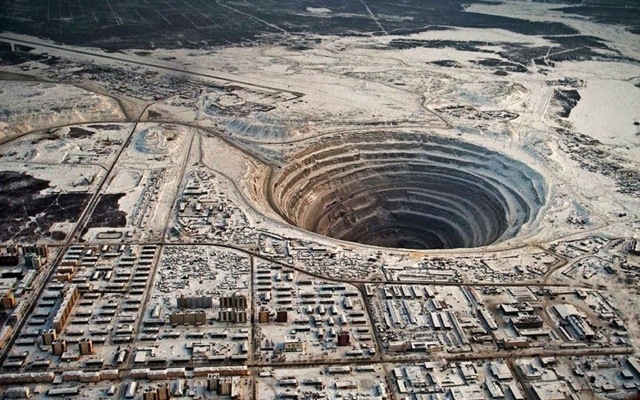
Look at that image. Really look at it. Does that look natural to you? Of course not. That is a scar on the face of the planet. This is the Mirny Diamond Mine in Eastern Siberia, Russia. It is the second-largest man-made hole in the world, a beast so wide and so deep that it creates its own weather.
Let’s go back to the Cold War. Stalin wanted diamonds. He needed them for industrial tooling, for the war machine, to keep the Soviet Union hard and unbreakable. So, he ordered the earth ripped open. But this wasn’t just digging a ditch. The ground here is permafrost—frozen solid for seven months of the year. In the winter, tires shattered like glass. Oil froze. Steel snapped. So they used jet engines to blast the ground and dynamite to blow it apart.
The No-Fly Zone Conspiracy
Here is where it gets creepy. You cannot fly a helicopter over the Mirny mine. Why? The official explanation is “air currents.” They say the hole is so deep (1,722 feet) that it creates a massive downward suction. A vortex. Pilots who flew too close reported their instruments going haywire and their aircraft being physically dragged down into the darkness.
Think about that. A hole that eats aircraft. But is it just wind? Some conspiracy theorists buzz about magnetic anomalies deep within the crust here. Did they dig too deep? Did they find something other than shiny rocks down there? Operations ceased abruptly in 2004 (for the open pit). Why stop? They say it got “too difficult.” Or maybe, just maybe, the earth told them to stop.
Today, it sits there. A spiraling abyss right next to a town of people who live in its shadow. Imagine waking up every day and looking into the belly button of the underworld.

The Hotel of Doom: Pyongyang’s Concrete Ghost
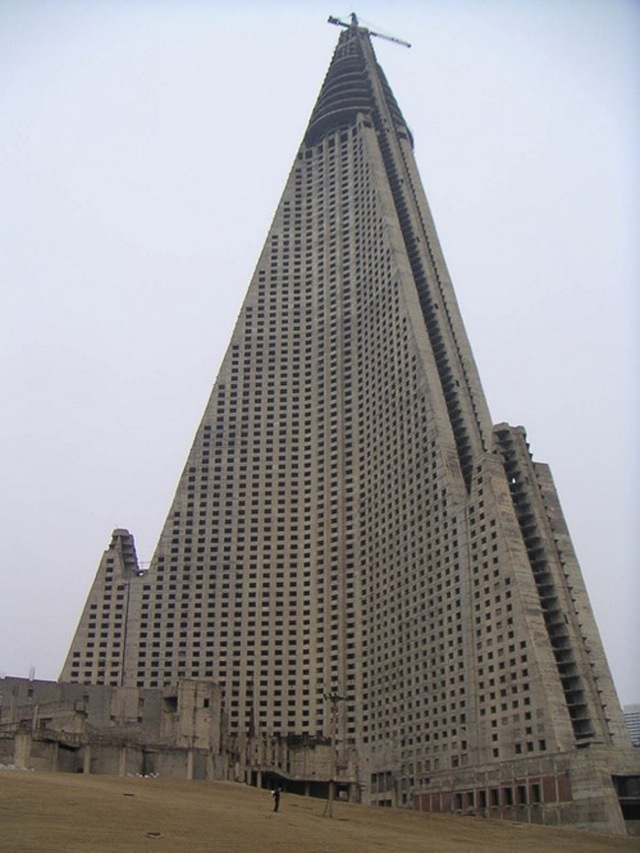
This structure defies logic. It looks like a villain’s lair from a sci-fi movie, doesn’t it? This is the Ryugyong Hotel in North Korea. It dominates the Pyongyang skyline like a threatening spear tip. Locals used to pretend it wasn’t there. For years, if you asked a tour guide about the massive pyramid blocking the sun, they would change the subject. It was a shame they couldn’t hide.
Construction began in 1987. It was supposed to be a symbol of North Korean power, a middle finger to the West and the South. But reality hits hard. The Soviet Union collapsed, the money dried up, and a devastating famine struck the Hermit Kingdom. People were starving, eating tree bark to survive, while this 105-story concrete skeleton stood unfinished.
What Are They Hiding Inside?
For 16 years, it was a windowless, hollow shell. A rust-bucket crane sat at the very top, frozen in time, like a tombstone for the economy. Then, in 2008, something strange happened. Suddenly, Egyptian contractors moved in. They slapped $150 million worth of glass onto the exterior.
Now, it glistens. At night, it puts on massive LED light shows, broadcasting propaganda slogans into the dark. But here is the catch: it’s all fake. It is a mask.
Foreign guests and rare journalists who have managed to peek behind the curtain report that the interior is largely empty. Bare concrete. No wires. No pipes. Just cold, gray nothingness. It is the world’s largest empty building. Is it really a hotel? Or is it a massive surveillance tower? Or maybe just a monument to pure, unadulterated ego? It stands there, watching, silent, and totally hollow.

The Exploding Fortress: Bannerman Castle
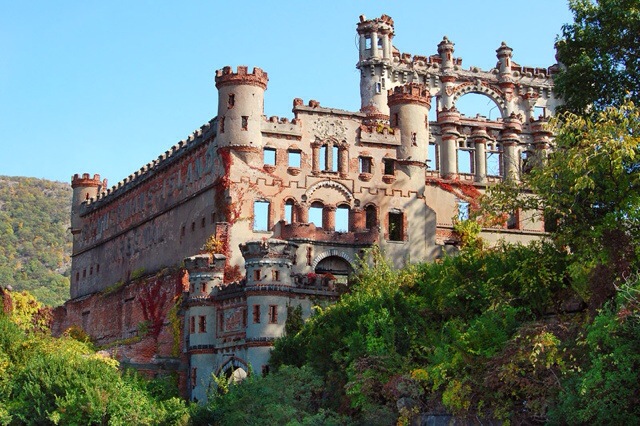
If you take a boat up the Hudson River, just 50 miles north of New York City, you see something that shouldn’t exist in America. A Scottish castle. Rotting on a tiny island. This is Pollepel Island, home to Bannerman Castle.
This isn’t a story of royalty. It’s a story of war and gunpowder. Francis Bannerman VI was a scrap metal guy, but not for soda cans. He bought military surplus. Cannons. Uniforms. Bayonets. After the Spanish-American War, he bought so much captured Spanish ammunition (we’re talking 30 million cartridges) that the laws in New York City wouldn’t let him store it. So, he built a fortress on an island.
The Curse of the Goblins
Before Bannerman laid a single brick, the local indigenous tribes avoided the island. They claimed it was haunted by goblins and spirits. They wouldn’t step foot on it at night. Francis Bannerman didn’t care about ghosts. He cared about inventory.
Maybe he should have listened. In 1920, 200 pounds of powder and shells just… exploded. Boom. A massive chunk of the complex was vaporized. The blast was heard miles away. Was it an accident? A chemical reaction? Or did the island finally reject the intruder?
Today, the castle is a jagged silhouette against the sky. Walls are crumbling. Use your imagination. Think about the energy left behind in a place designed to store the tools of death. Thousands of guns, millions of bullets, all sitting there, rusting into the river. The energy there is heavy. You can feel it from the shore.
Photo Credits: Luuk de Kok
Château Miranda: The Crying Orphanage
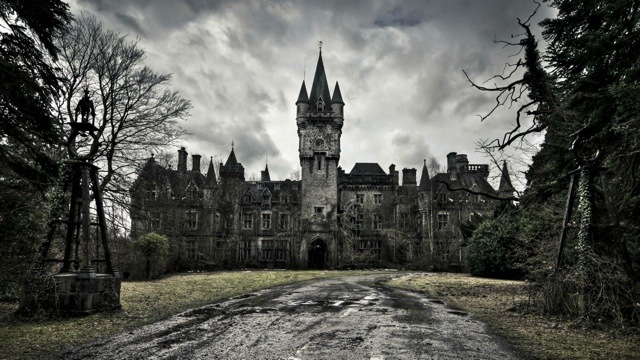
Look at those spires. This is—or was—Château Miranda in Belgium, also known as the “Noisy Castle.” Why noisy? Because of the wind howling through the broken windows? Or because of the screams?
The history here is a rollercoaster of tragedy. It was built by French aristocrats, the Liedekerke-Beaufort family, who were running for their lives from the guillotine during the French Revolution. They wanted a hideout. A fortress.
From Aristocracy to Misery
Fast forward to World War II. The Nazis took it over (because of course they did). Later, it became an orphanage run by the National Railway Company of Belgium. This is where the stories get dark. For decades, it housed sick children. The walls absorbed their coughs, their cries, their loneliness.
It was abandoned in 1980. But here is the weird part: The family owned it, but they refused to fix it. They refused to sell it. They refused to let the government save it. They just let it rot. Why? Did they hate the place? Was there a family secret buried in the foundation?
Ghost hunters flocked here for years. They reported sudden temperature drops. Voices. The feeling of being watched from the upper balconies. Sadly, demolition began recently, erasing the physical structure. But does a haunting end just because you knock down the walls? Or does the energy just get released into the soil?

Hashima Island: The Battleship in the Mist
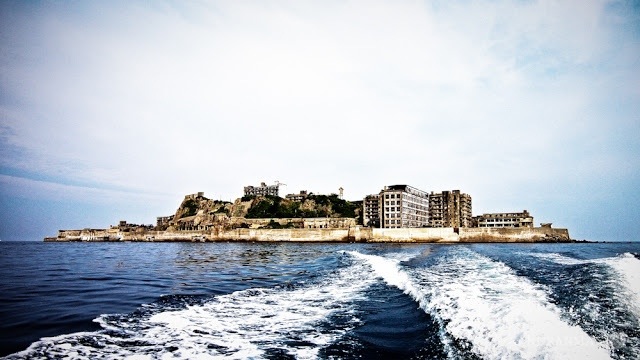
From a distance, this doesn’t look like an island. It looks like a battleship floating on the waves. That’s why the Japanese call it “Gunkanjima” (Battleship Island). But this isn’t a military base. It was a city.
Hashima Island sits off the coast of Nagasaki. It sits on top of a massive undersea coal deposit. Mitsubishi bought it and turned it into a mining facility. But they needed workers. Lots of them. They crammed apartment blocks onto this tiny rock. At its peak in 1959, this was the most densely populated place on Earth. More crowded than Tokyo. More crowded than Hong Kong.
A Concrete Prison?
Imagine living here. A tiny slab of concrete in the middle of a rough ocean. No green space. No silence. Just the sound of crushing coal and crashing waves. There are dark rumors here, too. Forced labor during the war. Prisoners. People who went into the mines and never came back up.
In the 1970s, petrol killed coal. Mitsubishi closed the mine. Everyone left. And I mean *everyone*. They left coffee cups on tables. They left bicycles leaning against walls. They left dolls in cribs.
Now, it is a grey ghost. The salt air is eating the concrete. Buildings are collapsing. It was the villain’s lair in the James Bond movie Skyfall, but the real history is scarier than fiction. Walking there feels like walking through a graveyard of the industrial age. It’s a warning: we build, we crowd, and then we vanish.

The Ghost Ship: SS America
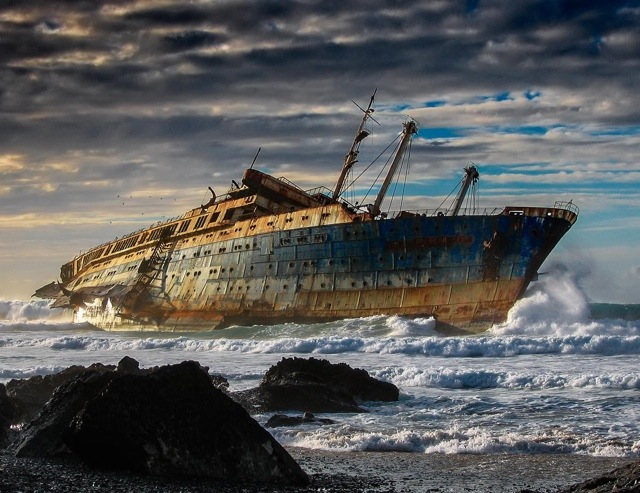
Ships are supposed to die in scrap yards, broken down piece by piece. They aren’t supposed to rot on a beach while tourists watch. The SS America was once the queen of the seas. A luxury ocean liner. Champagne. Ballrooms. Celebrities. It was built in 1940, a beautiful machine.
Its end was humiliating. In 1994, it was being towed to Thailand to be turned into a floating hotel (a bad idea from the start). A storm hit. The tow lines snapped. The ocean, furious and wild, dragged the ship toward the Canary Islands and slammed it onto the rocks of Fuerteventura.
Broken by the Waves
The ship didn’t sink immediately. It sat there, upright. But the ocean is relentless. Within 48 hours, the hull cracked. The ship broke in two. For years, the stern and the bow stood like tombstones in the surf.
Locals say the ship never wanted to leave. Looters stripped it. Waves pounded it. Today, almost nothing is left above the water line. But for a long time, it was the world’s most famous ghost ship. People claimed they could hear music coming from the wreck on windy nights. Echoes of the parties from the 1950s? Or just the metal groaning as it died? The sea takes back what is hers, always.

Sweetness and Rot: The Domino Sugar Factory
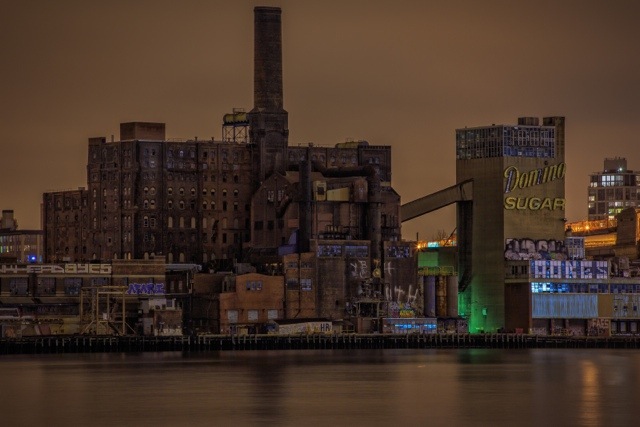
Brooklyn, New York. Hipsters. Coffee shops. Expensive condos. But looming over the Williamsburg waterfront for decades was this behemoth. The Domino Sugar Factory. At one point, this factory produced 60% of the sugar consumed in the United States. Think about that. Almost every cake, every coffee, every candy bar in America had a piece of this building in it.
It operated for 148 years. The air around it smelled like burning caramel. But inside? It was a dark, sticky, dangerous labyrinth. Accidents. Heat. Noise. When it closed in 2004, it became a massive, rotting temple to American manufacturing.
The sticky residue of history
Urban explorers who broke in described a surreal scene. Vats of molasses that had turned into black tar. Walls dripping with decades of caramelized sugar sludge. It was like the inside of a beast. The famous “Domino Sugar” sign acted as a beacon over the East River, yellow and buzzing.
While much of it has now been converted into luxury office space and parks (because money never sleeps), the core of the refinery held a spooky energy. It was a place where generations of immigrants broke their backs to make life sweet for everyone else. The silence in those massive vat rooms was heavy with their sweat.

Pripyat: The Atomic Pompeii
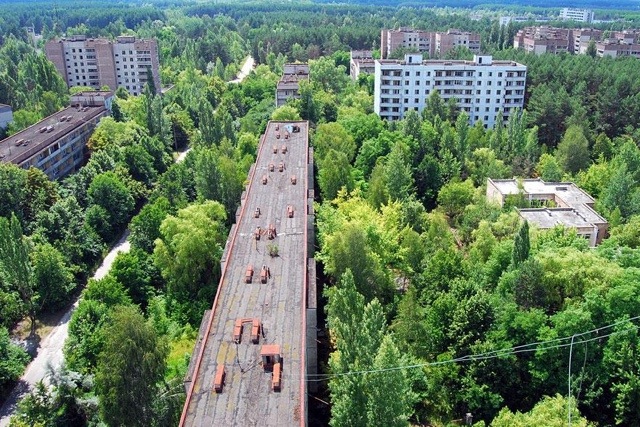
We saved the biggest one for last. This is the holy grail of abandoned places. Pripyat, Ukraine. The city that died in a single night.
April 26, 1986. Reactor Number 4 at the Chernobyl Nuclear Power Plant explodes. The sky turns strange colors. The air tastes like metal. But the people in Pripyat—50,000 of them—weren’t told immediately. They went about their day. Kids played in the sandboxes. Couples got married.
Then came the evacuation. “Temporary,” they said. “Bring your documents. Leave your pets.” They never came back.
The Ferris Wheel That Never Turned
The most haunting image is the Ferris wheel. It was supposed to open for the May Day celebrations a few days later. It never officially opened. It stands there now, yellow and rusting, creaking in the radioactive wind. A symbol of lost joy.
Pripyat is a time capsule of the Soviet Union. You walk into a school, and there are textbooks on the desks open to a page from 1986. Gas masks litter the floor of the cafeteria (looters pulled the silver filters out, leaving the rubber faces staring up at you). Bumper cars sit frozen.
Nature has reclaimed the city entirely. Trees grow through living room floors. Wolves and bears roam the streets. It is an apocalyptic movie come to life. But the scary part? The invisible enemy is still there. Radiation. It’s in the moss. It’s in the wood. It’s in the bones of the city.
Scientists say the immediate area won’t be safe for human habitation for 20,000 years. Think about that timeframe. Pyramids turn to dust in that time. Languages die. But the poison we created? That stays.
Why Does This Matter?
We look at these pictures and we shiver. But we can’t look away. These places—Mirny, Ryugyong, Pripyat—they are mirrors. They show us what happens when ambition goes wrong. They show us that the Earth is patient. It will wait for us to fail. And when we do, the vines and the rust will be ready to take over.
Which one of these places would you dare to visit? Or maybe the better question is: would you ever make it back out?