The Dead World Next Door: A Warning from History?
Look at that image. Really look at it. It’s not just a collection of pixels sent back from a robot millions of miles away. It is a portrait of a corpse. Mars is the fourth rock from the Sun, sitting right next door to us, tantalizingly close. It floats there in the darkness, a rusty, blood-red warning sign. Scientists call it the Red Planet. But why is it red? Rust. Iron oxide. For a planet to rust that thoroughly, you need two things: iron and massive amounts of oxygen. Oxygen usually comes from life.
So, we have to ask the big question right out of the gate. Did Mars die of natural causes? or was it murdered?
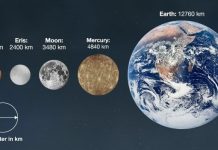
This world is about 142 million miles from the Sun, a little colder, a little harder, but eerily familiar. It’s about half the size of Earth, or one-sixth if you’re looking at volume. But don’t let the size fool you. This place holds secrets that could shatter our understanding of human history. It has two jagged, lumpy moons named Phobos and Deimos. In Greek mythology, those names mean “Panic” and “Fear.” fitting, isn’t it? One of them, Phobos, orbits so fast and so low that some astronomers in the 1960s seriously calculated it might be hollow. An artificial station? A derelict ship? The mainstream science books say “captured asteroids.” The math says “anomaly.”
The Frozen Wasteland: What is Mars Really Like?
If you stepped out onto the surface of Mars without a suit, your blood would boil instantly. But before you died, you’d feel the chill. It is bone-cracking cold. We are talking about an average temperature of minus 80 degrees Fahrenheit. That is way below freezing. It makes Antarctica look like a tropical paradise. On a summer day at the equator, it might hit 70 degrees, but at night? It plunges to temperatures that shatter steel.
The terrain is a chaotic mix of violence and beauty. It’s rocky. It’s scarred. It’s covered in canyons that make the Grand Canyon look like a cracks in a sidewalk. Valles Marineris runs for 2,500 miles—a gash so deep it would stretch from New York to Los Angeles. How does a planet get a scar that big? Tectonic plates? Or a glancing blow from a cosmic weapon?
And then there are the volcanoes. Olympus Mons. It is the largest volcano in the entire solar system. It stands three times taller than Mount Everest. Imagine a mountain so big that if you stood at the base, you couldn’t even see the peak because it would be over the horizon. It’s quiet now. But millions of years ago, it was spewing lava, reshaping a world that might have been blue and green.
Red dust covers everything. It’s fine, like talcum powder, but sharp as glass. It coats the rocks, the ice caps, and the rovers we send there. And it moves. Mars has an atmosphere—thin, mostly carbon dioxide—but enough to support weather. It has clouds. It has wind. And sometimes, that wind goes crazy. We see dust devils, twisting tornadoes of red grit dancing across the plains. And every few years, a global dust storm kicks up. It swallows the entire planet. One day Mars is visible; the next, it’s just a fuzzy orange ball. The storms can last for months. What are they hiding?
Gravity and the “Super-Soldier” Theory
Here is where the physics gets interesting. Mars has about one-third the gravity of Earth. If you weigh 100 pounds here, you’d only weigh about 37 pounds there. You could jump over a house. You could lift a car.
Think about this for a second. If humans lived there for generations, what would happen to their bodies? They would get taller. Leaner. Their bones would change. Some alternative historians suggest that we didn’t evolve on Earth at all. They say we have bad backs and knee problems because we evolved on a low-gravity world—like Mars—and then came here, to a high-gravity prison planet. It sounds crazy. But why are humans the only species on Earth that suffers from chronic back pain just by standing up? It’s a puzzle piece that doesn’t quite fit the standard evolutionary board.
NASA’s Obsession: A History of Hunting Ghosts
NASA has been poking around the Red Planet for decades. They act like they are looking for rocks. But are they looking for artifacts? In 1965, Mariner 4 flew by. It sent back grainy, black-and-white photos of a cratered dead world. It was a disappointment to the sci-fi dreamers who wanted to see cities. But then came 1976.
Viking 1 and Viking 2 were the first American machines to touch the soil. They landed. They took pictures. And they performed a specific experiment to look for life. It was called the Labeled Release experiment, designed by Dr. Gilbert Levin. Guess what? It tested positive. The soil reacted exactly as if something was eating the nutrients and exhaling gas. Life! We found it in 1976!
But NASA said “Wait.” They said, “No organic molecules were found by the other instrument, so the first result must be a false positive.” They buried the lead. For forty years, Gil Levin shouted from the rooftops that we found life. NASA ignored him. Why? If we admitted there was life—even microbial life—on the neighbor planet, every religious and scientific textbook on Earth would have to be rewritten overnight.
Since then, we’ve sent an armada. Orbiters, landers, rovers. They are mapping every inch. They are looking for “signs of ancient water.” But we know the water was there. The geological evidence is overwhelming. Riverbeds. Deltas. Ocean floors. Mars wasn’t just wet; it was drowning. So where did the water go? And more importantly, where did the people—or the microbes—go?
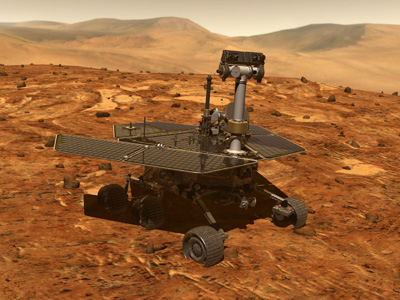
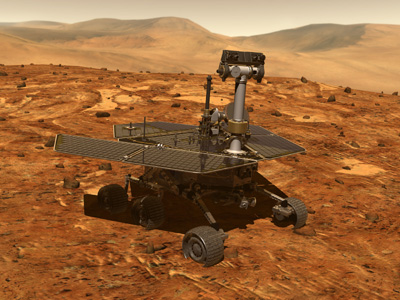
NASA’s Spirit and Opportunity rovers bounced onto the surface in January 2004. They were supposed to last 90 days. Opportunity lasted nearly 15 years. It kept going, and going, driving past strange spherical rocks they called “blueberries.” Hematite spheres. Evidence of standing water. Living things need water. If water was there, life was there. Period.
The Eyes in the Sky: What are They Hiding?
Today, the traffic around Mars is getting heavy. Three spacecraft are circling above, orbiting the red giant. They aren’t just taking vacation photos. They are using high-tech sensors, radar, and spectrometers. They measure the volcanoes, the canyons, and the temperature. They are scanning for minerals. Why? Because space mining is the next Gold Rush. Trillions of dollars in rare earth metals are sitting right there on the surface.
But they are also looking for something else. Sub-surface anomalies. Large, hollow spaces underground. The internet is buzzing with theories about “lava tubes”—giant caverns big enough to fit entire cities inside. If you wanted to survive a planetary catastrophe, where would you go? Underground. The radiation on the surface is deadly. But 50 feet down? You’re safe.
Down on the ground, the robot army is growing. Curiosity and Perseverance are there now (along with the Chinese rover Zhurong). They travel around, drilling holes, zapping rocks with lasers. NASA tells us they are learning about the soil. But internet sleuths comb through every photo released. They’ve found things that shouldn’t be there. Objects that look like statues. Machine parts. A “doorway” cut into the rock. NASA says, “It’s just a rock fracture.” “It’s a trick of the light.”
Is it? Or are we looking at the ruins of a civilization that wiped itself out?
The Nuclear Theory: Did Mars Have a War?
This is where it gets terrifying. Dr. John Brandenburg, a plasma physicist, came out with a theory that shook the community. He studied the atmospheric data—specifically the isotopes of Xenon found on Mars. Xenon-129. On Earth, this isotope is only found in significant quantities in one place: sites of nuclear weapon detonations.
Brandenburg claims the concentration of Xenon-129 on Mars is massive. He suggests that Mars didn’t just lose its atmosphere naturally. He believes it was stripped away by two massive thermonuclear airbursts. He even points to the locations: Cydonia and Utopia. A planetary war? An attack from aliens? Or did the Martians blow themselves up, just like we are threatening to do today?
Suddenly, the “Face on Mars” in Cydonia doesn’t look like a trick of the light anymore. It looks like a monument.
The Future: The Great Return
NASA has a plan. They always have a plan. They want to send more robots. They want to bring the rocks back to Earth. This is called “Sample Return.” Imagine bringing a tube of Martian soil into a lab on Earth. What if there is a dormant pathogen in there? A Martian plague? It’s the plot of a dozen horror movies, but it’s real life science.
The MAVEN spacecraft started orbiting in September 2014 to study the atmosphere—or what’s left of it. It confirmed that the solar wind is stripping the air away. But the timeline is the key. When did Mars die? Was it billions of years ago? Or was it more recent?

The Human Factor: Colonization or Escape?
NASA wants to send astronauts. It’s the ultimate goal. Boots on the ground. To get ready, they are studying new kinds of homes. Habitats. 3D-printed igloos made of Martian regolith. Scientists are studying how people could grow plants for food in toxic soil. They are watching astronauts on the International Space Station to see how microgravity ruins the eyes and the muscles.
But look at the private sector. Elon Musk and SpaceX. They aren’t just doing science. They are building an ark. Musk has said repeatedly that we need to be a “multi-planetary species” to survive. Survive what? What do they know that we don’t?
Terraforming is the buzzword. They want to melt the poles. Release the frozen CO2. Thicken the atmosphere. Turn the Red Planet blue again. It sounds like science fiction, but the math checks out. We could make it rain on Mars. We could bring back the rivers. But if we dig too deep, what will we wake up?
Mars is not just a planet. It is a mirror. It shows us what happens when a world dies. And as we stare at those high-definition photos of the empty, wind-swept plains, we can’t shake the feeling that we’ve been there before. Maybe we aren’t going to Mars for the first time. Maybe we are going home.
Originally posted 2016-03-19. Updated for the Truth Seeker Community.
Originally posted 2016-03-19 12:27:58. Republished by Blog Post Promoter
![mars-rover-2[1]](https://coolinterestingnews.com/wp-content/uploads/2012/08/mars-rover-21.webp)