The Day the Ocean Turned Green: A Deep Dive into the Sydney Sphere Mystery
Imagine this for a second. You wake up. The sun is shining. It’s a perfect Australian morning. You grab your coffee and head down to the shoreline for a jog. But something is wrong. The golden sand is gone.
It’s been replaced.
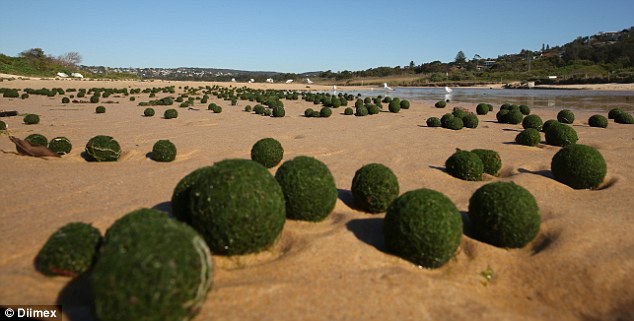
Thousands upon thousands of strange, alien-looking objects have taken over the beach. They are green. They are fuzzy. And they are everywhere.
This isn’t a scene from a 1950s sci-fi B-movie. This actually happened at Dee Why Beach in northern Sydney. And it left locals, scientists, and the internet at large scratching their heads in absolute confusion.
What were they? Where did they come from? And why did they appear so suddenly, like a silent army rising from the deep?
The Invasion Begins
It started quiet. A few anomalies here and there. A couple of weird green rocks that weren’t really rocks. But within seventy-two hours, the situation escalated into a full-blown phenomenon. The beach wasn’t just dotted with them; it was carpeted.
Beachgoers in Australia are used to dangerous things. Sharks? Sure. Box jellyfish? Standard. Blue-ringed octopuses? Just another Tuesday. But this? This was new. And humans fear what they don’t understand.
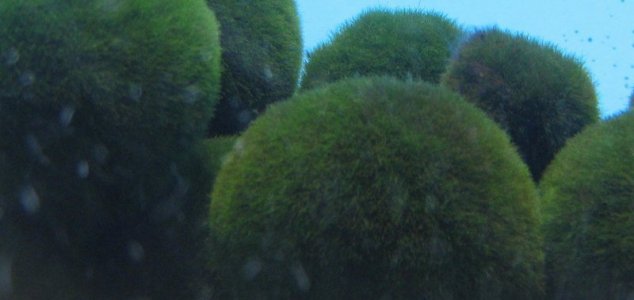
The visual was striking. Spheres. Perfect, fuzzy, vibrant green spheres. Ranging from the size of a golf ball to a softball, they rolled in with the tide, bobbing on the surface before settling on the sand like clutches of biological eggs waiting to hatch.
Local resident Jenny Zhang witnessed the rapid escalation firsthand. Her account suggests an almost exponential growth rate, something that feels more like a viral outbreak than a weather event.
“About three days ago, there were a few egg-shaped balls but then today, they were much bigger and everywhere on the beach,” Zhang told reporters.
Bigger. Everywhere. Just let that sink in.
“I Poked It With My Toes”
The human reaction to the unknown usually falls into two categories: run away screaming, or poke it with a stick. In Australia, the curiosity factor won out. But people were cautious. If movies have taught us anything, it’s that the weird glowing green thing is probably going to bite you, burn you, or infect you.
RaeMaree Hutton, a member of the local beach patrol, summed up the hesitation perfectly.
“I didn’t want to touch one because you never know what can sting you on the beach,” Hutton admitted.
Smart move. But curiosity is a powerful force.
“But I did poke it with my toes and it’s squishy, like a sponge,” she added. “They look like alien eggs or something.”
Alien eggs. That is the description that stuck. That is the phrase that sent the photos viral. Because when you look at them—really look at them—they don’t look like plants. They look structured. They look intentional.
The “Official” Explanation (And Why It’s Boring)
Of course, the moment the internet started whispering about aliens, USOs (Unidentified Submerged Objects), or Godzilla’s caviar, the experts stepped in to calm everyone down.
The consensus from the scientific community came swiftly. They claimed these weren’t pods from a distant galaxy. They weren’t mutant turtle eggs.
They were algae. Specifically, a rare type of filamentous green algae that forms into balls.
According to the marine biologists who descended on the scene, these are likely a form of Aegagropila linnaei, or perhaps a similar species like Chaetomorpha linum. The theory goes like this: the algae grows on the sea floor. Rough conditions, specific currents, or strong waves detach the algae. As it rolls around on the sandy bottom of the ocean, it gets tangled.
Think of it like a snowball rolling down a hill. Or the lint in your dryer. It rolls, it gathers more material, it gets rounder, and it gets tighter.
Eventually, the “marimo” (as the Japanese call them) gets too buoyant or is ripped free by a storm, and it washes up. Case closed?
Maybe.
But here is the thing about the “official” story: it relies on a perfect storm of coincidences. You need the right algae. You need the right rock formations to roll them. You need the right currents to shape them without ripping them apart. And you need all of this to happen simultaneously to create *millions* of them at once.
The “Marimo” Anomaly: Why Sydney is Different
Let’s look at the most famous example of this phenomenon. Lake Akan in Hokkaido, Japan.
In Japan, these moss balls are national treasures. They are protected. They are beloved. They grow slowly in fresh water. They are incredibly rare.
The Sydney event was different. These appeared in saltwater. They appeared in massive quantities overnight. And they looked different—brighter, spongier, more “alien” than their Japanese freshwater cousins.
While the Japanese marimo are velvety and dense, the Sydney spheres were described as squishy sponges. This suggests a different biological makeup or a much more rapid formation process.
Could environmental changes be accelerating the growth of strange ocean flora? We know ocean temperatures are rising. We know acidity levels are shifting. Is this the ocean’s way of adapting? Or is it a warning sign?
Alternative Theories: What Else Could It Be?
If we step away from the textbook for a moment, things get darker and more interesting. The ocean covers 70% of our planet. We have explored less than 5% of it. We know more about the surface of Mars than we do about the floor of the Pacific.
When thousands of unidentifiable bio-spheres wash up, we have to ask the weird questions.
1. The Panspermia Hypothesis
Panspermia is the theory that life exists throughout the Universe and is distributed by space dust, meteoroids, asteroids, comets, and planetoids.
What if these aren’t from the bottom of the ocean, but from above?
It sounds crazy, but historical records are full of “star jelly” events—strange gelatinous substances found on grass or trees after meteor showers. Could these green spheres be an aquatic version of that? Biological matter that hitched a ride on a meteorite, landed in the ocean, rehydrated, and washed ashore?
RaeMaree Hutton said they looked like “alien eggs.” Maybe her gut instinct was closer to the truth than the biology textbooks.
2. Cryptid Spawning
Cryptozoology enthusiasts had a field day with this. The ocean is home to giants. Squid that battle whales. Jellyfish that are effectively immortal.
Some theorized that the “green balls” were a mass spawning event of an undiscovered species. We know that coral spawns in massive synchronized events that turn the water milky. Is it so hard to believe that a deep-sea creature releases buoyant, protective egg sacks that float to the surface?
If they were eggs, what was inside? Did anyone cut one open under a microscope before they dried out and died? Or did we just accept the “seaweed” explanation and shovel them into the trash?
3. The Pollution Mutation
A grittier, more realistic theory involves pollution. We are dumping plastics, chemicals, and radioactive waste into the water daily.
Plastic usually breaks down into microplastics. But what if nature is binding around it? Some researchers have found “plastiglomerates”—rocks made of plastic and sand. Could these spheres be algae forming around cores of human waste? A beautiful green shell hiding a toxic center?
The Historical Context: It’s Happened Before
This wasn’t a totally isolated incident, which actually makes it spookier.
In 2014, a similar event happened at Cronulla Beach, also in Sydney. Thousands of them. Then they vanished.
In St. Ives, Cornwall (UK), people have reported baseball-sized “sea potatoes” (an urchin species) washing up in the millions.
The ocean burps. It throws things up. And usually, it happens right before something big changes.
Some folklore suggests that massive wash-ups are precursors to earthquakes or tsunamis—animals and deep-sea life fleeing the vibration of tectonic plates grinding together long before humans feel the shake. Was the Sydney event a premonition? A warning from the deep?
The Verdict?
So, what are they?
If you trust the guys in the white coats, they are balls of algae. Aegagropila linnaei. Rare, cool, but ultimately just a plant. A tumbleweed of the sea.
But if you trust your eyes? If you trust that primal feeling you get when you see something that just doesn’t belong?
They are a mystery. They are a reminder that the ocean is a weird, wild, uncontrollable beast. It can throw thousands of green spheres at our feet just to see how we react.
Next time you are walking on the beach, watch where you step. Kick the sand. Look closer at that seaweed.
Because you never really know what is rolling in with the tide.
Originally posted 2015-10-16 06:16:33. Republished by Blog Post Promoter

Arindam loves aliens, mysteries and pursing his interest in the area of hacking as a technical writer at ‘Planet wank’. You can catch him at his social profiles anytime.