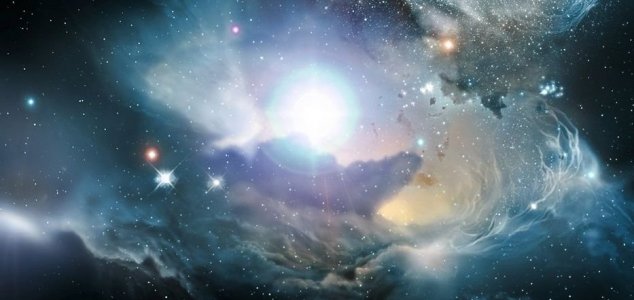
Is Our Universe Haunted? A Ghostly Glow in Space Could Be the First Real Proof of a Parallel World
Forget everything you think you know about reality. Seriously. Tear it up. Toss it out the window.
Because what if our entire universe—every star, every galaxy, every planet, every single person you’ve ever known—is just one, tiny bubble in a vast, cosmic ocean of other universes?
A multiverse.
It sounds like pure science fiction. A plot from a comic book. For decades, it was little more than a mind-bending thought experiment for physicists scribbling on chalkboards. A fun “what if.” But something changed. Scientists, staring at the oldest light in the cosmos, found something that shouldn’t be there. A faint, cold, mysterious patch of light in the afterglow of creation itself. A cosmic bruise.
Could this be it? The first tangible evidence that we are not alone in the cosmos in the most profound way imaginable? The first proof that our universe once bumped into another?
The Universe’s Baby Picture Holds a Dark Secret
To understand this shocking discovery, we have to travel back in time. Way back. To the very beginning.
Imagine the Big Bang. Not as an explosion in space, but as the explosion *of* space. An infinitely hot, dense point erupting into existence. For the first 380,000 years, this newborn universe was a scorching, opaque soup of particles and radiation, so hot that light couldn’t travel freely. It was a cosmic fog.
Then, the universe cooled enough for atoms to form. And in that instant, light broke free for the first time, flooding the cosmos in a brilliant flash. That ancient flash of light is still traveling across the universe today. It’s everywhere. And it’s called the Cosmic Microwave Background, or the CMB.
Deep Dive: What Exactly is the Cosmic Microwave Background?
Think of the CMB as the universe’s baby picture. It’s the oldest photograph we will ever possess. When we build powerful telescopes to look at it, we are literally looking at an image of the universe when it was just a 380,000-year-old infant. It is the faint, leftover heat from the Big Bang, a thermal echo of creation.
In the 1960s, two American radio astronomers, Arno Penzias and Robert Wilson, stumbled upon it completely by accident. They were trying to use a large radio antenna for experiments but were plagued by a persistent, annoying hiss. A background noise they couldn’t get rid of. They checked for equipment failures. They even cleaned out pigeon droppings from the antenna, thinking it might be the cause. But the hiss remained. No matter where they pointed their antenna in the sky, the static was the same. Uniform. Constant.
What they had accidentally discovered was the afterglow of the Big Bang. That hiss was the sound of creation. They won a Nobel Prize for it, and their discovery changed cosmology forever.
This CMB isn’t perfectly uniform, though. It has tiny, minuscule temperature variations. Some spots are a fraction of a degree warmer, others are a fraction of a degree cooler. These tiny fluctuations are vital. They were the seeds that, over billions of years, grew into the massive clusters of galaxies we see today. They are the blueprints of our cosmos.
The Planck Telescope Stared into the Dawn of Time… and Found a Bruise
Fast forward to the 21st century. The European Space Agency (ESA) launched the Planck telescope, a mission with one primary goal: to map the Cosmic Microwave Background with more precision than ever before. It created the most detailed, high-resolution baby picture of our universe ever taken.
And that’s when scientists saw it. The anomaly.

Most of the temperature spots on the Planck map were tiny, as predicted. But in one area, in the direction of the constellation Eridanus, there was a massive, unusually cold region. Colder and larger than any computer model of the early universe could explain. It became known simply as the “CMB Cold Spot.”
It was a puzzle. A glaring inconsistency in our most fundamental picture of the universe. What could have caused it? Was it an error in the data? A flaw in the satellite? Or was it something… else?
This is where the story takes a sharp turn from astrophysics into the Twilight Zone.
In 2015, researcher Dr. Ranga-Ram Chary, working at Caltech on the Planck data, proposed a radical, almost unbelievable explanation. He suggested that this cold spot wasn’t just a cold spot. It was a cosmic bruise. The remnant of a collision. A point of impact between our infant universe and another, entirely separate “bubble” universe.
Think about that. A scar from an inter-universal fender bender at the dawn of time.
Chary’s paper sent shockwaves through the community. He argued that the spectral signature of this cold patch of light was more consistent with the physics of another universe—one with a different ratio of fundamental particles—leaking into ours than anything native to our own cosmos. “The fine tuning of parameters in the early universe required to reproduce our present day universe suggests that our universe may simply be a region within an eternally inflating super-region,” he stated. “Many other regions beyond our observable universe would exist with each such region governed by a different set of physical parameters than the ones we have measured for our universe.”
In plain English? Our universe is just one neighborhood in a gigantic, eternally growing mega-city. And we just found evidence that we once bumped into the neighborhood next door.
What If He’s Right? A Journey Through the Multiverse
If this isn’t just a fluke, it opens a Pandora’s Box of possibilities that shatter our sense of place in the cosmos. The idea of a multiverse isn’t new, but having potential physical evidence changes the game. There are several popular theories about what a multiverse might look like, and this “cosmic bruise” could fit neatly into one of them.
Theory 1: The Boiling Pot of Eternal Inflation
This is the theory Dr. Chary’s work supports. Imagine the multiverse as a massive pot of water that is eternally boiling. The boiling itself is “inflation,” the super-fast expansion that happened right after the Big Bang. As this pot of cosmic energy boils, little bubbles form. Each bubble is a new universe. Our universe is just one of these bubbles. And just like bubbles in a pot, they can expand, grow, and sometimes… collide.
In this model, each bubble could have radically different laws of physics. One universe might have stronger gravity. Another might have only two dimensions of space. In another, life might be utterly impossible. The “fine-tuning” of our own universe—the fact that the constants of nature seem perfectly set to allow for stars, planets, and life—is explained away. It’s not a miracle; it’s just that we happen to live in one of the bubbles where the physics worked out. There are countless others where it didn’t.
Theory 2: The Endless Copies of the Many-Worlds
This one comes from the weird world of quantum mechanics. The Many-Worlds Interpretation, first proposed by Hugh Everett III in the 1950s, suggests that every time a quantum event has more than one possible outcome, the universe splits. All possible outcomes happen, just in separate, parallel universes.
Did you choose coffee instead of tea this morning? In another universe, a copy of you is drinking tea. Did you turn left instead of right? Another you turned right. Every choice, every random decay of an atom, every quantum coin flip creates a new branch of reality. This would mean there isn’t just a handful of other universes—there are an infinite, uncountable number of them, many almost identical to our own, with only tiny variations. While this doesn’t directly explain the CMB Cold Spot, it paints a picture of a reality far vaster and stranger than we can perceive.
Theory 3: The Landscape of String Theory
String theory, the ambitious attempt to be a “theory of everything,” comes with its own multiverse. The math of string theory doesn’t just describe one possible universe. It describes a staggering number of them—something like 10 to the power of 500. This is often called the “cosmic landscape.” Each “valley” in this landscape represents a stable universe with its own set of physical laws. Our universe is just one valley among a near-infinite mountain range of possibilities.
This theory, like Eternal Inflation, would mean other universes are fundamentally different from our own, which lines up with Dr. Chary’s hypothesis that the “bruise” contains the signature of alien physics.
The Skeptics Fire Back: Is It All Just Cosmic Noise?
Of course, an idea this revolutionary is going to face intense scrutiny. And it absolutely has. Many cosmologists are deeply skeptical of the “cosmic bruise” theory. The pushback is fierce, and it comes with some very compelling counter-arguments.
The most popular alternative explanation is that the Cold Spot isn’t a bruise from another universe, but rather the signature of a “Supervoid.” This would be an unimaginably vast region of space, billions of light-years across, that is almost entirely empty of matter. A colossal cosmic desert with far fewer galaxies than the surrounding universe. Light from the CMB traveling through this void would lose energy, making it appear colder to our telescopes. Some surveys of the sky have indeed found evidence of a large, under-dense region of space in the same direction as the Cold Spot.
Case closed? Not quite. Other studies claim the supervoid isn’t nearly large or empty enough to explain the size and intensity of the Cold Spot. The numbers don’t fully add up.
Then there’s the simplest explanation of all: it’s nothing. Just a random fluke. In any sufficiently large dataset, you’re bound to find anomalies. If you flip a coin a billion times, you’ll find some weirdly long streaks of heads or tails. It doesn’t mean the coin is rigged; it’s just statistics. The CMB Cold Spot might just be the universe’s version of a long streak of tails. A one-in-a-thousand statistical anomaly that our pattern-seeking human brains are desperate to assign a grand, cosmic meaning to.
The Internet’s Newest Rabbit Hole
Mainstream science remains divided, but online, the mystery of the CMB Cold Spot has become the stuff of legend. It’s a favorite topic in forums and on late-night YouTube deep dives, often presented as “the evidence NASA doesn’t want you to see.” It fuels endless speculation. If universes can collide, can we travel between them? Did the collision import something into our universe? Or did it suck something out?
The conversation has evolved beyond the initial discovery. Now, people are re-analyzing the CMB data, looking for other, smaller “bruises.” Some claim to have found them. The official scientific consensus is that these are just statistical noise, but for believers in the multiverse, each new anomaly is another potential breadcrumb on the trail to a truth far grander than we can imagine.
Our Eyes on the Sky Are Getting Stronger
This debate won’t be settled by arguments. It will be settled by data. The original post mentioned NASA’s hope to fund a mission called the Primordial Inflation Explorer. While that specific mission hasn’t launched, its spirit lives on. The next generation of cosmic telescopes, both on the ground and in space like the James Webb Space Telescope, are peering deeper into the cosmic dawn than ever before.
They are designed to hunt for the echoes of inflation, to map the structure of the early universe with insane precision, and to test these wild ideas. Every new photon captured from the edge of time is another piece of the puzzle. We are on the cusp of being able to either put the multiverse theory on a much firmer footing or potentially rule it out for good.
So where does that leave us?
We are left staring at a ghost. A faint, cold patch in the sky that defies easy explanation. It could be the first hard evidence that we live in a multiverse, a concept that would forever alter humanity’s understanding of our place in existence. Or, it could be a simple void. A statistical blip. A whole lot of nothing.
But the possibility, however remote, is intoxicating. It whispers that just beyond the veil of our own reality, countless other worlds, with other laws, and perhaps other versions of ourselves, are bubbling into existence.
The next time you look up at the silent, black expanse of the night sky, remember the cold spot. Remember the bruise. And ask yourself: what are you really looking at? Just our universe… or the ghostly silhouette of another one, pressed up against our own?
Originally posted 2015-10-31 06:23:14. Republished by Blog Post Promoter