The Giza Anomaly: Why Everything You Know About the Great Pyramid is Wrong
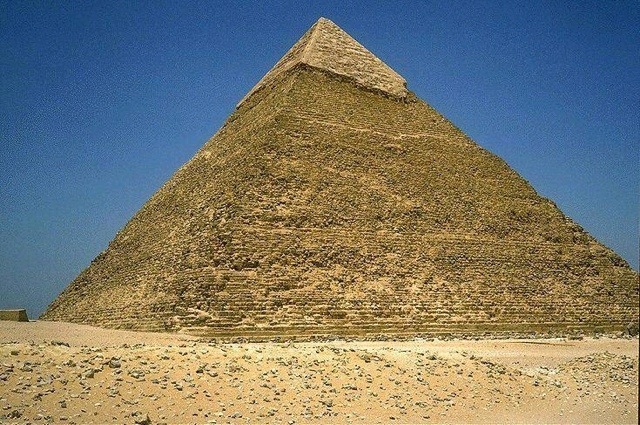
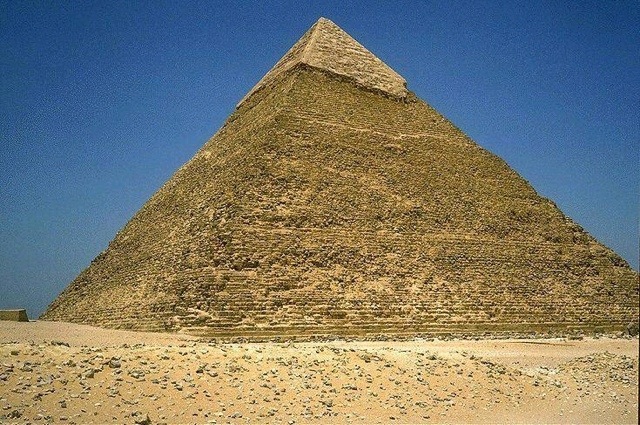
Forget your history books. Forget what you were taught in school. Forget the neat, tidy stories of pharaohs, ramps, and slaves that have been spoon-fed to us for generations. We’re told the Great Pyramid of Giza is a tomb. A spectacular, oversized headstone for a king named Khufu. It’s a simple story. A comfortable story.
And it might be the biggest lie in ancient history.
Because the Great Pyramid isn’t just a pile of rocks. It’s a puzzle box built on a planetary scale. It’s a mathematical enigma that whispers of a lost science, a forgotten technology, and a level of precision that we, with all our modern might, cannot replicate. Not even close. This isn’t just a “Wonder of the World.” It’s a smoking gun. A silent, stone giant that challenges the very timeline of human civilization.
So, buckle up. We’re not just looking at some old building. We’re peeling back the layers of a 4,500-year-old mystery that gets stranger, deeper, and more mind-bending the closer you look.
The Blueprint of the Impossible: A Construction Nightmare
Let’s start with the basics. The raw, staggering numbers that mainstream archaeology tends to gloss over.
The official story says the Great Pyramid was built in about 20 years. Simple enough, right?
Now consider this. The pyramid is made of an estimated 2.3 MILLION stone blocks. These aren’t pebbles. They weigh anywhere from 2.5 to a jaw-dropping 80 tons each. The heaviest ones, massive granite beams forming the roof of the “King’s Chamber,” were quarried in Aswan, over 500 miles away.
Do the math. To build this in 20 years, the ancient Egyptians would have had to quarry, cut, transport, and perfectly place one of these multi-ton blocks every two and a half minutes. Every single minute. Of every single hour. Of every single day. For twenty straight years. Non-stop.
With copper chisels and stone hammers?
It’s not just improbable. It’s ludicrous. Today, with our most advanced hydraulic cranes and heavy machinery, a project of this scale and precision would be a logistical and financial nightmare. We couldn’t do it in 20 years. Yet we’re supposed to believe a Bronze Age civilization, with no evidence of wheels for transport, no iron tools, and no written record of the construction itself, pulled it off without a hitch?
Deep Dive: The Mortar Mystery
And what holds it all together? A mortar of some unknown, impossible origin. Seriously. Scientists have analyzed it. They know its chemical makeup. It’s a type of gypsum cement, but it’s stronger than the stone blocks themselves and has held them together through millennia of earthquakes and heat. We know what it is. We just can’t reproduce it. We don’t have the formula. How did a supposedly primitive culture create a chemical compound that baffles 21st-century material science?
Orion’s Belt on the Desert Floor: A Map to the Stars?
This is where the mystery moves from the ground to the heavens. For years, people noticed the strange layout of the three main pyramids at Giza. The two largest, the Great Pyramid (Khufu) and the Pyramid of Khafre, are in a near-perfect diagonal line. But the third, the Pyramid of Menkaure, is smaller and slightly offset to the east.
It looked… sloppy. Out of place. Why would master builders, capable of impossible precision, make such an obvious mistake? It didn’t make sense.
Then, in the 1980s, researcher Robert Bauval had a moment of inspiration. He looked up at the night sky, at the constellation of Orion, which was deeply associated with the god Osiris, the god of rebirth. He focused on the three bright stars that form Orion’s Belt.
Two stars are bright and in a line. The third is dimmer and slightly offset.
He superimposed a map of the Giza pyramids over the stars of Orion’s Belt. The match was perfect. The layout of the pyramids on the ground is a direct, deliberate mirror of Orion’s Belt in the sky. The slight offset of the third pyramid wasn’t a mistake. It was the entire point.
But it gets even stranger. Due to the precession of the equinoxes—the slow wobble of the Earth’s axis—the stars aren’t fixed in the sky over long periods. Bauval used computer programs to wind back the celestial clock. He found the time when the alignment between the pyramids and the stars was most perfect. The date the software locked onto was not 2,500 BCE, when the pyramids were supposedly built. It was 10,500 BCE. A time when, according to our history books, humans were still primitive hunter-gatherers living in caves.
Coincidence? Or is the Giza plateau a celestial clock, pointing to a much, much older origin for human civilization than we are willing to admit?
Secrets Coded in Stone: The Pyramid’s Impossible Math
If the celestial alignment doesn’t convince you, the pure mathematics built into the pyramid’s very structure will break your brain. This isn’t just a big building; it’s a computer made of stone, containing universal constants and measurements of our planet with a degree of accuracy that shouldn’t have been possible.
Pinpointing True North
The Great Pyramid is aligned to True North with only 3/60th of a degree of error. That makes it the most accurately aligned structure on the planet. Even the Meridian Building at the Greenwich Observatory in London is off by more. How did they achieve this? The North Pole itself drifts over time in a process called polar motion. This means that at some point in the distant past, the pyramid’s alignment would have been perfect. Absolutely perfect.
The Center of the World
Here’s another little “coincidence.” The Great Pyramid is located at the exact center of the Earth’s landmass. The planet’s longest line of latitude and longest line of longitude intersect at only two places on Earth. One is in the middle of the Pacific Ocean. The other is right where the Great Pyramid stands. You have a better chance of winning the lottery a dozen times in a row than that happening by chance.
The 8-Sided Anomaly You Can’t See
This is one of the weirdest and most undeniable facts. The Great Pyramid is not a four-sided pyramid. It’s an eight-sided one. Each of the four faces is slightly concave, indented with a precision that is almost imperceptible. This effect is completely invisible from the ground. You can only see it from the air, and only for a fleeting moment at dawn and sunset on the spring and autumn equinoxes. At that precise moment, the sun’s shadow splits each face in two, revealing the true eight-sided shape. What possible purpose could this have for a tomb? Why create a feature so subtle it couldn’t be appreciated by anyone on the ground and would only be discovered thousands of years later with the invention of flight?
A Universal Calculator
The numbers embedded in the pyramid’s dimensions are even more startling.
- If you take the height of the pyramid and multiply it by 43,200, you get the polar radius of the Earth.
- If you take the perimeter of the base of the pyramid and multiply it by 43,200, you get the equatorial circumference of the Earth.
- The relationship between Pi (π) and the Golden Ratio (Phi, φ) is expressed in the pyramid’s fundamental proportions.
- Some researchers have even claimed the weight of the pyramid (estimated at 5,955,000 tons) multiplied by 10^8 gives a reasonable estimate of the Earth’s mass.
These are not random numbers. They show an advanced knowledge of geometry, astronomy, and global geography that the ancient Egyptians were simply not supposed to have. Where did this knowledge come from?
The Glorious Light: When Giza Shone Like a Jewel
What we see today is just the weathered, stripped-down core of the Great Pyramid. It’s a shadow of its former self. Originally, it was covered in 144,000 highly polished, perfectly flat casing stones made of white Tura limestone. These stones were cut to an accuracy of 1/100th of an inch, weighed about 15 tons each, and were fitted together so perfectly you couldn’t fit a razor blade between them.
The effect would have been breathtaking. The pyramid would not have been a sandy, tiered structure. It would have been a smooth, gleaming white jewel that reflected the sun’s light with blinding intensity. It would have shone like a beacon, visible from the mountains in Israel and, some calculations suggest, possibly even from the Moon. The ancient Egyptians didn’t call it the “Great Pyramid.” They called it “Ikhet,” which means “The Glorious Light.”
So what happened to this glorious mantle? A massive earthquake in the 14th century AD loosened many of the stones, and they were subsequently stripped away and used to build mosques and fortresses in nearby Cairo. The greatest wonder of the ancient world was cannibalized to build a city.
Inside the Enigma Machine
The interior of the pyramid is just as baffling as the exterior. The passageways are narrow, the chambers are stark and empty, and the engineering is on another level.
The Riddle of the Granite Coffer
In the heart of the pyramid, in the so-called “King’s Chamber,” sits a lidless granite box. The “sarcophagus.” The one piece of “proof” that this was a tomb. Except for one problem: it’s completely empty. No mummy was ever found. No burial goods were ever recorded. Nothing.
And it gets weirder. The granite coffer is too large to fit through the pyramid’s ascending passageway. It couldn’t have been moved in. It must have been placed in the chamber as the pyramid was being built around it. Why go to all that trouble?
The coffer itself is an engineering marvel. It’s carved from a single, solid block of hard Aswan granite. Microscopic analysis shows it was likely cut using fixed-point drills tipped with hard jewels, applied with a drilling force of over 2 tons. This is not Bronze Age technology. And for what? To create an empty box?
The 20-Ton Door a Child Could Move
Early accounts from when the pyramid was first explored speak of a massive swivel door. Weighing an estimated 20 tons, this stone door was so perfectly balanced on its pivots that it could be pushed open with minimal force from the inside, but was so flush with the outer casing stones that from the outside, it was virtually undetectable. This is high-tech engineering that would be a challenge today. What purpose did it serve?
So… What Was It REALLY For?
If it wasn’t a tomb, then what in the world was it? The theories are multiplying, and they’re far more exciting than the boring old textbook explanation.
Was it a power plant? Engineer Christopher Dunn’s theory, detailed in his book “The Giza Power Plant,” suggests the pyramid was a machine. He proposes it was designed to harness the Earth’s natural vibrations (seismic energy) and convert them into microwave energy, using the chemical properties of its shafts and chambers. A wild theory? Perhaps. But it explains the design choices, material selection, and precision engineering far better than the tomb theory ever could.
Was it a time capsule? A monument built by a lost, advanced civilization—perhaps the “Atlantis” Plato wrote about—to preserve their knowledge of science, mathematics, and astronomy for a future culture to find? A way to say “We were here” and to pass on the secrets of the cosmos?
The questions are endless. The official story is full of holes. The evidence carved in stone points to something far more profound, far more advanced, and far more mysterious than we’ve been led to believe.
The Great Pyramid is not a relic of the past. It’s a message. A challenge. It stands silent in the desert, waiting for us to be smart enough to ask the right questions. The truth is out there, and it’s bigger than any pharaoh’s tomb.