Saturday, June 6, 2026
HomeFilms & DocumentariesTHE LOST WORLD OF LAKE VOSTOK - Documentary

THE LOST WORLD OF LAKE VOSTOK – Documentary

The Alien World Beneath the Ice: Cracking Open the Vostok Anomaly

There is a place on Earth so cold, so utterly hostile, that it makes Mars look like a vacation spot. A place where the air itself can freeze. A white desert of absolute nothing, stretched over a continent of secrets.

Antarctica.

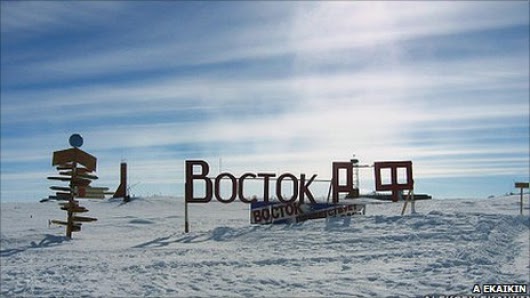
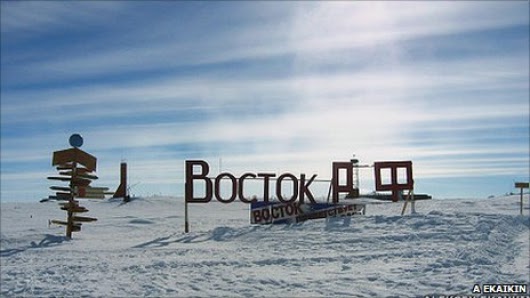
And at its very heart, at the southern Pole of Cold, sits a lonely outpost. A testament to human endurance against the impossible. Vostok Station. This isn’t just a dot on a map; it’s the coldest inhabited place on our planet. But the true mystery of Vostok isn’t on the surface. It’s below. Almost four kilometers below. Hidden under a crushing, suffocating blanket of ancient ice lies a secret that challenges everything we thought we knew about life, about our planet, and about what might be waiting for us in the dark.

A lake.

Not a frozen pond. An enormous, mind-bendingly huge lake of liquid water. A lost world, sealed off from the rest of the planet for at least 15 million years. What’s down there? Why has its discovery been shrouded in so much mystery? The official stories are strange enough. The unofficial stories, the whispers on the internet, the theories that get you labeled a crank… they’re something else entirely.

Forget what you think you know. We’re going deep. We’re going under the ice.

Vostok Station: Life at Absolute Zero

To understand the secret, you first have to understand the prison that contains it. In 1957, during the Cold War’s scientific pissing contest known as the International Geophysical Year, the Soviet Union established Vostok Station. The location was chosen for one reason: to be at the Southern Geomagnetic Pole. It was a place of immense scientific interest.

It was also, quite possibly, the worst place on the planet to build anything.

Forget cold. This is a different kind of cold. On July 21, 1983, the thermometer at Vostok plunged to −89.2 °C (−128.6 °F). That is the coldest air temperature ever directly recorded on Earth’s surface. It’s a cold that can shatter steel. A cold where a single deep breath could flash-freeze your lungs, causing you to hemorrhage and die. The average winter temperature hovers around -65 °C (-85 °F).

Supplying this place was a nightmare. Everything, and I mean *everything*, had to be dragged 1,000 kilometers from the coast by massive tractor convoys. An epic, slow-motion journey across a frozen hellscape that took over a month. This wasn’t a research base; it was a lonely island of humanity in an alien ocean of white.

A Ghost on the Radar Screen

For years, life at Vostok was a brutal routine of survival and science. But in the 1970s, something strange happened. A British team, flying over the continent in a plane packed with ice-penetrating radar, was mapping the hidden landscape beneath the ice sheet. For the most part, their readings were exactly what you’d expect: the jagged, chaotic lines of a buried mountain range, the Gamburtsev Mountains, completely entombed in ice.

Then, as they flew near the Vostok station, the radar trace changed.

Suddenly. Dramatically.

The jagged lines vanished. The chaos was gone. In its place was a perfectly, impossibly flat line. A reflection so smooth, so uniform, that it could only mean one thing. Water. Liquid water.

Think about that. In the coldest place on Earth, they saw the ghost of a lake. It was a wild idea, a fringe theory based on a blip on a screen. The data was filed away. A curiosity. An anomaly. For twenty long years, the secret slept, and the world remained oblivious.

The Satellite’s Eye Confirms the Unthinkable

Two decades passed. The Soviet Union collapsed. Technology marched on. And from orbit, new eyes began staring down at Antarctica. Satellites using advanced radar altimetry could measure the height of the ice sheet with incredible precision.

And they saw it.

Over the exact spot where the British team had seen that flat line, the surface of the ice was different. It was a massive, smooth, level expanse. While the rest of the ice sheet undulated with the mountains beneath, this area was flat because it was floating. Floating on a colossal body of liquid water.

The ghost was real. Lake Vostok was confirmed.

The scale is staggering. It’s one of the largest lakes on the planet, by both surface area and volume. At nearly 10,000 square kilometers, it’s about the size of Lake Ontario, but in some places, it’s over 500 meters deep. That’s deeper than the Great Lakes. You could sink the entire Empire State Building in parts of Lake Vostok and still have water above its spire. And all of it, every last drop, is buried under 3,700 meters (that’s 2.3 miles) of solid ice.

Deep Dive: How is This Even Possible?

So, how can a liquid lake exist in a place that freezes a human lung solid? It comes down to two simple but powerful forces.

  • The Planet’s Blanket: That two-mile-thick sheet of ice is the greatest insulator on Earth. Like a massive down comforter, it traps the planet’s geothermal heat—the natural warmth radiating from the Earth’s core. While the surface plunges to unimaginable lows, the base of the ice sheet is warmed from below.
  • The Weight of the World: The sheer pressure of all that ice is immense. It’s over 350 times the atmospheric pressure you’re feeling right now. This incredible pressure lowers the freezing point of water. Just like salt on a road, pressure makes it harder for water to turn to ice.

Combine the trapped heat from below with the intense pressure from above, and you get the perfect conditions for a permanent, liquid lake. A world unto itself, born from ice and fire.

A 15-Million-Year-Old Time Capsule

This is where the story shifts from a geographical curiosity to a profound, world-altering mystery. Scientists estimate that Lake Vostok has been sealed off from the surface, completely isolated from Earth’s atmosphere and ecosystem, for at least 15 million years. Possibly as long as 25 million.

Fifteen. Million. Years.

That means the water in that lake last saw sunlight when giant, prehistoric sharks roamed the oceans and the ancestors of humankind were just beginning to walk upright. It is the most pristine, untouched environment on the entire planet. It contains water that is supersaturated with oxygen and nitrogen, to levels found nowhere else in nature. It is an environment so extreme, so alien, that it was long thought to be sterile.

But life is stubborn. Life finds a way.

Here on the surface, we know of “extremophiles”—organisms that thrive in conditions that should kill them. Bacteria that eat radiation in nuclear reactors. Microbes that live in boiling volcanic vents at the bottom of the ocean. Life that exists in total darkness, under crushing pressure, feeding on rock and chemicals.

Could Lake Vostok be a massive, continental-sized petri dish for just this kind of life? Could it hold unique microbes that evolved in isolation for millions of years, following a completely different biological path? Could it be, in essence, an alien ecosystem right here on Earth?

The possibilities were too great to ignore. We had to get in.

The Drill and the Danger: Breaching the Lost World

The Russians, whose Vostok Station sat directly atop this incredible prize, had been drilling into the ice for decades. Their initial goal was to retrieve ice cores—getting a layered record of Earth’s past climate. But when the lake was confirmed, the mission changed. The new goal: reach the water.

The international scientific community panicked.

The danger was twofold and terrifying. First, the risk of contaminating this perfectly preserved world. The drill bit, the drilling fluids—a special mix of kerosene and freon used to keep the borehole from freezing shut—could introduce surface microbes into the lake, destroying a 15-million-year-old experiment forever. It would be like a Neolithic hunter stumbling into a modern, sterile operating theater and sneezing everywhere.

But the second fear was even more primal. What if something got *out*?

What if the lake contained ancient microbes for which life on the surface has no immunity? It sounds like the plot of a science fiction movie, but it was a genuine concern. You are about to open a biological time capsule. You have no idea what’s inside. Prudence is not an optional extra.

The project halted. Debates raged. Finally, the Russians devised a clever plan. They would drill until their sensors told them they were just meters above the liquid water. Then, they would remove the main drill, lower a clean, heated thermal probe, and just melt that last little bit of ice. The immense pressure from the lake below would cause water to surge up into the bottom of the borehole, where it would freeze, creating a sterile, natural plug of Vostok’s own water for them to sample later. No contamination in, and hopefully, nothing nasty out.

In February 2012, after decades of slow, painstaking work, they did it. They touched the lost world. Humanity had breached Lake Vostok.

The Official Findings and the Unsettling Silence

So what did they find? The initial samples were analyzed. The official reports were… underwhelming. They found traces of bacteria. Some were familiar, likely contaminants from the drilling fluid. Others seemed to be unique, but they were simple, single-celled organisms. It was interesting for microbiologists, but it wasn’t the monster from the abyss people were hoping for.

And then… a strange sort of silence fell. The grand discoveries and Earth-shattering revelations never seemed to materialize. Which, for the mystery-hunting corners of the internet, is more suspicious than finding a dinosaur.

This is where the official story ends, and the rabbit hole begins.

Conspiracy Deep Dive: What Are They Hiding Under the Ice?

Why would a discovery of this magnitude just… fizzle out? Online researchers and anomaly hunters point to several strange facts that just don’t add up.

Theory 1: The Great Magnetic Anomaly
This one is real. It’s not a theory. Scientific surveys have confirmed a massive magnetic anomaly in the southeast portion of the lake’s shoreline. It spans over 105 by 75 kilometers. What is it? Scientists speculate it could be caused by a thinning of the Earth’s crust in that area. But conspiracy forums have other ideas. Is it a massive, buried metallic object? The wreckage of some ancient, unknown craft? A natural deposit of a strange metal not found elsewhere? Some believe it’s the power source for whatever is really going on down there. A city, perhaps. A base.

Theory 2: The Nazi “Base 211” – New Swabia
This is one of the most enduring alternative history legends. The story goes that in 1938, the Nazis launched a massive expedition to Antarctica, claiming a huge chunk of it and naming it New Swabia. During the war, they allegedly used U-boats to create a top-secret base, “Base 211,” hidden in a network of ice-free caves warmed by geothermal vents. The goal? To develop super-weapons and wait out the war. After Germany’s defeat, top Nazi officials and scientists supposedly fled there. Could the geothermally active, life-sustaining environment of Lake Vostok be the true location of this mythical Nazi fortress? Is the magnetic anomaly not a natural feature, but the remnants of advanced, secret technology?

Theory 3: The Silence is the Answer
Perhaps the most compelling theory is the simplest one. What if the Russians *did* find something? Something so profound, so paradigm-shifting, that it simply could not be revealed to the public? Not a monster, not a Nazi, but something… else. Proof of a shadow biosphere. An organism that breaks the rules of DNA. Something that would force us to rewrite every biology textbook on the planet. A discovery so big that the world’s powers decided, for once, to keep a lid on it until they could understand what they were dealing with.

The Future is a Submarine

The exploration of Vostok has only just begun. The initial breach was just a pinprick. The next stage involves sending autonomous probes down into the depths.

Scientists and engineers at NASA and other institutions are designing “cryobots”—probes that can melt their way through the ice shell, trailing a communication wire behind them, before deploying a small, sterile submarine into the lake itself. This hydrobot would be equipped with cameras, sensors, and sampling tools, free to explore the dark waters and finally show us what’s there.

In a very real way, Lake Vostok is our practice run for exploring the heavens. Jupiter’s moon Europa and Saturn’s moon Enceladus are also believed to have massive liquid water oceans hidden beneath icy shells. The technology we develop to safely explore Vostok is the very same technology we will one day use to search for life on other worlds.

We are trying to find aliens in space, but we may have an alien world right here, under our feet.

For now, the lake waits. Silent. Dark. Deep. It holds the secrets of millions of years of isolation. It guards anomalies that defy easy explanation. We have knocked on the door, but we have not yet stepped inside. The truth of what lies beneath the coldest place on Earth is still out there, waiting for us in the crushing, eternal darkness.

Amit Ghosh
Amit Ghoshhttps://coolinterestingnews.com
Aloha, I'm Amit Ghosh, a web entrepreneur and avid blogger. Bitten by entrepreneurial bug, I got kicked out from college and ended up being millionaire and running a digital media company named Aeron7 headquartered at Lithuania.
RELATED ARTICLES
- Advertisment -

Most Popular

Recent Comments

Warren Pan Abbott on The legend of the Devil Monkey !
chris davies on The McPherson Tape Mystery
Reed Reedly on ET has Internet!
Bea Houseoffashion on Proof Of Time Travellers – Gallery
Marcus2012 on ET has Internet!
Reed Reedly on ET has Internet!
LaughsAtConspiracyNuts on The 9/11 Conspiracy – Myths and Facts
Alex Sliverman on Did the ancients fly?
Doctor Wholigan on Time Traveler in 1938 film
chris davies on The McPherson Tape Mystery
Archie1954 on 10 secret UFO hideouts
chris davies on Ghosts of flight 401
Marcus2012 on ET has Internet!
jason Macdonald on Proof of Time Travel? – China
chris davies on Long-Lost Pyramids Found?
Reed Reedly on ET has Internet!
Milkman on Connected Universe
Tenmiles on Baigong Pipes Mystery
Simon Foster on Sirius – The Documentary
From the 1st April on 2013 – Alien Contact date ?
SkyWatcher on Is ET ignoring us?
I Come From The Future on Obama to make UFO Alien disclouser soon ?
ÛñK?øWn on 2013 – Alien Contact date ?
Just another person on 2013 – Alien Contact date ?
Malcolm Windowcleaner on The strange case of Rudolph Fentz
Mason Servio on Strange Things on Mars
Marke Wisdom Seeker on What will we find as arctic melts?
Andrea A Elisabeth Levyne on Aliens Captured in Varginha, Brazil
Mitch Grouyeki on Amazing Space Shuttle pictures