What if an entire town vanished? Not in a flash of light or a puff of smoke, but one day at a time, until nothing was left but the dust, the silence, and the ghosts of what used to be. This isn’t a sci-fi plot. This is the chillingly true story of Steins, New Mexico, a town that didn’t just die—it was frozen in time, leaving behind a mystery that grows darker and more complex the deeper you dig.
The official story is simple. Too simple.
They tell you it was about the railroad. But what if it was something else entirely?
The Day the Whistle Went Silent
Picture it. The late 1940s. The air in the high desert of New Mexico is thick with the smell of coal smoke and hot metal. The ground itself seems to vibrate, not with earthquakes, but with the raw power of the Southern Pacific Railroad. Steins was a railroad town, through and through. It was a watering hole, a place for the great iron beasts of the steam age to drink and breathe before continuing their monumental trek across the continent. The town’s very existence was tied to the hiss of steam and the shriek of the train whistle.
Its population hovered around 1,000 souls—miners, railroad men, saloon keepers, and families who carved out a life in a place most people only saw from a train window. It was a tough place for tough people.

Then, progress happened. A cold, efficient, and devastating form of progress called the diesel locomotive. These new engines were marvels of engineering. They were stronger, faster, and they didn’t need to stop for water. They didn’t need the coal that the local mines supplied. They didn’t need Steins.
The railroad simply… changed its route. The artery was severed. The lifeblood stopped pumping. And in 1944, the post office closed its doors for good. The official narrative ends there. A simple economic casualty. A forgotten dot on an old map.
But that’s where our story truly begins. Because the people of Steins didn’t just leave. It looks like they fled.
A Town Frozen in Amber
When you leave a place, you pack. You take your valuables, your keepsakes, the things that make a house a home. You don’t leave dinner plates on the table. You don’t leave your bed perfectly made, waiting for a sleeper who will never return. You don’t leave the piano in the bar, its keys gathering a silent layer of dust, waiting for a song that will never be played again.
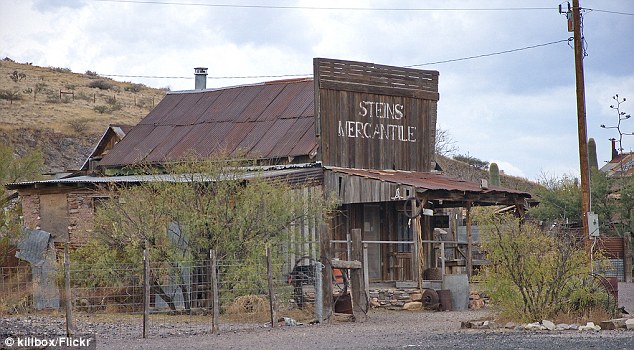
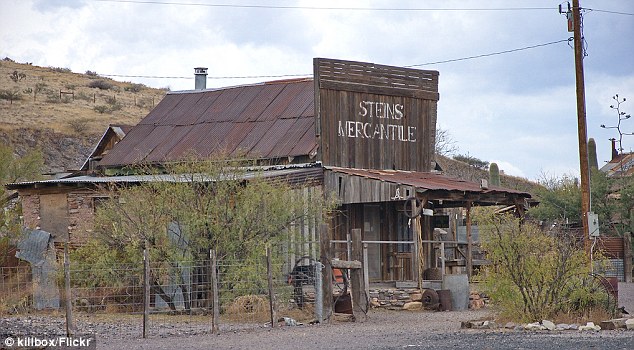
Yet in Steins, that’s exactly what you find. The place is less of a ghost town and more of a crime scene. Walking through its dusty main street is like stepping into a photograph taken the second after everyone on Earth disappeared. The general store is still stocked with goods, spice jars lining the shelves. The bordello’s rooms are eerily intact. Typewriters sit on desks with a piece of paper still loaded, as if the writer was interrupted mid-sentence.
It begs the question that hangs in the dry desert air: why the hurry? An economic downturn is slow. It’s a cancer, not a heart attack. People see it coming. They sell what they can, pack what they can’t, and move on. They don’t just drop everything and walk away from their entire lives. Unless they were forced to. Unless they were running from something.
The Riddle of the Countless Jars
Visitors who were lucky enough to walk the town’s streets before it was closed off always noted one particularly strange detail. The glass jars. They were everywhere. In every home, every shop. Rows upon rows of empty glass jars.
What were they for? The easy answer is canning. Preserving food was a way of life in a remote place like Steins. But the sheer quantity seems… obsessive. It goes beyond simple food prep. Modern internet theories have offered a range of wilder explanations.
Was it a desperate attempt to collect and store water, anticipating a sudden cut-off? Some have speculated the town’s well was poisoned or dried up catastrophically, forcing an immediate and unplanned evacuation. Others whisper about something more fringe. Were they trying to capture something? Or were the jars part of some strange, forgotten folk ritual, meant to ward off an evil they saw coming? It’s a small detail, but in a mystery this big, the smallest clues often scream the loudest.
The Rattlesnake King and His Ghost Town Kingdom
For decades, Steins rotted under the sun. Tumbleweeds reclaimed the main street. The desert did its best to swallow the town whole. Then, in 1988, a most unusual savior appeared: Larry Link. Link wasn’t a historian or a developer. He was a rattlesnake farmer. A man who understood the desert and its secrets.
He became obsessed with Steins. He saw past the decay and saw the soul of the place, perfectly preserved. He bought the entire town and began a painstaking, one-man mission to restore it. But “restore” isn’t the right word. He didn’t want to rebuild it or turn it into a cheap tourist trap with staged gunfights.
His granddaughter, Melissa Lamoree, said it best: “He didn’t want to entertain people.”
No. Link’s vision was something purer. He was a curator of a forgotten moment. He meticulously cleared the overgrown brush, repaired roofs just enough to keep the buildings from collapsing, and opened the doors. He let the town speak for itself. He changed nothing. Every lantern, every dusty book, every child’s toy was left exactly where it was found. He was the guardian of the ghost town, the keeper of its secrets.
Or perhaps he was looking for one of them.
The Dark Turn: Murder in a Town of Ghosts
The story of Steins was already a haunting melody of loss and abandonment. In June 2011, it became a brutal tale of violence. Larry Link, the 68-year-old guardian of Steins, the man who breathed life back into its dusty lungs, was found murdered right there, outside his home, in the kingdom of ghosts he had so lovingly protected.
The quiet mystery of the 1940s was suddenly shattered by a very real, very modern crime. Who would murder an old rattlesnake farmer in the middle of nowhere? The official investigation pointed towards a robbery, a dispute with an employee. A simple, ugly answer. Just like the official reason for the town’s death.
But for those who look deeper, the questions are unavoidable. Is it really a coincidence? The man who owned a town that looked like its inhabitants fled for their lives is suddenly, violently killed?
Whispers in the Dust: Unanswered Questions
This is where the story slides from strange history into the chilling territory of conspiracy. What if the people of Steins didn’t just leave because of the railroad? What if they left something behind? Something valuable. Something dangerous.
Could there have been a hidden cache of gold from an old stagecoach robbery? Secret government experiments conducted in the desolate landscape, forcing a swift and silent evacuation? What if Larry Link, in his decades of careful preservation, finally found what was left behind? What if his “curation” was actually a long, patient search?
His murder suddenly looks different. It’s not just a robbery. It could have been a silencing. Someone, or some group, might have been watching the town, waiting. And when the old man finally uncovered the secret, they came to take it back, leaving his body as a final, grim artifact in the town of forgotten things.
A Legacy Cursed?
After the tragedy, Larry’s granddaughter, Melissa, bravely took up the mantle. The family’s commitment to preserving Steins and its strange, sad story was inspiring. They continued to welcome those who were drawn to the town’s magnetic pull, sharing its history and its mysteries with a new generation.
But the darkness wasn’t finished with Steins.
In a second devastating blow, another tragedy struck the family at the site. The weight of it all became too much. The family, having suffered unimaginable loss, made the difficult decision to close the ghost town to the public. Permanently.
The gates of Steins are now locked. The story has another layer of tragedy, another locked door. The town that was resurrected as a time capsule is once again sealed off, left alone with its secrets and its sorrow. It feels less like an abandoned town now and more like a cursed one.
A Portal to the Past or a Grave Warning?
So what is the truth of Steins, New Mexico? Was it just a town that died a slow, economic death, whose artifacts were later curated by a fascinating man who met a random, tragic end? Is that all?
Or is it a place marked by a deeper, darker secret? A secret that caused a thousand people to flee their homes in the 1940s. A secret that a rattlesnake farmer may have unearthed seventy years later. A secret that he paid for with his life.
The locked gates only make the mystery more potent. We can no longer walk its streets or peer into its frozen-in-time buildings. All we can do is look at the pictures, read the stories, and wonder.
Some towns die. They fade away, their buildings crumble, and they are forgotten. But Steins is different. It refuses to be forgotten. Its story is an open wound, a puzzle with too many missing pieces. The official history is a flimsy bandage over a truth we may never know. The silence from that patch of desert is deafening. It’s waiting. And whatever secrets it holds, it is guarding them well.