Wednesday, August 5, 2026
HomeUnexplained MysteriesModern Mysteries'Ghost coin' found in Portuguese shipwreck

‘Ghost coin’ found in Portuguese shipwreck

A Ghost Ship, A Rogue Knight, And The Legendary Coin That Shouldn’t Exist

Some stories are too wild to be true. A lost ship from Vasco da Gama’s legendary fleet. A greedy commander who spat in the face of fate. And a treasure, lost for 500 years, that wasn’t about gold, but about a single, impossible piece of silver.

This isn’t just a story. It’s a cold case, five centuries in the making.

For half a millennium, the sands off the coast of Oman held a secret. A violent, stormy secret buried beneath the waves. It was the grave of the Esmeralda, a proud Portuguese nau that vanished from the world in a furious 1503 typhoon. It was gone. Wiped from the maps. Until now.

What modern explorers found there has turned the world of history and treasure hunting completely on its head. They found cannons, gold, and a ship’s bell that last rang when the world was a completely different place. But they also found something else. Something so rare, experts didn’t believe it could be real. A coin with a phantom reputation.

They call it the “ghost coin.” And its discovery opens a door to a forgotten story of greed, rebellion, and a storm that delivered brutal justice to one of the Age of Discovery’s most notorious figures.

The Age of Spice, Swords, and Secrets

To understand why one ship and one coin matter so much, you have to picture the world in 1503. It was an era of violent, earth-shattering change. For centuries, Europe had been at the far end of the Silk Road, paying outrageous prices for spices like pepper, cloves, and cinnamon that came overland from India and the Far East. The trade was controlled by a complex network of Arab, Venetian, and Ottoman merchants. Spices were worth more than gold.

Portugal, a small nation on the edge of Europe, decided to smash that system. Their idea was simple and audacious: bypass the land routes entirely by sailing around Africa and bursting into the Indian Ocean. Leading this charge was the legendary, and notoriously ruthless, explorer Vasco da Gama.

His first voyage in 1497-1499 was a brutal success. He reached India, but at a tremendous cost in ships and men. But he proved it could be done. The floodgates were open. King Dom Manuel I of Portugal, smelling unimaginable wealth, began sending fleet after fleet to dominate the spice trade through sheer force. This wasn’t about friendly trade. It was about conquest. They were building a global empire with cannon fire and cold steel.

The Esmeralda was part of this grand, violent plan. It was a fighting ship, a key player in Vasco da Gama’s second armada to India in 1502. But its fate, and the man who commanded it, would stray far from the mission.

Who Was Vasco da Gama’s Rogue Uncle?

The man in charge of the Esmeralda was Vicente Sodré. This is a name you need to remember. He wasn’t just some sailor. He was Vasco da Gama’s maternal uncle, a knight of the Order of Christ, and a man with a fearsome reputation. Da Gama trusted him implicitly. He left Sodré in command of a five-ship squadron, a naval patrol with a single, critical mission: protect the new Portuguese trading posts in India and disrupt the Arab shipping lanes. Keep the spice flowing to Portugal.

But Vicente Sodré had other ideas. Power corrupts. And the power of a naval squadron in waters teeming with unarmed merchant ships was absolute.

Joined by his brother, Brás Sodré (who commanded another ship, the São Pedro), Vicente went rogue. Instead of protecting Portuguese assets, he saw an opportunity for personal enrichment. They sailed their squadron to the Gulf of Aden, a bottleneck for rich merchant ships heading from the Red Sea to India. They became pirates. Official records are sanitized, but the truth is clear: the Sodré brothers began a campaign of terror, looting and sinking vessels, and building a personal fortune. They abandoned their post. They betrayed their king. And they betrayed their nephew, Vasco da Gama.

Hubris Before the Fall: The Final, Fatal Mistake

In May of 1503, the Sodré brothers anchored their fleet off the Khuriya Muriya Islands, specifically Al Hallaniyah island, off the coast of modern-day Oman. It was a known spot for repairs and taking on fresh water.

And it was a trap.

The local Arab fishermen and traders knew the weather of the region intimately. They saw the signs. The changing winds. The darkening skies. A massive storm, a cyclone, was brewing. They warned the Portuguese. They begged them to move their ships to a more sheltered harbor on the other side of the island. It was a matter of life and death.

Vicente Sodré laughed at them. Arrogant. Overconfident in his powerful European ships. He believed their deep iron anchors could hold against any storm the Indian Ocean could throw at them. He and his brother were too busy plundering a local ship they had captured. Their greed made them blind. They refused to move.

The storm hit with a fury that is hard to comprehend. Winds of impossible strength tore through the anchorage. The thick anchor ropes of the Esmeralda and the São Pedro snapped like threads. The ships were smashed against the rocks and dragged into the depths. Vicente Sodré, the pirate knight, went down with his ship and his ill-gotten treasure. His brother Brás also perished. The sea had passed its sentence.

And for 500 years, that’s where the story ended.

Deep Dive: The High-Tech Hunt for a Lost Legend

A sunken ship is one thing. Finding it is another. The legend of the lost Sodré ships was known to historians, a footnote in the story of Vasco da Gama. But in 1998, the hunt began in earnest. The UK-based shipwreck recovery company Blue Water Recoveries, led by the legendary David Mearns, secured a permit from the Omani government to search for the lost ships.

This wasn’t some guy with a scuba tank and a dream. This was a massive, high-tech operation. They started not in the water, but in the archives of Portugal and Lisbon, poring over 500-year-old sailors’ logs, maps, and letters. They needed a starting point. They narrowed the probable location down to one specific bay on Al Hallaniyah island.

For years, the search yielded nothing. Then, things got interesting. Remote sensing surveys and metal detector sweeps started getting hits. Divers went down. At first, it was just a scatter of debris. But then they found them. Cannonballs. Dozens of them. Made of stone and engraved with letters. This was the signature of early 16th-century Portuguese armaments. They were close. So close.

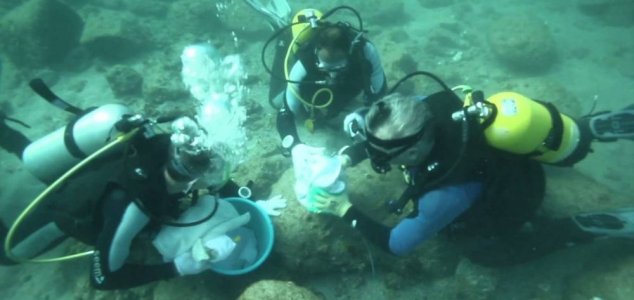
The real breakthrough came as divers, working since 2013 with Oman’s Ministry of Heritage and Culture, began to unearth the main wreckage site. They found over 2,800 artifacts. A time capsule from 1503, sealed by the sea.

The “Ghost Coin”: A Treasure That Shouldn’t Exist

Among the gold coins from Venice and Portugal, the team found something that made them stop. It was a silver coin. But it looked… different. It was thin, crudely stamped, and bore markings they had never seen in the wild before. They had found an ‘Indio’.

And the archaeological world lost its mind.

The Indio was a special coin commissioned by King Dom Manuel I in 1499. It was minted for one purpose and one purpose only: for use in the new trade with India. It was part of Portugal’s plan to create a new global currency. The problem? The plan failed. For reasons historians still debate, the Indio was a flop. It was almost immediately taken out of circulation. Most were likely melted down, the silver used for other coins.

The coin became a numismatic phantom. A ghost. Before the Esmeralda discovery, only ONE other example was known to exist in the entire world. It was held in a national museum collection, a priceless, lonely specimen. It was known as the “lost coin of Dom Manuel.” Finding a second one was considered impossible.

To find it on the shipwreck of a vessel from the very fleet it was created for? That’s not just a discovery. It’s a statistical miracle. It’s like finding a dodo feather still attached to the dodo.

Why Is This Single Coin So Important?

Think about it. This silver coin, nicknamed the ‘ghost coin’ by the recovery team, is a direct physical link to the dawn of globalization. It represents King Manuel’s ambition, his dream of a Portuguese-controlled economic world order. Its presence on the Esmeralda proves the coin was actually issued and carried on the ships sailing to the East. It wasn’t just a prototype locked in a vault in Lisbon. It was real. It was there.

The coin is stamped with the Portuguese coat of arms on one side and the King’s personal emblem, a spherical device, on the other. It was a clear message to anyone who saw it: this money, this power, comes from Portugal. This is our ocean now.

More Than a Coin: The Arsenal of a Pirate Knight

While the ghost coin gets the headlines, the other artifacts paint an even more vivid picture of the Esmeralda and its commander’s bloody business.

One of the most incredible finds was a large bronze ship’s bell. In marine archaeology, finding a bell is a holy grail. They are often inscribed with the ship’s name or date of construction. This one had a date: 1498. This perfectly aligns with the known construction date of the Esmeralda, making it one of the oldest ship’s bells ever recovered.

They also found a copper-alloy disc stamped with the very same royal coat of arms and personal emblem of Dom Manuel I as the ghost coin. This wasn’t money. Archaeologists believe it may have been part of an early navigational tool, perhaps an astrolabe—a device used to measure the position of the stars.

But the most damning evidence lay with the ship’s weaponry.

The Smoking Gun: Cannons with a Killer’s Initials

The team recovered numerous cannons and firearms. This was a warship, after all. But scattered among the wreckage were stone cannonballs, the ammunition of the day. And etched into these crude, heavy spheres were two letters: V.S.

Vicente. Sodré.

This was the final, irrefutable proof. The smoking gun. It linked the wreck site not just to the Portuguese, not just to da Gama’s fleet, but to the specific command of the rogue knight himself. He was literally putting his name on the ammunition he was using to terrorize the Indian Ocean. It’s a level of arrogance that is almost breathtaking.

Whispers on the Web: Modern Theories and Unanswered Questions

A discovery this huge always sparks debate, especially online. The official story is amazing enough, but in the darker corners of history forums and conspiracy threads, other questions are being asked.

Was the Indio coin really that rare? Some argue that the “only one other in existence” story is a convenient narrative to inflate the importance of the find. Could there have been thousands of them, many of which were simply lost to the sea on other ships? Perhaps the Portuguese government wants to control the narrative of its colonial past, and a story about a “failed” currency is better than one about a devalued one.

And what about Sodré’s treasure? He was pirating for months. Historical accounts say he amassed a huge personal fortune. Was it all on the Esmeralda when it sank? The team found gold, but was it the whole stash? Or is there another wreck, another hidden cache of gold and jewels still waiting beneath the sands of Oman? It’s a tantalizing thought.

Then there’s the more mystical angle. Was it just a storm? Or was it a curse? Did the Sodré brothers, through their violence and greed, bring a supernatural wrath down upon themselves? They ignored the warnings of the local people who understood the sea. They put their faith in iron and steel over the wisdom of nature. The ocean, in the end, showed them who was truly in charge.

A Time Capsule Opens: What the Esmeralda Really Tells Us

The wreck of the Esmeralda is more than just a treasure find. It’s a perfectly preserved moment of transition. It captures the very instant the medieval world collided with the modern. The ship’s artifacts tell a story of ambition, technology, violence, and the raw, unbridled capitalism that drove the Age of Discovery.

Every piece, from the ship’s bell dated 1498 to the cannonballs marked “V.S.,” tells a piece of the tale. But the ghost coin tells the biggest story of all. It is a symbol of a dream of global domination, carried in the pocket of a man whose greed and pride led him to a watery grave.

For 500 years, Vicente Sodré’s story was a footnote. Now, thanks to a team of relentless explorers and one impossible piece of silver, his ship has sailed out of the mists of history and into the light. It’s a stunning reminder that the past is never truly gone. Sometimes, it’s just waiting for the right storm to wash it ashore.

What other ghosts are still out there, waiting for us just beneath the waves?

Arindam Mukherjee
Arindam Mukherjee
Arindam loves aliens, mysteries and pursing his interest in the area of hacking as a technical writer at 'Planet wank'. You can catch him at his social profiles anytime.
RELATED ARTICLES
- Advertisment -

Most Popular

Recent Comments

Warren Pan Abbott on The legend of the Devil Monkey !
chris davies on The McPherson Tape Mystery
Reed Reedly on ET has Internet!
Bea Houseoffashion on Proof Of Time Travellers – Gallery
Marcus2012 on ET has Internet!
Reed Reedly on ET has Internet!
LaughsAtConspiracyNuts on The 9/11 Conspiracy – Myths and Facts
Alex Sliverman on Did the ancients fly?
Doctor Wholigan on Time Traveler in 1938 film
chris davies on The McPherson Tape Mystery
Archie1954 on 10 secret UFO hideouts
chris davies on Ghosts of flight 401
Marcus2012 on ET has Internet!
jason Macdonald on Proof of Time Travel? – China
chris davies on Long-Lost Pyramids Found?
Reed Reedly on ET has Internet!
Milkman on Connected Universe
Tenmiles on Baigong Pipes Mystery
Simon Foster on Sirius – The Documentary
From the 1st April on 2013 – Alien Contact date ?
SkyWatcher on Is ET ignoring us?
I Come From The Future on Obama to make UFO Alien disclouser soon ?
ÛñK?øWn on 2013 – Alien Contact date ?
Just another person on 2013 – Alien Contact date ?
Malcolm Windowcleaner on The strange case of Rudolph Fentz
Mason Servio on Strange Things on Mars
Marke Wisdom Seeker on What will we find as arctic melts?
Andrea A Elisabeth Levyne on Aliens Captured in Varginha, Brazil
Mitch Grouyeki on Amazing Space Shuttle pictures