It is the greatest game of hide-and-seek in human history. The playing field? The scorching sands of the Valley of the Kings. The prize? The lost mummy of the most powerful woman to ever walk the banks of the Nile.
For nearly a century, we thought we knew everything about King Tutankhamen. We thought his tomb, KV62, had given up all its secrets. We were wrong. Dead wrong.
What if the greatest discovery in Egyptology wasn’t the Boy King himself? What if he is just the doorman? What if he is merely guarding the entrance to something much, much bigger?
The whispers started in 2015. They haven’t stopped since. A shadow on a wall. A temperature spike that defies logic. A theory that sounds crazy until you look at the facts. The tomb of Queen Nefertiti might not be lost at all. It might be right in front of our faces, hidden behind a layer of plaster and three thousand years of silence.

Has the tomb of Queen Nefertiti been found?
The Discovery That Shook the World
Let’s rewind. It’s 1922. Howard Carter smashes through a sealed door and peers into the darkness. “Wonderful things,” he says. Gold. Chariots. The glint of a mask that would become the face of ancient history.
But something was off. Even then, Carter knew it.
Tutankhamen’s tomb is weird. It’s tiny. It’s cramped. Compared to the sprawling underground palaces of other Pharaohs, KV62 looks like a rush job. It looks like a storage closet. Why would a King, even a young one, be buried in a basement?
For decades, historians shrugged. “He died young,” they said. “There was no time to build a real tomb.”
British archaeologist Nicholas Reeves didn’t buy it. He looked closer. He ignored the gold and stared at the walls. In 2015, he published a bombshell paper that set the internet on fire. He noticed strange lines on the painted walls of the burial chamber. Faint traces. Ghostly outlines.
They looked like door frames.
Reeves put forward a mind-bending hypothesis: Tut’s tomb was never meant for him. It was originally built for Nefertiti. When she died, she was buried in the main chamber. Years later, when her stepson Tut died unexpectedly, the priests panicked. They had no tomb ready. so they opened up the front of Nefertiti’s tomb, walled her off, and squeezed the Boy King into the hallway.
If Reeves is right, the North Wall isn’t a wall. It’s a partition. And behind it? The undisturbed burial of the Heretic Queen.
The Heatmap Anomaly: Science Meets Mystery
Authorities in Egypt didn’t just laugh this off. They got curious. They brought in the big guns. Infrared thermography.
The idea is simple. Solid rock holds heat differently than empty space. If there is a room behind a wall, the wall will cool down or heat up at a different rate than the solid bedrock around it.
Earlier this month, Egypt’s Minister of Antiquities, Mamdouh el-Damaty, dropped a bombshell of his own. He revealed that part of the tomb’s northern wall appeared to exhibit a radically different temperature than the rest of the tomb. A discrepancy. A hot spot.
This wasn’t just a glitch. It pointed directly to the existence of a void. A secret chamber. Just as Reeves had predicted.
Now, following a frantic analysis of the most recent findings, Egyptian authorities have gone on record. They are now 90% certain that there really is something hidden behind those walls.
Ninety percent. In the world of archaeology, where people argue over broken pottery shards for decades, 90% is basically a guarantee. It is a scream.
The “Ghost Door” Theory Explained
Why Nefertiti? Why not just a storage room?
It comes down to the layout. Ancient Egyptian tombs follow a code. When you enter the tomb of a King, you turn left. When you enter the tomb of a Queen, you turn right.
KV62 is a mess. It has elements of both. But the orientation of the burial chamber suggests it was part of a larger structure designed for a female royal. And not just any female. The art style on the walls—the weird proportions, the specific way the figures are drawn—dates back to the Amarna period. This was Nefertiti’s time.
Reeves believes that the famous death mask of Tutankhamen might not even be his. Look closely at the gold. Scholars have noticed that the face plate looks like it was soldered onto the rest of the headdress. Some hieroglyphs inside the mask seem to have been erased and re-carved. Was the most famous object in history stolen from Nefertiti’s corpse to save money on Tut’s funeral?
It sounds like a soap opera. But in ancient Egypt, recycling was common. And erasing the past was a political weapon.
Who Was Nefertiti and Why Did She Vanish?
To understand why this matters, you have to understand the woman.
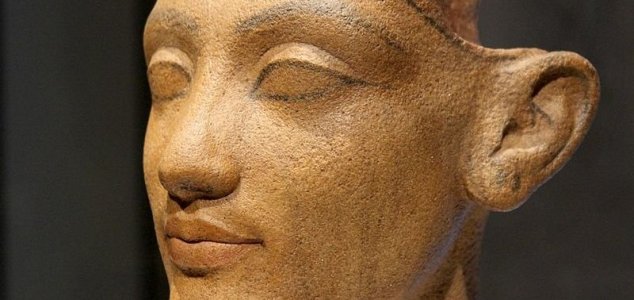
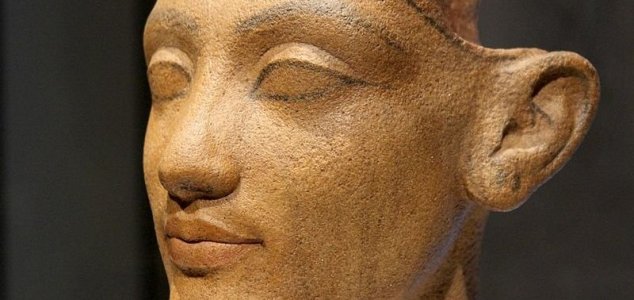
Nefertiti wasn’t just a pretty face on a limestone bust. She was a revolutionary. Alongside her husband, Akhenaten, she tore down the old gods. They fired the priests. They shut down the temples. They moved the capital city into the middle of the desert. They told the people to worship only one god: the sun disk, the Aten.
She was powerful. Art shows her smiting enemies, a pose usually reserved only for the King. She was basically a co-pharaoh.
And then, poof. Gone.
Around the 12th year of Akhenaten’s reign, she disappears from the historical record. For a long time, historians thought she died of a plague. But recent evidence suggests something crazier: she didn’t die. She got a promotion.
Many experts now believe she changed her name to Smenkhkare and ruled as a full Pharaoh after her husband died. She ran the show.
If she ruled as a King, she would be buried as a King. With all the gold, all the magic, and all the protection that comes with it. Finding her tomb wouldn’t just be finding a mummy. It would be finding the lost library of the Amarna period. It would answer the biggest questions of the Bible, the Exodus, and the collapse of the Bronze Age.
The Rollercoaster: Radar Scans and Confusion
The story didn’t end with the thermal scan. It got messier. This is where the conspiracy theorists start taking notes.
Following the heat scan, the Egyptian government authorized Ground Penetrating Radar (GPR). A Japanese specialist, Hirokatsu Watanabe, scanned the walls. His data was shocking. He claimed to see not just voids, but metallic and organic objects. Metal means gold. Organic means mummies.
The world went nuts. We were weeks away from breaking down the wall.
Then, everything stopped.
A second team, this time from National Geographic, came in to verify the data. They scanned. They looked at the monitors. They saw… nothing. Just solid rock. They claimed the first radar data was a “ghost signal”—reflections from the plaster paint bouncing around.
How can one machine see a door and another see a wall?
Then a third team came in. Then a fourth. The results were conflicting. Some data suggested a void exists but is smaller than thought. Others said the geology of the Valley (limestone with natural cracks) makes radar useless. The official narrative shifted from “90% certain” to “we need more data.”
Is There a Cover-Up?
Whenever Egyptology stalls, people ask questions. Why the delay? Why are they terrified to drill a tiny hole? A hole the size of a needle could settle this in five minutes. You slide in a fiber-optic camera, look around, and you’re done.
But the Ministry refuses. They say the wall is a priceless work of art (which it is). You can’t just drill into a 3,000-year-old painting on a hunch.
But skeptics argue it’s about control. A discovery this big changes history. It changes tourism. It changes the narrative. Maybe they know what’s in there, and they aren’t ready to show us. Or maybe, they are terrified of being embarrassed if they break down a wall and find nothing but dust.
The “What If” Scenario: Breaking the Seal
Let’s play a game. Let’s assume Reeves is right. Let’s assume the radar wasn’t a glitch.
Imagine the moment. The authorities finally give the green light. Conservators carefully remove the painted plaster of the North Wall, inch by inch, saving the artwork. Behind it, they find a masonry wall, stamped with the seal of the Necropolis.
They pull out a stone. A blast of stale, hot air escapes—air that hasn’t moved since 1330 BC. The air that Nefertiti breathed.
What’s inside?
- The Blue Crown: We have the bust of Nefertiti in Berlin, but we don’t have her crown. It could be there, made of solid gold and lapis lazuli.
- The Library: The Amarna period was a time of religious upheaval. There could be scrolls explaining the true nature of their monotheistic religion.
- The Twins: Nefertiti had many daughters. Some vanished. Are they in there with her?
- Gold: Tut’s tomb was packed to the ceiling, and he was a minor King who died suddenly. Nefertiti was a major ruler with years to prepare. The amount of treasure could dwarf the Tut collection.
It isn’t clear how long it will be before any attempt can be made to find out what lies inside. The political situation is tense. The science is contradictory. But if the existence of the room can be confirmed, and if it does contain the final resting place of Queen Nefertiti, then it will surely be one of the most important discoveries ever. Not just in Egyptology, but in the history of the human race.
Modern Theories and 2024 Updates
The story hasn’t died. It’s just gone underground.
In recent years, leading Egyptologist Zahi Hawass has been hunting in a different area of the Valley, claiming he is close to finding Nefertiti near the tomb of Amenhotep III. He believes she isn’t in Tut’s tomb at all.
However, Dr. Reeves hasn’t backed down. He released updated research showing that the hieroglyphs in Tut’s tomb were painted over earlier hieroglyphs. He claims the original writing showed Tut burying Nefertiti, but it was changed to show Ay (Tut’s successor) burying Tut. It’s a literal cover-up.
We are stuck in a limbo of “almost.” The technology exists to see through the rock, but the permission does not. We are standing on top of a locked box, holding the key, but afraid to turn it.
Is the ghost of the Queen calling out from behind the wall? Or are we just chasing shadows in the desert heat?
One thing is certain: The Valley of the Kings never gives up its dead easily. You have to fight for every inch of history.
Keep your eyes on the news. The next scan might just change everything.
Originally posted 2016-01-11 15:34:29. Republished by Blog Post Promoter and updated with modern deep-dive analysis.