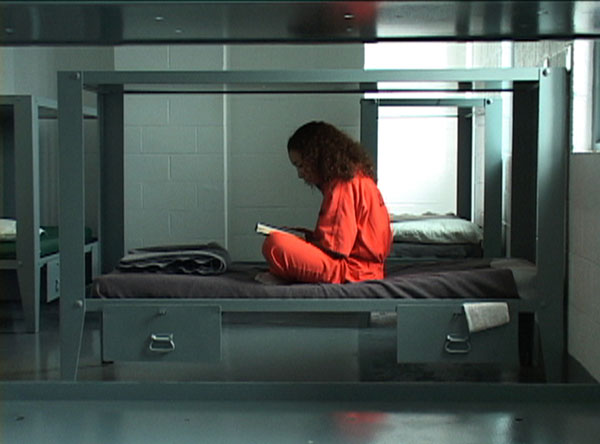
In 2004, the streets of Nashville, Tennessee, swallowed a sixteen-year-old girl named Cyntoia Brown. She wasn’t just a teenager. She was a runaway. A victim. And then, in the blink of an eye, she became something else entirely in the eyes of the law: a cold-blooded murderer.
You think you know this story? You don’t. Not really.
Most people saw the headlines. They saw the mugshot. They saw a “prostitute” who killed a 43-year-old client named Johnny Allen. But if you peel back the layers, if you really look at the machinery grinding beneath the surface, you find a story that isn’t about murder. It’s about survival. It’s about a justice system that looked at a trafficked child and saw a monster.
The Night Everything Changed
It was a humid night in August. Cyntoia Brown was living a nightmare that most of us can’t even comprehend. She was under the control of a pimp known as “Kut Throat.” Just the name sends shivers down your spine, doesn’t it? This wasn’t a consensual arrangement. This was slavery. Modern-day, American slavery.
Johnny Allen picked her up. He was 43. She was 16. Do the math. In any other context, we call that a crime against a child. But on that night, in that house, the script flipped.
According to Cyntoia, she saw him reach for something. A gun? Maybe. She didn’t wait to find out. She pulled the pistol she had in her purse—a weapon she carried because her world was a war zone—and she fired. Bang. One shot to the back of the head. Johnny Allen was dead.
Was it a robbery gone wrong? That’s what the prosecution screamed. They painted a picture of a greedy, manipulative girl executing a man for his wallet. But was it? Or was it the terrified reflex of a child who had been beaten, raped, and sold, finally deciding she wasn’t going to die that night?
The System Swallows Her Whole
Here is where the story gets dark. Really dark. Tennessee law at the time was a trap. A steel jaw aimed at the ankle of anyone who slipped up.
Despite being a juvenile, despite the clear evidence of sex trafficking, Cyntoia was tried as an adult. Think about that. A child, brain not even fully formed, standing in a courtroom designed for hardened criminals. The jury didn’t see a victim. They saw a killer. They convicted her of first-degree murder and aggravated robbery.
The sentence? Life in prison.
But in Tennessee, “life” didn’t just mean life. It meant she had to serve a minimum of 51 years before she could even look at a parole board. She would be nearly 70 years old before breathing free air again. Essentially, they threw her in a concrete box and threw away the key.
Enter the Camera: The Documentary That Changed History
While Cyntoia sat in a cell, watching her youth evaporate, something unusual happened. A filmmaker named Daniel Birman got access. Not just a quick interview. We are talking about deep, unprecedented access.
Birman started filming her the week of her arrest. He stuck with the story for six long years. This wasn’t just a news segment. This was a dissection of a tragedy.
His documentary, Me Facing Life: Cyntoia’s Story, didn’t just record events. It forced the audience to look Cyntoia in the eye. It stripped away the “murderer” label and showed the scared kid underneath. It explored the tragic events leading up to that fatal night in 2004.
The film captures a heartbreaking moment that feels almost scripted, but it’s raw reality: Cyntoia’s biological mother meets her daughter for the first time since giving her up for adoption 14 years earlier. The emotion in that room? It’s heavy. It suffocates you.
The DNA of Tragedy: A Generational Curse?
Birman’s film does something else incredible. It stops looking at Cyntoia as an isolated incident. It zooms out. Way out.
The documentary explores the history of abuse, violence, drugs, and prostitution back through three generations. This isn’t just about one girl making a bad choice. This is about a lineage of pain.
We learn about Georgina Mitchell, Cyntoia’s biological mother. We learn about her own mother. We see a pattern that repeats like a broken record. Abuse. Addiction. Incarceration. It raises a question that makes uncomfortable people squirm: Do we really have free will? Or are some of us born into a game that is rigged from the start?
The Medical Mystery: Fetal Alcohol Spectrum Disorder
Let’s get technical for a second. During the appeals process and the making of the documentary, a massive bombshell dropped. Doctors examined Cyntoia. They looked at her brain function. They looked at her history.
The diagnosis? Fetal Alcohol Spectrum Disorder (FASD).
Because her mother drank heavily while pregnant, Cyntoia’s brain literally did not develop like yours or mine. This condition impacts impulse control. It affects decision-making. It affects the ability to understand cause and effect.
So, you have a 16-year-old girl, being trafficked by a violent pimp, inside the home of a strange man, with a brain that is biologically wired to struggle with judgment under stress. And the court said, “She planned this coldly.”
The science says otherwise. The science says she was a walking time bomb, created by circumstances she had zero control over.
The Internet Wakes Up
For years, Cyntoia Brown was just another inmate number. Another statistic. The documentary aired on PBS, people were shocked, but the world kept turning. She sat in prison. Ten years passed. Then twelve.
Then, the internet happened.
Around 2017, the digital winds shifted. A new generation discovered her story. Clips of the documentary started floating around Twitter and Instagram. People were outraged. How could a sex trafficking victim be serving life for killing her abuser?
It went supernova. The hashtag #FreeCyntoia started trending globally. And then, the heavy hitters arrived.
Rihanna posted about it. Kim Kardashian West, who was pivoting into criminal justice reform, took up the cause. Suddenly, the Governor of Tennessee wasn’t just dealing with a lawyer; he was dealing with the combined force of millions of angry people holding smartphones.
This is the power of modern media. It bypassed the dusty law books and went straight to the court of public opinion. The pressure was volcanic.
The Clemency Miracle
In January 2019, something rare occurred. Governor Bill Haslam, in one of his final acts in office, granted Cyntoia Brown clemency.
He didn’t say she was innocent. But he admitted the sentence was too harsh. He admitted that forcing a child to wait 51 years for a chance at freedom was cruel. He commuted her sentence to 15 years, which she had already served.
On August 7, 2019, in the early hours of the morning, Cyntoia Brown walked out of prison. She went in a child. She came out a 31-year-old woman.
Why This Story Still Haunts Us
Cyntoia is free now. She is married. She is an advocate. She wrote a book. It looks like a happy ending.
But is it? As Cyntoia faces a lifetime of rebuilding what was stolen from her, the programme and her lingering story ask difficult questions about her treatment by the American justice system.
Why did it take Kim Kardashian to free her? What about all the other girls who don’t have a documentary crew following them? What about the women serving life sentences right now for defending themselves against abusers, who don’t have a viral hashtag?
The system is designed to crush. It is designed to process humans like cattle. Cyntoia Brown escaped the slaughterhouse, but the machinery is still running.
The Unanswered Questions
- Was Johnny Allen really just a client? Some theories suggest the local networks of trafficking run deeper than we know. Was he a part of something bigger?
- Where is “Kut Throat” now? The man who sold her. The man who put the gun in her hand. Why does the anger always fall on the girl, and rarely on the handler?
- Is Justice blind, or just expensive? Without the high-profile legal team that eventually rallied around her, Cyntoia would still be sitting in a cell today. She would be there until 2055.
This case isn’t just history. It’s a warning. It shows us that the line between “criminal” and “victim” is often drawn by people who have never walked a mile in the dark.
We need to keep watching. We need to keep filming. Because if we blink, the system wins.
Source: BBC films
Cyntoia’s journey proves one thing: The truth doesn’t always set you free. Sometimes, you have to fight for it with everything you have. And sometimes, you need the whole world to fight with you.
Originally posted 2016-02-15 16:28:01. Republished by Blog Post Promoter