Camelot: We’ve Been Searching in All the Wrong Places for Arthur’s Lost Capital
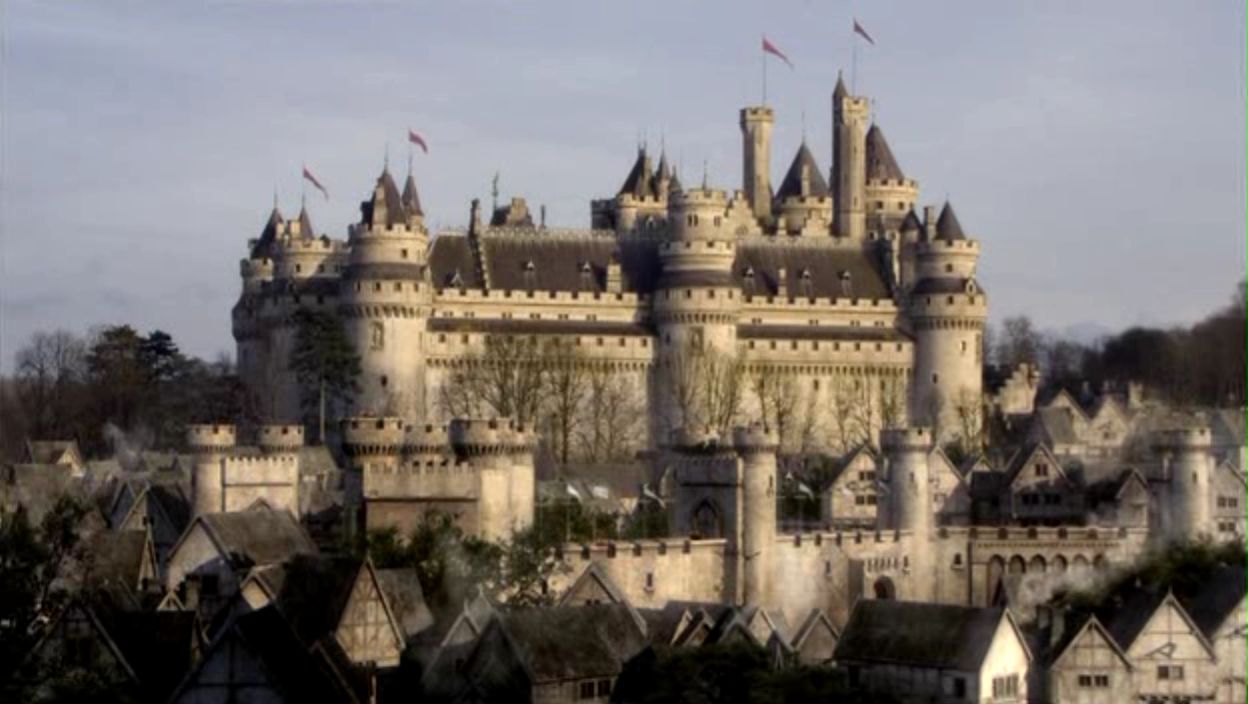
Camelot. The name itself sends a shiver down the spine. It conjures images of towering spires, shimmering banners, and a legendary Round Table where the bravest knights in Christendom gathered. It’s the heart of the Arthurian legend—the shining city on the hill, a beacon of justice in a dark and brutal age. A lost golden age.
But what if I told you it was a lie?
Well, not a lie exactly. More like a ghost. A whisper. A detail added to the story hundreds of years after the supposed events took place. If you go back to the very first tales of Arthur, the oldest, dustiest chronicles… Camelot is nowhere to be found. Nothing. It’s a historical black hole. The most famous castle in Western literature is a phantom, a place that appears out of thin air long after its alleged king has faded into myth.
So where did it come from? And if it wasn’t real, was it based on something that was? The hunt for the *real* Camelot is a maddening, exhilarating journey into the mists of Britain’s Dark Ages. It’s a puzzle with pieces scattered across England, Wales, and even France. And the prime suspect might just be a windswept hill in Somerset with a very strange story to tell.
Strap in. This gets weird.
The French Invention: How a Poet Created a Kingdom
Let’s get one thing straight. The original Arthur, if he existed at all, wasn’t a king in a crown. He was a warlord. A desperate, mud-spattered general fighting a bloody rearguard action against Saxon invaders in the 6th century. Early Welsh poems and chronicles like the *Annales Cambriae* and Nennius’s *Historia Brittonum* paint a picture of a brutal warrior, the *Dux Bellorum* (leader of battles), not a chivalrous ruler holding court.
He had strongholds, sure. Forts. But no Camelot.
The name doesn’t appear for over 600 years. Six centuries. Then, in the late 1100s, a French poet named Chrétien de Troyes sits down to write a new kind of story. His audience isn’t a bunch of grim Welsh warriors; it’s the sophisticated, romance-loving courts of medieval France. They want love triangles, quests, and chivalry. Arthur the Warlord gets a makeover. He becomes King Arthur. And a king needs a court. A capital city.
So, in his poem *Lancelot, the Knight of the Cart*, Chrétien just… drops it in. He mentions Arthur is at a place called Camelot. He doesn’t describe it. He doesn’t explain it. He just names it, as if everyone should already know it. It was the ultimate retcon. A literary software patch installed into the Arthurian operating system, and it changed everything.
Camelot was born not of stone and mortar, but of ink and imagination. A French invention to give the old British legend a touch of continental class. But that’s where the story should end, right? A literary footnote. Except it doesn’t. Because the idea was too powerful to remain fictional.
The Search Heats Up: Pinning the Ghost to a Map
Once Chrétien opened the floodgates, everyone wanted a piece of Camelot. It grew in the telling, becoming the center of the world for writers like Sir Thomas Malory, whose famous *Le Morte D’Arthur* (The Death of Arthur) in 1485 cemented the Camelot we know today. Malory even gave us a clue, connecting the Round Table to the Great Hall at Winchester.
Could it be that simple? Was Camelot just… Winchester?
Case File #1: The Winchester Deception
Walk into the Great Hall of Winchester Castle today, and you’ll see it. A massive, painted wooden disc hanging on the wall, eighteen feet across, proclaiming itself to be King Arthur’s Round Table. For centuries, people believed it. It was proof!
Except it’s a fraud. A glorious, magnificent fraud.
Scientific analysis, including tree-ring dating, has proven the table was built in the late 13th or early 14th century, probably for a tournament hosted by King Edward I. He was a huge Arthurian legend fanboy and likely wanted a killer prop for his medieval-themed party. The painting, with the Tudor rose in the center, was added even later by order of King Henry VIII to impress a visiting emperor. It’s a medieval movie prop, not a Dark Age artifact. The Winchester theory is a dead end, a testament to how badly people *wanted* the legend to be real.

Case File #2: The Roman Ghost Town
So, we look at the name itself. Camelot. Does it sound like anything else? Some historians have pointed their fingers east, towards Essex. To a place the Romans called *Camulodunum*. Sound familiar?
Camulodunum (modern Colchester) was a powerhouse. It was the first capital of Roman Britain and a major Celtic tribal center before that. The name is a direct linguistic ancestor. It’s tantalizing. Could Chrétien de Troyes have heard of this ancient, powerful city and borrowed its name for his fictional court?
It’s possible. But there’s a huge problem. Geography. Almost every other major site in the Arthurian legends—from his birth at Tintagel to his final battle at Camlann and his resting place on Avalon (Glastonbury)—is firmly rooted in the west of England. Cornwall. Somerset. Wales. Camulodunum is way out on the wrong side of the country. It just doesn’t fit the map of Arthur’s world. A fascinating linguistic coincidence, perhaps, but almost certainly not the physical location.
Case File #3: The Prime Suspect of Somerset
This brings us to a lonely, windswept hill in Somerset. It doesn’t look like much today. Just a massive, grass-covered mound rising from the flatlands. But the locals have always known. They’ve always called it King Arthur’s Palace.
The place is Cadbury Castle. And it is, without a doubt, the number one contender for the historical basis of Camelot.
Our first solid clue comes from a man named John Leland, an antiquarian who traveled England in 1542 on behalf of Henry VIII, documenting historical sites. When he reached South Cadbury, he wrote something that should make the hair on your arms stand up. The villagers told him about an old ruined city on the hill, and they called it Camallate.
He wrote: “At the very south end of the church of South-Cadbyri standeth Camallate, sometime a famous town or castle… The people can tell nothing there but that they have heard say that Arthur much resorted to Camallat.”
Leland saw the ruins with his own eyes. Foundations of walls. Piles of blue lias stone that locals were carting away to build their homes. This wasn’t a medieval romance. This was a 16th-century eyewitness account of a local tradition linking a real, ruined fortification to King Arthur. And the name they used… Camallate. It’s chillingly close.
DEEP DIVE: The Dig That Shocked the World
For four hundred years, Leland’s account was just a curious story. Folklore. But then, in the 1960s, a team of archaeologists led by the legendary Leslie Alcock decided to see if there was any fire behind the smoke. They launched a massive, multi-year excavation of Cadbury Castle. What they found was explosive.
Cadbury wasn’t a castle in the stone-tower sense. It was a colossal Iron Age hillfort, fortified with gigantic earth ramparts and ditches. But the real discovery was what happened there during the exact time Arthur was said to have lived—the late 5th and early 6th centuries.
The archaeologists uncovered evidence of massive refortification. Someone, a leader of immense power and resources, had rebuilt the ancient defenses. They constructed a 1,200-yard-long defensive wall of stone and timber, enclosing an area of 18 acres. At the very summit, they found post-holes marking the location of a huge timber building—a Great Hall, 63 feet long by 34 feet wide. A chieftain’s feasting hall.
And then came the smoking gun. They found pottery. Not coarse, local stuff. They found shards of amphorae—clay jars used to transport wine and olive oil—all the way from the Eastern Mediterranean. This wasn’t some backwater fort. This was the headquarters of a British king who was still trading with the remnants of the Roman Empire. A man of immense wealth and international standing. A man exactly like the historical figure Arthur would have been.
Cadbury Castle fits the profile perfectly. It’s in the right part of the country. It was a massive, high-status, refortified stronghold at the exact right time in history. And, most importantly, it has an unbroken local tradition stretching back at least 500 years linking it directly to Arthur and a name that sounds suspiciously like Camelot. While it’s not proof, it’s as close as we are ever likely to get.
The Welsh Connection: Was Camelot a Stolen Identity?
Before Chrétien invented the name “Camelot,” did Arthur’s court have a different name? Oh, yes. And it points us toward Wales.
Geoffrey of Monmouth, writing about 50 years before Chrétien in his *History of the Kings of Britain*, gave Arthur a grand court. He described it in detail. But he didn’t call it Camelot. He called it Caerleon.
Caerleon, in South Wales, was one of the most important Roman sites in all of Britain. Its name means “Fortress of the Legion,” and it was home to the Legio II Augusta. It had an amphitheater, massive stone buildings, and baths. In the Dark Ages, its impressive Roman ruins would have seemed like the work of giants. It was a natural place for a writer like Geoffrey to place the court of a great Romano-British king. For many, Caerleon is the *original* Camelot, the seat of power that Chrétien de Troyes later rebranded.
Could the truth be a hybrid? Perhaps the historical Arthur, the warlord, ruled from a fortified hilltop like Cadbury. But the legendary Arthur, the king of all Britain, was given a more suitably grand capital by storytellers—the magnificent Roman ruins of Caerleon. Then, the French poet gave it a new, more romantic name: Camelot.
The Unseen Kingdom: A Castle of the Mind
So where does this leave us? The truth is, you will never find a signpost that says “Welcome to Camelot.” It doesn’t exist on a physical map, because it was never a single, physical place. It’s a composite entity. A legend built in layers over centuries.
It started as the memory of a real Dark Age warlord’s hilltop fortress. A place of power, a place like Cadbury Castle, where a British leader rallied his forces against the encroaching darkness.
Then, storytellers gave that memory a grander home, placing it among the awe-inspiring ruins of Roman cities like Caerleon.
Finally, a French poet gave it a name. A beautiful, musical name that captured the imagination of the world. Camelot.
Perhaps the real search isn’t for a pile of stones, but for what those stones represented. Camelot isn’t just a place; it’s an idea. It’s the belief that even in the darkest of times, there can be a brief, shining moment of justice, honor, and hope. A “one brief shining moment,” as the modern musical puts it. That is the true castle, the one that can never be conquered or fall into ruin. It wasn’t built on a hill in Somerset. It was built in the human heart, and it’s a kingdom we’re all still searching for.