The Ghost in the Sky: Cracking the Unsolved Legend of D.B. Cooper
November 24th, 1971. A day before Thanksgiving. The air is cold, the skies are grey, and America is about to be gripped by a mystery so perfect, so audacious, that it remains a gaping wound in the FBI’s case files over half a century later. This is the story of the man who called himself Dan Cooper. A man who boarded a commercial airliner, extorted a fortune, and then simply… vanished. He leaped from a speeding jet into a furious winter storm and became a ghost. A legend. He became D.B. Cooper.
And to this day, it remains the only unsolved case of air piracy in the entire history of the United States. Not a single charge. Not a single conviction. Just a bottomless rabbit hole of questions, theories, and suspects that has obsessed investigators and internet sleuths for decades. Forget what you think you know. Forget the neat little summaries. We’re going deep. We’re going to pull apart the timeline, examine the evidence, and stare into the heart of the storm where a man with a plan became an American folk hero.

So buckle up. The flight is about to get turbulent.
A Quiet Man with a Dark Plan
It all began so quietly. So… normally. The scene is Portland International Airport. A man, probably in his mid-40s, walks up to the Northwest Orient Airlines ticket counter. He’s wearing a dark business suit, a crisp white shirt, and a skinny black tie. He could be any traveling salesman on his way to a meeting. Nothing about him screams danger. He is the definition of a grey man. Anonymous.
He purchases a one-way ticket to Seattle, a short 30-minute flight. He pays in cash. The name he gives? Dan Cooper. The legend of “DB Cooper” was actually a frantic media mistake, a slip-up by a reporter chasing a lead that stuck like glue. But on that day, he was simply Dan Cooper.
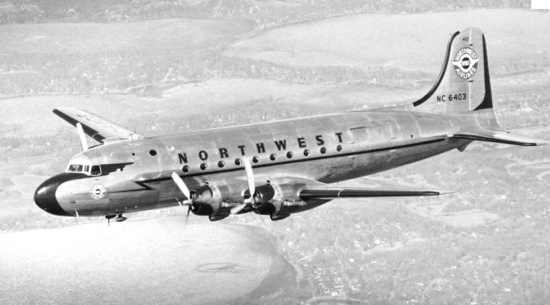
He boards Northwest Orient Airlines Flight 305, a Boeing 727-100. He takes his seat, 18C, in the rear of the plane. He orders a bourbon and soda. Smokes a cigarette. He is calm. Composed. Waiting. The plane takes off at 2:50 PM, climbing into the moody skies of the Pacific Northwest.
And then, the mask slips.
“Miss, You’d Better Look at This.”
Shortly after takeoff, Cooper calls over a flight attendant named Florence Schaffner. He hands her a folded note. Thinking it’s just another lonely businessman’s phone number, she slips it into her purse, unopened. He leans closer. His voice is low, but firm. “Miss, you’d better look at that note. I have a bomb.”
Florence’s blood runs cold. She opens the note. The neat, all-caps handwriting lays out his demands. She asks to see the bomb. Cooper obliges, cracking open his briefcase just enough for her to see a terrifying mess of wires, a large battery, and eight red cylinders. Dynamite? Maybe. Nobody was taking any chances.
The pilot, William Scott, is informed. The message is relayed to air traffic control. On the ground, chaos erupts. The president of Northwest Orient Airlines, Donald Nyrop, makes the immediate decision to cooperate fully. Lives are on the line. Whatever this man wants, he gets.
Cooper’s demands were shockingly specific:
- $200,000 in “negotiable American currency.” That’s over $1.5 million in today’s money.
- Four parachutes. Two primary civilian parachutes and two reserve chutes.
- A fuel truck standing by in Seattle to refuel the plane upon arrival.
He remained eerily polite throughout the ordeal. He ordered a second bourbon. He even tried to pay for it. He calmly told the crew that he had no grudge against them. This wasn’t personal. It was just business.
The Longest Layover: High-Stakes on the Tarmac
As the plane circled Puget Sound, buying time, a frantic scene unfolded below. FBI agents scrambled. They rushed to gather the cash—10,000 individual $20 bills. They photographed every single one, creating a microfilm record of the serial numbers. The money was stuffed into a heavy bank bag.
Sourcing the parachutes was another problem. Agents rushed to a local skydiving school. The owner, a man named Earl Cossey, provided the chutes. One of the reserve chutes he handed over was a dummy, a non-functional training unit sewn shut. Did the FBI know? Did Cossey? It’s a detail that adds another layer of insane risk to Cooper’s plan.
At 5:39 PM, Flight 305 landed at Seattle-Tacoma Airport. The plane was parked in a remote, brightly lit section of the tarmac. The lights inside the cabin were dimmed at Cooper’s command, a move to thwart any potential police snipers.
A single airline employee walked across the tarmac, carrying the money and the parachutes. He handed them to flight attendant Tina Mucklow through the aft stairs—the 727’s unique, built-in staircase at the rear of the plane. Once the ransom was aboard and verified by Cooper, he kept his word. All 36 passengers and two of the flight attendants were allowed to leave. They scurried off the plane, unaware of just how close they had been to disaster.
Only the flight crew and Tina Mucklow remained. The ordeal was far from over. Phase two was about to begin.
Deep Dive: Why Four Parachutes?
This has always been one of the most brilliant parts of Cooper’s plan. Why ask for four? The common theory is a stroke of pure psychological genius. By demanding multiple chutes, he created the illusion that he might force a crew member to jump with him. This masterstroke made it impossible for the authorities to sabotage the parachutes. They couldn’t risk a hostage’s life. It also kept them guessing. Was there an accomplice on board they didn’t know about? It was a simple request that sowed maximum confusion and ensured his own safety. A true chess move.
Into the Howling Dark: The Impossible Jump
With the ransom secure, Cooper laid out his flight plan to the pilots. They were to fly south, towards Mexico City, with a refueling stop in Reno, Nevada. But he had a very strange set of flight parameters:
- The plane must stay below 10,000 feet—an unusually low altitude for a jetliner.
- The landing gear must remain down.
- The wing flaps must be set to 15 degrees.
These instructions did two things: they kept the plane’s airspeed incredibly slow, around 200 miles per hour, and kept the cabin unpressurized. Perfect conditions for a jump.
And then came the final, chilling command: the aft staircase must be lowered in flight. The pilots protested. It was dangerous, possibly impossible. Cooper was insistent. Around 7:40 PM, the refueled 727 took off from Seattle, a ghost ship flying into the teeth of a raging storm. The weather was horrific. Heavy rain, high winds, and near-zero visibility.
Two F-106 fighter jets were scrambled to tail the airliner, but the storm and the 727’s slow speed made it nearly impossible to keep a visual. They saw nothing.
Inside the plane, Cooper ordered the remaining crew member, Tina Mucklow, to join the pilots in the cockpit and close the curtain. He was now alone in the dark, empty cabin. At approximately 8:00 PM, a warning light flashed in the cockpit. It indicated that the aft staircase had been opened. The pressure in the cabin changed.
Sometime around 8:13 PM, somewhere over the dense, rugged wilderness of southwestern Washington, Dan Cooper did the unthinkable. He walked down the stairs into a 200-mph wind, in the pitch-black of a freezing storm, and leaped into history, with $200,000 strapped to his body.
He was gone.
A Cold Trail and a Boy on a Beach
The largest manhunt in US history kicked off. The FBI’s best guess for a jump zone was a massive, unforgiving swath of forest near Ariel, Washington. They threw everything they had at it. Hundreds of soldiers, FBI agents, and local police scoured the terrain on foot and by helicopter. They found nothing. No parachute. No briefcase. No body. No money. It was as if the sky had simply swallowed him whole.
The case went cold. Years turned into a near-decade. The legend of D.B. Cooper grew, a modern-day folk hero who beat the system and got away clean.
Then, in February 1980, a miracle. An eight-year-old boy named Brian Ingram was digging a fire pit on a sandy stretch of the Columbia River known as Tena Bar. His fingers brushed against something in the sand. He pulled out three rotting bundles of cash. They were bound with rubber bands. When his family got the money home and dried it out, they called the FBI.
The serial numbers were a perfect match. It was Cooper’s money. Almost $6,000 of it.
The discovery blew the case wide open again, but it created more questions than answers. How did the money get there? Tena Bar was miles from the original search zone. Did Cooper land in the river and drown, the money eventually washing ashore? Or did he lose some of the cash during his jump, and it slowly made its way down tributaries into the main river over nine years? Some scientists even argued the bundles didn’t wash up naturally, but were more likely scooped up by a dredging operation on the river and deposited on the shore.
The money on Tena Bar remains the only piece of physical evidence from the hijacking ever recovered. It’s a tantalizing clue that leads nowhere definite.
The Suspect Carousel: Who Was Dan Cooper?
For decades, the FBI vetted thousands of potential suspects. The file grew into a bible of dead ends. But a few names have always floated to the top of the list, each a compelling story in its own right.
Richard McCoy Jr: The Copycat?
Just a few months after Cooper’s heist, a Vietnam vet and skydiving enthusiast named Richard McCoy Jr. pulled off an almost identical hijacking. He jumped from the back of a 727 with $500,000. But McCoy was sloppy. He was caught, convicted, and later killed in a shootout with the FBI after a prison break. For years, many thought he was Cooper, but the timeline and physical descriptions didn’t quite match up. The FBI officially ruled him out.
Duane Weber: The Deathbed Confession?
In 1995, a man named Duane Weber lay dying. He turned to his wife and said, “I am Dan Cooper.” After his death, his wife Jo began connecting the dots. He had an old knee injury from, he claimed, “jumping out of a plane.” He had a nightmare where he talked about leaving his fingerprints on the aft staircase. The evidence was circumstantial, but spooky.
Robert Rackstraw: The Modern Media’s Favorite?
In recent years, a TV documentary series pushed hard for a man named Robert Rackstraw, a Vietnam vet with extensive training in parachuting and explosives. He was a person of interest early on but was cleared by the FBI. The filmmakers presented a mountain of circumstantial evidence, but Rackstraw denied it until his death in 2019. Despite the media hype, the FBI never wavered, stating the evidence against him wasn’t enough.
The list goes on and on. Dozens of names, each with a sliver of plausibility, but none with the knockout proof needed to close the case. In 2016, the FBI finally, officially, suspended the active investigation. They had chased ghosts long enough.
The Final Question: Did He Survive?
This is the debate that still rages in online forums and late-night conversations. Could anyone have survived that jump?
The case for his death is strong. He jumped into a sub-zero windstorm, at night, over some of the most rugged terrain in North America. He was wearing a business suit and loafers, not survival gear. The parachutes he was given were not steerable, and one of them may have been a dummy. The odds were astronomically against him.
But the case for his survival is just as seductive. The man was meticulous. He knew the exact capabilities of the Boeing 727. He was cool under pressure. FBI tests later proved the jump itself was survivable. Maybe he was an experienced paratrooper who knew exactly what he was doing. Maybe he had an accomplice on the ground, waiting at a predetermined spot. Maybe he landed, buried the money, and simply walked back into a normal life, a quiet millionaire hiding in plain sight.
He is a ghost. A question mark. A legend who pulled off the perfect crime and faded into the storm, leaving us with nothing but a handful of rotting twenty-dollar bills and a mystery for the ages. Dan Cooper isn’t just a man anymore. He’s an idea: the ultimate fantasy of sticking it to the man and getting away with it, dissolving into the night, free and rich. And that, perhaps, is why we can never let him go.