Home Conspiracies Aghori : The Living Dead Monks In Hindu

Aghori : The Living Dead Monks In Hindu

1
143

Beyond the Veil: The Unspeakable Truth of India’s Aghori Flesh-Eaters

You think you’ve seen the edge. You’ve listened to the music. You’ve worn the black. You’ve surrounded yourself with the imagery of death, a comfortable aesthetic to keep the mundane world at arm’s length. But let me ask you a question. A real question.

What if it wasn’t an aesthetic?

What if, to truly understand life, you had to live inside death? Not just think about it, but taste it. Smell it. Bathe in its dust. What if the path to true spiritual freedom was paved with every taboo, every revulsion, every single thing society tells you to fear? Forget your comfort zone. We’re not even in the same dimension anymore. We’re talking about a path so extreme, it makes everything else look like a child’s fairytale. Welcome to the world of the Aghori.

Who Are the Aghori? The Ghosts Who Walk Among Us

In the bustling, chaotic cities of India, particularly the holy city of Varanasi, they exist. They are phantoms in plain sight. The Aghori are a sect of Hindu ascetics, but calling them that is like calling a black hole a dimple in spacetime. It’s technically true, but it misses the terrifying scale of the thing entirely.

They are the followers of Shiva, the Destroyer. The god of transformation. And they take their worship to an absolute, bone-chilling extreme. To an Aghori, the separation between purity and filth, good and evil, beauty and decay is a complete illusion. A cosmic joke. To prove this, they don’t just reject society’s norms. They hunt them down, kill them, and consume the remains.

They live in cremation grounds, the *shmashana*. This isn’t a temporary retreat. It’s their home. Their church. Their university. The air is thick with the smoke of burning bodies, the scent of mortality hanging heavy like a shroud. This is their oxygen.

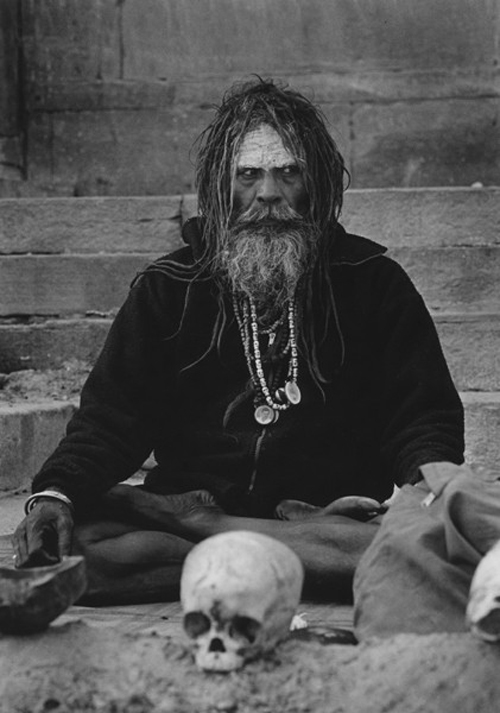
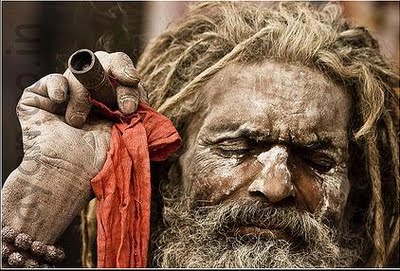
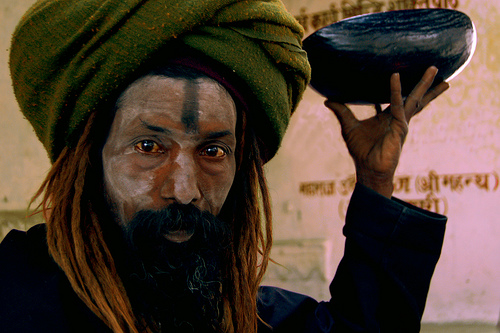
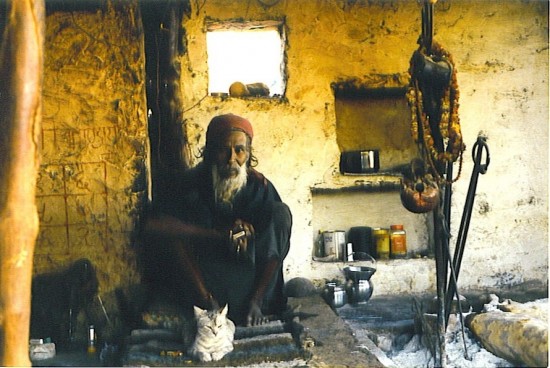
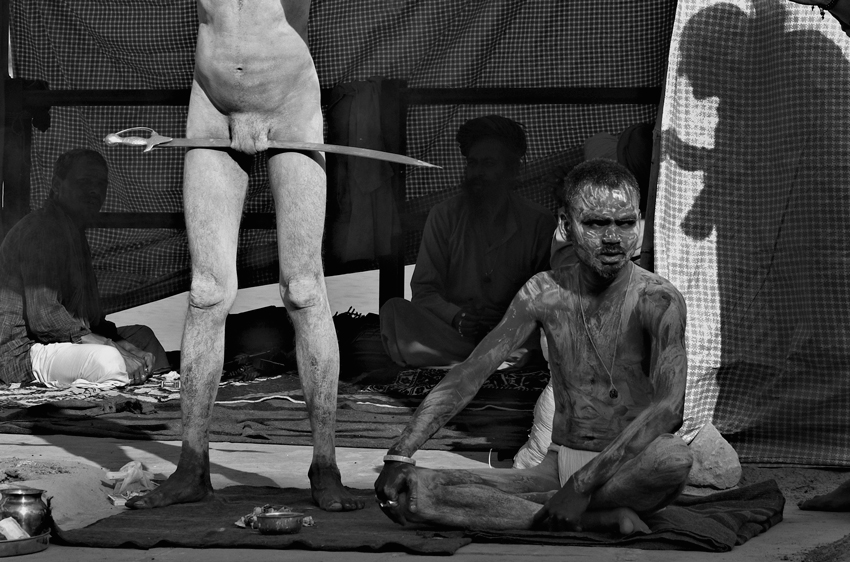
Aghori monk with face painted in ash

A Deep Dive into the Aghori Philosophy: Why Embrace the Taboo?

Why would anyone choose this life? It’s a question that cuts to the core of human fear. The answer is rooted in a profound and unsettling philosophy: non-duality. In their worldview, everything in the universe is a manifestation of the ultimate reality, Brahman. Everything. The fragrant flower and the rotting corpse. The saint and the sinner. The divine nectar and the putrid excrement.

They believe our minds create categories of “good” and “bad” out of fear and attachment. Disgust is a prison. Aversion is a chain. By actively seeking out and embracing the things we find most repulsive, an Aghori aims to shatter these mental chains. They want to destroy the ego, that little voice inside you that says “I like this, I don’t like that.” When the ego is gone, all that remains is the divine. Pure consciousness. Complete and total freedom.

So when an Aghori meditates on a corpse, eats food from a garbage pile, or even consumes human flesh, it is not for shock value. It is a surgical strike against their own mind. It is a declaration of war on the illusion of separation. It is the most extreme form of spiritual practice imaginable.

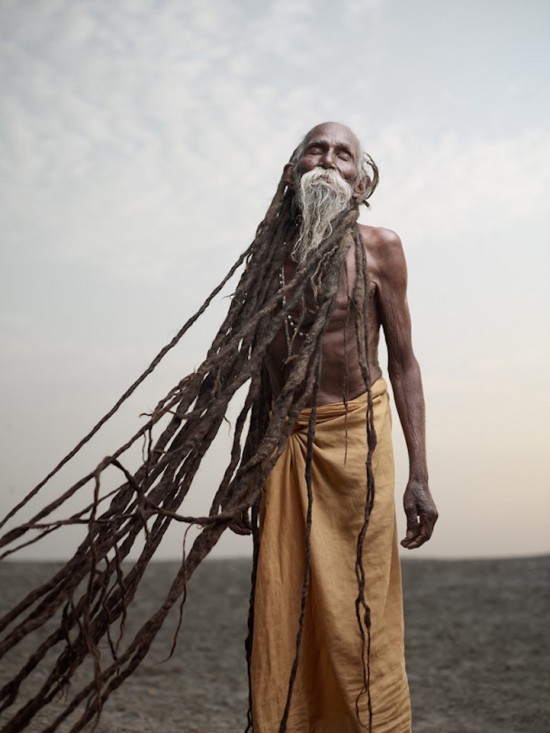
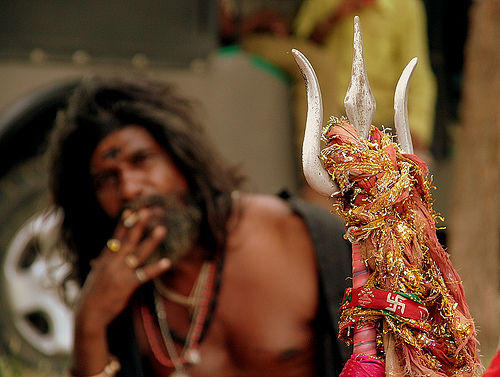
Aghori sadhu in contemplation

The Cremation Ground: A Sacred Home

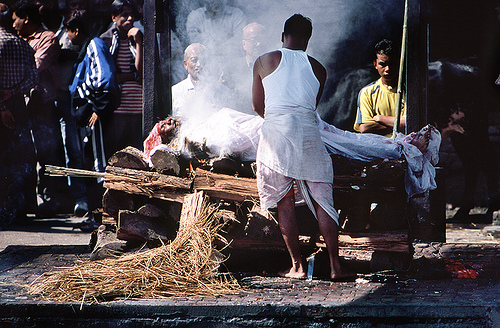
Imagine living where life ends. Day in, day out. The Manikarnika Ghat in Varanasi is one of the most auspicious places for a Hindu to be cremated. Fires burn 24/7, turning bodies back into their base elements. For us, it’s a place of grief and finality. For the Aghori, it is a bustling metropolis of spiritual opportunity.

Here, they are surrounded by the raw, unfiltered truth of existence: life is temporary. They see families weep. They see bodies wrapped in simple cloth, awaiting the fire. They collect the ashes from the pyres and smear them on their bodies, a constant, gritty reminder of their own mortality. This isn’t macabre. To them, it is holy. It is a shield against the trivialities and distractions of the world we live in, a world obsessed with preserving a body that is destined to fail.

The river Ganges flows nearby, carrying the ashes of thousands. The Aghori bathe in these waters, not just cleaning their bodies, but absorbing the essence of countless lives that have come and gone. It’s a visceral, constant communion with the cycle of life and death.

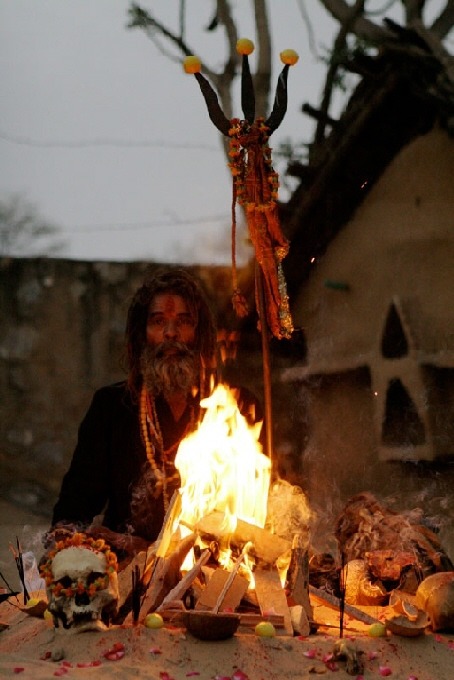
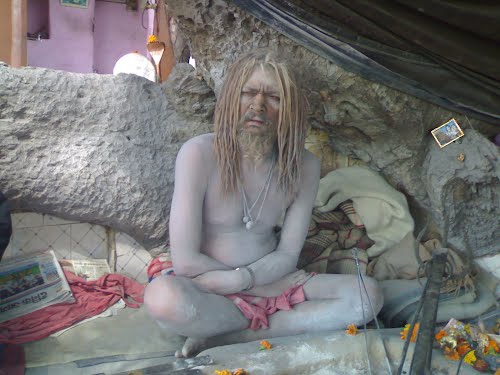
Aghori sadhu at a cremation ground

Rituals That Defy Reality

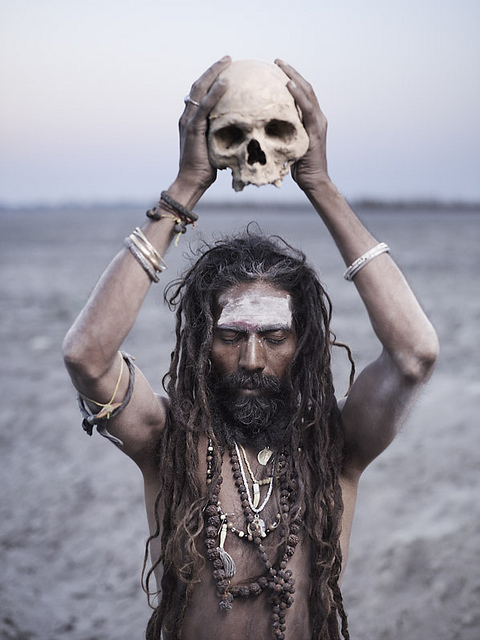
The practices of the Aghori are not for the faint of heart. They are designed to demolish every boundary of the mind. Their most important tool is the human skull, the *kapala*. This is their bowl, their cup, their only real possession. It’s taken from the cremation grounds. Every meal, every drink, is a direct confrontation with death. It’s a symbol that even the vessel of the human ego, the skull that houses the brain, is just an empty bowl once life has fled.

They perform *shava sadhana*, a complex Tantric meditation performed while sitting on a human corpse. Think about that for a second. The goal is to confront the deepest, most primal fear of death head-on. In that terrifying space, they believe they can gain immense power and insight, using the residual energy of the departed as a focusing lens for their own consciousness.

And then there are the things they consume. They eat what is offered, and that often means food that has been discarded. They are known to consume their own waste and drink urine. This is the ultimate test of non-differentiation. If God is in everything, then God is in the waste products of the body. To reject it is to reject a part of reality. It’s a terrifying logic, but it’s completely consistent with their worldview.

Portrait of an Aghori sadhu

Cannibalism or a Sacred Rite?

This is the one that stops everyone in their tracks. The Aghori practice a form of ritual cannibalism. Let’s be very clear. They do not hunt or kill people. Their practice is limited to consuming parts of human corpses brought to the cremation grounds. They might pluck a piece of flesh from the funeral pyre before it is fully consumed by the flames.

Why? For the Aghori, this is the final taboo. The absolute peak of embracing what is feared. By consuming human flesh, they are internalizing the concept of mortality itself. They are demonstrating, in the most graphic way possible, that the body is just meat, a temporary vessel for the soul. They believe that this act can confer supernatural powers, or *siddhis*, and can sever the cycle of reincarnation. It is a sacrament. A horrifying, unthinkable sacrament that proves their absolute detachment from the physical form.

Aghori monk in a ritual pose

Supernatural Powers or Urban Legend?

Whispers and legends swirl around the Aghori like the smoke from their funeral pyres. People both fear and revere them, believing they possess powerful *siddhis*. Locals tell stories of Aghori who can heal the sick with a touch or a chant, absorbing the disease into their own bodies. They are said to be immune to poisons and extreme temperatures. Some tales speak of their ability to levitate, to see the future, or to inflict terrible curses on those who disrespect them.

Are these just stories, born of fear and misunderstanding? Or is there something more to it? Modern internet forums are filled with debates. Some researchers suggest that their extreme lifestyle and consumption of certain psychoactive plants during rituals could induce altered states of consciousness that feel like supernatural experiences. Believers argue that by pushing the human body and mind to their absolute breaking point, the Aghori tap into a level of reality that science can’t yet measure. They claim the Aghori are not just rejecting our world; they are mastering the hidden laws that govern it.

An Aghori with a human skull
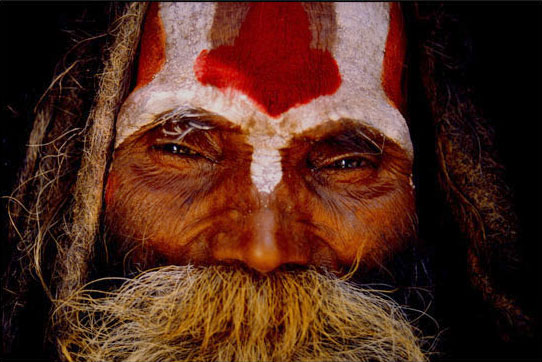
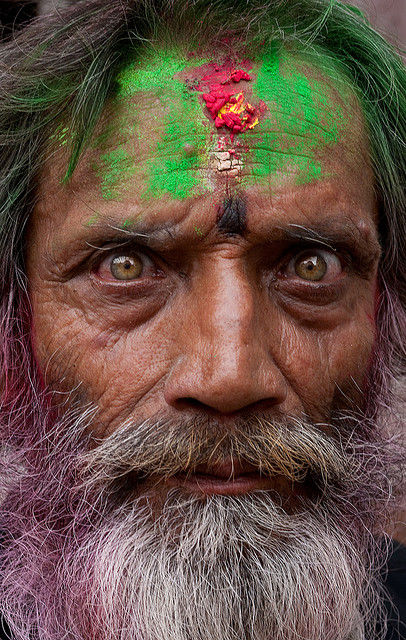
Close-up of an Aghori sadhu
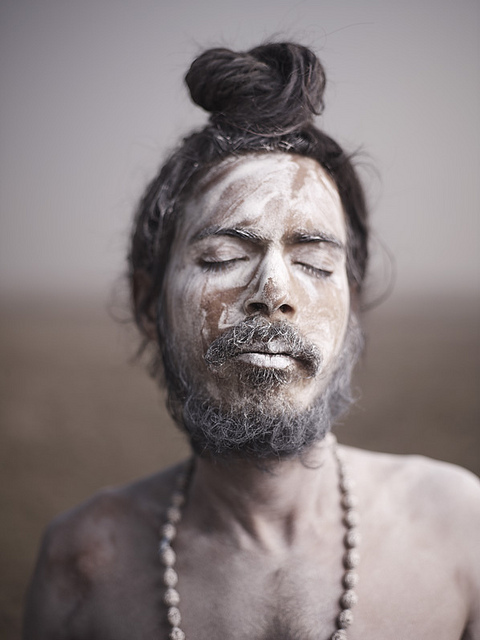
Aghori covered in ash
Two Aghori monks together

The Modern Aghori: Misunderstood Sages or a Dying Breed?

In the age of the smartphone, the Aghori remain a shocking anachronism. Photographers and documentary filmmakers have made them objects of morbid fascination, their images spreading like wildfire across the web. This exposure is a double-edged sword. It has brought their philosophy to a wider audience, but it has also attracted charlatans—fakes who smear on some ash and sit by the ghats, preying on tourists for money.

The true Aghori remain elusive. They do not seek publicity. Their path is a solitary one, a deeply personal war against the self. Yet, they are not entirely removed from society. Many Aghori are also known for their compassion. Some run informal leper colonies, caring for the sick and outcast that mainstream society has abandoned. In their eyes, a leper’s decaying flesh is no different from a king’s healthy body—both are just temporary forms, equally divine.

They are a walking, breathing paradox. Feared as ghouls, yet sought out for blessings. Dismissed as insane, yet possessing a philosophical consistency that is terrifying in its intensity. Their lifestyle makes what we do here, our fascination with dark art and music, look like a bunch of pansy shit. And that’s the truth. We dip our toes in the darkness. They have made it their ocean.

Aghori monk in meditation
Aghori with intense gaze
Group of Aghori sadhus
Aghori monk near the Ganges

So, the next time you think about death, don’t just think about the imagery. Think about the Aghori. Think about what it would mean to truly, utterly, let go of every fear. To look at the most horrific thing you can imagine and see not horror, but God. We build walls in our minds to keep the darkness out. The Aghori invite it in, offer it a seat, and eat from the same skull. The question isn’t whether they are crazy. The question is, who is truly free?

Originally posted 2014-06-27 20:16:06. Republished by Blog Post Promoter