Monday, June 8, 2026
HomeUnexplained MysteriesCrime MysteriesThe strange case of the ‘Bill o’ Jacks Murders’

The strange case of the ‘Bill o’ Jacks Murders’

The wind screams differently on Saddleworth Moor. If you’ve ever stood there, you know what I mean. It’s a hollow, lonely sound that cuts right through your coat and settles in your bones. Most people today hear “Saddleworth” and immediately think of the Moors Murders of the 1960s—Ian Brady and Myra Hindley. Pure evil. But the moors have a memory much longer than that. The soil here is soaked in blood that goes back centuries. Long before the modern horrors, there was the Moor Cock Inn.

And there was the night the devil came for Bill o’ Jacks.

This isn’t just a cold case. It is the cold case. A locked-room mystery without the locked room, a brutal slaughter in the middle of nowhere that remains one of the UK’s most baffling unsolved crimes. We are talking about a crime scene so violent, so chaotic, that it feels less like a murder and more like a frenzy. A massacre.

Let’s set the record straight right now. While some old reports (and the original snippet above) cite 1882, true historians and locals know the real date: April 2, 1832. This was a time before forensics. Before DNA. Before fingerprints. If you killed someone in the dark of the moors, the only witness was the moon.

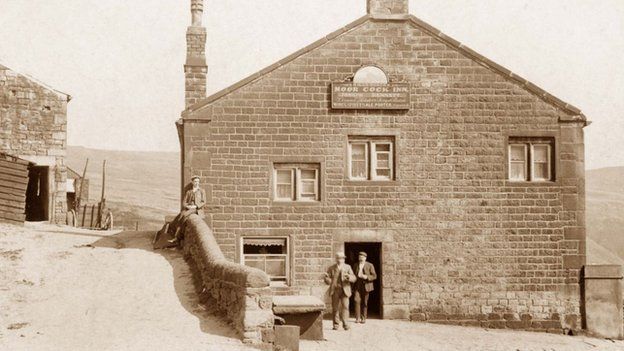
image

The Slaughter at the Moor Cock Inn

Imagine the isolation. The Moor Cock Inn wasn’t just a pub; it was an outpost on the edge of the civilized world, sitting near Greenfield in Saddleworth. In the 19th century, this was wild country. To live here, you had to be tough. To run a pub here, you had to be tougher.

William Bradbury, known locally as “Bill o’ Jacks” (a naming custom referring to him as the son of Jack), was 84 years old. A giant of a man in his youth, and still formidable. His son, Thomas Bradbury, was 46. They weren’t soft men. They were the kind of men who broke up bar fights and threw drunks out into the snow. They were the law in their little corner of the hills.

So, what could take them both down?

The discovery was made by Bill’s granddaughter, little Mary Ann. Imagine that trauma. She walked into the pub the next morning expecting breakfast. Instead, she found a slaughterhouse. The silence must have been deafening.

A Scene Straight From Hell

The reports from the time are gruesome. They don’t hold back. Blood was everywhere. It wasn’t just a struggle; it was a war. The police—or what passed for police back then—found blood smeared on the floor. Splashed up the walls. Dripping down the stairs. It was a chaotic map of violence that no one could read.

Thomas, the son, was found downstairs. His body was battered. Destroyed. It looked like he had fought for his life, trading blow for blow until he was simply overwhelmed. The weapons? Heavy stones. A poker. Maybe the butt of a pistol. Blunt force trauma. Up close and personal. This wasn’t a sniper shot from a distance; this was someone looking into Thomas’s eyes and beating the life out of him.

Upstairs, the horror continued.

Old Bill was in his bed. The attackers hadn’t just stopped at the son; they had hunted the father. Bill was battered, his skull fractured, lying in a pool of his own blood. But here is the twist that keeps historians awake at night: Bill was still alive.

The Dying Whisper: The Clue That Leads Nowhere

This is where the story turns from a tragedy into a legend. The 84-year-old patriarch, beaten beyond recognition, was clinging to life by a thread. He couldn’t move. He could barely breathe. But he was conscious.

When help arrived, they leaned in close. This was it. The moment where the victim names the killer. The final testament. Bill o’ Jacks tried to speak. His lips moved. A mumble. A whisper entangled with the death rattle.

What did he say?

That question has haunted Saddleworth for nearly 200 years.

The witnesses heard a word. Or a name. Or a sound. The consensus was something like “Platts.”

Decoding the Dead Man’s Words

Detectives and locals went wild with theories. “Platts.” What could it mean? It seems simple, right? Go arrest Mr. Platt. But nothing is simple on the moors.

  • Theory A: The Name “Platt”. It was a common name in the area. There were Platts everywhere. Which one? Was it a neighbor? A rival? Police questioned locals with the name, but nothing stuck. No blood on their clothes. No motive that made sense.
  • Theory B: “Patts”. Some believed Bill was trying to say “Paddy” or “Patts,” a derogatory slang term for Irishmen at the time. There was a lot of tension with Irish laborers moving through the area for work. Was this a hate crime gone wrong? Or a robbery by a traveling gang?
  • Theory C: “Platters”. This one is fascinating. “Platters” was a term sometimes linked to Romany Gypsies or traveling tinkers who sold dishware. The moors were a crossing point for travelers. Did a deal go sour? Did Bill refuse them service?

Or, and this is the most chilling option, was it just nonsense? The firing of dying neurons? A random syllable from a brain that had been smashed in? We will never know. The ambiguity is maddening.

The Motive: Why Kill the Bradburys?

You don’t beat two men to death for fun. Well, most people don’t. There had to be a reason. Over the years, sleuths have tried to piece together the “Why.”

The Poacher Revenge Theory

Thomas Bradbury wasn’t just a landlord; he was a gamekeeper of sorts, or at least he worked closely with them. He was set to testify in court against a local poacher. In the 1830s, poaching wasn’t a hobby; it was a matter of survival for the poor and a matter of strict property rights for the rich. The class war was real.

If Thomas testified, someone was going to prison. Or worse, getting transported to Australia. Did the poacher—or his friends—decide to silence the witness? It fits the brutality. It fits the local knowledge. They knew the layout of the inn. They knew when the men would be vulnerable. But if it was just about Thomas, why go upstairs and kill the old man in his bed? That feels personal. That feels like “leave no witnesses.”

The “Game of Cards” Theory

Paula Badger, a historian who has spent years obsessing over this case, offers a different angle. A more modern angle. Money.

“I think the younger one discovered the intruder,” Badger has stated in interviews. She posits that the murders weren’t about poaching at all, but about a gambling debt or a robbery gone wrong.

Let’s look at the economics. The Moor Cock Inn wasn’t a dusty shack. It was affluent. It served as a collection point for toll money for the nearby Holmfirth Road. In those days, toll roads were cash cows. Travelers paid coins to pass. The inn would have had cash on site. Bags of it.

“If you have an affluent inn, there will be disputes,” Badger argues. “Don’t forget, in those days pubs were won and lost on a game of cards.”

Imagine the scene: A high-stakes game. Alcohol flowing. A losing hand. Desperation. Someone owes a debt they can’t pay, or perhaps Bill or Thomas won a pub or a fortune from the wrong man. The intruder breaks in to steal the money back—or the deed to a property.

Thomas wakes up. He hears a creak on the floorboards. He goes down to investigate. He walks straight into a nightmare. The fight ensues. The intruder panics, kills Thomas, and realizes Old Bill is upstairs. He can’t leave the father alive to identify him. He goes up the stairs. The stairs creak. Bill wakes up. And the rest is history.

The Investigation: A Comedy of Errors?

We have to remember the context of 1832 policing. There was no CSI. There was no cordon tape. The crime scene was likely trampled by half the village before the constable even took notes. Neighbors, travelers, and family members would have walked through the blood, moving evidence, touching the bodies.

The “investigation” consisted mostly of rounding up the “usual suspects”—tramps, Irish travelers, and anyone who looked shifty. They arrested a few people. They interrogated them. But without hard proof, they had to let them go. The killers simply melted away into the landscape.

It creates a terrifying reality: The killers likely stayed in the area. They might have attended the funeral. They might have sat in that very pub a month later, drinking ale, laughing, while standing on the floorboards they had stained with blood.

The Grave That Speaks

If you go to the Saddleworth Churchyard today, you can find the grave of Bill and Tom. It’s a pilgrimage site for dark tourists. The tombstone doesn’t just list dates; it tells the story. It features a grim poem that captures the horror and the mystery. It reads:

“Murdered they were, strange to say,
The slayer from justice fled away,
And though he sleeps in the silence of the dust,
The Great Judge will be just.”

Even the people burying them knew they wouldn’t get justice in this life. They had to bank on divine retribution. It’s a permanent reminder of a community’s failure to catch a beast.

Modern Theories: Was it a conspiracy?

In the internet age, new theories pop up all the time. Some web sleuths suggest it was a family inside job—an inheritance dispute disguised as a robbery. Others look at the “toll money” angle and wonder if it was organized crime from Manchester, a professional hit rather than a local squabble.

The brutality suggests rage, though. Professional hits are usually quick. A bullet. A knife to the throat. This was messy. This was smashing bones. That speaks of anger. Fear. Panic. It feels like someone who knew them.

The Paranormal Echo

We can’t talk about the Moor Cock Inn murders without touching on the supernatural. You can’t have a double murder this violent without people seeing ghosts. For decades, locals claimed the area was haunted. Strange lights on the moors. The sound of heavy boots on the stairs when the pub was empty. A feeling of overwhelming dread near the site of the old inn.

Is it a haunting? or is it just the heavy psychological weight of the history? When you know two men were bludgeoned to death where you are standing, every creak of the building sounds like a footstep. Every draft feels like a cold hand.

Why It Still Matters

Why do we care about two men who died nearly 200 years ago? Because it breaks the pattern. We like to think of the past as a simpler time. We think of Victorian England (or late Georgian, technically) as a time of order. But this case proves that chaos was always there.

The Bill o’ Jacks murders strip away the romantic view of the countryside. The moors aren’t just beautiful; they are dangerous. They hide things. The killer walked away. He lived his life. He took his secret to his own grave. And that lack of closure acts like a hook in our brains.

We want to solve it. We want to know what “Platts” meant. We want to know if it was the poacher or the gambler. But the moors aren’t talking.

So next time you are driving through Saddleworth, maybe keep the doors locked. The inn is long gone, demolished years ago, but the location remains. The ground is the same. The wind is the same. And somewhere in the mist, the truth is still waiting, buried deep in the peat, waiting for a day that will never come.

Originally posted 2015-11-20 10:45:12. Republished by Blog Post Promoter

Arindam Mukherjee
Arindam Mukherjee
Arindam loves aliens, mysteries and pursing his interest in the area of hacking as a technical writer at 'Planet wank'. You can catch him at his social profiles anytime.
RELATED ARTICLES
- Advertisment -

Most Popular

Recent Comments

Warren Pan Abbott on The legend of the Devil Monkey !
chris davies on The McPherson Tape Mystery
Reed Reedly on ET has Internet!
Bea Houseoffashion on Proof Of Time Travellers – Gallery
Marcus2012 on ET has Internet!
Reed Reedly on ET has Internet!
LaughsAtConspiracyNuts on The 9/11 Conspiracy – Myths and Facts
Alex Sliverman on Did the ancients fly?
Doctor Wholigan on Time Traveler in 1938 film
chris davies on The McPherson Tape Mystery
Archie1954 on 10 secret UFO hideouts
chris davies on Ghosts of flight 401
Marcus2012 on ET has Internet!
jason Macdonald on Proof of Time Travel? – China
chris davies on Long-Lost Pyramids Found?
Reed Reedly on ET has Internet!
Milkman on Connected Universe
Tenmiles on Baigong Pipes Mystery
Simon Foster on Sirius – The Documentary
From the 1st April on 2013 – Alien Contact date ?
SkyWatcher on Is ET ignoring us?
I Come From The Future on Obama to make UFO Alien disclouser soon ?
Just another person on 2013 – Alien Contact date ?
Malcolm Windowcleaner on The strange case of Rudolph Fentz
Mason Servio on Strange Things on Mars
Marke Wisdom Seeker on What will we find as arctic melts?
Andrea A Elisabeth Levyne on Aliens Captured in Varginha, Brazil
Mitch Grouyeki on Amazing Space Shuttle pictures