Look up. What do you see? Clouds? Blue sky? Maybe a jet trail cutting across the horizon? It looks empty up there. Peaceful. But what if I told you that the space directly above your head isn’t empty at all? What if it is a busy highway? A biological superhighway.
For decades, we have been looking for little green men on Mars. We built massive radio telescopes to listen for a whisper from the Andromeda galaxy. We spent billions sending rovers to scratch the rusty dirt of red planets.
We might have been looking in the wrong place.
The aliens aren’t just out there. According to a shocking set of data that rocked the scientific community, they might already be here. Floating. Waiting. Raining down on us. Right now.

The Day the Sky Came Alive
It started in Wakefield, West Yorkshire. Not exactly the setting for a Spielberg sci-fi blockbuster. No secret government bunkers. No Area 51 fences. just a team of dedicated researchers from the University of Sheffield and a balloon.
But this wasn’t a birthday balloon.
Professor Milton Wainwright and his team designed a special sampling device. They weren’t interested in the air down here. They wanted the air up there. Way up. They launched their research balloon 27 kilometers (16.7 miles) into the stratosphere.
Let’s pause for a second. Do you know how high 27 kilometers is? Commercial airliners cruise at about 10 or 11 kilometers. Mount Everest, the roof of the world, only reaches about 8.8 kilometers. The team sent this balloon into the “death zone” of the atmosphere. The stratosphere is cold. It is irradiated. It is hostile.
Life shouldn’t exist there.
The launch was timed perfectly. They didn’t just pick a random Tuesday. They waited for the Perseids meteor shower. They wanted to see if the shooting stars lighting up our night sky were leaving anything behind.
The balloon went up. The sampler opened. It drank in the thin, freezing air. Then, it snapped shut and fell back to Earth.
When the team retrieved the payload in Wakefield, they expected dust. Cosmic dust. Maybe some industrial pollution that drifted too high. What they found under the microscope made their blood run cold.
“This Isn’t Dust. It’s Alive.”
They found bugs.
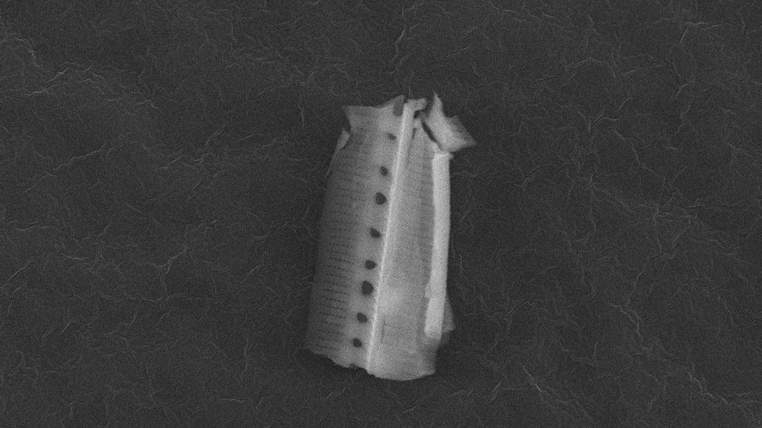
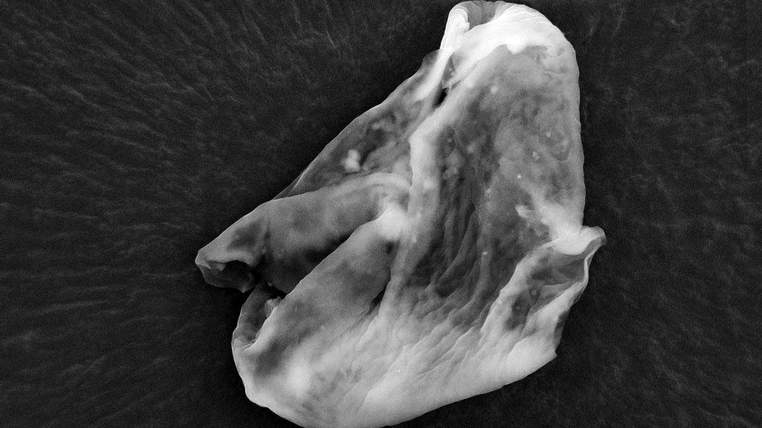
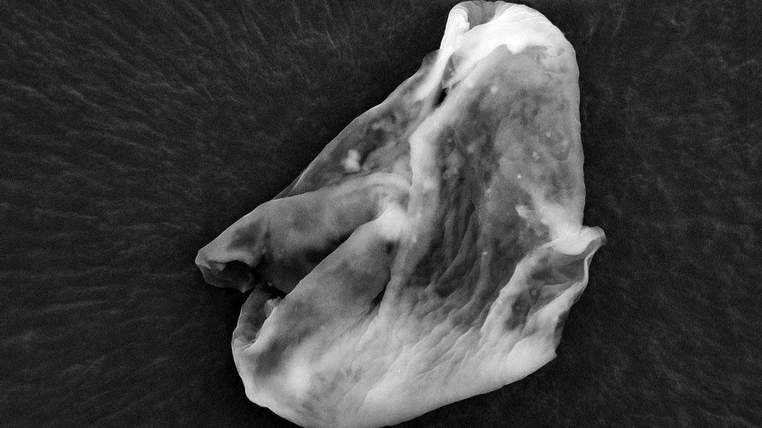
Not insects with legs and antennae, but microscopic biological entities. Diatoms. Algae-like fragments. Things that had no business being that high up. These weren’t just random specks of carbon. These were structured, organic forms.
The skeptics immediately pounced. You can hear them now, right? “Oh, the equipment was dirty.” “Oh, it blew up from the ground.”
Professor Wainwright wasn’t having it. The team was obsessive about protocol. They used “strict tests” to ensure the equipment was sterile before launch. But the physical evidence was the real smoking gun.
Here is the physics problem that the skeptics can’t answer: Gravity.
The Gravity Problem
Nature has rules. One of those rules is that heavy things fall down. They don’t fall up.
To get a particle of the size found by the Sheffield team from the ground to 27km altitude requires a massive amount of energy. We aren’t talking about a stiff breeze. We aren’t talking about a thunderstorm.
“Most people will assume that these biological particles must have just drifted up to the stratosphere from Earth,” Professor Wainwright explained. “But it is generally accepted that a particle of the size found cannot be lifted from Earth to heights of, for example, 27km.”
So, how does stuff from Earth usually get that high? Volcanoes.
A violent, catastrophic volcanic eruption can blast debris into the stratosphere. It acts like a cannon. But here is the kicker: there hadn’t been a volcanic eruption of that magnitude anywhere on the planet for three years prior to the sampling trip.
The air was calm. The physics were clear.
If the bugs didn’t float up from the ground, and they weren’t shot up by a volcano… then they must have fallen down from above.
The “Cosmic Zoo” Theory
This brings us to one of the most unsettling and fascinating theories in the history of science: Panspermia.
The word sounds like a disease, but it translates to “seeds everywhere.” The theory dates back to ancient Greece, but it got a serious boost in the modern era from scientists like Lord Kelvin and Svante Arrhenius. The idea is simple but radical.
Earth didn’t cook up life from scratch.
Standard evolutionary theory tells us that Earth was a hot rock, then it cooled, there was a “primordial soup,” lightning struck, and boom—DNA happened. But the math on that is incredibly difficult. The odds of random chemicals assembling into the complex machinery of life are astronomical.
Panspermia suggests a different path. It suggests that the universe is teeming with life. Bacteria, viruses, and genetic material are hitching rides on comets, asteroids, and meteors. They are frozen in the deep freeze of space, sleeping, waiting.
When a comet passes near Earth—like during the Perseids meteor shower—it heats up. It sheds its tail. That tail is full of dust, ice, and, if Wainwright is right, bugs.

The Sheffield balloon flew right into this stream. It caught the travelers as they were entering our atmosphere.
“He went on: ‘We can only conclude that the biological entities originated from space,'” the report states. “‘Our conclusion then is that life is continually arriving to Earth from space, life is not restricted to this planet and it almost certainly did not originate here.'”
Read that again. Almost certainly did not originate here.
We Are The Aliens
If this research holds up, it changes everything. It means you are an alien.
Think about it. If the “seeds” of life came from space billions of years ago, then every tree, every dog, every human being is a descendant of those cosmic visitors. We are just the local adaptation of a galactic biology.
But it gets darker.
If life is raining down on us continually, what else is coming in? New viruses? New bacteria? Some epidemiologists have famously suggested that the 1918 Spanish Flu or even SARS variants could have cometary origins. It sounds like fringe madness, but if biological material is entering the atmosphere constantly, we have to ask: is it all friendly?
The “bugs” found over Wakefield were likely dead or dormant. But what if they weren’t? What if they survive the entry?
The Silence of the Mainstream
You might be wondering, “Why isn’t this on the front page of every newspaper in the world?”
Good question.
Science is a slow, conservative beast. Extraordinary claims require extraordinary evidence. When the Sheffield team prepared their findings for the Journal of Cosmology, they knew they would be attacked. The scientific establishment protects the status quo. They like the “Primordial Soup” theory. It is safe. It is contained.
Admitting that the Earth is an open system, constantly being contaminated by alien biology, is terrifying. It means we have no control.
However, the tide is turning. Look at the recent Pentagon disclosures regarding UAPs (Unidentified Aerial Phenomena). Look at the recent detection of phosphine—a potential marker of life—in the clouds of Venus. The idea that Earth is the only biological game in town is rapidly dying.
The DNA of the Universe
Let’s look closer at the image of the organism found. It looks biological. It looks designed. It has symmetry.
If this is what is floating 27km up, imagine what is floating further out. Are comets just dirty snowballs? or are they incubators? Are they delivery trucks?
Francis Crick, the man who co-discovered the structure of DNA, once proposed a theory called “Directed Panspermia.” He looked at the complexity of DNA and thought, “This couldn’t have happened by accident.” He theorized that an advanced civilization might have deliberately shot canisters of bacteria to all corners of the universe to terraform planets.
Is the Sheffield balloon evidence of that? Was that tiny bug sent here?
Or is it just nature? Just as dandelions release seeds into the wind to find new soil, maybe the galaxy releases life into the cosmic wind to find new planets. Earth was just a lucky patch of dirt that caught a seed.
The Future of the Sky
This discovery opens a door that can never be closed. We can no longer look at the sky as a vacuum.
NASA and other space agencies are now obsessed with “planetary protection.” They are terrified of our rovers contaminating Mars with Earth bacteria. But if Wainwright is right, the contamination has been happening both ways for billions of years. Mars and Earth have probably been swapping spit since the solar system was young.
The University of Sheffield team did something brave. They looked up. They asked a question that seemed absurd.
The samples from Wakefield are still being analyzed. The debate rages on. But the next time you see a shooting star, don’t just make a wish. Wonder what it is bringing.
Is it dust? Is it rock?
Or is it the next branch of the family tree, burning bright as it crashes through the atmosphere to meet us?
Summary of the Sheffield Findings
- The Altitude: 27km (Stratosphere).
- The Event: Perseids Meteor Shower.
- The Discovery: Diatoms and biological entities.
- The Logic: Too heavy to float up, no volcanoes to shoot them up.
- The Conclusion: They fell from space.
We are not alone. We never were. The proof might just be floating right above the clouds.
Source: SKY NEWS
Originally posted 2013-09-21 13:11:05. Republished by Blog Post Promoter
![alien-bugs[1]](https://coolinterestingnews.com/wp-content/uploads/2013/09/alien-bugs1.webp)