Forget The Walking Dead. Forget George Romero. Forget every single Hollywood blockbuster that told you zombies were a fiction invented in the 20th century. They weren’t. The fear of the empty shell, the shambling corpse, the thing that refuses to stay down? It is ancient. It is primal. And in a dusty, sun-baked corner of Southeastern Sicily, we have found the proof.
This isn’t a myth. This isn’t a translation error in some dusty scroll.
This is physical evidence. Heavy stones. Smashed pottery. Bodies pinned to the dirt by people who were absolutely terrified of what would happen if they looked away.
The Nightmare at Kamarina
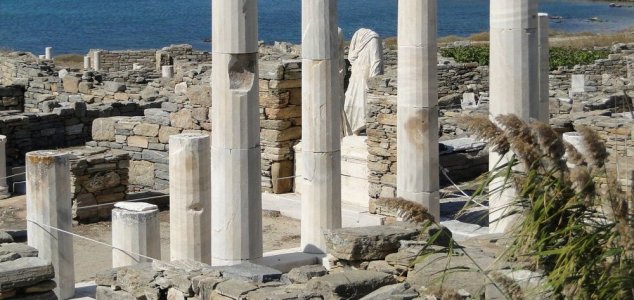
The location is Kamarina. Today, it’s an archaeological site, quiet and ruinous. But centuries ago, it was a thriving Greek colony. Life was hard. Death was common. But something else was happening here. Something dark.
Archaeologists were digging through a massive necropolis—literally a “city of the dead.” We are talking about a site containing nearly 3,000 graves. Most of them were normal. Respectful. The bodies were laid out, perhaps with a coin for the ferryman, sent off to the underworld with tears and grief.
But then the digging team found two graves that didn’t fit. They were wrong. They broke every rule of ancient Greek burial rites.
In the vast majority of burials, the body is laid supine. Face up. Peaceful. But in these specific pits, the living had waged a war against the dead.
Grave 693: The Trapped Adult
The first anomaly was cataloged as Grave 693. Inside lay an adult of indeterminate gender. But you couldn’t see the body clearly at first. Why? Because the head and feet were completely obscured.
The mourners—if you can even call them that—had taken large, heavy fragments of ceramic amphorae (giant storage jars) and smashed them down onto the corpse. They piled these heavy shards specifically over the head and the feet.
Think about the mechanics of that. This wasn’t accidental. This wasn’t a cave-in.
This was a calculated engineering problem. How do you stop a thing from walking? You pin the feet so it cannot stand. How do you stop a thing from seeing or biting? You crush the head. The intent is undeniable. They wanted this person to stay put. Forever.
The Boy Under the Stones
If Grave 693 is creepy, the second discovery is heartbreakingly terrifying. This one was labeled Grave 653.
Inside was a child. A teenager. Probably between 8 and 13 years old. A kid. Under normal circumstances, the death of a child in ancient Greece would be met with immense sorrow, delicate grave goods, and tenderness.
Not this time.
The archaeological team found the skeleton buried with five massive stones placed directly on top of the body. These weren’t pebbles. These were heavy rocks, likely hauled from a distance for this specific purpose. The placement was surgical.
They put the stones on the chest. On the pelvis. On the arms.
Imagine the scene. A group of adults, standing over the open pit of a dead child, sweating in the Mediterranean heat, heaving heavy boulders onto the small body. Thud. Thud. Thud. They weren’t grieving. They were securing a perimeter.
Why? What had this child done? Or, more importantly, what did the community think this child was going to become?
Deep Dive: What is a Revenant?
To understand why the Greeks would desecrate a body like this, we have to get inside their heads. We need to strip away our modern scientific logic and look at the world through the eyes of a terrified peasant in the 5th Century BC.
The Greeks believed in “revenants.”
This word comes from the Latin reveniens, meaning “returning.” These weren’t exactly the brain-eating zombies of modern cinema, but they were close. They were reanimated corpses that were believed to prowl the night, spreading disease, killing livestock, and terrorizing their former families.
In later Greek folklore, these entities morphed into the vrykolakas—a creature that is part vampire, part werewolf, part zombie. A corpse that doesn’t rot. A body that swells up, turns red, and comes back to knock on your door.
If you answered the door? You died next.
Carrie Sulosky Weaver, the archaeologist who analyzed these findings, put it bluntly: “Necrophobia, or the fear of the dead, is a concept that has been present in Greek culture from the Neolithic period to the present.”
She isn’t mincing words. This fear was real. It drove people to do insane things.
The “Patient Zero” Theory
Why these two? Out of 3,000 bodies, why were only these two singled out for the heavy-rock treatment?
One leading theory is illness. History is full of mysteries, but pathology often gives us clues. It is highly possible that the individual in Grave 693 and the teenager in Grave 653 suffered from a condition that the locals didn’t understand.
Maybe it was rabies. Imagine a person foaming at the mouth, biting, lashing out, afraid of water, and then dying. To an ancient Greek, that looks like possession. That looks like a beast taking over a human soul.
Maybe it was a coma. Or catalepsy. Imagine if someone “died,” was prepared for burial, and then suddenly woke up screaming on the funeral pyre? If that happened once, the paranoia would spread like wildfire.
If these individuals died of a mysterious wasting sickness, or a violent plague, the community might have believed they were “tainted.” The heavy stones were a quarantine measure. A physical barrier between the sickness of the underworld and the health of the living.
The Paradox: Fearing the Dead vs. Using the Dead
Here is where the story gets twisted. It gets weird. Because at the exact same site—Kamarina—where people were crushing bodies with rocks to keep them down, other people were trying to wake them up.
You read that right.
Archaeologists found evidence of what are called Katadesmoi. These are curse tablets. Usually made of lead (a heavy, cold metal associated with Hades and the underworld), these tablets were inscribed with dark spells.
The process was grim. A person would scratch a curse onto the lead. “Bind my enemy’s tongue.” “Make the woman love me.” “Kill the man who stole my sheep.” Then, they would fold the tablet up, sometimes piercing it with a bronze nail (symbolizing the binding), and bury it in a grave.
Why a grave?
Because they needed a messenger. They used the spirits of the recent dead to carry their messages down to the Chthonic gods—the gods of the underground. Hades. Persephone. Hecate.
“The tablets contained petitions that were addressed to underworld deities who would command the spirits of the dead to fulfill the request of the petitioner,” said Weaver.
Do you see the contradiction? It is mind-bending.
- Group A: “Put a rock on that kid! He’s going to come back and eat us!”
- Group B: “Hey, dead guy. Here’s a note. Go tell a demon to break my neighbor’s legs.”
“Although these acts appear to be contradictory,” Weaver explains, “together they provide a powerful testimony to the ways in which the ancient Greeks conceptualized the dead.”

The dead weren’t just “gone.” They were powerful. They were active. They were a resource to be used, or a threat to be neutralized. The grave wasn’t a final resting place; it was a door. And that door swung both ways.
The Science of Superstition
Let’s look at the “how.” The method of pinning the dead is found all over Europe, not just in Sicily. We have seen it in Medieval Poland, where “vampires” were buried with sickles across their throats (so if they sat up, they would be decapitated). We have seen it in Bulgaria, where iron stakes were driven through chests.
But the Kamarina find is special because it is so old. This predates the medieval vampire craze by a thousand years.
It shows that the human brain has always been hardwired to fear the corpse. It’s the “Uncanny Valley” effect. A dead body looks like a person, but it doesn’t move. It’s wrong. It triggers a deep, biological alarm bell in our heads.
When you add in the decomposition process—bodies bloating, making noises as gas escapes, hair and nails appearing to grow (as the skin recedes)—it is easy to see how a pre-science society would freak out.
What if they were right?
Let’s play devil’s advocate for a second. Let’s get a little wild.
What if the people of Kamarina weren’t just superstitious rubes? What if they saw something? We often dismiss ancient history as “myth,” but myths usually start with a seed of truth.
Maybe the teenager in Grave 653 wasn’t just sick. Maybe he was violent. Maybe the “illness” that authorities were so worried about was something that induced hyper-aggression. We know that mass hysteria is real. We know that rabies is real. Is it so hard to imagine a localized outbreak of something that looked, to them, exactly like a zombie plague?
The heavy ceramic fragments on the adult in Grave 693 suggest a frantic burial. They didn’t have a coffin ready. They grabbed what was nearby—trash, broken pots—and piled it on. That screams emergency. That screams panic.
The Modern Connection
We like to think we are smarter now. We have iPhones and MRI machines. But are we really that different?
Look at how we handle death today. We pump bodies full of chemicals to stop the rot. We seal them in heavy caskets. We put those caskets inside concrete vaults in the ground. Why?
We say it’s for sanitation. We say it’s for respect.
But maybe, deep down in our lizard brains, we are doing the exact same thing the Greeks did. We are putting barriers between us and them. We are making sure that once they go down, they stay down.
The discovery at Kamarina is a mirror. It forces us to look at our own fears. It reminds us that for thousands of years, humans have looked at the grave and wondered: Is this really the end?
A Warning from the Past
The next time you walk past a cemetery, look at the heavy headstones. Look at the iron fences. Look at the concrete vaults.
Think about the teenager in Grave 653, pinned by five stones for eternity. Think about the spell tablets asking the dead to do the dirty work of the living.
The ancient Greeks built temples to logic, math, and philosophy. They gave us democracy. But when the sun went down, and the shadows stretched across the necropolis, they picked up rocks. They smashed pottery. They cast spells.
They knew that the line between the living and the dead is thinner than we like to admit. And sometimes, you need a really heavy rock to keep that line intact.
So, were they crazy? Or were they just careful? As you turn off your lights tonight, you might want to ask yourself: if the dead did decide to wake up, do you have a heavy enough rock nearby?
Originally posted 2015-09-23 15:41:19. Republished by Blog Post Promoter