Sunday, August 9, 2026
HomeWeird WorldStrange PlacesNew building in Japan to be over a mile high

New building in Japan to be over a mile high

The New Babel: Is Tokyo Secretly Building an Elite Ark for the Apocalypse?

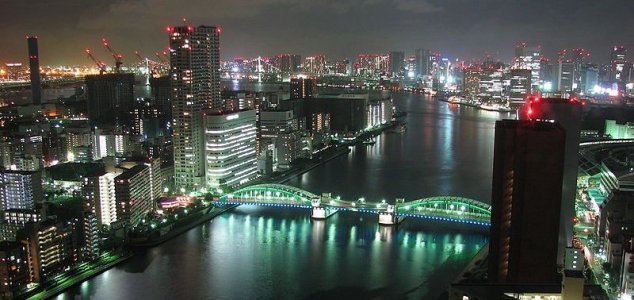
Look at it. Just look at that image above. It doesn’t look real, does it? It looks like a matte painting from a sci-fi movie where the rich live in the clouds and the poor fight over scraps in the mud below. But this isn’t Hollywood. This is Tokyo.

And it is coming.

The new tower will become a distinctive part of the Tokyo skyline, they say. That is the understatement of the century. We are talking about the Sky Mile Tower. A structure so massive, so mind-bendingly tall, that it threatens to tear up the rulebook on physics, engineering, and perhaps even human society itself. The new ‘Sky Mile Tower’ will be twice the height of the current tallest building – Dubai’s Burj Khalifa. Think about that for a second. The Burj Khalifa is already a vertigo-inducing needle that scrapes the stratosphere. Now double it.

Why? Why do we need to go a mile high? Is it just hubris? Or is something else going on here? Something the mainstream news isn’t telling you about the future of our rising oceans?

The Beast in the Bay: 5,577 Feet of Steel and Secrets

Standing at 5,577ft in height, the ridiculously tall building will be situated in Tokyo Bay to the southeast of the capital and will provide residential and commercial facilities for 55,000 people. Let that sink in. Fifty-five thousand souls. That is not a building. That is a city. A vertical city stacked into the heavens, separated from the earth below.

This project is part of a larger initiative called “Next Tokyo 2045.” On paper, it looks like a visionary architectural proposal. But if you read between the lines, the “Next Tokyo” isn’t just about expansion. It’s about survival.

We all know the climate narratives. We hear about rising sea levels every single day. Most cities are planning sea walls. They are planning levees. They are planning to pump water out. But Tokyo? Tokyo is planning to leave the ground entirely.

This tower is designed to house a population roughly the size of a small American town, but compacted into a single, high-tech spire. Who gets to live there? Who gets a ticket to the cloud city when the waters start lapping at the streetlights of old Tokyo? The project brochure mentions “residential facilities,” but let’s be honest with ourselves. Do you think the average salaryman is going to have a penthouse on the 400th floor? Or is this the beginning of a breakaway civilization? A fortress for the ultra-elite to ride out the coming environmental storms in luxury, literally looking down on the chaos below?

Hexagons and Hard Truths: The Geometry of Survival

The engineering behind this is where things get really strange. You can’t just slap a mile-high stick in the mud, especially not in Japan. This is the Ring of Fire. Earthquakes are a weekly occurrence. Typhoons hammer the coast with the force of nuclear bombs. To build something this tall in a zone this volatile seems insane.

Unless they know something we don’t. Or unless they possess technology that hasn’t hit the public textbooks yet.

In addition to the main tower, a series of hexagonal islands will be built in the water around its base to help protect the city from flooding and to provide a foundation for more homes in the future. Hexagons. Nature’s perfect shape. You see it in honeycombs. You see it in insect eyes. And now, you see it as the shield for the future of humanity.

These islands aren’t just pretty landscaping. They are designed to break the kinetic energy of incoming waves. Imagine a mega-tsunami roaring toward Tokyo Bay. These hexagonal clusters are engineered to shatter the wave’s power before it can touch the main tower. It is a fortress. A castle with a moat made of science.

The Tesla Connection: Free Energy in the Clouds?

How do you power a city in the sky? The energy requirements would be astronomical. You need to run elevators that travel a mile upward. You need climate control. You need lights, computers, life support. If you plug this thing into the grid, you blackout the rest of Japan.

So, the Sky Mile Tower is going off-grid.

Electricity for the building will be generated by a combination of solar panels, wind turbines and algae farms situated on the islands below. Algae farms? Yes, you read that right. They are planning to use biological fuel sources grown right at the base of the tower. It’s a closed-loop system.

The wind turbines are intriguing too. At one mile up, the wind speeds are constant and powerful. Some theorists speculate that the tower itself could act as a massive atmospheric conductor, harvesting static electricity directly from the air, much like the wardenclyffe tower concepts proposed by Nikola Tesla over a century ago. Is the Sky Mile Tower actually a disguised power plant? A massive free-energy receiver hidden in plain sight as a luxury condo?

The tower will also be able to collect and store rainwater meaning that it won’t be necessary to pump a supply up from the ground floor. This is a critical detail. Total independence. If the municipal water supply fails—poisoned, destroyed, or cut off—the Sky Mile Tower doesn’t care. It drinks from the clouds. It powers itself from the wind. It grows its own fuel. It is a spaceship that never leaves Earth.

2045: The Singularity Date

The ambitious project is currently still in the planning stages with a completion date set for 2045. Does that date ring a bell? It should.

2045 is the year Ray Kurzweil and other futurists predict the Technological Singularity—the moment when artificial intelligence surpasses human intelligence, and we merge with machines to become something new. Something immortal.

Is it a coincidence that this mega-structure, this perfect machine-city, is slated to open its doors the exact same year humanity is predicted to change forever? Maybe the Sky Mile Tower isn’t just a building. Maybe it’s the hardware for the new human operating system. A hive for the transhumanist future.


The Prototype: Decoding the Tokyo Skytree

But before we get to the mile-high monster, we have to look at the prototype. The test run. We are talking about the Tokyo Skytree. If the Sky Mile Tower is the future, the Skytree is the warning shot.

Tokyo Skytree (東京スカイツリー Tōkyō Sukaitsurī?) is a broadcasting, restaurant, and observation tower in Sumida, Tokyo, Japan. It became the tallest structure in Japan in 2010 and reached its full height of 634.0 metres (2,080 ft) in March 2011, making it the tallest tower in the world, displacing the Canton Tower, and the second tallest structure in the world after the Burj Khalifa (829.8 m/2,722 ft).

March 2011. The dates line up in a chilling way. The Skytree reached its full height exactly when the Great East Japan Earthquake struck. While the ground shook and nuclear reactors melted down in Fukushima, this needle stood firm. It didn’t buckle. It swayed. It absorbed the shock. It proved that the technology works.

More Than Just TV Signals?

The official story is mundane. Boring, even. They tell us the tower is the primary television and radio broadcast site for the Kantō region; the older Tokyo Tower no longer gives complete digital terrestrial television broadcasting coverage because it is surrounded by high-rise buildings.

Digital coverage. That’s the key. The switch from analog to digital wasn’t just about better picture quality. It was about compression. Data. Control. Analog signals are messy, hard to police. Digital is binary. It’s on or it’s off. With the Skytree dominating the skyline, it acts as the central nervous system for Tokyo’s information flow.

Skytree was completed on 29 February 2012, with the tower opening to the public on 22 May 2012. The tower is the centrepiece of a large commercial development funded by Tobu Railway and a group of six terrestrial broadcasters headed by NHK. Trains stop at the adjacent Tokyo Skytree Station and nearby Oshiage Station, the complex is 7 km (4.3 mi) north-east of Tokyo Station.


Think about the layout. It’s a hub. Trains, data, people, money—all funneling into this one location. It is a massive concentration of resources.

The Psychological Impact of Giants

Why do we build these things? Psychologists and urban planners have argued for years about the impact of “megatalls” on the human psyche. They dominate the visual field. No matter where you are in Tokyo, the Skytree is watching you. It reminds you of the power of the state, the power of technology, and your own smallness.

Now, imagine the Sky Mile Tower. It will be nearly three times the height of the Skytree. It won’t just be a landmark; it will be a new artificial mountain. It will cast a shadow that stretches for miles. It will create its own weather patterns.

If the Skytree was the test to see if Tokyo’s soil could hold a giant, the Sky Mile Tower is the final exam. The Skytree proved that Japanese engineering could dance with earthquakes and win. Now, they are ready to bet the house—literally—on a structure that defies logic.

The Verdict: Utopia or Dystopia?

So, where does this leave us? We have a plan for a building that eats its own waste, drinks the clouds, and sits on a throne of hexagonal armor. It is slated for the year of the Singularity.

Is this the bright green future we were promised? A world where technology saves us from the rising tides? Or is the Sky Mile Tower the ultimate gated community? A vertical Elysium where the chosen few look down on a flooded, dark world?

History shows us that technology always trickles down eventually. But survival? Survival is rarely shared equally. As 2045 approaches, keep your eyes on Tokyo Bay. The Tower of Babel is rising again, and this time, it’s built to withstand the wrath of God.

Originally posted 2016-02-08 15:51:09. Republished by Blog Post Promoter

Arindam Mukherjee
Arindam Mukherjee
Arindam loves aliens, mysteries and pursing his interest in the area of hacking as a technical writer at 'Planet wank'. You can catch him at his social profiles anytime.
RELATED ARTICLES
- Advertisment -

Most Popular

Recent Comments

Warren Pan Abbott on The legend of the Devil Monkey !
chris davies on The McPherson Tape Mystery
Reed Reedly on ET has Internet!
Bea Houseoffashion on Proof Of Time Travellers – Gallery
Marcus2012 on ET has Internet!
Reed Reedly on ET has Internet!
LaughsAtConspiracyNuts on The 9/11 Conspiracy – Myths and Facts
Alex Sliverman on Did the ancients fly?
Doctor Wholigan on Time Traveler in 1938 film
chris davies on The McPherson Tape Mystery
Archie1954 on 10 secret UFO hideouts
chris davies on Ghosts of flight 401
Marcus2012 on ET has Internet!
jason Macdonald on Proof of Time Travel? – China
chris davies on Long-Lost Pyramids Found?
Reed Reedly on ET has Internet!
Milkman on Connected Universe
Tenmiles on Baigong Pipes Mystery
Simon Foster on Sirius – The Documentary
From the 1st April on 2013 – Alien Contact date ?
SkyWatcher on Is ET ignoring us?
I Come From The Future on Obama to make UFO Alien disclouser soon ?
Just another person on 2013 – Alien Contact date ?
Malcolm Windowcleaner on The strange case of Rudolph Fentz
Mason Servio on Strange Things on Mars
Marke Wisdom Seeker on What will we find as arctic melts?
Andrea A Elisabeth Levyne on Aliens Captured in Varginha, Brazil
Mitch Grouyeki on Amazing Space Shuttle pictures