Look at the history books. They tell a clean, linear story. Stone Age. Bronze Age. Iron Age. A slow, steady climb from caves to skyscrapers. But look closer. Look at the ruins scattered across our planet like debris from a forgotten war.
Something is wrong. The narrative doesn’t fit the physical evidence sitting in the middle of the desert.

The Silence of the Stones
We are told that our ancestors, possessing nothing but copper chisels, stone hammers, and hemp ropes, built structures that our modern engineers would struggle to replicate today. We are talking about the Giza Plateau. The impossible heights of Machu Picchu. The mind-bending weight of Baalbek. Mainstream archaeology calls these “tombs” or “temples.” They say it was all done with brute force and religious fervor.
But have you ever tried to cut granite with a piece of copper? You can’t. It’s physically impossible.
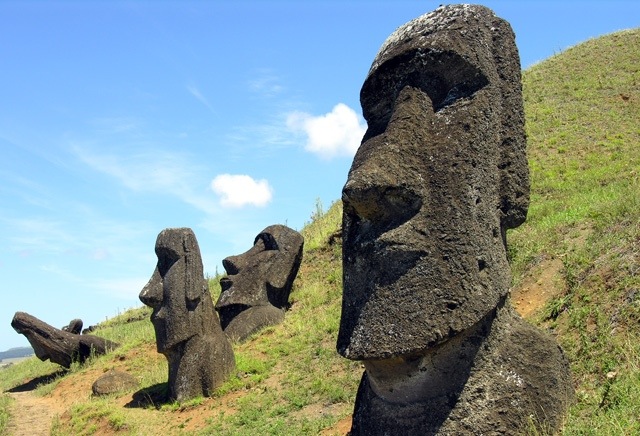
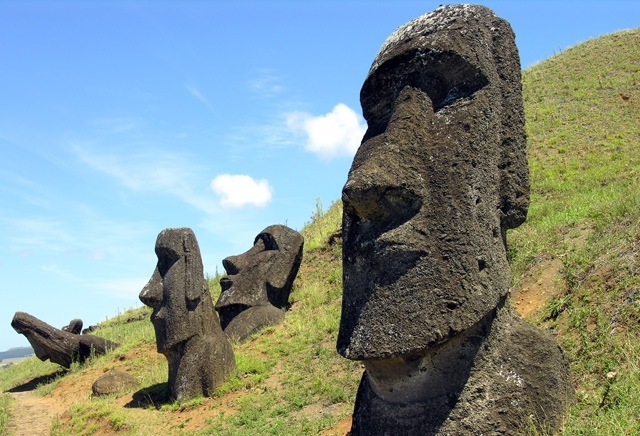
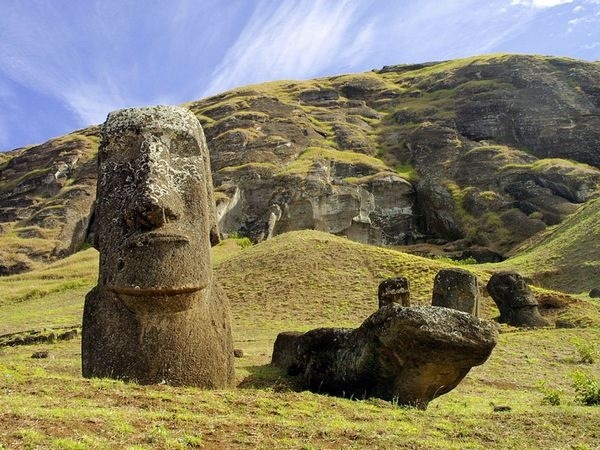
Evidence for ancient astronauts—or at the very least, a lost, technologically advanced human civilization—isn’t hidden in some secret vault. It is standing right in front of us. It is claimed to include the existence of ancient monuments and megalithic ruins such as the Giza pyramids of Egypt, Machu Picchu in Peru, Baalbek in Lebanon, the Moai of Easter Island, and Stonehenge in England. These aren’t just piles of rocks. They are mathematical anomalies.
The Mathematics of Impossibility
Let’s break down the Great Pyramid. Forget the aliens for a second. Just look at the logistics. It contains roughly 2.3 million blocks of stone. The average weight? About 2.5 tons. Some weigh as much as 80 tons. Mainstream historians tell us this was built in 20 years for Pharaoh Khufu.
Do the math. Seriously, pull out a calculator.
If they worked 12 hours a day, 365 days a year, for 20 years, they would need to quarry, transport, lift, and precisely place one massive stone block every two and a half minutes. Every. Single. Block.
No breaks. No mistakes. No dropped stones. For twenty years straight. Does that sound like a bronze-age civilization to you? Or does it sound like a machine? A factory? The precision involved is mind-numbing. The Great Pyramid is aligned to true north with an accuracy within 3/60th of a degree. We didn’t achieve that kind of alignment again until we started using satellites.
These stone structures could not have been built with the technical abilities and tools of the people of the time. Proponents of the Ancient Astronaut theory further argue that many could not be duplicated even today. They suggest that the large size of the building stones, the precision with which they were laid, and the distances many were transported leaves the question open as to who constructed these sites. These contentions are categorically rejected by mainstream archeology, but the rejection feels less like science and more like dogma.
The Baalbek Enigma: Weight That Crushes History
If Egypt is a problem for historians, Lebanon is a nightmare. In Baalbek, there is a platform. On this platform sit three stones known as the Trilithon.
Each one weighs roughly 800 to 1,000 tons. One thousand tons. Let that sink in. To move a 1,000-ton object today, we need specialized, custom-built crawler cranes that take weeks to assemble. And we are supposed to believe the Romans moved these? The Romans were great engineers, sure. They built roads. They built aqueducts. But they wrote everything down. They were meticulous record keepers. Yet, nowhere in Roman records do they discuss moving stones the size of apartment buildings.
Why? Because maybe they didn’t build it. Maybe they found it. Maybe they built their temple on top of a foundation that was already there—a foundation left by someone else.

The Tool Marks of the Gods
Walk through the museums in Cairo. Look past the statues and the gold. Look at the granite boxes. The Serapeum of Saqqara. There are over 20 massive granite boxes there, each weighing 70 tons with 30-ton lids. The inside surfaces are polished to a mirror finish. The corners are perfect 90-degree angles.
Christopher Dunn, an expert manufacturing engineer, analyzed these. He found that the surface flatness was accurate to within 1/10,000th of an inch. You don’t get that with a hand stone and sand. You get that with high-velocity precision machinery. You get that with computers.
And then there are the drill holes. In granite blocks across Egypt, we find tubular drill holes. The striations (grooves) inside the holes suggest the drill bit was moving into the rock at a rate of 1/10th of an inch per revolution. That is 500 times faster than a modern diamond drill can cut through granite. The pressure required to do that would crush a copper tool instantly. So, what were they using?
Sonic Technology?
This is where things get weird. Some researchers speculate about sound. Acoustic levitation. We know today that sound waves can levitate small objects. Did the ancients figure out how to scale this up? There are legends in cultures all over the world—from the Mayans to the builders of Jericho—that speak of “singing stones” or walls brought down (or up) by trumpets and vibration.
Was the “magic” of the ancients actually a mastery of resonance? If you hit the right frequency, matter loses its density. It’s a wild theory. But when you look at a 1,200-ton stone block in a quarry that was seemingly abandoned mid-transport, you have to ask: Did the power go out?
Mainstream Science: The “Logs and Ropes” Defense
Of course, academia isn’t taking this lying down. They have their models. They have their theories.
Some mainstream archeologists have participated in experiments to move large megaliths. These experiments have succeeded in moving megaliths up to at least 40 tons, and they have speculated that with a larger workforce, larger megaliths could be towed with ancient technology. They gather hundreds of people, grease up some wooden sleds, and pull. And yes, it moves. Slowly. On flat ground.
But there is a massive difference—a monumental difference—between dragging a 40-ton block across a flat parking lot and lifting a 70-ton granite beam 300 feet into the air to place it in the King’s Chamber of the Great Pyramid. The logistics change. The physics change.
Try dragging that 40-ton block up a 50-degree incline. The ropes snap. The people get crushed. The wood turns to splinters.
Such allegations are not unique in history, however, as similar reasoning lay behind the wonder of the Cyclopean masonry walling at Mycenaean cities in the eyes of Greeks of the following “Greek Dark Ages”, who believed that the giant Cyclopes had built the walls. The Greeks, looking at the ruins of their own ancestors, couldn’t figure out how it was done. They invented monsters to explain the architecture. Are we doing the same? Or are we ignoring the monsters—the technological giants—that were really there?
Peru: The Stones That Melted
Fly over to South America. Go to Sacsayhuaman in Peru. Here, you find walls made of massive polygonal stones. They aren’t squares. They are irregular shapes, like a jigsaw puzzle. Some of them weigh 100 tons. And yet, they fit together so perfectly that you cannot fit a single sheet of paper between them.
There is no mortar. Nothing holding them together but gravity and friction. And here is the kicker: the stones have “scoop” marks on them. It doesn’t look like they were chiseled. It looks like the stone was soft—like marshmallow or clay—and someone just scooped a piece out with a spoon.
Some theorists suggest the ancients possessed a plant-based acid or a thermal device that could soften stone. Vitrification. We see ancient forts in Scotland where the stone walls have been fused into glass by intense heat. Heat that requires temperatures far higher than a wood fire can produce. Atomic war in pre-history? Or a solar torch?
The “Cargo Cult” of Humanity
Here is a darker thought. What if the history we know is just a “Cargo Cult”?
During WWII, islanders in the Pacific saw American planes land with supplies. When the war ended, the planes stopped coming. The islanders built straw planes and wooden runways, hoping to summon the gods back. They mimicked the technology they saw but didn’t understand.
Is that what the later pyramids are? The Great Pyramid of Giza has no hieroglyphics inside. It is a cold, sterile machine. The later pyramids—the ones that are crumbling piles of rubble today—are filled with writing. They are filled with spells. They are inferior copies.
Did the Egyptians find the Giza pyramids standing there, built by a previous civilization (the Atlanteans? The Aliens?), and then try to copy them? They tried. And they failed. They built tombs that collapsed while the originals stood tall for millennia.
The Global Connection
Why do we see pyramids on every continent? Egypt. Mexico. China. Bosnia. Indonesia.
Why do all these cultures, separated by vast oceans, build the exact same shape? And why do they all share the same myths? The “Sky Gods” who came down in fiery chariots. The teachers who brought agriculture, astronomy, and law. Quetzalcoatl in Mexico. Osiris in Egypt. Oannes in Sumeria.
Mainstream history calls this coincidence. They say humans just naturally like building triangles. But the engineering suggests a shared legacy. A root civilization that spread out across the globe before a massive cataclysm wiped them out, leaving only the stone skeletons of their technology behind.
We are a species with amnesia. We have forgotten who we are.
The Verdict
You don’t have to believe in little green men to see that the timeline is broken. You just have to look at the rocks. The rocks don’t lie. People lie. Historians make mistakes. But a 1,000-ton block of granite levitated onto a hilltop says something very specific: “We knew things you have forgotten.”
Maybe it was aliens. Maybe it was us—a version of humanity that reached the stars before falling back into the mud. Either way, the evidence is solid. It’s heavy. And it’s not going away.
Keep your eyes open. The truth is usually stranger than fiction.
Originally posted 2013-06-09 15:34:48. Republished by Blog Post Promoter
![20130609-193158[1]](https://coolinterestingnews.com/wp-content/uploads/2013/06/20130609-1931581.webp)