Tuesday, May 12, 2026
HomeWeird WorldScienceBionic eyes could eventually 'cure' blindness

Bionic eyes could eventually ‘cure’ blindness

The End of Blindness or the Beginning of the Borg? The Bionic Eye Revolution Is Here

Imagine waking up tomorrow and realizing your eyes are no longer necessary. Not because you’ve gone blind. But because something better has arrived. Something synthetic.

For centuries, the concept of restoring sight to the blind was pure fantasy. It was the stuff of miracles, ancient religious texts, or wild science fiction paperbacks from the 1950s. We accepted that once the lights went out, they stayed out. Biology was destiny. If your optic nerve died, you were done.

That is no longer true.

We are standing on the edge of a technological cliff, looking down into a future where biology and machinery smash into each other at high speed. It’s messy. It’s exciting. And frankly? It’s a little bit terrifying. While the rest of the world is distracted by social media algorithms and political theater, a team of researchers has been quietly rewriting the rules of human perception.

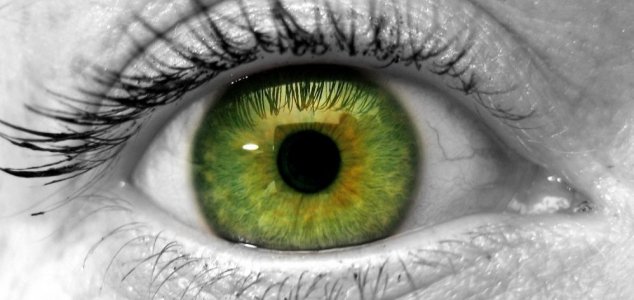
Look at that image. Really look at it. It looks like something out of a cyberpunk graphic novel, right? But this isn’t fiction. This is the new reality of the “Bionic Eye.”

The Monash Breakthrough: Hacking the Human Hard Drive

Let’s cut through the noise. How do we see? You probably think you see with your eyes. You don’t. Your eyes are just biological cameras. They are lenses that focus light and sensors that turn that light into electrical sparks. That’s it. The actual “seeing” happens in the dark, wet matter at the back of your skull: the visual cortex.

Your brain doesn’t know what a tree looks like. It only knows the electrical signal for “tree.”

This is where the mad geniuses (and I mean that as a compliment) at Monash University in Australia stepped in. They asked a question that sounds simple but changes everything: If the eyes are broken, why don’t we just skip them?

They have developed a system that bypasses the ocular system entirely. We aren’t talking about fixing a retina. We are talking about hardwiring a computer directly into the gray matter of a human being.

The “Gennaris” System: 11 Tiles to a New Reality

Here is the nuts and bolts of it. The system, often referred to as the Gennaris bionic vision system, is a beast of micro-engineering. It involves implanting 11 miniature tiles into the brain. These aren’t just chunks of plastic; they are sophisticated bridges between the digital and the biological worlds.

Each of these tiles is armed with 43 hair-thin electrodes. Do the math. That’s hundreds of distinct entry points into the human mind. These electrodes are designed to “zap” the parts of the brain responsible for vision. They stimulate the neurons directly.

No light enters the eye. No signal travels the optic nerve. The machine simply tells the brain: “You are seeing this now.”

And the brain believes it.

Living in Low Resolution: The 500-Pixel World

Now, hold your horses. If you’re imagining 4K Ultra-HD streaming directly into a blind person’s mind, we aren’t there yet. Not quite. The current technology builds up a picture consisting of roughly 500 pixels.

500 pixels.

To put that in perspective, a standard smartphone screen has millions of pixels. Healthy human eyes process about 1 to 2 million pixels of data instantly. A 500-pixel image is like playing an Atari game from 1979 through a foggy window. It’s blocky. It’s primitive.

But ask a person who has lived in total darkness for twenty years what they would give for 500 pixels. They would give everything.

With this grid of light, they can navigate a room. They can see a doorway. They can tell if someone is standing in front of them. It is the difference between complete isolation and connection. It’s a series of glowing dots—phosphenes—that the brain learns to interpret as shapes and edges. It is a crude map of the world, but it is a map nonetheless.

The Gear: Wearing the Future

This isn’t just about brain surgery. To make the magic happen, the patient becomes a walking sensor array. The system requires special custom-built glasses equipped with:

  • A Digital Camera: The “eye” that captures the world.
  • Movement Sensors: To track head position so the image stabilizes.
  • A Transmitter: The radio that beams the data through the skull and into the implants.

The camera sees the car. The processor turns the car into a grid of dots. The transmitter screams that data at the brain tiles. The brain sees the car. All of this happens in a fraction of a second. Boom. Sight.

Beyond Curing the Blind: The Super-Human Implications

Here is where we go off the deep end. This is the part the mainstream news reports gloss over because it makes people uncomfortable. If we can make a blind person see a doorway using a camera and a brain implant, what else can we make them see?

The technology is agnostic. It doesn’t care if the signal comes from a camera on your glasses, or a thermal imaging sensor, or a Wi-Fi signal from a satellite.

This brings us to the “Deep Dive” theory of Augmented Vision.

The Predator Vision Scenario

Right now, the goal is restoration. Noble. Good. But military organizations and private contractors are watching this tech like hawks. Why? Because biology is limited. Your eyes can’t see in the dark. Your eyes can’t zoom in on a license plate a mile away. Your eyes can’t see heat signatures.

But a camera can.

If you hook a thermal camera up to the Monash implants, a human being could literally see in the dark. No bulky night-vision goggles required. You would just “know” where the heat is coming from. Your brain would process infrared radiation as visual data.

Zoom capabilities? Easy. Just upgrade the camera lens on the glasses. Suddenly, you have a human scout who can read a newspaper from a helicopter. The potential for “Super Sight” isn’t science fiction anymore; it is just a matter of swapping out the input device.

The Transhumanist Agenda: Merging with the Machine

We need to talk about the elephant in the room. Or rather, the cyborg in the room. This technology aligns perfectly with the growing Transhumanist movement—the belief that humans should merge with technology to evolve beyond our physical limitations.

Elon Musk’s Neuralink gets all the headlines today, but projects like the Monash bionic eye have been laying the groundwork for years. They prove that the brain is plug-and-play compatible. If you can input visual data, what’s stopping you from inputting other data?

Imagine walking down the street. You look at a restaurant. Instead of just seeing the sign, your visual cortex overlays the Yelp reviews, the menu, and the health inspection rating directly onto your vision. No phone screen. No Google Glass. Just pure information injected into your reality.

It sounds cool. It also sounds like a nightmare.

The Dark Side: Can Your Eyes Be Hacked?

Every computer system ever built has vulnerabilities. Everything that receives a signal can be jammed, spoofed, or hijacked. So, let’s ask the scary question: What happens when someone hacks your eyes?

If your vision is dependent on a digital transmitter talking to a brain implant, you are susceptible to interference. A bad actor could potentially:

  • Blind you remotely: Shut off the feed. Total darkness at the push of a button.
  • Inject False Images: Make you see things that aren’t there. A wall where there is a door. An enemy where there is a friend.
  • Data Mining: If the camera is feeding your brain, who else is seeing that feed? Is the corporation that built your eyes recording everything you look at?

This creates a terrifying “Black Mirror” scenario where your perception of reality is a subscription service that can be revoked or manipulated. We are moving toward a world where “I saw it with my own eyes” is no longer a valid defense in court.

The Forgotten History: We’ve Been Here Before

It is important to remember that this didn’t come out of nowhere. The quest to electrify vision goes back decades. In the 1960s and 70s, researchers like Brindley and Dobelle were already sticking wires into the visual cortexes of blind volunteers. Back then, the computers were the size of refrigerators.

Those early pioneers proved the concept: electricity equals light. One patient, known as “Jerry,” was able to see large letters projected into his mind back in 1978. But the tech was dangerous. Infections were common. The brain didn’t like having thick wires shoved into it.

The modern miracle of the Monash system is the miniaturization. Wireless. Biocompatible. It’s the iPhone compared to the telegraph.

The Verdict: A Brave New World

Curing blindness outright isn’t possible even with today’s advances in science and medicine—at least, not in the biological sense. We cannot regrow a dead optic nerve yet. But there is still hope thanks to researchers such as those at Monash University in Australia who have been working on building special bionic eyes capable of communicating directly with the brain.

This is a workaround. A cheat code for the human body.

While right now the main goal of this technology is to enable blind people to see, in the future such a system might also be used to give a healthy-sighted person augmented vision. The ability to zoom in over long distances. The ability to see radiation. The ability to browse the internet with your eyes closed.

We are blurring the line between man and machine. Some call it progress. Some call it an abomination. But one thing is certain: the way we view the world is about to change forever.

Keep your eyes open. If you still can.

Arindam Mukherjee
Arindam Mukherjee
Arindam loves aliens, mysteries and pursing his interest in the area of hacking as a technical writer at 'Planet wank'. You can catch him at his social profiles anytime.
RELATED ARTICLES
- Advertisment -

Most Popular

Recent Comments

Warren Pan Abbott on The legend of the Devil Monkey !
chris davies on The McPherson Tape Mystery
Reed Reedly on ET has Internet!
Bea Houseoffashion on Proof Of Time Travellers – Gallery
Marcus2012 on ET has Internet!
Reed Reedly on ET has Internet!
LaughsAtConspiracyNuts on The 9/11 Conspiracy – Myths and Facts
Alex Sliverman on Did the ancients fly?
Doctor Wholigan on Time Traveler in 1938 film
chris davies on The McPherson Tape Mystery
Archie1954 on 10 secret UFO hideouts
chris davies on Ghosts of flight 401
Marcus2012 on ET has Internet!
jason Macdonald on Proof of Time Travel? – China
chris davies on Long-Lost Pyramids Found?
Reed Reedly on ET has Internet!
Milkman on Connected Universe
Tenmiles on Baigong Pipes Mystery
Simon Foster on Sirius – The Documentary
From the 1st April on 2013 – Alien Contact date ?
SkyWatcher on Is ET ignoring us?
I Come From The Future on Obama to make UFO Alien disclouser soon ?
ÛñK?øWn on 2013 – Alien Contact date ?
Just another person on 2013 – Alien Contact date ?
Malcolm Windowcleaner on The strange case of Rudolph Fentz
Mason Servio on Strange Things on Mars
Marke Wisdom Seeker on What will we find as arctic melts?
Andrea A Elisabeth Levyne on Aliens Captured in Varginha, Brazil
Mitch Grouyeki on Amazing Space Shuttle pictures