Home Unexplained Mysteries Crime Mysteries Amanda Knox and Raffaele Sollecito murder verdict: live GUILTY

Amanda Knox and Raffaele Sollecito murder verdict: live GUILTY

0
65

The Perugia Nightmare: Unraveling the Amanda Knox Media Storm

It’s a story that feels ripped from a twisted thriller novel. A picturesque Italian hilltop town. A vibrant young British student with her whole life ahead of her. And a brutal murder that would ignite a global media firestorm, creating a legal saga so bizarre, so convoluted, it still keeps us up at night.

This isn’t just a true crime story. It’s a labyrinth of questionable evidence, cultural misunderstandings, and a trial by tabloid that nearly destroyed lives. The central question still echoes in the dark corners of the internet: was Amanda Knox an angel-faced, cold-blooded killer? Or was she the innocent victim of a catastrophic failure of justice?

Forget what you think you know. Forget the headlines. We’re going deep into the shadows of Perugia to dissect one of the most polarizing cases of the 21st century.

A Light Extinguished in Umbria

Before the headlines, before the nicknames, there was Meredith Kercher. Let’s not forget her. A 21-year-old student from Leeds University, she was brilliant, kind, and full of life. She had come to the historic city of Perugia, the capital of Italy’s Umbria region, to immerse herself in the language, the culture, the beauty. She was living a dream.

That dream turned into an unimaginable nightmare on November 1, 2007. Halloween night.

The next day, her body was discovered in her locked bedroom. It was a scene of horrific violence. She had been sexually assaulted and her throat had been cut. The world reeled. Who could do such a thing? The quiet, cobblestoned streets of Perugia suddenly felt sinister, and the hunt for a monster began.

20140130-211124.webp

Deep Dive: A Crime Scene That Screamed Deception

Right from the start, things didn’t add up. The initial theory was a burglary gone wrong. A window in a spare bedroom had been smashed, glass littering the floor below. Simple, right? A thief broke in, was surprised by Meredith, and panicked.

Wrong. So very wrong.

Investigators quickly noticed something was off. The glass from the broken window was found on *top* of clothes that had been strewn on the floor. Think about that. If a burglar had smashed the window from the outside, the glass should be underneath the mess they made inside. Furthermore, the climb to that window was treacherous, and nothing of significant value seemed to be missing. Meredith’s own room was locked from the *inside*.

The conclusion was chilling. The break-in was staged. It was a clumsy attempt to mislead the police. This wasn’t a random act of violence. The killer, or killers, were likely someone Meredith knew. Someone who had been inside that apartment.

The focus immediately shifted from an unknown intruder to those closest to Meredith. And the spotlight landed squarely on her American roommate.

The Players on a Terrifying Stage

Every great mystery has a cast of unforgettable characters. The Perugia case was no exception, its key figures becoming international celebrities—or villains, depending on which newspaper you read.

Amanda Knox: The “Foxy Knoxy” Enigma

Amanda Knox was the 20-year-old American student from Seattle, sharing the apartment with Meredith. In the days following the murder, her behavior struck Italian investigators—and later, the world’s media—as bizarre. She was seen kissing and cuddling with her new boyfriend, Raffaele Sollecito. She did cartwheels in the police station. Was this the behavior of a traumatized, grieving friend? Or the cold, detached actions of a psychopath?

The media pounced. They unearthed an old nickname from her Myspace page: “Foxy Knoxy.” It was perfect. Seductive. Dangerous. An image was crafted out of thin air: a hyper-sexualized, manipulative she-devil who lured her innocent roommate into a deadly game. The narrative was set before a single piece of credible evidence was presented in court.

20140130-212145.webp

Raffaele Sollecito: The Bewildered Boyfriend

Raffaele was a quiet, slightly awkward Italian computer engineering student. He and Amanda had only been dating for about a week when Meredith was killed. He seemed swept up in a whirlwind, his story changing under the pressure of intense police interrogations. He claimed they were at his apartment all night, watching a movie, smoking marijuana. But his memory was hazy. Later, he’d cast doubt, unable to confirm Amanda’s alibi for the entire night. Was he a lovesick puppy dragged into a murder plot by a manipulative girlfriend? Or a willing and active participant?

Rudy Guede: The Ghost in the Room

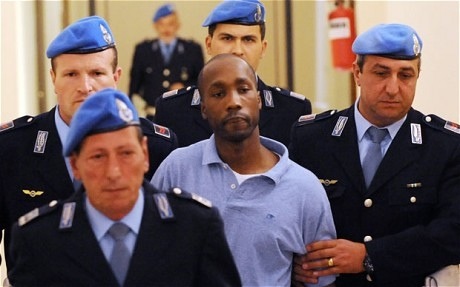
Then there was Rudy Guede. An Ivory Coast national who had been adopted by a wealthy Italian family, Guede was known for petty crimes and break-ins. Crucially, his DNA—in the form of bloody fingerprints and other biological material—was found *all over* the crime scene. He had fled to Germany shortly after the murder and was arrested there.

He admitted to being in Meredith’s room that night but claimed he was there with her consensually. He said he was in the bathroom when an unknown man came in, argued with Meredith, and killed her. He claimed he panicked and ran. A convenient story. But with his DNA everywhere and Meredith’s on him, his presence was undeniable. To many, he was the obvious killer. Case closed, right?

But the prosecution had a different theory. A wilder theory. They believed it wasn’t just Guede. They believed it was a satanic, drug-fueled sex game gone horribly wrong, involving all three: Amanda, Raffaele, and Rudy.

The Investigation and the DNA Debacle

The case against Knox and Sollecito was built on a pyramid of questionable evidence and a confession that wasn’t a confession at all.

After a grueling, 50+ hour interrogation over four days—with no lawyer and a questionable translator—a distraught and exhausted Amanda Knox signed a statement implicating herself and her boss, a local bar owner named Patrick Lumumba. It was a fantasy, a product of extreme pressure and confusion, which she recanted almost immediately. Lumumba had a rock-solid alibi and was quickly released, but the damage was done. The prosecution now had their “confession.”

Then came the forensic evidence. The supposed “smoking guns.”

  • The Kitchen Knife: A large knife was found at Raffaele Sollecito’s apartment. The prosecution claimed it was the murder weapon. On its blade, they said they found a tiny, almost invisible trace of Meredith’s DNA. On the handle, they found Amanda’s DNA. It seemed damning. But was it? The defense argued the trace amount was so small it was likely the result of lab contamination, a common issue in forensics. The knife also didn’t match the primary wounds on Meredith’s body.
  • The Bra Clasp: This became the most controversial piece of evidence. A clasp from Meredith’s bra, allegedly containing Raffaele’s DNA, was collected from the crime scene… a full 46 days after the initial investigation. Forty. Six. Days. The crime scene had been compromised, trampled through by dozens of people. The idea that this tiny piece of metal remained untouched, only to be discovered over a month later, was unbelievable to many forensic experts.

20140130-212231.webp

The Legal Rollercoaster: A Journey Through Hell

What followed was one of the most chaotic legal journeys in modern history, a seemingly endless series of trials, appeals, and reversals that played out on a global stage.

Conviction #1 (December 2009)

Despite the shaky evidence, the prosecution’s narrative of a demonic ritual was powerful. The media had painted Amanda as a monster. In 2008, Rudy Guede was convicted of murder in a separate fast-track trial and sentenced to 30 years (later reduced to 16). Then, in December 2009, an Italian court found Amanda Knox and Raffaele Sollecito guilty. They were sentenced to 26 and 25 years in prison, respectively. The world was stunned. To half the observers, justice had been served. To the other half, a terrifying miscarriage of justice had just occurred.

The Shocking Acquittal (October 2011)

Amanda and Raffaele spent four years in an Italian prison, fighting to clear their names. Their appeals trial was a game-changer. The court appointed two independent forensic experts to review the DNA evidence. Their conclusions were explosive. They found that the original police investigation had been hopelessly botched. The collection methods invited contamination. The supposed DNA on the knife and bra clasp was unreliable and couldn’t be trusted. The entire scientific basis of the prosecution’s case crumbled to dust. In October 2011, Knox and Sollecito were acquitted and walked free. Amanda flew home to Seattle, vowing never to return.

20140130-212341.webp

Reversal and Retrial: The Nightmare Returns (2013-2014)

Just when they thought it was over, the Italian legal system pulled them back in. In a move that is baffling to those familiar with American law (which prohibits double jeopardy), Italy’s highest court, the Court of Cassation, threw out the acquittal in March 2013. They claimed the appeals court judge had ignored evidence and ordered a brand new trial.

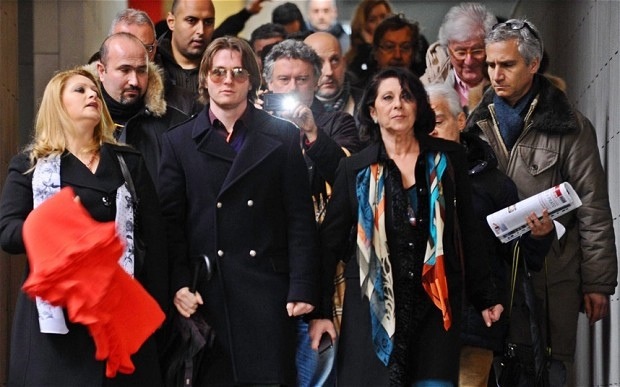
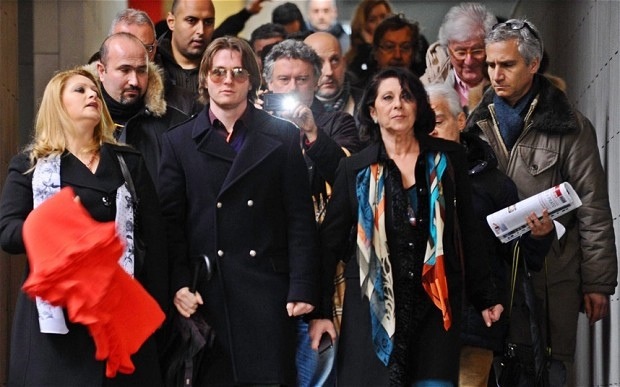
The world watched in a state of suspended animation as a Florence court re-tried the case in 2014. Amanda remained in the United States, a fugitive in the eyes of the Italian court. The tension was immense. The press gathered. Meredith Kercher’s family, desperate for closure, sat stoically in the courtroom. And then the verdict came down like a hammer blow. Guilty. Again. The court reinstated the original conviction, sentencing Knox to an even longer term of 28.5 years.

It was a legal twilight zone. How could this happen? An American citizen was now a convicted murderer in Italy, safe in her home country but unable to travel, living with a verdict hanging over her head that could, in theory, lead to an extradition battle.

The Final Twist: Exonerated for Good

The saga had one last, definitive chapter. In March 2015, the case went to the Court of Cassation for the final time. This was it. The last word. Everyone expected them to uphold the 2014 guilty verdict.

They didn’t.

In a stunning and final decision, Italy’s highest court completely exonerated both Amanda Knox and Raffaele Sollecito. They didn’t just overturn the conviction on a technicality; they annihilated the prosecution’s case, citing “stunning flaws” in the investigation and a complete lack of evidence proving they had anything to do with the crime. The court declared they did not commit the crime. Period. After eight years, the nightmare was finally, truly over.

20140130-212534.webp

Unanswered Questions and Lingering Shadows

So where does that leave us? Rudy Guede, the only person whose DNA was definitively at the scene, was convicted but released from prison early in 2021. He continues to maintain his innocence and points the finger at Knox and Sollecito.

The internet remains a hotbed of debate. Modern theories still swirl. Some Reddit detectives pore over court documents, convinced the Italian courts got it right the first time. They point to the couple’s odd behavior and changing alibis as proof of a guilty conscience. They argue that the absence of their DNA doesn’t mean they weren’t there—just that they were careful.

Others believe the truth is simpler and darker. They argue that Rudy Guede did not act alone, but that his accomplice was never found. That the police, under immense international pressure to solve the murder of a British student, fixated on the “weird” American girl and her boyfriend, building a case around them and ignoring leads that pointed elsewhere. That Amanda and Raffaele were convenient scapegoats for a botched investigation.

What really happened in that cottage on Via della Pergola 7? We know Meredith Kercher was murdered. We know Rudy Guede was there. Everything else is a fog of speculation, media sensationalism, and failed forensics. Was it a sex game gone wrong? A lone burglary that turned deadly? Or something else entirely?

The case serves as a chilling warning about the power of narrative. Once the story of “Foxy Knoxy” was written, the facts almost didn’t matter. It was a story the world wanted to hear. A cautionary tale. But in the end, after years of legal battles that cost millions and ruined reputations, the highest court in Italy found that the story was just that. A story.

And somewhere in the middle of it all, the memory of Meredith Kercher waits for a truth that may never be fully known.

Originally posted 2014-01-30 20:14:29. Republished by Blog Post Promoter