Home Weird World Strange Places Greenland’s vanishing lakes mystery solved

Greenland’s vanishing lakes mystery solved

0
59

The Lake That Vanished: What Is Greenland Hiding Beneath the Ice?

Picture a lake. Not a pond. Not a puddle. A sprawling, sapphire-blue body of water, two square miles wide, shimmering under the arctic sun. Now, picture it gone.

Vanished. In two hours.

That’s not science fiction. It’s not a scene from a disaster movie. This is the chilling, true story of Greenland’s North Lake, an event that baffled scientists and kicked off a decade-long investigation into the secrets buried beneath the ice. We’re talking about 12 billion gallons of water. Enough to cover the entire island of Manhattan in nearly two feet of water. One moment it was there, a vast mirror to the sky. The next, an empty, gaping wound in the ice.

The official story? It drained. A simple answer for an impossibly complex event. But as with all great mysteries, the official story is never the *whole* story. What really happened out there in the vast, silent expanse of the world’s largest island? What kind of force can pull the plug on a lake the size of a town in less time than it takes to watch a superhero movie?

The answer is far more shocking, and has far greater consequences for every single person on this planet, than you could ever imagine.

A Disappearing Act of Impossible Scale

Let’s go back to the scene of the crime. For years, scientists flying over the Greenland ice sheet had monitored its thousands of “supraglacial” lakes. These are temporary bodies of water that form on the surface of the ice every summer as the sun beats down. They are a normal, expected part of the seasonal cycle. Beautiful, but routine.

Until they weren’t.

The case of North Lake was different. Catastrophic. The sheer speed of its disappearance was something no one had ever documented. Twelve billion gallons. Gone in a flash. The initial theories were simple enough. The water must have found a crack, a fissure, and drained down through the ice sheet. A phenomenon they call a moulin.

But that answer was lazy. It was incomplete. It explained *where* the water went, but it completely failed to explain the “how.” How could a crack in ice nearly a mile thick open up so violently, so quickly, that it could swallow a lake whole? The pressure from the water alone wasn’t enough. Something else was at play. A hidden variable. A force working in the shadows, deep within the ancient ice.

For nearly ten years, the mystery lingered. A ghost story told by climatologists. A data point that didn’t make sense. And all the while, the ice kept melting.

Greenland's vanishing lakes mystery solved

A Continent on the Move

The breakthrough came not from looking at the lake, but from looking at the entire continent of ice itself. You see, we think of Greenland as a static, frozen block. A permanent fixture on the globe. We are wrong. So very wrong.

The Greenland ice sheet is alive. It breathes. It moves.

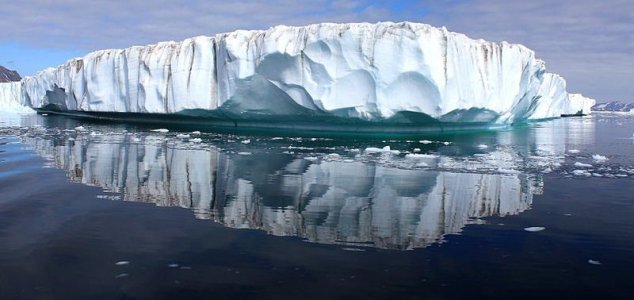
It is a glacier. A river of ice so vast it smothers a landmass, flowing under its own colossal weight toward the sea. And like any moving object, it is subject to incredible stress. The ice sheet stretches. It warps. It groans under titanic forces that we can barely comprehend. Think of it like a sheet of impossibly vast, cold taffy being pulled from all sides. In some places it compresses. In others, it stretches thin, becoming brittle and weak.

And this is the key.

A new study finally cracked the code. Scientists realized the disappearing lakes were forming over these exact zones of tension. These pre-existing weak spots in the ice. The lake itself, pooling in a depression, was just the final straw. The weight of the water, combined with the immense tension pulling the ice apart from below, created a perfect storm. It wasn’t just a simple crack. It was a catastrophic structural failure.

The bottom of the lake didn’t just crack. It shattered. A web of fractures would explode open at the base, connecting and creating a super-highway for the water to plunge into the abyss.

This explains the terrifying speed. It wasn’t a leak; it was a detonation. A “hydro-fracture” event on a scale that defies belief. It solved the mystery. Or did it?

The Conspiracy Corner: What Aren’t They Telling Us?

This is where the story takes a turn. Because when you start digging into the strange happenings around Greenland, you find that vanishing lakes are just the tip of the iceberg. The “tension” theory is a neat, tidy scientific explanation. But some researchers, digging through old maps and new satellite data, think there’s more to it.

H3: Ancient Anomalies Beneath the Ice?

For years, blurry satellite images and declassified ground-penetrating radar scans have fueled rumors of something truly paradigm-shattering buried under the ice of both Greenland and Antarctica. Strange, symmetrical shapes. Unexplained magnetic anomalies. Some call them pyramids. Others, the ruins of a long-lost city.

Think about it. We know our planet goes through cycles of warming and cooling. What if Greenland wasn’t always a frozen wasteland? What if, 12,000 years ago, it was a green and temperate land, home to a civilization we have no record of? A civilization swallowed by the ice at the end of the last Ice Age?

Could these rapid drainage events be linked to what’s underneath? What if the ice is thinner, weaker, and more prone to fracture over specific locations? Perhaps over the ruins of an ancient city, where residual heat, even minuscule amounts, could be creating a weak point from the bottom up. Could these vanishing lakes be nature’s way of trying to excavate something? Trying to show us a secret it has kept for millennia?

H3: Echoes of the Cold War

If ancient aliens aren’t your speed, consider a more modern conspiracy. It is a documented fact that during the height of the Cold War, the U.S. Army built a top-secret base *under* the Greenland ice. It was called Camp Century, a sprawling network of tunnels powered by a nuclear reactor. Their stated goal was research. The classified goal, Project Iceworm, was to create a hidden network of tunnels for launching nuclear missiles at the Soviet Union.

The project was abandoned when they realized the ice sheet was moving too fast. But it proves one thing: we have been operating under the ice for over 60 years.

What are they doing there *now*? With modern technology, have they found a way to stabilize their bases? Are they conducting new, even more secret experiments? Sub-glacial drilling for resources? Testing new forms of energy? Could these massive, sudden fractures be an unintended side effect of a secret military or corporate operation disturbing the delicate balance of the ice from below?

When a lake vanishes overnight, we have to ask: was it a natural event, or was it pushed?

The Doomsday Equation: Why a Vanishing Lake in Greenland Matters in Your Backyard

This is not just an arctic curiosity. The fate of these lakes is directly tied to the fate of our coastal cities. The mystery of where the water goes has a terrifying answer. It doesn’t just disappear. It goes *down*.

All 12 billion gallons of it, and the billions of gallons from countless other drainage events, plunge through the mile-thick ice sheet and pool at the very bottom, right where the ice meets the bedrock.

What does that do? It lubricates the entire system.

Think of trying to push a giant ice cube across a dry stone countertop. It’s hard. It takes immense force. Now, pour a little water under that ice cube. It glides. It slips. It accelerates with terrifying ease.

This is what’s happening in Greenland. These sudden injections of massive amounts of water are greasing the wheels of the entire ice sheet. The water lifts the ice ever so slightly off the bedrock, reducing friction and allowing it to flow much, much faster toward the ocean. It’s like putting the world’s biggest glacier on a Slip ‘N Slide.

Faster flow means more icebergs calving into the ocean. More ice in the ocean means higher sea levels. Period.

As Laura Stevens, a study author from the Massachusetts Institute of Technology, pointed out, understanding this process is “half of the equation of how the Greenland ice sheet contributes to sea level rise.” It’s a critical piece of the puzzle, and it’s telling us that the situation is far more dynamic and unstable than previous models suggested.

The water that vanishes in Greenland doesn’t stay there. It shows up, silently and slowly, on the streets of Miami, the canals of Venice, and the shores of New York City.

The Mystery Deepens: A Chain Reaction at the Top of the World

The original post you read was from 2016. In the world of climate science, that’s a lifetime ago. The situation has not improved. It has escalated.

Scientists monitoring the ice sheet with an arsenal of new satellites have discovered that these lake drainages are not isolated events. They can trigger a chain reaction. When one massive lake drains, it alters the stress and tension on the ice for miles around it. This can, in turn, weaken the ice beneath a neighboring lake, causing it to drain. It’s a domino effect of catastrophic proportions.

What was once a rare phenomenon is becoming more common. These events are happening more frequently, and in areas of the ice sheet further north that were once considered stable. The system is waking up, and it’s more volatile than we ever knew.

We no longer have to guess. We can watch it happen in near real-time from space. We can see the brilliant blue lakes form, and we can watch the satellite images as they wink out of existence, leaving a ghostly white scar on the landscape. Each disappearance is a death cry. A warning signal.

The ice is not just melting. It is breaking apart. From the inside out.

So we are left with a convergence of terrifying possibilities. A natural process of ice mechanics, supercharged by a warming climate, that is greasing the skids for global sea-level rise. A process that could, just possibly, be influenced by secrets buried under the ice for twelve thousand years, or by clandestine operations happening right now under our feet.

Greenland is speaking. In the groan of shifting ice, in the roar of a billion gallons of water plunging into the dark, it is sending a message. The real mystery isn’t just what happened to North Lake. It’s what will happen to us when the next one goes. And the one after that.

Are we listening?

Originally posted 2016-05-04 19:43:12. Republished by Blog Post Promoter