Home Weird World Strange Stories Alligator found in Chicago man’s basement

Alligator found in Chicago man’s basement

0
63

The Monster Next Door: The Secret Dinosaur Beneath a Chicago Basement

It sounds like the plot of a B-horror movie. Or maybe an urban legend whispered by kids at a slumber party. You know the one. “My cousin’s friend knows a guy who keeps a monster in his house.” We laugh it off. We check the locks. We tell ourselves that real life is boring, predictable, and safe.

But sometimes? Sometimes the legends are real.

In the frozen, wind-swept streets of Chicago, amidst the row houses and the snow shovels, a secret was breathing. It was waiting. For twenty-six years, it grew in the dark. While neighbors walked their dogs and children played in the yards nearby, a prehistoric predator was scratching at the concrete just a few feet beneath their boots.

This isn’t a ghost story. This is the story of Charles Price, a washing machine repairman, and the 200-pound secret that shattered a quiet suburban illusion.

alligator

Alligator found in Chicago man’s basement

The Discovery: A Repairman’s Worst Nightmare

Imagine the scene. It’s January in Chicago. The air hurts your face. You’re an appliance repairman, just trying to get through the day. You’ve got a ticket for a house in a normal neighborhood. The homeowner, Charles Price, seems like a regular guy. Maybe a bit quiet. Maybe a bit eccentric. But nothing screams “supervillain.”

You head down the stairs. The basement is dim. Cluttered. The smell hits you first. A musk. Dank, swampy, and raw. Not the smell of moldy drywall. The smell of something alive.

You start working on the machine. Clink. Clank. Then, you hear it.

A hiss.

Not a steam pipe leaking. Not a radiator acting up. A low, guttural, reptilian hiss. The sound of a creature that hasn’t changed its evolutionary design in millions of years because it didn’t need to. You turn around, flashlight beam cutting through the gloom, and there it is.

Eyes. Cold, yellow eyes reflecting the light. Scales. Teeth. A cage that looks far too small and far too flimsy for the beast inside.

This is exactly what happened on January 28. The repairman, whose name deserves to be etched in history for not immediately fainting on the spot, didn’t just run. He took pictures. He documented the madness. Then he called the police.

The Beast of the South Side

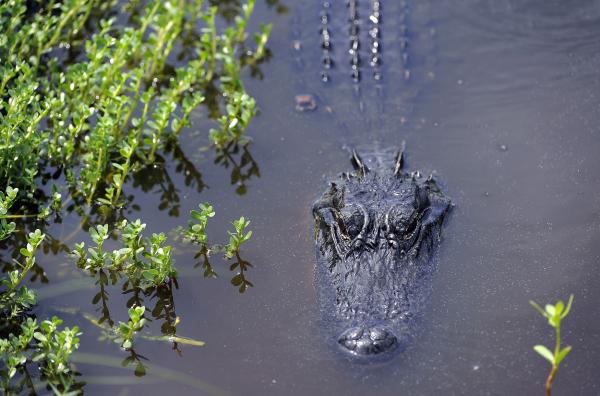
When the authorities arrived, they weren’t dealing with a stray cat or a raccoon stuck in a chimney. They were staring down a six-foot American Alligator. This wasn’t a baby. This was a fully grown, apex predator.

“It was every bit of 200 pounds,” Illinois Department of Natural Resources Sgt. Bill Shannon told the Chicago Tribune. You could hear the disbelief in his voice. Even for seasoned officers, this was a shock.

The logistics of this are mind-bending. How do you hide a 200-pound dinosaur? Price had reportedly been keeping this animal for 26 years. Let that sink in. This alligator was older than many of the police officers arriving on the scene.

While the internet was being invented, this gator was in the basement. While the Twin Towers fell, the gator was in the basement. While smartphones took over the world, the gator was in the basement. Eating. Growing. Waiting.

The Kankakee Connection: Where Do You Buy a Dinosaur?

Here is where the story takes a turn into the dark underbelly of the exotic pet trade. You can’t just walk into a PetSmart and pick up an alligator along with a bag of kibble. So where did Price get it?

He admitted to purchasing the reptile illegally when it was just a tiny hatchling. The location? A swap meet in Kankakee.

For those uninitiated in the world of high-strange commerce, swap meets and flea markets are often fronts for the “gray market.” You have tables selling antique lamps, tables selling tube socks, and then, in the back, usually out of a van or under a tarp, the weird stuff. Endangered birds. Venomous snakes. And apparently, baby alligators.

“It’s very common, unfortunately, for endangered animals to be sold under the table,” Sgt. Shannon explained. It’s a massive industry. It’s shadowy, unregulated, and dangerous.

Price saw the baby gator. Maybe it was cute. Maybe it cost fifty bucks. He bought it, put it in his pocket or a shoebox, and drove home. He likely thought, “I’ll keep it for a bit.” But reptiles are long-game players. They don’t stay small. And Price, for whatever twisted reason, couldn’t let go.

The “Cute Phase” Trap

This is the classic blunder of the exotic pet owner. Baby gators make chirping sounds. They have big eyes. They seem manageable. But biology is a strict taskmaster. That cute six-inch lizard adds a foot of length every year in its youth. Before you know it, you aren’t feeding it crickets; you’re feeding it chickens.

And then? You’re feeding it things you don’t want to talk about.

Living With a Monster: The Logistics of Madness

Let’s break down the sheer insanity of keeping a gator in a Chicago basement. This isn’t Florida. It’s not Louisiana. It’s Chicago. It gets cold. Bitterly cold.

Alligators are ectothermic. They need external heat to survive. If the temperature drops too low, they enter a state of brumation (reptile hibernation) or they simply die. Price must have had heat lamps running 24/7. The electric bill alone should have raised eyebrows.

And the smell. Have you ever been near a swamp? Now imagine that swamp is enclosed in a concrete box with poor ventilation. Reptiles produce waste. 200-pound reptiles produce massive amounts of waste. The ammonia smell must have been overpowering. Did the neighbors think Price just had bad plumbing? Or did they just learn to ignore the funk drifting from his windows?

The Backyard Terror

Here is the detail that will keep you up at night. The report states that Price “periodically let it out into his back yard.”

Let that marinate.

This wasn’t a permanent prisoner. It had yard time. Imagine being the neighbor. You’re grilling burgers. You look over the fence. And there, sunning itself next to the dandelion patch, is a creature that belongs in the Everglades. Did Price stand guard? Did he put it on a leash? A 200-pound gator can move with terrifying speed when it wants to—up to 30 miles per hour in short bursts.

If a child had chased a ball into that yard? We would be reading a very different, much more tragic headline.

The Psychology of the Keeper

Why? That is the question burning a hole in this page. Why do men like Charles Price do this?

Psychologists and criminologists often look at exotic pet hoarding as a form of control. The world is chaotic. People leave you. Jobs are stressful. But the predator in the basement? It needs you. You are the God of the Basement. You bring the food. You bring the light. It is a relationship of total dominance.

Or perhaps it was status. In his own mind, Price wasn’t just a guy in a quiet neighborhood. He was the Dragon Keeper. He had a secret that made him special. Every time he walked past a neighbor, he knew something they didn’t. That secret knowledge is a powerful drug.

Some theorists suggest a “savior complex.” He bought it to “save” it from the swap meet, and then felt he couldn’t release it because it would die in the Chicago winter. So, he became its jailer, trapped in a 26-year cycle of feeding and hiding.

Urban Legends: From Sewers to Basements

We have all heard the stories of alligators in the New York City sewers. The legend goes that kids brought baby gators back from Florida vacations in the 1950s, flushed them down the toilet when they got too big, and now a colony of albino mutants patrols the waste pipes.

Science tells us that is impossible. The sewers are too toxic, too cold, and lack the UV light required for reptiles to process calcium. They would die of metabolic bone disease in weeks.

But Charles Price proves the legend is almost right. The monsters aren’t in the sewers. That would be too convenient. They are in the basements. They are in the spare rooms. They are living among us, kept alive by heat lamps and the obsession of lonely men.

This reality is infinitely scarier than the myth. A sewer gator is a public problem. A basement gator is a private ticking time bomb.

The Legal Fallout and the Fate of the Beast

So, what happens when the cops bust your basement Jurassic Park? Price was hit with a charge of unlawful possession of an endangered species. It’s a misdemeanor. A slap on the wrist. After 26 years of harboring a man-eater, the legal consequences seem almost laughably small.

As for the alligator? It was removed by animal control. This is a trauma for the animal, too. For over two decades, its entire universe was a concrete floor and a man named Charles. Suddenly, it is dragged into the light, surrounded by flashing sirens and shouting men.

Typically, animals confiscated in these raids are sent to reptile sanctuaries or zoos, where they can live out their days with proper water, sunlight, and space. But the transition is brutal. It had likely never hunted live prey in the wild. It was a “pet” in the most twisted sense of the word.

The “What If” Scenario

Let’s play a game of “What If.”

What if the appliance repairman hadn’t come that day? What if Price had a heart attack and died in his sleep? The gator would have eventually grown hungry. Hungry animals get desperate. A 200-pound gator can smash through weak basement doors. It can tear through drywall.

We could have had a situation where a hungry, confused reptile wandered out the front door and into a school bus stop. Or worse, it could have turned on Price himself. History is full of exotic pet owners who ended up as dinner. The “Grizzly Man” documentary is the most famous example, but reptile owners are not immune. In 2011, an Ohio man released dozens of lions, tigers, and bears before taking his own life. The carnage was horrific.

Price’s story ended calmly, but it was balancing on a razor’s edge for a quarter of a century.

The Modern “Basement Zoo” Epidemic

Since this story broke, internet sleuths and animal rights activists have pointed out that this isn’t an isolated incident. With the rise of the Dark Web and encrypted messaging apps, the trade in exotic animals has only gotten easier. You don’t even need to drive to a swap meet in Kankakee anymore.

You can order a cobra online. You can buy a tiger cub on Instagram if you know the right hashtags. The sheer number of dangerous animals living in residential neighborhoods is unknown, but estimates suggest there are more tigers in captivity in the U.S. than there are in the wild.

Your neighbor’s shed? The one that’s always padlocked? The one with the strange heating unit humming in the summer? Maybe it’s a woodshop. Or maybe, just maybe, it’s another Charles Price situation waiting to be discovered.

Conclusion: The Wild Is Never Far Away

We build our cities to keep nature out. We put up fences, we pave the roads, we install climate control. We like to think we have conquered the food chain. But stories like this remind us that the line between civilization and the wild is paper-thin.

Charles Price brought the swamp to the suburbs. He lived with a dinosaur beneath his feet. It’s a testament to the strangeness of human nature—the desire to own the uncontrollable, to hide the monstrous, to live a double life.

So, tonight, when you hear a strange noise in your own house—a creak in the floorboards, a hiss from the radiator, a scratch in the walls—don’t just assume it’s the house settling. Go check. Turn on the light.

Because you never really know what your neighbors are hiding.

Originally posted 2016-03-15 14:55:55. Republished by Blog Post Promoter

Originally posted 2016-03-15 14:55:55. Republished by Blog Post Promoter