Sunday, May 10, 2026
HomeAlien LifeAliens on mars could have supported life!

Aliens on mars could have supported life!

They Found What on Mars? The Red Planet’s Buried Secret

You think you know Mars? That cold, dead, rust-colored rock floating in space? Think again. The story we’ve been told—a tale of a barren wasteland—is starting to crumble. It’s a planetary cover-up of cosmic proportions. For decades, NASA has drip-fed us information, showing us pictures of rocks and dust. Rocks. And. Dust.

But what if it’s all a distraction? What if the Red Planet is hiding a secret so profound it would change everything we know about our place in the universe? The evidence isn’t just wishful thinking anymore. It’s in the soil samples. It’s in the chemical analysis. It’s in the strange, inexplicable anomalies the rovers keep stumbling upon before the camera feed mysteriously cuts out.

They tell us Mars is dead. But the truth is, it might just be sleeping. And we’re about to find out what happens when it wakes up.

A Habitable Paradise Lost in Time

Let’s start with the official story. The one they are comfortable telling us. Billions of years ago, Mars wasn’t red. It was blue. A vibrant, shimmering blue world with deep oceans, rushing rivers, and a thick, protective atmosphere. A second Earth, right next door. NASA’s own robotic detectives, the rovers, have confirmed this beyond any doubt.

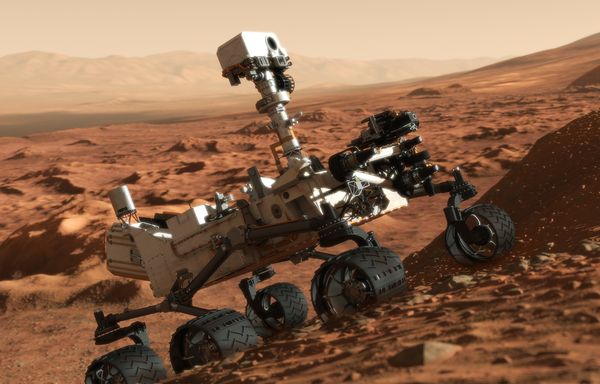
The Curiosity rover, a rolling laboratory the size of a small car, landed in a place called Gale Crater. Why there? Because scientists, looking from millions of miles away, saw something special. They saw the ghost of an ancient lakebed. And when Curiosity started drilling, what it found should have been the biggest news story in human history.

It found the chemical building blocks of life. All of them. Sulfur, nitrogen, hydrogen, oxygen, phosphorus, and carbon. Everything a living organism would need to thrive. But it gets even better.

ancient aliens at mars

The rover’s analysis of the ancient mudstone revealed something stunning. The water that once flowed here was pure. So pure, in fact, that John Grotzinger, the mission’s lead scientist at the time, dropped an absolute bombshell. He said, “We have found a habitable environment that is so benign and supportive of life that probably if this water was around and you had been on the planet, you would have been able to drink it.”

Drinkable water. On Mars. Let that sink in. This wasn’t the acidic, briny sludge that earlier rovers like Spirit and Opportunity had found elsewhere. This was the good stuff. The kind of water that fosters life, not destroys it. They found a place that wasn’t just *potentially* habitable. It was a paradise, waiting for life to begin.

So the million-dollar question, the one they don’t like to answer directly, is this: If all the ingredients were in the pot, why do they insist nothing was ever cooked?

Deep Dive: The Cataclysm That Murdered a Planet

What happened? How does a vibrant, water-rich world turn into a frozen desert? Around three billion years ago, Mars suffered a planetary catastrophe. Its molten core cooled and solidified. It died.

Without a spinning liquid core, the planet’s magnetic field—its invisible shield against the harsh radiation of space—vanished. Gone. The sun, which gives life, became the executioner. A relentless stream of solar wind slammed into Mars, stripping away its atmosphere molecule by molecule, like a cosmic sandblaster. The air thinned. The pressure dropped. The oceans boiled away into space or froze solid, buried under miles of red dust. The planet suffocated. If there was life teeming on the surface, it was wiped out in a planetary-scale extinction event that makes our asteroid impact look like a fender bender.

That’s the official story. A tragic, natural death. But is it the whole story? Or is it just the end of Chapter One?

The Conspiracy Files: What the Rovers Really See

This is where things get interesting. For years, eagle-eyed researchers and amateur astronomers have been combing through the thousands of publicly available photos from the Martian rovers. And they’re finding things. Things that shouldn’t be there. NASA is quick to dismiss them all as “pareidolia”—the human brain’s tendency to see patterns, like faces in clouds. A trick of light and shadow. But are they all?

You decide.

Exhibit A: The Face on Mars and the Pyramids of Cydonia

The granddaddy of all Martian conspiracies. In 1976, the Viking 1 orbiter snapped a photo of a region called Cydonia. In it was a mile-long mesa that looked uncannily like a human face, staring up into the void. Nearby were other formations that looked suspiciously like pyramids. The image became a global phenomenon. Was this a message? A monument left by a long-dead civilization?

NASA dismissed it. A trick of light, they said. Years later, they sent new probes to take high-resolution photos, which showed a heavily eroded, natural-looking mountain. Case closed, right? But the theorists push back. They argue the new photos could have been digitally altered. Or perhaps the monument, billions of years old, has simply eroded. What if that first, grainy photo captured it at just the right angle, under just the right light, to reveal its true, artificial nature?

Exhibit B: The “Thigh Bone” and Other Fossilized Remains

In 2014, the Curiosity rover photographed an object that made the internet explode. It looked, for all the world, like a fossilized thigh bone resting in the dust. The resemblance was uncanny. NASA was forced to issue a statement, claiming it was just an ordinary rock sculpted by wind and water erosion. A rock.

But the anomalies keep coming. A “spoon” seemingly levitating above the ground. A small figure that looks like a woman in a dress watching the rover from a distance. A perfectly spherical “ball” that looks completely out of place among the jagged rocks. Each time, the official explanation is the same: it’s a rock. It’s a shadow. It’s your brain playing tricks on you. How many times can it just be a rock before you start to question the official story?

mars rover on mars

The Methane Enigma: Is Something Still Breathing?

Forget the photos for a moment and let’s talk about gas. Specifically, methane. Here on Earth, about 95% of the methane in our atmosphere is produced by living organisms. From microbes in swamps to gas from cows, life makes methane. It’s considered a powerful biosignature—a potential sign of life.

And we’ve detected it on Mars. Repeatedly.

This isn’t a conspiracy theory; this is a mainstream scientific mystery that is driving NASA scientists crazy. Both rovers on the ground and orbiters in the sky have detected strange plumes of methane that appear, linger for a bit, and then vanish. What’s more, they seem to follow a seasonal pattern, spiking in the Martian summer and disappearing in the winter.

What could be causing it? The “official” safe explanation is some unknown geological process. Maybe underground water is reacting with certain types of rock to release trapped gas. It’s possible. But there’s another, far more electrifying possibility. What if the source is biological?

Imagine this: deep beneath the Martian surface, shielded from the deadly radiation, colonies of microbes have survived. They lie dormant in the frigid Martian winter. But as the seasons change and the ground warms ever so slightly, they wake up. They metabolize. They reproduce. They live. And they release tiny puffs of methane—the collective exhalation of a hidden, underground biosphere. A planet’s last, faint breath.

What If? The Subterranean Civilization Scenario

Let’s take this one step further. If tiny microbes could survive by going underground, what about a more advanced civilization? Faced with the slow, agonizing death of their world’s atmosphere, what would a society with advanced technology do? Would they just lay down and die?

Or would they go down?

The surface of Mars is riddled with massive lava tubes—caverns left behind by ancient volcanic flows. Some of these are enormous, far larger than any on Earth, creating vast, city-sized networks of caves that would be perfectly shielded from the lethal surface radiation. It’s the ultimate fallout shelter, built by nature itself.

Could an ancient Martian civilization have retreated into these subterranean realms, building new cities far from the dying sun? Could they still be there, living in self-sustaining ecosystems deep beneath the red sand? It sounds like science fiction, but it’s a logical solution to a planetary crisis. The methane plumes we detect could be the industrial exhaust of their hidden world, accidentally leaking to the surface.

The objects the rovers see—the “bone,” the “spoon,” the strange structures—might not be remnants of a surface civilization that died billions of years ago. They could be modern artifacts, accidentally dropped or discarded during brief, clandestine missions to the surface world. Our world.

The Truth is Out There, Under the Red Dust

The narrative is clear. NASA found a world that was once perfectly habitable. That world suffered a cataclysm. And now, that “dead” world is showing signs of activity—strange objects, mysterious gases—that defy easy explanation.

They tell us to look at the rocks. To admire the desolate beauty of the empty craters. They are spending billions of dollars to find traces of long-dead, fossilized microbes. But maybe they’re looking in the wrong place. Maybe they’re looking in the past, when the real story is happening right now, right under our rovers’ wheels.

The evidence points to a stunning possibility: Mars is not a graveyard. It’s a fortress. Life didn’t die out. It hid. The rovers keep sending back data, but they are only scratching the surface. The real question is not “Was there life on Mars?” The real question is “Where is it now?” And are we truly prepared for the answer?

Amit Ghosh
Amit Ghoshhttps://coolinterestingnews.com
Aloha, I'm Amit Ghosh, a web entrepreneur and avid blogger. Bitten by entrepreneurial bug, I got kicked out from college and ended up being millionaire and running a digital media company named Aeron7 headquartered at Lithuania.
RELATED ARTICLES

1 COMMENT

- Advertisment -

Most Popular

Recent Comments

Warren Pan Abbott on The legend of the Devil Monkey !
chris davies on The McPherson Tape Mystery
Reed Reedly on ET has Internet!
Bea Houseoffashion on Proof Of Time Travellers – Gallery
Marcus2012 on ET has Internet!
Reed Reedly on ET has Internet!
LaughsAtConspiracyNuts on The 9/11 Conspiracy – Myths and Facts
Alex Sliverman on Did the ancients fly?
Doctor Wholigan on Time Traveler in 1938 film
chris davies on The McPherson Tape Mystery
Archie1954 on 10 secret UFO hideouts
chris davies on Ghosts of flight 401
Marcus2012 on ET has Internet!
jason Macdonald on Proof of Time Travel? – China
chris davies on Long-Lost Pyramids Found?
Reed Reedly on ET has Internet!
Milkman on Connected Universe
Tenmiles on Baigong Pipes Mystery
Simon Foster on Sirius – The Documentary
From the 1st April on 2013 – Alien Contact date ?
SkyWatcher on Is ET ignoring us?
I Come From The Future on Obama to make UFO Alien disclouser soon ?
ÛñK?øWn on 2013 – Alien Contact date ?
Just another person on 2013 – Alien Contact date ?
Malcolm Windowcleaner on The strange case of Rudolph Fentz
Mason Servio on Strange Things on Mars
Marke Wisdom Seeker on What will we find as arctic melts?
Andrea A Elisabeth Levyne on Aliens Captured in Varginha, Brazil
Mitch Grouyeki on Amazing Space Shuttle pictures