
The Hollywood Hoax That Accidentally Exposed the Entire UFO Conspiracy
Stop what you’re doing. Forget every blurry, shaky, out-of-focus UFO video you’ve ever seen. Forget the smudges on the lens, the weather balloons, the distant lights that could be anything. For a brief, shining moment, the internet had what it was always waiting for. The one. The smoking gun.
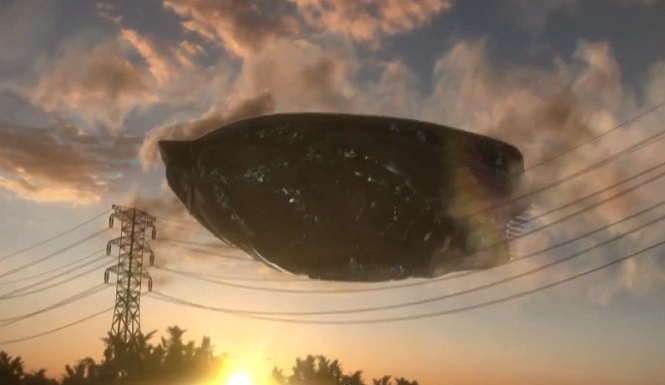
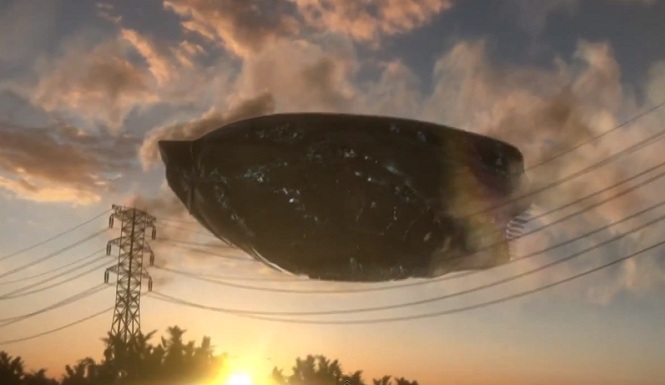
Crystal clear footage. A craft of impossible design, hovering silently, menacingly, in broad daylight over a sleepy California suburb. You could see the details. The panels. The strange, alien geometry. The witness, breathless and terrified, fumbling with their phone just like you or I would. It felt real. It felt… final.
This was it. Proof.
But what if the most convincing piece of evidence was also the most devastating lie? What if the video that was supposed to change everything was actually a digital Trojan horse, designed not to reveal the truth, but to destroy our ability to recognize it forever? Hold on tight. Because the story behind the “UFO Over Santa Clarita” is more terrifying than any alien invasion. It’s a story about a hidden war for your perception, and it proves that the most dangerous secrets aren’t in the sky, but on our screens.
The Video That Broke the Internet
It landed on YouTube like a thunderclap. No dramatic title. No sensationalist music. Just raw, seemingly authentic footage. The scene is mundane, almost painfully so. A car, a dusty road, the bright California sun. Then, it appears.

A small, dark object zips into frame with physics-defying speed. It stops on a dime. Hovers. The person filming lets out a shaky, authentic gasp. “Holy…” You know the one. The universal human reaction to seeing the impossible. The camera zooms, it shakes, it struggles to focus—all the hallmarks of a genuine, unplanned encounter. The small craft is soon joined by others. They move in an eerie, coordinated swarm. It’s unsettling. It’s convincing.
And then the finale.
A shadow falls over the entire scene. The camera pans up, and a monstrous mothership, a city in the sky, emerges from the clouds. It’s over the top. It’s absurd. And for millions of people, it was the moment the video became undeniable proof.
The online UFO community exploded. Forums lit up. YouTube channels dedicated to dissecting footage declared it the most significant evidence ever captured by a civilian. Skeptics were, for once, a little quieter. The usual explanations didn’t stick. It wasn’t a drone; the movements were too erratic. It wasn’t a conventional aircraft. The quality was just too good to be a simple fake. The video had achieved a perfect, terrifying balance: it was just polished enough to be clear, but just shaky enough to feel real.
The Mastermind Revealed: A Hollywood Insider Spills the Beans
Just as the debate reached a fever pitch, the truth came out. And it was far stranger than any alien theory. The bombshell dropped in an article from Wired. The man behind the video wasn’t a terrified bystander. He was a Hollywood professional. A master of illusion.
His name? Aristomenis “Meni” Tsirbas.
If you don’t know the name, you absolutely know his work. Tsirbas is a veteran visual effects artist and director. His resume is a tour of modern blockbuster cinema. He’s worked on movies like Titanic and Hellboy. He’s contributed to multiple Star Trek television series. This was not some kid in his basement with a pirated copy of Adobe After Effects. This was a guy who builds believable fantasy worlds for a living.
And he had a point to prove.
“The point of the video was to prove that CGI can look natural and convincing,” Tsirbas told Wired, pulling back the curtain on his four-month-long project. He was tired of the glossy, over-produced look of computer-generated effects in big movies. He wanted to show the world that with enough care and artistry, you could create something that felt raw, accidental, and utterly, totally real.
He succeeded. Maybe a little too well.
Not Just a Fake UFO… A Fake Universe
Here’s the part that should send a shiver down your spine. The real twist isn’t that the UFO was CGI. Everyone suspected that. The true mind-bending revelation from Tsirbas was far more profound.
Everything was fake.
Everything.
Let that sink in. The UFOs were fake. The mothership was fake. But so was the car. The dashboard. The dusty road. The mountains in the background. The sky. The lens flare. The camera shake. The out-of-focus blur. The terrified gasp of the “witness.” Every single pixel on the screen was a meticulously crafted lie, rendered in a computer.
“Everybody assumes the background and car are real, and that the UFOs are probably fake,” Tsirbas explained. “The general reaction is disbelief, so I usually have to prove it by showing a wireframe of the entire shot to prove that nothing is real.”
This wasn’t just a special effect placed into a real video. This was an entirely synthetic reality, built from the ground up to fool our brains. Tsirbas didn’t just fake an alien spacecraft; he faked the human experience of seeing one.
The Uncomfortable Truth: If This is Fake, What Can We Believe?
The initial reaction to the reveal was a mix of awe and anger. Awe at the technical skill. Anger at being duped. But once that faded, a much darker realization began to creep in. The Santa Clarita video is more than a clever hoax. It’s a warning. It’s a paradigm shift in the search for truth.
Think about it. Meni Tsirbas and his small team did this over four months, essentially as an art project. Now, ask yourself a question. What could a government agency with a black budget do? What could a three-letter agency dedicated to psychological operations create with unlimited resources and the world’s best artists at their disposal?
The Santa Clarita video single-handedly proves that creating 100% realistic, completely fabricated “evidence” of *anything* is not just possible, but has been for years. It completely undermines the very foundation of video evidence in the 21st century.
The Disinformation Dilemma
This is where we tumble down the rabbit hole. For decades, UFO researchers have been clamoring for the “smoking gun” footage. The crystal-clear video that will force the world to acknowledge the truth. But Tsirbas’s experiment poses a terrifying “what if” scenario.
What if the “smoking gun” has already been fired, but it was loaded with blanks?
Consider the possibility of a sophisticated disinformation campaign. A government, worried about public panic over a real phenomenon, could decide to flood the internet with hyper-realistic fakes. They could release dozens of videos, each more convincing than the last. Then, they could orchestrate a grand reveal, exposing them all as hoaxes—just like Tsirbas did. The result? The public becomes permanently cynical. The very idea of UFOs becomes a joke. Then, when the *real* footage of a *real* event finally surfaces, no one will believe it. It would be dismissed instantly. “Oh, it’s just another CGI fake.”
Checkmate.
It’s a form of psychological warfare. You don’t have to hide the truth if you can make the truth impossible to believe.
A Legacy of Lies: From Pie Tins to Pixels
The Santa Clarita video wasn’t created in a vacuum. It stands on the shoulders of a long, proud tradition of UFO hoaxes. The methods change, but the intent to deceive is a constant.
In the 1950s, it was George Adamski, who claimed to meet a Venusian named Orthon and took “photographs” of their ships—which skeptics noted looked suspiciously like lampshades and ping pong balls.
In the 1970s and 80s, we had the infamous Billy Meier case from Switzerland, with incredibly clear photos of “beamships.” For years, they were held up as the best evidence available, until investigators proved they were small, expertly crafted models dangled from strings.
Then came the 1990s and the “Alien Autopsy” footage. A grainy, black-and-white film supposedly showing the dissection of a Roswell alien. It caused a global sensation before its creator, Ray Santilli, admitted it was almost entirely a staged recreation.
Each hoax was a product of its time, using the technology available to push the boundaries of belief. From models and darkroom tricks to video editing and now, fully synthetic digital worlds. The Santa Clarita video is simply the next logical step in this evolution of deception.
The Post-Truth Battlefield of Modern Ufology
The game has changed. In the years since the Santa Clarita hoax, we’ve entered a bizarre new era. The US Pentagon itself has officially released and verified its own UFO—now rebranded as UAP—videos. The “Tic Tac.” The “Gimbal.” The “GoFast.” The government is now admitting that there are things in our skies that they cannot identify.
But the ghost of Meni Tsirbas’s creation haunts this new disclosure. If a single artist could create a fake universe on a computer years ago, how can we be 100% certain that these official videos aren’t part of an even more complex psychological game? Are they real? Are they advanced drones from a foreign adversary? Or are they the most sophisticated CGI fakes ever produced, released by our own government for reasons we can’t even begin to fathom?
The internet is now flooded with countless videos, many of them low-quality and easily debunked, like the endless compilations that clog up YouTube feeds. They serve to muddy the waters, to make finding anything of value a needle-in-a-haystack ordeal.
The AI Threat on the Horizon
If the Santa Clarita video was a warning shot, then Artificial Intelligence is the nuclear bomb. We are now entering the age of deepfakes and AI-generated video. Soon, the ability to create a 100% convincing fake will not be limited to Hollywood professionals. It will be available to anyone with a powerful enough computer. You won’t need four months. You’ll need four minutes.
Imagine a world where you can type a sentence—”Show me a UFO hovering over the White House, filmed on an iPhone 15″—and an AI generates a flawless, photorealistic video in seconds. How do we find truth in that world? How do we believe anything we see?
The answer is, you can’t. Not with your eyes, anyway.
So, What Does It All Mean? Can We Still Trust Our Eyes?
The “UFO Over Santa Clarita” began as an artist’s technical exercise. But it became something far more important. It became a lesson. A permanent, unavoidable asterisk next to every piece of video evidence from now until the end of time.
It forces believers and skeptics alike to confront the same uncomfortable reality: seeing is no longer believing. Our senses, the most basic tools we have for interpreting the world, can now be hijacked and manipulated with terrifying ease.
The legacy of this brilliant hoax is not just a funny story about a viral video. It’s a chilling prophecy of a future where reality is for sale. Where the truth is not what happened, but what can be rendered most convincingly. The real search is no longer for a smoking gun in the sky, but for a single, verifiable pixel of truth in a rising ocean of digital lies. Look up at the skies if you want. But maybe, just maybe, you should be more worried about what you’re looking at on your phone.
![UFO-Hoax-Video[1]](https://coolinterestingnews.com/wp-content/uploads/2013/03/ufo-hoax-video1.webp)









