Saturday, June 6, 2026
HomeWeird WorldStrange Stories50 More Amazing Random Facts About India

50 More Amazing Random Facts About India

India’s Forbidden History: 50 Mind-Bending Secrets They Don’t Want You To Know

Forget everything you think you know about India. Forget the travel brochures. Forget the Bollywood montages. The story they sell you is a thin veneer, a painted screen hiding a chasm of bizarre truths, lost histories, and paradoxes so profound they can make your head spin. We’re told stories of maharajas and spice routes, but what about the 4,000-kilometer wall that vanished from history? Or the underground fire that’s been burning for over a century? Or the living bridges that grow stronger with every monsoon?

This isn’t a history lesson. This is an excavation. We’re digging past the sanitized textbooks to unearth the raw, strange, and sometimes terrifying truths buried just beneath the surface. What you are about to read is a collection of fragments, whispers, and echoes from a subcontinent of over a billion souls and countless secrets. Prepare yourself. Some of these truths are stranger than any fiction.

Echoes of Lost Engineering and Forgotten Empires

History is written by the victors, they say. But what happens when the evidence of the losers, or even just the forgotten, is so monumental it defies erasure? What happens when it’s literally woven into the landscape, a silent challenge to the official narrative?

The Living Bridges of Meghalaya

In the Eastern state of Meghalaya, a place that holds the record for the most rainfall on the planet, steel and concrete are useless. The monsoons would tear them apart, rusting them into oblivion. The local Khasi and Jaintia peoples knew this centuries ago. Their solution wasn’t to fight nature. It was to partner with it.

They don’t build bridges. They *grow* them.

Using the aerial roots of the Ficus elastica tree, they guide them across rivers, weaving them through hollowed-out tree trunks and bamboo scaffolds. It’s a process that takes decades. A single bridge is not the work of one person, but a generational pact. A promise made by a grandfather that his grandchildren will one day walk across. These aren’t dead structures. They are living, breathing organisms. They don’t rot or weaken in the endless rain. They get stronger. The roots thicken, the weave tightens, and the bridge becomes an inseparable part of the jungle itself, capable of holding dozens of people at a time and lasting for over 500 years. This isn’t just construction. It’s a form of organic engineering so advanced, so in tune with its environment, that modern science is only now beginning to understand it. Think about that. A “primitive” tribe holds the key to sustainable architecture that billion-dollar corporations can only dream of.

The Ghost Wall of the British Raj

You’ve heard of the Great Wall of China. You’ve heard of Hadrian’s Wall. Have you ever heard of the Inland Customs Line? Probably not. And that’s what’s so terrifying.

The British Empire, in its infinite greed, built a hedge. But this wasn’t some garden fence. This was a monstrous, 12-foot-high, impenetrable barrier of thorny trees, rock walls, and guard posts that snaked for nearly 4,000 kilometers (2,500 miles) across the heart of India. Its purpose? To enforce a salt tax. To stop people from smuggling a basic element of life. For decades, thousands of men patrolled this living wall. It was one of the largest, most ambitious, and most oppressive customs barriers in human history.

And then… it just vanished.

Poof. Gone. Almost nothing remains of it today. How does a structure that massive, that significant, get completely erased from the physical and historical record? Official accounts are bland. They say it was dismantled. But how? And where did it all go? It’s a ghost on the landscape, a colossal secret that raises chilling questions about how easily history can be manipulated, and how even the most massive monuments can be made to disappear when they become inconvenient.

When Greek Kings Ruled India

The story we learn is that Alexander the Great came, saw, and left. But that’s a lie of omission. The truth is far stranger. After Alexander’s main forces retreated, his generals and their descendants didn’t just pack up and go home. They stayed. They carved out kingdoms. For nearly 200 years, Greek kings ruled over parts of modern-day Punjab and beyond. They issued coins with their faces on one side and Hindu deities on the other. They blended Greek art with Buddhist philosophy, creating a unique Greco-Buddhist culture that influenced Asian art for centuries. Men with names like Menander and Apollodotus ruled from Indian cities until as late as 10 AD. This wasn’t a footnote in history; it was a full-blown chapter that has been quietly torn out of most Western textbooks.

Global Confusion and Bizarre Mysteries

Sometimes the clues to a deeper mystery aren’t buried in the ground, but hidden in plain sight—in the words we use, the art we see, and the stories we tell. They reveal a world far more interconnected and confused than we imagine.

The Case of the Confused Turkey

What do you call the bird we eat at Thanksgiving? A turkey, right? Simple. But pull on that thread and the whole world unravels.

Turkey-Amazing Random Facts About India

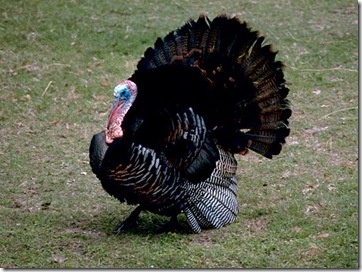
In Turkey, they call the bird “Hindi,” as in, “the bird from India.” Stay with me. In India, they often call it “Peru.” In Arabic, it’s a “Greek chicken.” In Greek, it’s a “French chicken.” And in French, it’s a “dinde,” a shortening of “poule d’Inde,” which means… “Indian chicken.”

The punchline? The bird is native to North America. It’s not from any of these places. Its name is a linguistic fossil, a map of mistaken identity and chaotic 16th-century trade routes where goods from the “New World” were confused with treasures from the “Indies.” That one bird’s name tells a bigger story about globalization, confusion, and conquest than a dozen history books.

The Last Supper’s Anomaly

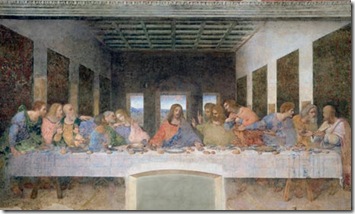
Look closely at Leonardo da Vinci’s masterpiece, The Last Supper. Something is wrong. On the table, you can see sliced oranges. A small detail? No. It’s an impossibility. Oranges were brought from India to Europe by Portuguese traders in the 15th century. They were a rare and exotic luxury. They absolutely did not exist in Jerusalem at the time of the historical Last Supper. Was Da Vinci just painting the fruit he knew, or was this a deliberate clue, a signature of a different reality hidden within the most famous painting in the world?

The Last Supper-Amazing Random Facts About India

The Bullet Baba: A Shrine to a Motorcycle God

This sounds like a fever dream, but I assure you, it is real. In Rajasthan, there is a temple. A holy shrine. And the deity inside is not a statue of a god, but a 350cc Royal Enfield Bullet motorcycle.

The story goes that a young man named Om Banna was killed in a crash at that spot. The police took the motorcycle to the station. The next morning, it was gone. It had mysteriously reappeared back at the crash site. They took it back, chained it up, and emptied the fuel tank. The next day, it was back at the crash site again. After this happened several times, the locals saw it as a miracle. They built a temple around the bike, believing “Bullet Baba” protects travelers on that dangerous stretch of road. Today, thousands of drivers stop to pray to the motorcycle for a safe journey. Is it a hoax? A legend? Or something else entirely?

The Ganga’s Grim Solution

The River Ganga is one of the most sacred rivers on Earth, a goddess in liquid form for over a billion Hindus. It is also one of the most polluted. For centuries, it has been a place for funeral rites, with bodies and ashes committed to its waters. Due to the overwhelming number of corpses being dumped into the river, authorities faced a grim and shocking problem. Their solution was something out of a horror movie. They began releasing thousands of flesh-eating snapping turtles into the river, hoping these predators would… clean up the human remains. A desperate, macabre attempt to use nature to solve a problem of faith and pollution.

Spider-Man-India-Amazing Random Facts About India

Human Extremes: Gods, Killers, and Supermen

The subcontinent seems to operate on a different scale, producing individuals who defy all known limits of human potential, for both good and evil.

Pavitr Prabhakar, the Spider-Man of Mumbai

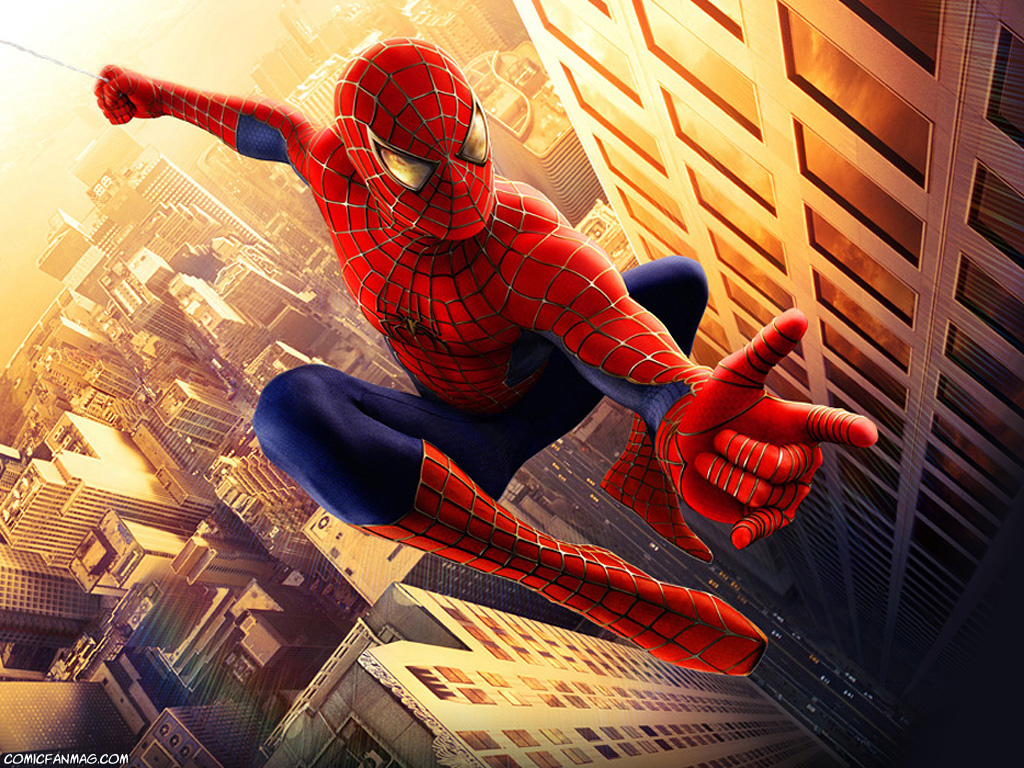
Think Spider-Man is just a kid from Queens? Think again. In 2004, Marvel Comics officially launched a new Spider-Man for the Indian market. His name is Pavitr Prabhakar. He’s not a nerdy science student from New York, but a poor village boy living in Mumbai with his Aunt Maya and Uncle Bhim. He doesn’t get his powers from a radioactive spider, but from an ancient yogi who grants him the power of a spider to fight the evil threatening the world. It’s a fascinating re-imagining of a classic myth, a perfect example of how stories mutate and adapt as they cross cultural borders.

The Great Gama: The Undefeated God of Wrestling

Before there was Hulk Hogan, before there was The Rock, there was The Great Gama. Born Ghulam Mohammad Baksh Butt, he was a legend, a myth in motion. He stood only 5’7″, but he was a powerhouse of muscle and technique. His career spanned 50 years. He fought over 5,000 matches. And he never lost. Not once. He was the undisputed world heavyweight champion, the only undefeated wrestler in recorded history. His training regimen was insane: thousands of squats and pushups daily. He was so legendary that a young Bruce Lee was a massive fan, incorporating Gama’s exercises into his own training. This wasn’t a sports star; this was a force of nature.

India’s 8-Year-Old Serial Killer

The story of Amarjeet Sada is one that chills you to the bone. In 2007, an 8-year-old boy from a poor village in Bihar was arrested for the murder of a 6-month-old baby. When questioned, he didn’t just confess. He calmly led police to the burial site and admitted to killing two other infants before that, including his own sister. He was, at the time, the world’s youngest known serial killer. The case presented a horrifying legal and moral dilemma. How do you prosecute a child? What creates such a monster? He was sent to a juvenile home, a dark question mark in the annals of criminal psychology.

Budhia Singh, The Marathon Toddler

At an age when most kids are learning to tie their shoes, Budhia Singh was running marathons. Plucked from poverty and trained by a local coach, this tiny boy became a national sensation. By the age of four, he had already completed 48 full marathons. His most famous feat was running 65 kilometers (40 miles) in seven hours in the blistering Indian heat. The story became a global media frenzy, but it had a dark side, sparking a massive controversy over child exploitation and abusive training methods. Was he a prodigy or a victim? The government eventually intervened and placed him in a state-run sports hostel, and his promising career fizzled out. A story of incredible potential and heartbreaking what-ifs.

Budhia Singh-Amazing Random Facts About India

Modern Marvels and Digital Ghosts

The old India of myth and legend is colliding head-on with the 21st century, creating sparks of pure, unadulterated weirdness.

The Temple That Shaves 20,000 Heads a Day

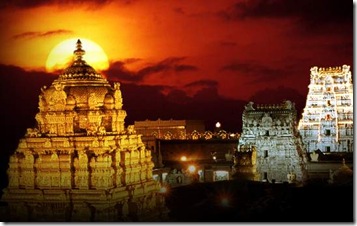
The Tirumala Venkateswara Temple is a place of staggering wealth and devotion. It receives more donations than the Vatican, often over $450,000 a day. Its annual gold offerings can top 3,000 kilograms. But its most unique industry is hair.

Tirumala Venkateswara Temple-Amazing Random Facts About India

As an act of humility and sacrifice, pilgrims have their heads shaved. Every single day, around 600 barbers deftly shave over 20,000 devotees. This makes the temple the world’s largest barbershop. The tons of human hair are then auctioned off, becoming a key ingredient in the billion-dollar global market for wigs and extensions. The hair you might be wearing could be a sacred offering from a temple in Southern India.

The Eternal Fire Beneath Jharia

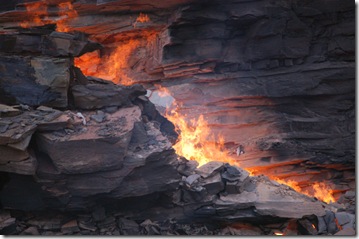
Imagine a town where the ground is literally on fire. Where smoke seeps from cracks in the earth and the land itself is hot to the touch. This isn’t a fantasy novel; it’s Jharia, in the state of Jharkhand. In 1916, a fire started in one of the region’s massive underground coal fields. It has been burning ever since.

Jharia-Amazing Random Facts About India

Over a century later, the fire still rages. It has consumed millions of tons of coal and forced entire communities to relocate as their homes collapse into the fiery caverns below. It is an environmental catastrophe of apocalyptic proportions, a subterranean inferno that no one knows how to extinguish. It just burns. And burns.

The Green Screen Revolution of Tunak Tunak Tun

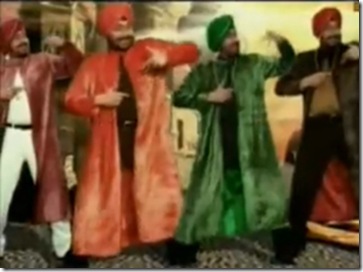
If you were on the internet in the early 2000s, you know this song. Daler Mehndi’s “Tunak Tunak Tun” became one of the first truly global viral memes. But the story behind its bizarre music video is fantastic. Daler Mehndi was a huge star in India, but critics snidely claimed his videos were only popular because they always featured beautiful women. Annoyed, Daler decided to prove them wrong. He created a music video that featured only him. Four of him, in fact. It was the first music video in India to make extensive use of blue screen technology, allowing him to clone himself into a quartet of colorful, dancing Daler Mehndis. The result was an absolute sensation that became a cult classic worldwide.

Tunak Tunak Tun-Amazing Random Facts About India

Lingering Shadows and Unsettling Truths

Some facts don’t fit into neat categories. They are just stark, strange realities that paint a picture of a nation of profound contrasts and lingering paradoxes.

The Tiger’s Deception

In the Sundarbans, the vast mangrove forests bordering India and Bangladesh, tigers are legendary and terrifying man-eaters. They are ambush predators, almost always attacking from behind. For a time, local villagers and honey collectors came up with a brilliantly simple solution: they started wearing human face masks on the back of their heads. The idea was to trick the tigers into thinking they were always being watched. And for a while, it worked! Attacks plummeted. But the tigers are smart. They adapted. They figured out the trick, and the attacks continued. It was a short-lived battle of wits between man and predator.

Miami-India Flag-Amazing Random Facts About India

The Economic Vanishing Act

Here is a number that should stop you in your tracks. In the year 1700, at the height of the Mughal Empire, the Indian subcontinent accounted for an estimated 27% of the entire world’s income. It was an economic superpower, on par with the whole of Europe combined. By 1950, after centuries of colonialism and exploitation, that number had plummeted to just 3%. It is one of the most dramatic and devastating economic collapses in human history, a story of wealth extraction on a scale that is almost impossible to comprehend.

Adolf Hitler, the Indian Politician

Yes, you read that correctly. In the state of Meghalaya, there is a politician named Adolf Lu Hitler Marak. He has successfully won elections and served in the state government. When asked about his name, he seems bemused by the fuss, claiming his parents likely just liked the name and didn’t know about the historical context. He is not the only one; names that are shocking in the West sometimes appear in India, disconnected from their original meaning.

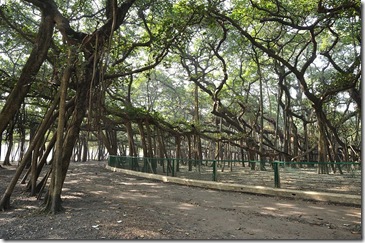
Banyan Tree-Amazing Random Facts About India

From a tree in Kolkata so large it looks like a forest, to a man-eating leopard that claimed over 500 victims, to a war with Portugal in 1961, the list goes on. India outsources the minting of its own coins. It’s the world’s largest milk producer. It is home to people of African descent, the Siddis, whose ancestors arrived in the 7th century.

India Milk Production-Amazing Random Facts About India

We’ve barely scratched the surface. Each of these points is a doorway to another, deeper mystery. India isn’t just a country. It’s a collection of countless realities, existing side-by-side, a place where the ancient past is not dead—it’s not even past. It’s living, breathing, and occasionally, it’s riding a motorcycle to a temple built in its own honor.

Amit Ghosh
Amit Ghoshhttps://coolinterestingnews.com
Aloha, I'm Amit Ghosh, a web entrepreneur and avid blogger. Bitten by entrepreneurial bug, I got kicked out from college and ended up being millionaire and running a digital media company named Aeron7 headquartered at Lithuania.
RELATED ARTICLES
- Advertisment -

Most Popular

Recent Comments

Warren Pan Abbott on The legend of the Devil Monkey !
chris davies on The McPherson Tape Mystery
Reed Reedly on ET has Internet!
Bea Houseoffashion on Proof Of Time Travellers – Gallery
Marcus2012 on ET has Internet!
Reed Reedly on ET has Internet!
LaughsAtConspiracyNuts on The 9/11 Conspiracy – Myths and Facts
Alex Sliverman on Did the ancients fly?
Doctor Wholigan on Time Traveler in 1938 film
chris davies on The McPherson Tape Mystery
Archie1954 on 10 secret UFO hideouts
chris davies on Ghosts of flight 401
Marcus2012 on ET has Internet!
jason Macdonald on Proof of Time Travel? – China
chris davies on Long-Lost Pyramids Found?
Reed Reedly on ET has Internet!
Milkman on Connected Universe
Tenmiles on Baigong Pipes Mystery
Simon Foster on Sirius – The Documentary
From the 1st April on 2013 – Alien Contact date ?
SkyWatcher on Is ET ignoring us?
I Come From The Future on Obama to make UFO Alien disclouser soon ?
Just another person on 2013 – Alien Contact date ?
Malcolm Windowcleaner on The strange case of Rudolph Fentz
Mason Servio on Strange Things on Mars
Marke Wisdom Seeker on What will we find as arctic melts?
Andrea A Elisabeth Levyne on Aliens Captured in Varginha, Brazil
Mitch Grouyeki on Amazing Space Shuttle pictures