Tuesday, May 5, 2026
HomeUnexplained MysteriesAncient MysteriesThe Turin Shroud - The Facts

The Turin Shroud – The Facts

It’s the ultimate cold case. A mystery etched onto a simple piece of linen. A photograph of a dead man, taken centuries before the invention of the camera.

It’s an object that shouldn’t exist.

We’re talking, of course, about the Shroud of Turin. A fourteen-foot-long strip of herringbone cloth that bears the faint, ghostly image of a crucified man. For millions, it is the most sacred relic in existence—the actual burial cloth of Jesus of Nazareth, supernaturally imprinted with his image at the moment of Resurrection.

For skeptics, it’s the most brilliant and enduring hoax ever created. A masterpiece of medieval forgery designed to prey on the faithful.

But the truth? The truth is far stranger, more complex, and more compelling than either side wants to admit. Forget what you think you know. Forget the Sunday school lessons and the dry academic takedowns. We’re going deep. We’re going to peel back the layers of myth, science, and history to confront the impossible questions at the heart of this ancient enigma.

What is this thing? And how in the world did it come to be?

The Enigma on the Linen: What Are We Really Looking At?

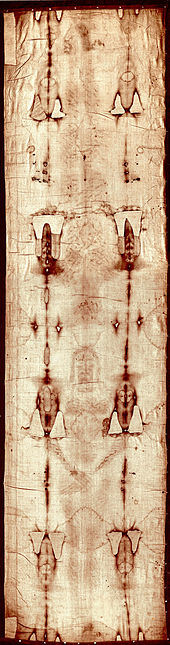
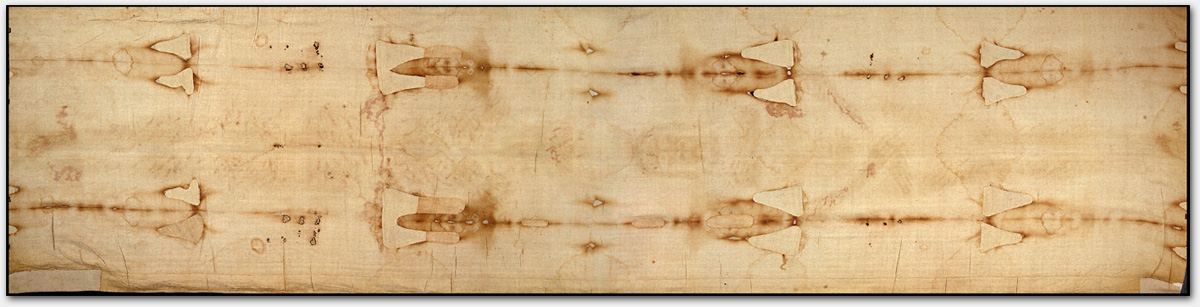
First, let’s get our hands dirty. Let’s look at the object itself. Imagine a long, yellowish sheet of linen, about 14.3 feet long and 3.7 feet wide. Laid out, it displays two faint, head-to-head images of a man—one frontal, one dorsal. As if a body were laid on one half, and the other half was folded over the head to cover the front.

The man depicted is muscular, about 5’10” to 6’0″ tall. He is bearded, with long hair. And he has been brutally, systematically tortured.

The evidence is written all over the cloth. Over 100 scourge marks, consistent with a Roman flagrum, cover the back, chest, and legs. The scalp shows dozens of small puncture wounds, a brutal mockery of a royal crown. His face is swollen, his nose appears broken. One knee is scraped, as if from a fall.

And then there are the crucifixion wounds. A large, piercing wound in his side, between the ribs. And the nail wounds. But here’s a detail that screams authenticity. The wounds aren’t in the palms of his hands, as almost every piece of medieval art depicts. They’re in his wrists. A detail anatomically correct for supporting the weight of a body on a cross, but completely at odds with the artistic traditions of the 14th century, when skeptics claim it was made.

But the weirdest part? The image itself. It isn’t paint. It isn’t a dye. It isn’t a scorch. Under a microscope, the image is found to be a discoloration of the topmost fibers of the linen threads. An almost impossibly superficial effect, penetrating only a few micrometers deep. No artist’s brushstroke, no directionality. It’s just… there. A chemical change on the cloth. A ghost in the fabric.

An Accidental Revelation in a Darkroom

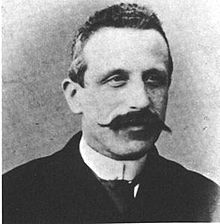
For centuries, the Shroud was a revered, if faint and mysterious, object. But in 1898, everything changed. An Italian lawyer and amateur photographer named Secondo Pia was given permission to photograph the relic. It was a huge moment.

Imagine the scene. Pia, in his makeshift darkroom, sliding the large glass plate negative into the developing solution. Watching, waiting. And then… something impossible happens.

As the image slowly resolves in the chemical bath, Pia gasps. The faint, ghostly figure on the cloth inverts. The dark markings become light. The light areas become dark. In the eerie red glow of the darkroom, the faint sepia image on the negative transforms into a stunningly clear, detailed, *positive* portrait of a man’s face. A face with serene dignity, even in death.

Pia nearly dropped the plate. He had just made the discovery of a lifetime. A discovery that turned the entire mystery on its head.

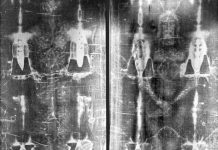
The Shroud of Turin is a photographic negative.

Think about that. A perfect photographic negative, encoded onto cloth, from a time when the most advanced image-making technology was a paintbrush. How could a medieval forger, with no concept of photography, create something that only reveals its true form in a photographic negative? It’s a paradox that has stumped scientists and artists for over a century.

Chasing Shadows Through History: The Lost Centuries

The official, documented history of the Shroud is frustratingly short. It pops into existence, almost out of nowhere, in the mid-1350s in a small church in Lirey, France, owned by a knight named Geoffroi de Charny. From the very beginning, it was controversial. The local bishop, Pierre d’Arcis, denounced it as a fake, claiming to know the artist who painted it. A “cunningly painted” fraud, he called it. Case closed, right?

Not so fast.

The bishop never named the supposed artist. No record of this confession has ever been found. And as we know now, it isn’t a painting. So what if the Shroud didn’t just appear in 1350? What if it was simply… reappearing? What if it had an older, more secret history?

Deep Dive: The Mandylion of Edessa

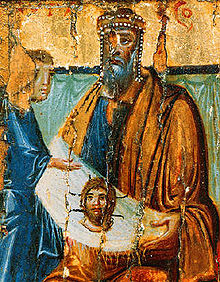
This is where the trail gets interesting. For centuries, the Byzantine Empire revered a holy relic known as the Mandylion, or the “Image of Edessa.” Legend says it was a cloth miraculously imprinted with the face of Jesus and sent to King Abgar of Edessa in the 1st century. This cloth was brought to Constantinople, the capital of the Empire, in 944 AD with enormous ceremony.

For a long time, historians assumed the Mandylion was just an image of the face. But historical descriptions refer to it as “tetradiplon”—doubled in four folds. If you fold the 14-foot Turin Shroud in four, the only part visible is the face. Coincidence?

Then, in 1204, the Fourth Crusade happened. A mob of Western knights, instead of fighting in the Holy Land, turned on their Christian brothers and brutally sacked the city of Constantinople. Relics were stolen and scattered across Europe. A crusader knight, Robert de Clarie, wrote an eyewitness account of the treasures in the city before the fall. He described a specific relic: “Where there was the Shroud in which our Lord had been wrapped, which every Friday raised itself upright so one could see the figure of our Lord on it.”

Notice he said “figure,” not just face. A full-body image. After the sack of 1204, this relic vanished. Poof. Gone. Roughly 150 years later, the Shroud of Turin appears in the possession of the family of a French knight. The timelines are tantalizingly close.

The Hungarian Connection

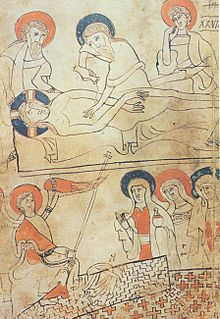
But the breadcrumbs go deeper. Housed in Budapest is a document called the Pray Manuscript, dated between 1192 and 1195–before the sack of Constantinople. An illustration within it depicts the burial of Jesus.

The details in this drawing are mind-blowing.

First, the body of Christ is shown as completely naked, which was extremely rare in medieval art. His hands are crossed over his groin, exactly as they are on the Shroud—again, not the typical burial posture in art. But here’s the clincher: the burial cloth itself has a distinct, unmistakable herringbone weave pattern drawn on it. The exact same pattern as the Turin Shroud. And on the empty tomb scene, there are four small circles in an ‘L’ shape. This perfectly matches a pattern of burn holes found on the real Shroud. How could an artist in Hungary in the 1190s know these specific, unique details of a cloth that supposedly wasn’t “invented” until 150 years later in France?

Science Enters the Cathedral: The STURP Investigation

Fast forward to 1978. The age of space exploration and computer science. For the first time, the Church granted a team of mainstream, credentialed scientists—the Shroud of Turin Research Project (STURP)—unprecedented, 24/7 access to the cloth for five straight days.

These weren’t theologians. They were physicists, chemists, and imaging specialists from places like the Los Alamos National Laboratory and the U.S. Air Force Academy. They came with crates of cutting-edge equipment, determined to solve the mystery once and for all. Many of them were convinced they’d prove it was a fake in a few hours.

They were wrong.

What they found shocked them. After 120 hours of intense testing, using everything from X-ray fluorescence to infrared spectroscopy, they came to some startling conclusions:

  • There is no paint. No pigments, no dyes, no stains. The team was emphatic. Whatever created the image, it wasn’t applied by an artist’s brush or any known artistic medium.
  • The blood is real. The reddish-brown stains are not paint or vermilion, as some had claimed. They are actual human blood, type AB. The blood even contains high levels of bilirubin, a substance produced under extreme stress or trauma—exactly what a man who had been tortured to death would have in his system.
  • The blood came before the image. In a crucial finding, the scientists determined that the image is not present *underneath* the bloodstains. This means a body, bleeding real blood, was on the cloth, and then the image-forming event happened *afterward*. A forger would have to paint the blood on top of his finished artwork.
  • It contains 3D information. This might be the most inexplicable discovery of all. When a photograph of the Shroud was scanned by a VP-8 Image Analyzer—a device used by NASA to map planetary surfaces like Mars from photos—it produced a perfect, distortion-free 3D relief of the man’s body. A normal photograph or a painting, when put through the same process, produces a garbled, nonsensical mess. The shading on the Shroud image directly corresponds to the cloth-to-body distance. This property is unique and has never been successfully replicated.

The STURP team’s final, official conclusion was a bombshell: “We can conclude for now that the Shroud image is that of a real human form of a scourged, crucified man. It is not the product of an artist. The blood stains are composed of hemoglobin and also give a positive test for serum albumin. The image is an ongoing mystery…”

The Carbon Dating Controversy: Case Closed or Scientific Sabotage?

Science seemed to be pointing toward the impossible. But then, in 1988, came the test everyone was waiting for. The Carbon-14 dating.

Three of the world’s top laboratories—in Oxford, Zurich, and Tucson—were each given a small sample snipped from a corner of the Shroud. The world held its breath. The results were announced with great fanfare: the linen of the Shroud of Turin dated from 1260 to 1390 AD. Right in the middle of the Middle Ages.

The headlines were brutal. “FAKE!” “HOAX!” “MYSTERY SOLVED!” For the mainstream media and the scientific establishment, the book was slammed shut on the Shroud of Turin. It was a medieval fraud, just as the bishop had claimed 600 years earlier.

But then… the story started to unravel.

Researchers began questioning the sample itself. The sample was taken from the single most handled and damaged corner of the entire cloth. This was an area that had been held by bishops for centuries during public exhibitions. It had been patched and repaired by nuns in the 16th century after a fire. Was it possible the sample wasn’t from the original cloth at all?

Years later, a respected chemist named Ray Rogers—who was a member of the original STURP team—decided to investigate. He obtained leftover threads from the 1988 sample. What he found under his microscope blew the case wide open again. His peer-reviewed research, published in a major scientific journal, showed that the sample area was chemically different from the rest of the Shroud. It contained cotton intertwined with the linen, and was coated with a plant-based gum and dye, likely used to blend the color of the patch with the older, original cloth.

The main body of the Shroud has no cotton. None. The C-14 labs had dated a medieval patch, not the original Shroud.

Suddenly, the “definitive” dating wasn’t so definitive after all. It was a catastrophic scientific blunder. The case was very much open.

If It’s a Forgery, How Was It Made?

Let’s play devil’s advocate. Let’s say the C-14 dating was right and Ray Rogers was wrong. Let’s assume it’s a 14th-century forgery. Then we are left with an even bigger mystery: how did they do it?

Any proposed method has to account for ALL of the Shroud’s bizarre properties:

  • Superficial image on the top fibers only.
  • No paint, pigments, or directionality.
  • Photographic negative properties.
  • Encoded 3D information.
  • Anatomical and historical accuracy (wrist wounds, Roman flagrum marks).

Could it be a rubbing from a heated bas-relief statue? People have tried. The result is distorted, lacks the detail, and doesn’t have the unique 3D data. Could it be a primitive form of photography using a camera obscura? This would require light-sensitive chemicals that STURP found no trace of, and it fails to explain how the image only affected the very top fibrils of the linen.

The bottom line is this: even with all our 21st-century technology, we cannot create a perfect replica of the Shroud of Turin. Not one that satisfies all the criteria. So how could a medieval con artist, working in secret with technology and knowledge far beyond his time, create a masterpiece that would stump scientists 700 years in the future?

The Enduring Question

So where does that leave us? Trapped between conflicting evidence. A carbon date that points to the Middle Ages, and a mountain of physical evidence that says it’s anything but. A historical trail that is both broken and filled with tantalizing clues. An image that science can describe in excruciating detail, but whose origin remains a complete and total mystery.

Is the Shroud of Turin the authentic burial cloth of Christ, seared by the inexplicable energy of the Resurrection? Is it the most sophisticated and enduring hoax in human history, created by a forgotten genius? Or is it something else entirely, an anomaly that fits no category we have?

Maybe the real secret of the Shroud isn’t the answer it might one day give us. Maybe its power lies in the questions it forces us to ask, and the stubborn, infuriating way it simply refuses to give up its secrets.

Amit Ghosh
Amit Ghoshhttps://coolinterestingnews.com
Aloha, I'm Amit Ghosh, a web entrepreneur and avid blogger. Bitten by entrepreneurial bug, I got kicked out from college and ended up being millionaire and running a digital media company named Aeron7 headquartered at Lithuania.
RELATED ARTICLES
- Advertisment -

Most Popular

Recent Comments

Warren Pan Abbott on The legend of the Devil Monkey !
chris davies on The McPherson Tape Mystery
Reed Reedly on ET has Internet!
Bea Houseoffashion on Proof Of Time Travellers – Gallery
Marcus2012 on ET has Internet!
Reed Reedly on ET has Internet!
LaughsAtConspiracyNuts on The 9/11 Conspiracy – Myths and Facts
Alex Sliverman on Did the ancients fly?
Doctor Wholigan on Time Traveler in 1938 film
chris davies on The McPherson Tape Mystery
Archie1954 on 10 secret UFO hideouts
chris davies on Ghosts of flight 401
Marcus2012 on ET has Internet!
jason Macdonald on Proof of Time Travel? – China
chris davies on Long-Lost Pyramids Found?
Reed Reedly on ET has Internet!
Milkman on Connected Universe
Tenmiles on Baigong Pipes Mystery
Simon Foster on Sirius – The Documentary
From the 1st April on 2013 – Alien Contact date ?
SkyWatcher on Is ET ignoring us?
I Come From The Future on Obama to make UFO Alien disclouser soon ?
Just another person on 2013 – Alien Contact date ?
Malcolm Windowcleaner on The strange case of Rudolph Fentz
Mason Servio on Strange Things on Mars
Marke Wisdom Seeker on What will we find as arctic melts?
Andrea A Elisabeth Levyne on Aliens Captured in Varginha, Brazil
Mitch Grouyeki on Amazing Space Shuttle pictures