50 Indian Secrets That Will Shatter Your Reality
Forget what you learned in history class. Seriously. Erase it. The real story of India isn’t some dusty timeline of empires and politicians. It’s a rabbit hole. It’s a collection of whispers, of secrets buried in plain sight, and of events so bizarre they sound like they were ripped from a science fiction script. What you’re about to read isn’t a list of “fun facts.” It’s a series of breadcrumbs leading to a much stranger, more complex truth.
The official narrative is a comfortable story. This is not that story. This is what’s bubbling just beneath the surface. Ready to see how deep it goes?
The Day 200 Women Became Judge, Jury, and Executioner
Picture this. A courtroom in Nagpur, 2004. The air is thick with tension. On the stand is a man named Akku Yadav, a serial rapist and murderer, a monster who had terrorized a slum community for over a decade. The system had failed the people. He’d been arrested before, only to be released, bolder and more violent. He taunted his victims, boasted that he’d bought the law. He was untouchable.
Until he wasn’t.
On that day, 200 women, the very people he had victimized, walked into that courtroom. They weren’t there to watch. They came armed with vegetable knives, with stones, with chili powder. And in a storm of righteous fury that lasted for 15 minutes, they took the law into their own hands. They lynched him right there on the polished marble floor of the court. Stabbed over 70 times. Chili powder thrown in his face to blind him, his penis cut off.
The aftermath? Even more shocking. When the police tried to find a culprit, every single woman claimed responsibility. “I killed him,” one after another said. They presented a united front so unbreakable that prosecution became impossible. It was an act of communal justice so raw, so potent, that the official records can barely contain the truth of what really happened.
Was it a breakdown of law and order? Or was it the only law that made sense when order itself had failed?
Concrete Jungles and Scars on the Earth
They tell us our cities grow organically. A chaotic sprawl. But some places are… different. They feel designed. Planned. Almost too perfect.
![]()
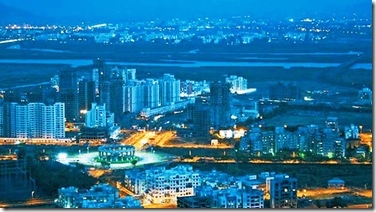
The Metropolis That Was Built by a Grand Design
Take Navi Mumbai. In 1972, planners decided to build a satellite city to ease the pressure on Mumbai. What they created wasn’t just a new town. It was, and still is, the largest planned township on the entire planet. A colossal social and architectural experiment. A network of self-sufficient nodes, connected by arteries of road and rail, all conceived on a drawing board before the first brick was laid. It’s a testament to human ambition. But when you look at a project of that scale, you have to wonder: what else are we capable of building? And what have we already built that we’ve forgotten about?
The Lake That Came From the Sky
Travel to Maharashtra, and you can find a wound on the face of the Earth. Lonar Lake. The official story is that a meteor, screaming through our atmosphere at an impossible speed, slammed into the ground here 50,000 years ago. It left a near-perfect circular crater, which over time filled with water, creating a lake that is both saline and alkaline. It’s one of a kind in the basaltic rock of the region.
But the story gets weirder. The lake’s chemistry is bizarrely unique, supporting microorganisms found almost nowhere else. In 2020, the entire lake mysteriously turned pink overnight, a phenomenon scientists scrambled to explain with algae blooms. Local legends, however, speak of the demon Lonasura, who was vanquished by a deity, his hidden underground lair filled with his blood. A meteor strike? Or something else? A crash? A weapon from a forgotten war? When you stand on the rim of that perfectly circular crater, the official explanation starts to feel a little too simple.
A Mountain That Refuses to Be Climbed
In the Himalayas sits Mount Kailash, one of the most sacred places on Earth for billions of people. But it holds a strange secret. It has never been climbed. Not once.
Think about that. We’ve conquered Everest. We’ve stood on K2. We plant flags on the world’s most dangerous peaks for sport. But Kailash remains untouched. Why? The public reason is respect for its religious significance. But dig a little, and the whispers start. Climbers who have attempted it speak of time rapidly accelerating, of beards and nails growing at a fantastic rate. They report mysterious disorientation and being inexplicably turned back by unseen forces. The Chinese government, not known for its spiritual deference, even offered support for expeditions in the past, but they all failed.
Modern internet theories go even further. Look at its four sheer, almost symmetrical faces. They ask: Is this a mountain at all? Or is it a massive, eroded, man-made pyramid? A power station for an ancient global energy grid? The axis mundi, the literal center of the world? The one place on Earth we are simply not allowed to go.
Forgotten Wars and Phantom Walls
History is written by the victors. We all know that. What we forget is how much is simply erased. Entire wars. Colossal structures. Acts of unbelievable courage.
The 27-Year War You’ve Never Heard Of
When you think of long wars, you think of the Hundred Years’ War in Europe. But what about the war fought between the Maratha Empire and the Mughal Empire from 1681 to 1707? Twenty-seven years. It was the longest recorded military conflict in the history of India, a brutal, sprawling war of attrition that bled both empires dry and reshaped the subcontinent. Yet, it barely gets a footnote in most world history books. A generation-long struggle for the soul of India, almost completely forgotten.
The Real Story of Longewala
Remember the movie *Border*? An epic tale of 120 Indian soldiers holding off a massive Pakistani tank assault. A heroic, bloody battle. The film shows massive Indian casualties. The reality? It was even more incredible. At the Battle of Longewala in 1971, the Indian company, against all odds, held its ground. But here’s the kicker: they suffered only two casualties. Two. The Pakistani side lost dozens of tanks and hundreds of soldiers. The official story was already a miracle; the truth is a statistical impossibility.
The Battle That Defies Belief: Rezang La
Even more mind-bending is the 1962 Sino-Indian war, and the battle of Rezang La. A single battalion, the 13 Kumaon Regiment, made up of just 120 soldiers, found themselves facing an onslaught of 6,000 Chinese troops backed by heavy artillery. It was a suicide mission. They were expected to be annihilated.
They weren’t. They held their ground to the last man, the last bullet. And in their final stand, those 120 soldiers killed an estimated 1,300 of the attackers. It’s a story of courage so extreme it sounds like mythology. A Thermopylae in the high Himalayas that the world has largely ignored.
Deep Dive: The Great Hedge of India
This sounds like something from a fantasy novel. A wall stretching across an entire continent. But it was real. To enforce the crippling salt tax, the British built a massive hedge—a living, thorny barrier—that spanned over 2,500 miles (4,000 km) from Punjab to Orissa. It was up to 12 feet high, a dense, impenetrable wall of thorns, guarded by 12,000 men. It was one of the largest and most oppressive customs barriers ever constructed.
And now? It’s gone. Vanished. Not a trace of it remains. How do you erase something that massive from both the landscape and from public memory? It was a symbol of colonial control so absolute, its disappearance is almost as strange as its existence.
The Hidden Hand: India’s Secret Influence on the World
The story we’re told is of Western dominance. Of ideas flowing from West to East. But what if the currents have been flowing the other way for centuries, silently shaping the world we know?
![]()
The Master of the Game
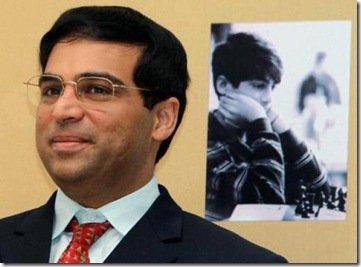
Look at Viswanathan Anand. The chess Grandmaster. He didn’t just play the game; he changed it. He became the first player in history to win the World Championship in three different formats: knockout, tournament, and match. He broke the mold, proving that dominance could be achieved through adaptability, a very Indian concept.
The Monk Who Taught China How to Fight
The origins of Kung Fu are shrouded in legend, but one name keeps appearing: Bodhidharma. He wasn’t Chinese. He was an Indian prince, a Pallava royal from the south. He traveled to China around the 5th or 6th century, finding the Shaolin monks physically weak from a sedentary life of meditation. He began training them. A series of exercises designed to build strength and discipline. Those exercises became the foundation of Shaolin Kung Fu, the martial art that would influence all others. The most iconic symbol of Chinese martial arts? It has Indian roots.
Ancient Chemistry and Modern Warfare
Think sugar is simple? The process of refining sugar from sugarcane juice, crystallization, was discovered in India during the Gupta period around 350 AD. This wasn’t just about sweetening food; it was advanced chemistry. A mastery of process that Europe wouldn’t see for centuries.
![]()
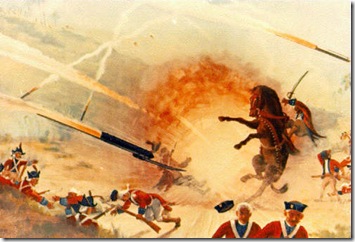
This technological edge wasn’t limited to the kitchen. Tipu Sultan, the “Tiger of Mysore,” terrified the British in the late 1700s with a secret weapon: rockets. These weren’t crude fireworks. They were iron-cased Mysorean rockets, some with swords fixed to the front, creating a terrifying screaming, slashing projectile. They were far superior to anything the British had encountered. This technology was so effective that it was studied by William Congreve and became the basis for the rockets used by the British against Napoleon. The rockets that rained down on Fort McHenry in the American War of 1812, immortalized in the “Star-Spangled Banner,” were direct descendants of Indian military tech.
Today, that legacy continues. A simple sugar company in Andhra Pradesh provides a key component for rocket fuel to ISRO, India’s space agency. From ancient chemistry to modern space exploration, the line is unbroken.
The “What If” That Could Have Changed Everything
History pivots on single moments. A single decision can echo for generations. In 1955, India was faced with one such decision, a moment that could have completely rewritten the story of the 20th century.
Jawaharlal Nehru, India’s first Prime Minister, was offered a permanent seat on the United Nations Security Council. The most exclusive club in the world. The power to veto any resolution, to shape global policy. An offer made by both the US and the Soviet Union.
He rejected it.
His reasoning was that it would be more appropriate for the People’s Republic of China to take the seat. He wanted to avoid getting entangled in Cold War politics. An idealistic, principled stand. But what if he had said yes? Imagine a world where India, from the very beginning, was one of the “Permanent Five.” How would the Cold War have played out with a powerful, non-aligned voice holding veto power? Would the dynamics of Asia, the wars in Korea and Vietnam, have been different? It is one of the biggest “what ifs” in modern history, a ghost of a timeline where the world looks very, very different.
![]()
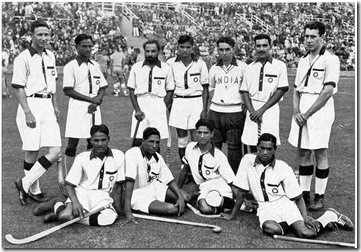
This wasn’t the only time India’s place on the world stage caused ripples. In 1928, the Indian hockey team was a force of nature. On their way to the Amsterdam Olympics, they played exhibition matches in England, dismantling local teams with ease. Their skill was so overwhelming, so dominant, that England made a stunning decision: they refused to field a team in the Olympics. They cited flimsy reasons, but the truth was clear. They were not prepared to be humiliated on the world stage by losing to their own “slave country.” India went on to win the gold without conceding a single goal.
Glitches in the System: The Truly Weird
And then there’s the stuff that just doesn’t fit into any category. The strange facts that make you question the nature of reality itself. The cultural oddities and unexplained phenomena.
![]()
You know Sir Ben Kingsley, the quintessential British actor who played Gandhi. His birth name? Krishna Pandit Bhanji. His father was of Gujarati Indian descent. The frontman of the legendary British rock band Queen, Freddie Mercury? Born Farrokh Bulsara, of Parsi descent from Gujarat. The world is smaller and more connected than the labels suggest.
![]()
In the murky waters of the Ganga river, a creature of myth swims. The Ganges Shark. A true river shark, one of the rarest and most critically endangered animals on the planet. For years it was considered a legend, a phantom. But it’s real. What else is hiding in the depths?
![]()
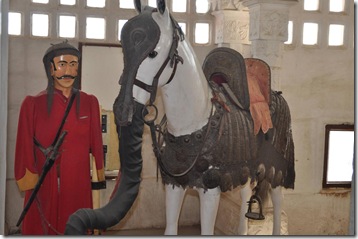
Ancient Indian kings reportedly used a brilliant piece of psychological warfare. They would fit their horses with artificial trunks, making them resemble baby elephants. The enemy’s war elephants, seeing what they thought were elephant calves, would refuse to attack them, neutralizing their most powerful weapon.
![]()
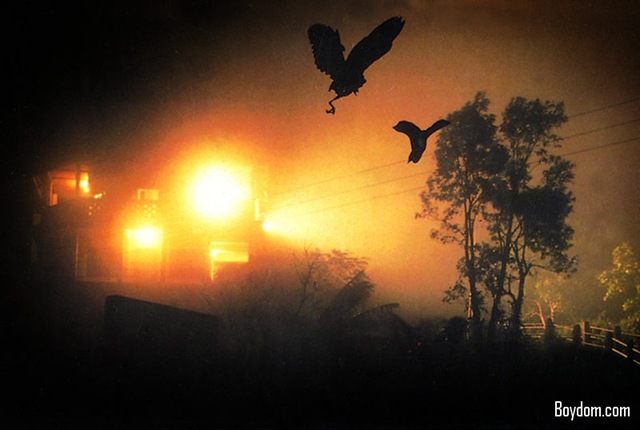
And perhaps the most haunting mystery of all is in Jatinga, a small village in Assam. Every year, at the end of the monsoon season, something unnatural happens. For a few specific nights, on a small strip of land just one mile long, thousands of birds become disoriented. They fly erratically, crashing into trees, houses, and the ground. For over a century, this mass “bird suicide” has occurred. Scientists blame fog and magnetic anomalies. Locals have darker explanations. Is it a strange natural phenomenon? Or is Jatinga a place where the rules of nature are temporarily suspended?
![]()
Even our language is filled with these echoes. In Indian law, a “John Doe” order (a restraining order against unknown persons) is called an “Ashok Kumar” order. The name for an unidentified dead body? Also Ashok Kumar. The dictionary has the word “Bangalored,” meaning to lose your job to outsourcing in India. A city named Jhumri Telaiya actually exists in Jharkhand. The first railroad wasn’t built by the British alone, but financed and pushed by two Indians, Jamsetjee Jeejeebhoy and Jaganath Shunkerseth.
![]()
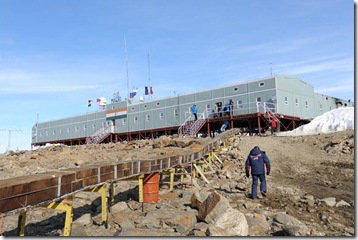
The reach extends from the coldest continent on Earth, where India maintains three Antarctic research stations, to the US, where you can find a city named Madras in Oregon. The story is everywhere, woven into the fabric of our world in ways we rarely notice.
India is not a country you can simply understand. It’s a puzzle box with a million missing pieces. A place of contradictions, where ancient mysteries exist alongside hyper-modernity. We’ve only glanced at a few of these pieces. What other secrets are still out there, waiting in a forgotten text, at the bottom of a strange lake, or on the peak of an unclimbed mountain? The truth is out there. You just have to know how to look.