Home Weird World Space Mars One – 1,058 People Advance to Round 2 to Earn a...

Mars One – 1,058 People Advance to Round 2 to Earn a One-Way Trip to Mars

0
49

The Mars One Deception: Was the One-Way Trip to the Red Planet a Daring Dream or the Greatest Scam in Space History?

It was the ultimate offer. A one-way ticket to immortality. A chance to leave everything behind and become a legend, one of the first human colonists on Mars. The year was 2012, and the world was electrified by a Dutch entrepreneur named Bas Lansdorp and his audacious plan: Mars One.

It wasn’t a government project. It wasn’t NASA or Roscosmos. This was a private, non-profit mission fueled by a radical, almost insane, business plan. They would fund the multi-billion dollar colonization of another world by turning the entire thing into the biggest reality television show in human history. From the astronaut selection to the launch to their final breath on the Red Planet, the world would be watching.

Thousands of people believed it. They flooded the Mars One website, pouring their hearts out in one-minute application videos, begging for a chance to die 140 million miles from home. The media loved it. The hype was deafening.

But what if it was all a lie? What if the rockets were never real, the technology was a fantasy, and the entire grand vision was nothing more than a house of cards built on a Martian sand dune? Today, we look back at the ghost of Mars One. A project that promised a new world and delivered nothing but broken dreams and a mystery that still haunts the fringes of the internet. Was it a noble failure? Or was it a cold, calculated deception from the very beginning?

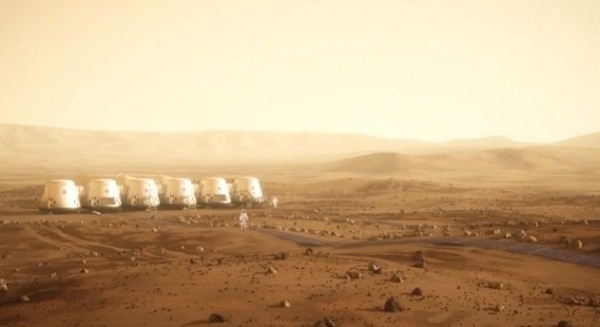
An artist's conception of the Mars One habitat on the Martian surface.

The Call for Pioneers: Who Signs Up to Die on Mars?

The premise was as simple as it was terrifying. Mars One opened its doors to the entire world. Anyone over 18 could apply. You didn’t need to be a fighter pilot or a Ph.D. in astrophysics. You just needed the right stuff. The grit. The psychological fortitude. And, according to the application, a good sense of humor.

In 2013, the applications began pouring in. Bas Lansdorp, the charismatic face of the operation, predicted they would receive over a million. The final tally was 202,586. A staggering number, yet far short of his lofty prediction—the first of many missed targets. Still, think about that. Over two hundred thousand ordinary people looked at their lives, at our world, and said, “I’m willing to leave it all behind forever.”

Who were these people? They were doctors, students, artists, engineers, and dreamers from every corner of the globe. They submitted their one-minute video pleas, each a tiny window into a soul yearning for something more. They explained why they would be a good candidate, why they wanted to be an ambassador for humanity on a desolate, alien world.

The screening process was, to put it mildly, unconventional. Lansdorp himself admitted the challenge was immense. “The challenge with 200,000 applicants is separating those who we feel are physically and mentally adept to become human ambassadors on Mars from those who are obviously taking the mission much less seriously,” he stated. “We even had a couple of applicants submit their videos in the nude!”

Naked ambition. You couldn’t make this stuff up.

By early 2014, the pool had been narrowed down. The organization announced that 1,058 hopefuls had made it to Round 2. A thrill shot through the community of applicants. This was it. It was getting real.

A Closer Look at the Chosen Few

Mars One released a demographic breakdown of the Round 2 candidates, and the numbers painted a fascinating picture of the would-be Martians:

  • The group was 55 percent male and 45 percent female, a surprisingly balanced split for a mission of this type.
  • Education was high, with 63 percent holding at least a bachelor’s degree.
  • A tiny but vital 3 percent held medical degrees. Because, of course, you’d need a doctor.
  • Geographically, they were a global village: 43 percent from the Americas, 27 percent from Europe, 21 percent from Asia, 5 percent from Africa, and 4 percent from Oceania. The United States had the largest single contingent of candidates.
  • Age was also diverse. The vast majority, 65 percent, were between 26 and 55. A bold 34 percent were under 25, while a handful of veterans, 2 percent, were over 55.

These weren’t just statistics. These were people. A young student in India, a middle-aged IT worker in Ohio, an artist in Italy. All of them united by one impossible, spectacular dream. And Mars One promised them fame. “We fully anticipate our remaining candidates to become celebrities in their towns, cities, and in many cases, countries,” Lansdorp boasted. “It’s about to get very interesting.”

He was right. It did get very interesting. Just not in the way anyone expected.

Countdown to Disaster: The Red Flags Everyone Ignored

While the media and the public were swept up in the romantic vision of Martian pioneers, experts in the aerospace community were raising their eyebrows. Serious questions began to bubble to the surface. Questions that Mars One seemed strangely incapable of answering.

Deep Dive: The Technology That Existed Only on Paper

Sending humans to Mars is arguably the single most complex technological undertaking in history. It requires a convergence of cutting-edge rocketry, life support, habitat construction, radiation shielding, and in-situ resource utilization. NASA, with its hundred-billion-dollar budget and army of geniuses, is still decades away.

So what was Mars One’s plan?

They didn’t have one. Not a real one, anyway.

Their technical roadmap was a masterpiece of hand-waving. They claimed they would use “existing and available” technology. They would simply contract companies like SpaceX for launch vehicles and Lockheed Martin for the lander. The problem? The specific technologies they needed didn’t exist. There was no off-the-shelf Mars transit habitat. No proven long-term surface life support system that could run for years without maintenance. No vehicle capable of landing the massive tonnage of hardware they required.

In 2014, a team of graduate students at the Massachusetts Institute of Technology (MIT) decided to run the numbers on Mars One’s public plan. Their conclusions were horrifying. The 119-page report found that, based on the mission’s own architecture, the colonists would likely begin to die within 68 days. The cause? Asphyxiation. The system designed to grow food would produce unsafe levels of oxygen, creating a flammable atmosphere, while the technology to balance the atmospheric mixture simply wasn’t accounted for.

The MIT study was a bombshell. It systematically dismantled the project’s technical feasibility. Yet Mars One dismissed it, carrying on as if nothing had happened.

The Billion-Dollar Reality Show That Never Aired

Even more fantastical than the technology was the business model. The entire mission—costing an estimated $6 billion for the first crew alone—was to be funded by selling broadcasting rights. They envisioned a global media event, a “Big Brother on Mars” that would captivate the planet and generate endless revenue from sponsors and viewers.

But did they have any deals? Any contracts?

In 2015, one of the finalists, Dr. Joseph Roche, an assistant professor with a Ph.D. in physics and astrophysics, blew the whistle. He revealed that the selection process was a farce. He claimed he had never been interviewed live, and that candidates were earning “points” to get to the next round by buying merchandise and donating money to Mars One. The so-called “rigorous simulations” mentioned by Chief Medical Officer Dr. Norbert Kraft? Roche claimed they consisted of little more than a 10-minute Skype call and a questionnaire from a downloaded medical PDF.

Even more damning, Roche revealed that he had spoken with a producer from Endemol, the production company behind the massive reality hit *Big Brother*. The producer allegedly told him they had ended their involvement with Mars One a year earlier. The centerpiece of the entire financial plan—the reality show—was a phantom. It wasn’t happening.

The Slow, Silent Collapse

After the initial flurry of press releases and media hype in 2013 and 2014, things began to go quiet. The promised reality show never materialized. The next rounds of selection were endlessly delayed. Communication with the remaining candidates, the so-called “Mars 100,” became sporadic and vague.

These were people who had reoriented their entire lives around this mission. They had become minor celebrities, the “Mars guy” or “Mars woman” in their hometowns. They gave interviews, spoke at schools, and put their careers on hold. Now, they were left in a bizarre limbo, clinging to a dream that was visibly evaporating before their eyes.

The internet, once a hotbed of fan enthusiasm, turned skeptical. Forums and Reddit threads that used to be filled with excited chatter were now dominated by posts questioning the project’s legitimacy. Former supporters and even candidates began to openly use a word that had once been whispered.

Scam.

The final, pathetic end came not with a bang, but with a whimper. In February 2019, a brief notice was posted in a Swiss trade register. Mars One Ventures, the for-profit arm of the project, was declared bankrupt. It had less than $25,000 in its accounts. The grand dream of colonizing Mars, the global media spectacle, had dissolved into insolvency in a quiet courtroom in Basel, Switzerland.

Bas Lansdorp claimed he was in talks with a new investor and that the non-profit foundation would continue. But no one was listening anymore. The show was over.

What If? A Glimpse of a Different Timeline

Let’s step away from the grim reality for a moment. What if they had pulled it off? What if, by some miracle, the money had appeared and the technology had worked? What would a Martian colony funded by reality TV have actually been like?

The psychological pressure would have been unimaginable. Every conversation, every argument, every intimate moment potentially broadcast to billions back on Earth. Colonists would not just be scientists and explorers; they would be cast members in a cosmic soap opera. Would mission-critical decisions be made based on good science or good television?

Imagine the producers in a control room in Houston. “The oxygen generator is failing, but Mark and Jessica are having a huge fight. Stay on the fight! The ratings are huge!” It’s a dystopian nightmare scenario, a fusion of *The Truman Show* and *The Martian*. The very model that was supposed to fund their survival would have created an environment that made survival nearly impossible.

The Final Verdict: Dream or Deception?

So we are left with the central question. Was Mars One a genuine, if catastrophically naive, attempt to reach for the stars? Or was it a deliberate, cynical grift from day one?

The “Noble Failure” argument suggests that Bas Lansdorp and his team were true believers. They were visionaries who understood the power of media and public engagement but were utterly out of their depth when it came to the brutal realities of aerospace engineering and finance. They thought they could inspire their way to Mars, and they were tragically, spectacularly wrong.

But the evidence for the “Calculated Scam” theory is powerful. The points system that rewarded candidates for giving money. The phantom TV deal. The complete lack of any real technological development. The way they collected application fees from over 200,000 people. It paints a picture of an organization designed not to go to Mars, but to generate hype and revenue for as long as possible before disappearing.

Perhaps the truth lies somewhere in the middle. A project that started with a spark of genuine, albeit misguided, inspiration but slowly devolved into a money-making enterprise as its founders realized their original goal was impossible.

Today, Mars One is a ghost story whispered in the halls of the space industry. It is a cautionary tale about the dangers of ambition untethered from reality. It preyed on a beautiful, universal human dream: to look up at the stars and imagine ourselves walking there. For a few brief, shining years, hundreds of thousands of people believed it was possible. They volunteered for the greatest adventure in history.

They just didn’t know the ship was never even being built.

Originally posted 2014-01-01 23:45:05. Republished by Blog Post Promoter