Beyond Cold: 5 True Crime Mysteries That Defy All Explanation
Some stories don’t have an ending. They just stop. They leave a ragged hole in the fabric of reality, a question mark hanging in the air forever. These aren’t your typical whodunits. These are the cases that crawl under your skin and stay there, the ones that keep detectives staring at the ceiling at 3 AM, decades after the files have gone cold. They are puzzles with missing pieces, whispers of ghosts in empty rooms, and brutal acts of violence that make no sense.
We’re not just looking at unsolved crimes. We’re opening the door to the truly bizarre. The cases where the facts themselves feel like a conspiracy, where every clue only deepens the shadows. Prepare yourself. Because today, we’re journeying into five of the most baffling and disturbing mysteries ever recorded. Forget what you know about crime. This is something else entirely.

The Nightmare in Room 1046: Who Was Roland T. Owen?
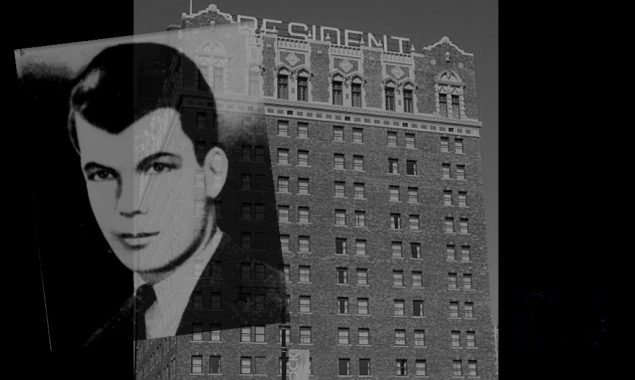
It was January 2, 1935. A man, well-dressed but with a distinct cauliflower ear and a long scar on his scalp, checked into the Hotel President in Kansas City, Missouri. He signed the register as Roland T. Owen, giving a Los Angeles address. He had no luggage. Just a comb, a brush, and a tube of toothpaste.
This was the beginning of one of the most maddening hotel mysteries of all time.
For two days, Owen’s behavior was… odd. He rarely left the room. A hotel maid, Mary Soptic, reported that he insisted on keeping the room dark, with only a single dim lamp turned on. He seemed paranoid, constantly on edge. He told her he was waiting for a friend named Don. On one occasion, Soptic returned to the room to find Owen in the dark, talking on the phone. She overheard him say, “No, Don, I don’t want to eat. I am not hungry. I just had something.” After hanging up, he asked her about her work, seemingly unconcerned that a strange man was now also in the room with him.
Think about that. A dark room. A nervous guest. And a silent, second man just… standing there.
The Unraveling
The weirdness escalated. A woman’s voice was heard on the phone. A note was found in the room that read, “Don, I will be back in fifteen minutes. Wait.” The hotel staff grew increasingly concerned. The “Do Not Disturb” sign was perpetually hanging on the door of 1046.
On the morning of January 4th, the hotel telephone operator noticed the phone in room 1046 was off the hook. A bellboy was sent to check. He knocked, but there was no answer. Using a passkey, he entered the room to find a scene of utter horror. Roland T. Owen was lying on the bed, naked, in a room spattered with blood. He had been brutally tortured. His wrists, ankles, and neck were bound with cord. He had been stabbed multiple times in the chest, suffering a punctured lung. His skull was fractured.
Incredibly, he was still alive. Barely.
When police arrived and asked what happened, who did this to him, Owen could only manage one cryptic sentence before slipping into a coma: “I fell against the bathtub.”
He died at the hospital later that night. The room, when searched, yielded no clues. The clothes he wore were gone. The murder weapon was missing. There was no cord, no knife, nothing. It was as if his killer had vanished into thin air, taking all the evidence with them.
Deep Dive: The Ghost of Artemus Ogletree
The name “Roland T. Owen” was a dead end. No one by that name existed. The man in room 1046 was a ghost. For over a year, he remained a John Doe in a potter’s field.
Then, the story took another turn. A woman named Ruby Ogletree from Alabama saw an article about the case and recognized the man’s description. It was her long-lost son, Artemus Ogletree. The mystery seemed solved. But it wasn’t. It just got deeper. Why was he in Kansas City? Who was “Don”? And who was the mysterious woman who, after Artemus’s funeral was arranged, called the funeral home and a local flower shop? This unknown woman paid for the service in full and sent a bouquet of 13 American Beauty roses with a card that read: “Love forever, Louise.”
The police were baffled. Artemus was not known to have any enemies. His mother said he was a quiet man. The case was briefly reopened in 1937 when a similar crime occurred in New York, but it led nowhere. For decades, the horror of room 1046 faded into cold case obscurity.
Then, decades later, a librarian at the Kansas City Public Library, John Horner, received a strange phone call. An anonymous man claimed he was helping an elderly person clear out their belongings after they died. Inside a box, he found a shoebox filled with old newspaper clippings. All about the murder of Artemus Ogletree. And something else. Something the caller said was mentioned in the box but never reported in the papers: that Ogletree had been killed because he had cheated someone in a gambling arrangement.
The caller hung up. He was never identified. Another ghost. Another question without an answer.
The Unsolvable Locked Room: Who Killed the King of Cards?
Let’s travel back to June 11, 1920. New York City. The roaring twenties were just getting started. In a lavish home on West 70th Street, a man named Joseph Bowne Elwell was found dead. This wasn’t just any man. He was a celebrity. The undisputed master of the card game bridge, a prolific author, and a notorious playboy with a little black book that could topple high society.
He was found in his study, sitting in a chair, wearing silk pajamas. A single, neat bullet hole was in his forehead. On a nearby table sat the morning’s mail, unopened. Nothing was stolen. Everything was in its place. It looked almost peaceful, except for the fact that he was dead.
And here’s the kicker. The room was locked. From the inside.

A World of Suspects, Not a Shred of Proof
If you like a good locked-room mystery, this is the real-life case that inspired a thousand fictional ones. The housekeeper, who lived in the home, found him when she couldn’t get into the room that morning. The door was bolted shut. Police had to break it down. There was no gun. No shell casing. The windows were secured. The only way in or out was the door he was found behind.
So, who did it? The list of suspects was a mile long.
- The Jilted Lovers: Elwell was a legendary womanizer. Police found a secret compartment filled with letters from dozens of married women, many of them prominent socialites. Did one of them, or an enraged husband, finally snap?
- The Gambling Rivals: Elwell made a fortune from cards, and not always by playing fair. He was a known cardsharp. Did a high-stakes game go bad? Did he cheat the wrong person?
- The Ex-Wife: His recently divorced wife, with whom he was still financially entangled, was a prime suspect. She had an alibi, but it was shaky. Could she have hired a professional?
The investigation was a media sensation. Reporters followed every lead. High-society names were dragged through the mud. But every path led to a dead end. No one could explain how the killer got out of the room and bolted the door from the inside. Theories ranged from a hidden passage (none was ever found) to a bizarre suicide made to look like murder (the missing gun and casing made this almost impossible). For over 100 years, the murder of Joe Elwell has remained one of the most perfectly executed and completely baffling crimes in American history. The killer simply walked away, leaving behind an impossible puzzle.
Nightmare on The Bayou: The Houston Ice Box Murders
Houston, Texas. June, 1965. It was a sweltering summer, the kind that makes the air thick and heavy. Fred and Edwina Rogers were an elderly couple, 81 and 79. They were quiet, kept to themselves. Their neighbors hadn’t seen them for about a week, which was unusual. When their nephew stopped by to check on them on Father’s Day, he was met with a chilling silence. And a strange smell.
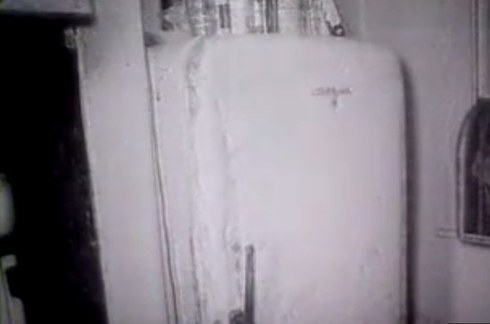
He called the police. Officers entered the home and found it eerily tidy. Nothing seemed out of place. Until they opened the refrigerator.
What they found inside is the stuff of nightmares. Fred and Edwina were there. They had been dismembered. Their body parts had been meticulously packed into the compartments of their own fridge. The investigation would soon reveal a horror that went far beyond what the first officers saw.
The Son Who Vanished
The autopsies revealed a truly gruesome sequence of events. Edwina had been brutally beaten and then shot. Fred had been killed with a claw hammer, his head bludgeoned. In an act of incomprehensible savagery, his organs had been removed and flushed down the toilet.
The house was clean. Too clean. It had been scrubbed down, but traces of blood were found in the bathroom. The evidence pointed to a methodical, calculated butchering that took place right there in their home. The question wasn’t just who, but why? Who could commit such a monstrous act against a quiet, elderly couple?
Suspicion immediately fell on their 43-year-old son, Charles. Charles lived with his parents. And Charles was gone. He had vanished without a trace. His room was empty. His wallet and keys were left behind. He was the only suspect. But with him gone, the case stalled.
From Murder Mystery to Conspiracy Theory
Charles Rogers was not your average man. He was a geophysicist with a brilliant mind, but also a history of financial problems and a reputation for being secretive and volatile. For years, the story was simple: Charles killed his parents and fled. He was declared legally dead in 1975.
But in the modern internet age, the story of Charles Rogers has taken a wild turn. Online sleuths and conspiracy researchers have connected him to something much bigger: the assassination of JFK. Researchers have pointed to a man who bears a striking resemblance to Charles Rogers among the infamous “three tramps” arrested in Dallas on November 22, 1963. They argue that Charles, with his potential connections to the CIA and his shadowy background, was involved in the plot. The theory goes that his parents may have discovered his secret, or that he was silenced by his co-conspirators, who then framed him for his parents’ murder.
Is it a far-fetched theory? Absolutely. Is there any concrete proof? No. But it adds a layer of high-stakes intrigue to an already horrifying crime. Did a brilliant man simply snap and butcher his parents? Or did he disappear because he knew too much about one of the darkest days in American history? We may never know.
Hell’s Half-Acre: The Bloody Benders of Kansas
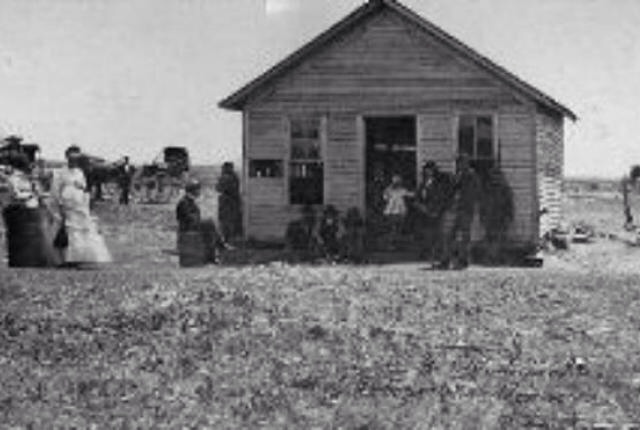
The American West in the 1870s was a place of hope and danger. Settlers pushed across the plains, seeking a new life. But along the desolate Osage Trail in Labette County, Kansas, travelers started disappearing. People would be heading to a new town, their wagons full of their life’s savings, and they would simply vanish. No trace. No witnesses.
The disappearances all had one thing in common: the last place many of them were seen was a small, one-room inn and general store run by a strange immigrant family. A family known as the Benders.

The Family Business
There was “Pa” Bender, a hulking, brutish man. “Ma,” his equally menacing wife. John Jr., a simple-minded giant. And then there was Kate. Young, attractive, and charismatic, Kate was the face of the operation. She claimed to be a psychic and a healer, luring weary travelers in with promises of a hot meal and a glimpse into their future.
Their method was brutally efficient. A traveler, usually a lone man with money, would be invited for dinner. They would be seated at the head of the table, in the place of honor. But this seat was a trap. It was positioned directly over a hidden trapdoor leading to the cellar. While the charming Kate distracted the guest, Pa or John Jr. would sneak up from behind a canvas partition and smash the man’s skull with a hammer. The body would be dropped through the trapdoor, stripped of its valuables, and later buried in the orchard out back under the cover of darkness.
They got away with it for years. The lonely prairie swallowed up their secrets.
The Discovery and Disappearance
Eventually, the number of missing persons became too much to ignore. When a prominent local doctor went missing, his brother, a powerful colonel, launched a massive search. Suspicion fell on the Benders, who were known for their unsettling behavior. A town meeting was called to organize a search of every homestead in the county. But when the search party arrived at the Bender inn, they found it abandoned. The family was gone. Their animals were starving. It was like they had been raptured.
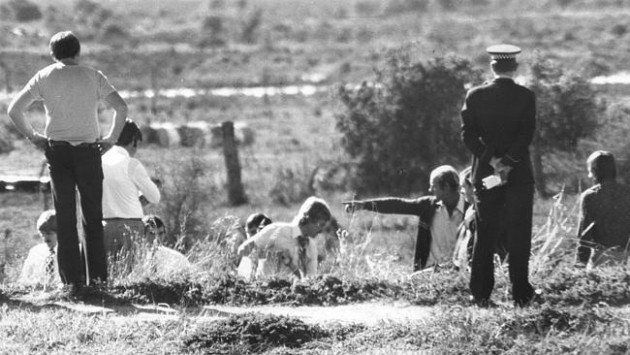
Inside, they found the blood-soaked trapdoor. Outside, in the apple orchard, they started digging. They found the doctor. Then they found another body. And another. And another. In total, they unearthed at least eleven bodies, including a small child. The orchard became known as “Hell’s Half-Acre.”
But what happened to America’s first family of serial killers? That’s the real mystery. Posses were formed. Bounties were issued. But the Bloody Benders were never caught. Did they escape to another state and start over? Were they caught and killed by a vigilante mob, their bodies dumped in an unmarked grave? The questions linger. The Benders didn’t just kill people; they disappeared from history, leaving behind nothing but a blood-stained patch of Kansas dirt and a terrifying legend.
The Bodies in the Barrels: Australia’s Snowtown Murders
Our final case is the most modern, and in many ways, the most disturbing. It’s not a “whodunit.” We know who did it. The mystery here is the *why*. It’s a journey into the absolute depths of human depravity and the terrifying power of psychological manipulation.
In May 1999, in the small town of Snowtown, South Australia, police made a horrifying discovery inside a disused bank vault. They found six plastic barrels. Inside the barrels were the decomposing, acid-preserved remains of eight human beings. This was the final dumping ground for a group of killers led by a man named John Bunting.

The Cult of a Killer
Between 1992 and 1999, John Bunting, along with his accomplices Robert Wagner and James Vlassakis, committed at least twelve murders. But Bunting wasn’t just a killer; he was a charismatic predator. He moved into a poor, downtrodden neighborhood and presented himself as a vigilante, a protector against the “undesirables” of society.
He preyed on the fears and prejudices of those around him, convincing them that his victims—who included pedophiles, drug users, and gay men—deserved to die. He built a small, loyal cult of followers who not only helped him commit these atrocities but believed they were doing the right thing. They were cleansing society.
The murders were sadistic. Bunting and his crew would torture their victims for days, often recording their screams. In a final, twisted act, they would often force the victim to call their loved ones and say they were leaving town, providing a cover story for their disappearance. After the murder, the group would then use the victim’s social security payments to fund their lifestyle.
The true horror of Snowtown isn’t the barrels. It’s the fact that these killings happened in plain sight, within a community of people who were manipulated into silence or, even worse, complicity. It shows how easily a charismatic monster can twist people’s minds, turning neighbors into accomplices and an ordinary suburban house into a torture chamber.
John Bunting and Robert Wagner are serving multiple life sentences without the possibility of parole. They will die in prison. But the questions they left behind will haunt Australia forever. How does a man gain that much power over others? And how many of us, in the right circumstances, might be capable of looking the other way?
The files may be closed. The killers may be caught. But the real mystery—the darkness in the human heart—remains utterly, terrifyingly unsolved.