The Shag Harbor Incident: Canada’s Roswell Was an Underwater Alien Rescue Mission
Some places are born from history. Others have history thrust upon them in a flash of unexplained light. For the tiny, forgotten fishing village of Shag Harbor, Nova Scotia, history arrived at 11:20 PM on a cold October night in 1967.
Before that moment, Shag Harbor was little more than a whisper on the map, a rugged collection of homes huddled against the raw, unforgiving Atlantic. A place where the biggest news was the daily catch. But on October 4th, the town became the epicenter of one of the most thoroughly documented, government-investigated, and utterly bizarre UFO events in history. An event that didn’t end with a crash in the desert, but with a silent plunge into the icy depths.
And that was just the beginning.
What really happened out there in the dark water? Was it a plane crash? An experimental Soviet craft? Or was it something else? Something not of this world, which triggered a secret underwater standoff between superpowers and a rescue mission from the stars?
Forget what you think you know. The official story is just the tip of a very, very deep iceberg.
The Night the Sky Fell
October 4th, 1967. The Cold War is at its frostiest. America is mired in Vietnam. The world is a powder keg of paranoia, with eyes glued to the skies, watching for Soviet bombers. In this hyper-alert atmosphere, anything out of the ordinary gets noticed. Fast.
So when the calls started flooding the Royal Canadian Mounted Police (RCMP) barracks, they took them seriously.
It began with a group of teenagers. Laurie Wickens and his friends were driving near Shag Harbor when they saw it. A series of brilliant, pulsating orange lights in the sky. Not a plane. Not a helicopter. This was different. The lights blinked in a strange, deliberate sequence before banking at an impossible 45-degree angle and screaming down toward the water’s surface.
They braced for the explosion. The thunderous roar of a plane crash. The geyser of water.
Nothing.
Just an eerie, chilling silence.
Dozens of other witnesses saw it too. Truck drivers on the highway, families in their homes, fishermen out on the water. They all described the same thing: four massive orange lights, part of a single, solid object, descending with unnatural speed. Most thought they were witnessing a horrific plane crash and frantically called the authorities.

A Crash Without a Splash
By a wild turn of events, RCMP Constable Ron Pound didn’t even need the phone calls. He saw the bizarre light show with his own eyes while on patrol. He was certain the lights were attached to one solid craft, something he estimated to be at least 60 feet long. He raced to the shoreline, meeting up with Police Corporal Victor Werbieki and Constable Ron O’Brien.
They got to the water’s edge and stared into the darkness. There it was.
Not wreckage. Not a slick of jet fuel. The object was floating. About half a mile out, a single, pale yellow light bobbed on the waves, moving slowly, purposefully. It wasn’t drifting. It was navigating. And as it moved, it left something behind in its wake. A thick, glowing, yellowish foam that clung to the surface of the black water, smelling faintly of sulfur.
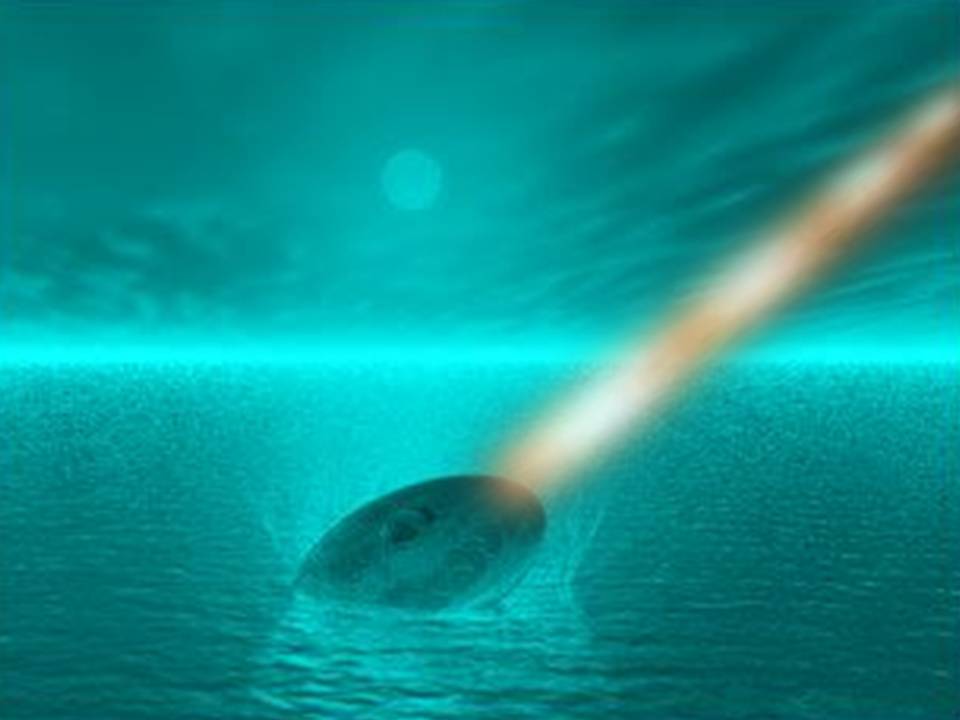
The witnesses were stunned. An object that big should have hit the water with the force of a bomb. It should have sunk like a stone. Instead, it floated like a cork, seemingly undamaged, before it started to slowly submerge, the light finally winking out beneath the waves.
The Search Finds… Nothing?
This was now an official search and rescue mission. The local community, a tight-knit group of fishermen who knew these waters better than their own backyards, sprang into action. They launched their boats, joined by the Coast Guard Cutter 101, and headed for the last known position.
They found the foam. It was dense, weird stuff, almost three feet thick in places, stretching for half a mile. But the light was gone. The object was gone. There was no debris. No oil slick. No bodies. Nothing.
After hours of searching the surface, they called it off at 3:00 AM. The official conclusion was starting to form: no plane was missing. No aircraft, civilian or military, was unaccounted for. So what did all those people see?
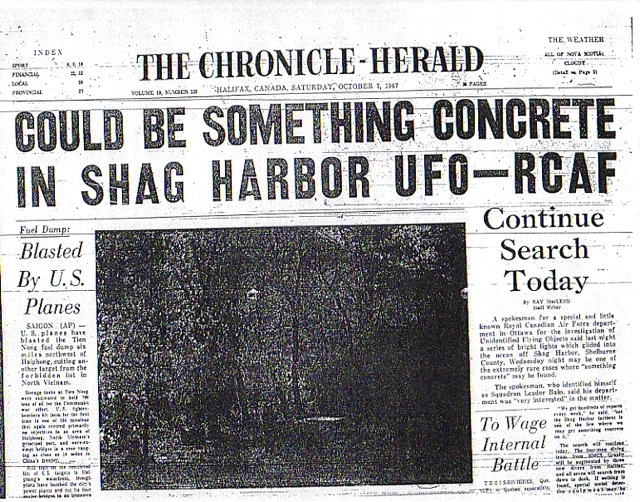
The next day, the military took over. The Royal Canadian Navy dispatched HMCS Granby, a fleet maintenance ship, to the harbor. For the next three days, a team of seven divers scoured the seabed. The press was told they were looking for wreckage from the “supposed” plane crash.
The official report, released to the public, was simple and dismissive. They found nothing. Case closed. The Shag Harbor incident was filed away as a strange, but ultimatelyexplainable, local phenomenon. A misidentified aircraft, perhaps. Or a meteor.
But that wasn’t the truth. Not even close.
The Secret Underwater Chase: Act Two Begins
For 25 years, the story died. It became a piece of local folklore, a weird tale told over beers at the pub. Then, in 1993, two UFO researchers, Chris Styles and Doug Ledger, decided the official story stank. They started digging, re-interviewing the original witnesses and, most importantly, tracking down the military personnel who had been sworn to secrecy.
What they uncovered was an explosive second act to the Shag Harbor story. A cover-up of jaw-dropping proportions.
According to the divers and sailors they interviewed, the search in Shag Harbor wasn’t fruitless. It was a smokescreen. The object hadn’t crashed and settled on the bottom. It was still active. It had simply gone deep. The Navy’s sonar had tracked it leaving Shag Harbor and moving underwater.
Slowly, silently, it traveled 25 miles northeast to a place called Government Point.
This was no random location. Government Point was right next to a top-secret submarine detection base. A Cold War listening post designed to track Soviet subs in the Atlantic. And that base was now tracking something it couldn’t identify. An Unidentified Submerged Object, or USO.
A Standoff at the Bottom of the Sea
Suddenly, the situation escalated. A fleet of Royal Canadian Navy ships converged on the waters off Government Point, forming a perimeter. Their mission had changed from “search and rescue” to “monitor and contain.” They had an unknown craft, of unknown origin and capability, sitting silently on their doorstep.
They watched. And they waited. For days, a tense underwater standoff unfolded. The military was planning a salvage operation, an attempt to recover whatever was down there.
And then the unthinkable happened.
A second UFO appeared.
Sources who were there claimed this second craft entered the water and moved directly to the location of the first one. The Navy was now facing two of them. Were they communicating? Was this a repair mission? A rescue? Every plan the military had was thrown out the window. Their posture changed from “salvage” to “do not engage.” They were completely, utterly outmatched.
Deep Dive: What Was the Russian Sub Doing There?
As if things weren’t complicated enough, there was another player in this submerged drama. A Soviet submarine. At the height of the Cold War, a Russian sub was detected entering Canadian territorial waters and heading directly for the same location.
Coincidence? Absolutely not.
Think about it. The Soviets had their own sophisticated monitoring systems. They would have seen the object come down. Just like the Americans and Canadians, they would have been desperate to get their hands on whatever this technology was. An underwater Cold War was now hot, with three factions—the Canada/US alliance, the Soviets, and the unknowns—converging on a single point off the coast of Nova Scotia.
Was the Russian sub there to observe? To try and steal the technology for themselves? Or was there a darker possibility? That both superpowers knew about these visitors already, and this was just another move in a long-running clandestine game for alien artifacts. The presence of that sub turns the story from a simple UFO incident into a full-blown international crisis that was kept completely hidden from the public.
The Great Escape
After several days of this tense, silent stalemate, the objects made their move. The sailors who were there described it in hushed tones for decades. The two USOs, acting in perfect unison, began to move. They headed out to sea, toward the deep waters of the Gulf of Maine.
The Navy ships gave chase.
It wasn’t even a contest. The objects underwater easily outpaced the fastest ships on the surface. Then, without warning, they broke for the sky. Witnesses described them bursting out of the ocean, shedding water as they ascended. They hovered for a moment over the stunned naval fleet before accelerating to impossible speeds and vanishing into the stars.
They were gone.
And with them went any chance of recovery. All that was left was a slew of official reports that were immediately classified as “Top Secret,” and a few dozen sailors, divers, and police officers who were told, in no uncertain terms, that what they saw never happened.
Shag Harbor’s Legacy: The Roswell of the North
Today, the town of Shag Harbor has embraced its strange history. There’s a small, charming UFO museum. They hold an annual festival to commemorate the event. It’s often called “Canada’s Roswell,” and in many ways, the comparison is spot on. But in some ways, Shag Harbor is even more compelling.
Unlike Roswell, where the evidence is based on scattered debris and conflicting deathbed confessions, the Shag Harbor incident was witnessed in real-time by hundreds of civilians, police, and military personnel. It wasn’t a single “crash,” but a prolonged, week-long event involving multiple objects and a secret military operation. The evidence isn’t just a few scraps of metal; it’s a mountain of official documents, eyewitness testimony, and a government that, for decades, said “nothing happened” when its own files proved something extraordinary did.
So what sits at the bottom of the ocean off the coast of Nova Scotia? What really happened during that week in 1967? We may never know for sure. The official files remain heavily redacted. But one thing is certain: for a few terrifying, awe-inspiring days, the Cold War came to a halt, and humanity was just a spectator in a drama that was playing out in the deep, dark waters off a small Canadian fishing town.
Originally posted 2013-07-07 14:36:46. Republished by Blog Post Promoter