History’s Deleted Scenes: The Chilling Mysteries That Refuse to Be Solved
History isn’t a neat and tidy book. It’s a crime scene. A chaotic mess of half-told stories, shredded documents, and whispers that haunt the edges of the official narrative. For every event carved into stone monuments, there are a dozen more that have been swallowed by the shadows, leaving behind nothing but a chilling, permanent question mark. These aren’t just footnotes. They are gaping holes in our understanding of the world, puzzles that mock our modern arrogance.
We think we know it all. We have satellites that can read a license plate from space and computers that can map the human genome. But can we find a lost city in a jungle we’ve been flying over for a century? Can we explain what happened to 117 people who vanished from the face of the earth, leaving behind only a single, cryptic word? Can we even keep track of a President’s brain?
The answer is a resounding, humbling no.
Forget what you learned in school. Today, we’re prying open the cold case files of history. We’re digging up the bodies the powerful thought were buried for good and dusting off the legends that scientists dismiss as fantasy. Get ready to question everything. Because the truth is not only out there—it’s been staring us in the face, hidden in plain sight, all along.
The Posthumous Vendetta: A King’s Revenge on Cromwell’s Corpse
Revenge is a dish best served cold. But for King Charles II, even “cold” wasn’t enough. His revenge needed to be frozen, dug up from the grave, and paraded through the streets for all to see. His target? The cold, dead body of the one man who had successfully toppled the English monarchy: Oliver Cromwell.
It’s one of the most bizarre and gruesome acts of political retribution ever recorded. A macabre puppet show with a corpse as the main attraction.
Deep Dive: The Man Who Killed a King
To get why the royals hated Cromwell with such a burning passion, you have to understand what he did. Oliver Cromwell wasn’t just a political rival. He was a plain-speaking, iron-willed Puritan revolutionary who led the Parliamentarian army—the “Roundheads”—to victory against King Charles I in the English Civil War. This wasn’t just a war; it was the shattering of a thousand-year-old belief in the divine right of kings.
Cromwell and his allies didn’t just defeat the king. They tried him for treason. And they executed him.
In 1649, Charles I was beheaded in public. It was an earth-shattering event that sent shockwaves across Europe. A king, God’s chosen ruler on Earth, had been killed by his own subjects. Cromwell went on to rule as Lord Protector of a republican Commonwealth. For a decade, there was no king in England. When Cromwell died of natural causes in 1658, he was given a funeral fit for a monarch and buried with the highest honors in the hallowed ground of Westminster Abbey, the final resting place of England’s greatest kings and queens.
And that’s where the story should have ended. But it didn’t.
A Grave Disturbance
In 1660, the monarchy was restored, and Charles I’s exiled son came back to claim the throne as Charles II. And he had a list. A long one. At the top of it was the name Oliver Cromwell. The fact that Cromwell was already two years dead was a minor inconvenience.
On the 12th anniversary of his father’s execution, Charles II ordered Cromwell’s body, along with those of two other high-profile regicides, to be exhumed from Westminster Abbey. Their rotting corpses were dragged on sledges through the jeering London crowds to the Tyburn gallows, a place of execution for common criminals. There, the dead men were ceremonially “hanged” for hours.
But the final insult was yet to come. At sunset, the bodies were cut down, and their heads were hacked off with an axe. The headless torsos were tossed into a common burial pit. The heads, however, were destined for a different fate. They were impaled on a 20-foot-tall spike and mounted above Westminster Hall, the very building where the trial of Charles I had taken place. A brutal, daily reminder to all who saw it: do not mess with the Crown.
The Head’s Bizarre 300-Year Journey
Cromwell’s head remained on that spike for nearly 25 years, weathering storms and seasons, a silent, mummified sentinel of a failed revolution. Then, one day in the mid-1680s, a fierce storm broke the spike, sending the head tumbling to the ground. A guard supposedly snatched it up and hid it in his chimney.
What followed was a three-century-long game of pass-the-parcel with one of history’s most famous heads. It became a morbid curiosity, passing from one private collector to another. It was owned by a Swiss-French comedian, a drunken failed actor, and a syndicate of businessmen who displayed it as a ghoulish tourist attraction. It was examined, prodded, and written about. Was it really him? The evidence seemed to point yes—it matched contemporary portraits and showed the tell-tale signs of embalming and decapitation.
Finally, in 1960, after centuries of being a macabre sideshow, the head was offered to Cromwell’s old college, Sidney Sussex at Cambridge University. The college accepted, and in a secret, solemn ceremony, they finally buried it. It was over.
Or was it?
The Cambridge Conspiracy: What Are They Hiding?
Here’s where it gets weird. The college buried the head in a secret, unmarked location within its grounds. And to this day, they refuse to reveal where. They have repeatedly denied all requests for scientific analysis, including DNA testing that could once and for all prove its identity.
Why the secrecy? One theory suggests that Cromwell’s real body was never in Westminster Abbey to begin with. Supporters, fearing the royalists would one day desecrate his grave, supposedly buried him in a secret location and put a decoy body in his official tomb. If that’s true, whose head has been on this bizarre journey for 300 years?
Is the college protecting the dignity of its most famous alumnus? Or are they hiding a secret? The refusal to allow modern science to answer the question only fuels the suspicion. The head of Oliver Cromwell, the man who beheaded a king, remains a prisoner of history, its final secrets buried in an unmarked patch of Cambridge soil.
The Lost City of Z: An Amazonian Obsession That Swallowed Men Whole
Deep in the green hell of the Amazon rainforest, there is a legend. A story whispered by tribesmen and scrawled in a forgotten manuscript. It speaks of a place of impossible wealth and advanced civilization, a city with paved streets, intricate temples, and arches of stone, hidden beneath the suffocating jungle canopy. They called it the City of Z.
For one man, it wasn’t just a legend. It was a glorious obsession that would cost him his life. And he wouldn’t be the last.
Colonel Percy Fawcett: The Last Victorian Explorer
Early 20th-century British explorer Colonel Percy Harrison Fawcett was a man out of time. He was a real-life Indiana Jones, a tough-as-nails surveyor and adventurer who was more at home in the mosquito-infested jungle than in a London drawing room. He had spent years mapping the uncharted borders of Brazil and Bolivia, surviving disease, hostile tribes, and countless horrors of the jungle that would have broken lesser men.
During his travels, Fawcett became convinced that a great, undiscovered civilization once thrived in the Amazon. The tribes he met told him stories. He found strange pottery shards. But his “Rosetta Stone” was a document he called Manuscript 512, housed in the National Library of Brazil. It was an 18th-century report by Portuguese explorers who claimed to have stumbled upon the ruins of a magnificent, ancient city deep in the Mato Grosso region.
Fawcett was hooked. This was his great white whale. He nicknamed the city “Z” and made it his life’s mission to be the first modern man to set eyes on it.
The Final Expedition
In 1925, funded by London’s Royal Geographical Society, Fawcett, then 57, set off on his final, fateful expedition. With him were his 21-year-old son, Jack, and Jack’s best friend, Raleigh Rimmell. They were warned. The Mato Grosso was a deadly place. But Fawcett was confident. He believed in a “go light” approach, carrying minimal gear to live off the land.
On May 29, 1925, from a camp he called “Dead Horse Camp,” Fawcett sent back his last dispatch. He wrote of the harsh conditions but was full of optimism, telling his wife he was about to venture into unexplored territory. “You need have no fear of any failure,” he wrote.
Then, silence. The jungle swallowed them whole.
For years, the world waited. Rescue missions were launched. Dozens of would-be rescuers died or vanished themselves, consumed by the same wilderness that took Fawcett. Rumors flew. Had they been killed by hostile tribes? Had they “gone native” and become chiefs of a jungle tribe? Had they found Z and decided never to return?
Modern Clues in a Vanishing Forest
For decades, most archaeologists dismissed Fawcett’s theory as romantic nonsense. The Amazonian soil, they argued, was too poor to support the large-scale agriculture needed for a complex civilization. But recent discoveries have forced a stunning re-evaluation.
American archaeologist Michael Heckenberger, working with the Kuikuro people in the Xingu region (the same area Fawcett was exploring), discovered something incredible. Using satellite imagery and GPS, he uncovered a network of ancient settlements now known as Kuhikugu. These were not primitive villages. They were meticulously planned communities with moats, causeways, and large plazas, all interconnected by a complex system of roads, dating back to a time before Columbus.
It wasn’t a single golden city like El Dorado. It was something far more complex: a sprawling, sustainable “garden city” civilization. Was this Fawcett’s Z? Had he been right all along, just wrong about the details? Technology like LiDAR, which can map the forest floor through the canopy, is now revealing even more ancient structures across the Amazon. The deeper we look, the more it seems Fawcett’s “crazy” obsession might have been closer to the truth than anyone dared to imagine.
The man may be gone, but his quest continues. The Lost City of Z remains one of history’s most tantalizing mysteries, a symbol of the secrets the jungle still refuses to give up.
JFK’s Missing Brain: The Ultimate Conspiracy Cover-Up?
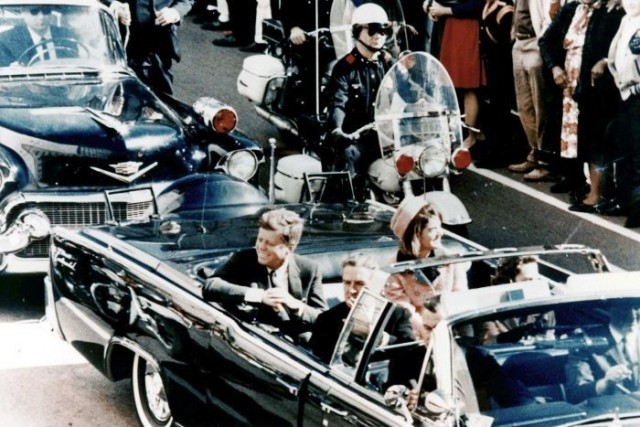
November 22, 1963. A gunshot rings out across Dealey Plaza in Dallas, Texas. President John F. Kennedy is assassinated. In the chaotic hours and days that follow, a nation grapples with its grief. And investigators grapple with the evidence.
The single most important piece of that evidence in the crime of the century? The President’s brain. The one object that could definitively prove the number of shooters, the direction of the bullets, and whether America was being told the truth about what happened that day.
And then it vanished.

Who killed JFK?
A Chaotic Autopsy
The story of the missing brain begins with the chaotic and controversial autopsy at Bethesda Naval Hospital. The pathologists, under immense pressure from military and government officials, conducted an examination that has been criticized for decades. The doctors in Dallas who first treated JFK reported a large exit wound at the *back* of his head, suggesting a shot from the front—the infamous grassy knoll. But the official autopsy, and the later Warren Commission, concluded all shots came from the rear, from Lee Harvey Oswald’s sniper’s nest.
The brain was key. A careful examination could trace the bullet paths with precision. After the initial autopsy, the brain was preserved in formalin and placed in a stainless-steel container. It was transferred to the custody of the Secret Service and eventually stored in a secure filing cabinet at the National Archives.
It was safe. It was secure. Until it wasn’t.
The Timeline of a Disappearance
In 1965, JFK’s brother, Attorney General Robert F. Kennedy, requested that all autopsy materials be transferred to the custody of Evelyn Lincoln, JFK’s former personal secretary, for safekeeping, supposedly en route to a future Kennedy Presidential Library.
In October 1966, an inventory was being conducted at the National Archives. Officials went to the secure room. They opened the filing cabinet. The stainless-steel container holding the brain was gone. So were tissue samples and other key autopsy materials. Panic set in. An investigation was launched, but it went nowhere. The most critical piece of evidence from the Kennedy assassination had simply dematerialized.
The Official Story vs. The Chilling Alternatives
The official explanation, put forth by the government, is a family tragedy. They concluded that Robert Kennedy, likely assisted by his aide Angie Novello, had taken the brain. The motive? To prevent it from ever becoming a morbid public exhibit, to spare the family further pain, and to bury it privately with the President’s body at Arlington National Cemetery. It’s a sad, understandable, and entirely plausible story. Robert Kennedy himself was assassinated in 1968, taking any definitive explanation to his grave.
But for a mystery of this magnitude, the simple answer is never enough. The conspiracy theories are far more sinister.
Theory 1: Hiding a Conspiracy. The most popular theory is that the brain was stolen to conceal the truth of the assassination. If the brain showed clear evidence of a bullet path from the front, it would blow the “lone gunman” theory to pieces and prove a conspiracy. The official autopsy photos and X-rays have long been accused of being altered. But the physical brain? That would be undeniable proof. Someone with immense power, theorists argue, had it destroyed to protect the plotters.
Theory 2: Hiding a Medical Secret. Another angle suggests the brain was taken not to hide a crime, but a secret about JFK’s health. The public saw a vigorous, healthy president, but Kennedy secretly suffered from Addison’s disease and was on a complex cocktail of medications, including steroids and amphetamines. Did the brain show evidence of this? Was someone afraid that revealing the true state of the President’s health would compromise national security or tarnish the Camelot myth?
Whatever the truth, the fact remains. The brain is gone. And with it, any chance of definitively answering the question that has haunted America for over half a century: who really killed JFK?
Roanoke: The Colony That Was Erased by a Whisper
Imagine this. You build a town on the edge of a wild, new continent. You bring over more than a hundred men, women, and children to start a new life. You leave to get supplies, promising to return in a few months. When you finally get back three years later, the town is gone.
Not abandoned. Not burned down. It has been meticulously, impossibly, erased. The houses are dismantled. The people have vanished without a trace. There are no bodies, no signs of a struggle. All that remains is a single, cryptic word carved into a wooden post.
This isn’t fiction. This is the story of the Roanoke Colony, America’s oldest and most unsettling ghost story.
A New World, A New Hope
In the late 1580s, England was desperate to get a foothold in the New World and challenge the dominance of Spain. Sir Walter Raleigh, a favorite of Queen Elizabeth I, financed an expedition to establish a permanent settlement on the coast of what is now North Carolina. In 1587, a group of 117 colonists, led by Governor John White, landed on Roanoke Island.
This was meant to be the real deal. Unlike previous military outposts, this group included families. Shortly after their arrival, John White’s daughter, Eleanor Dare, gave birth to a baby girl named Virginia. Virginia Dare holds the distinction of being the first English child born in the Americas. She was a symbol of a new beginning.
But the colony was low on supplies. The settlers persuaded John White, a talented artist and mapmaker, to sail back to England to gather more food, tools, and people. He reluctantly agreed, leaving behind his daughter, his newborn granddaughter, and the entire colony. He promised he’d be back soon.
The Three-Year Silence
He was wrong. When White arrived in England, he found the country on the brink of war with Spain. The Spanish Armada was coming. Every available ship was commandeered for the war effort. White was stranded, unable to get a ship to return to his family for three long, agonizing years.
When he was finally able to sail back in August 1590, on his granddaughter’s third birthday, he found the island shrouded in an eerie silence. As his boat approached, he saw smoke rising from the woods, a hopeful sign. But as they landed and walked toward the settlement site, a creeping dread set in.
The entire settlement was gone. The houses, the workshops, the fortifications—all had been carefully taken down. It wasn’t the work of a raiding party; there was no mess, no debris. It was as if the colonists had methodically packed up their town and moved on.
And then he saw the clue. Carved into a fence post was a single word: “CROATOAN.” Carved into another tree, he found the letters “CRO.” This was a pre-arranged signal. If the colonists had to leave, they were to carve their destination into a tree. If they were in distress, they were to add a Maltese cross. There was no cross.
A Search Abandoned
Croatoan was the name of a nearby island (modern-day Hatteras Island) and the name of a friendly Native American tribe. The clue seemed clear: the colonists had moved to Croatoan Island. So why didn’t White immediately go look for them?
The official account is that a storm was brewing, and his men refused to risk the journey. They turned the ship around and sailed for the Caribbean. John White, heartbroken, returned to England and never saw his family again. For reasons that defy logic, no major, organized search party was ever sent. The 117 men, women, and children of Roanoke, including little Virginia Dare, were left to their fate and became America’s “Lost Colony.”
What Really Happened? The Enduring Theories
For over 400 years, the question has tormented historians and conspiracy buffs alike.
- Assimilation: This is the most widely accepted theory. Starving and abandoned, the colonists simply walked to Croatoan Island and were absorbed into the local tribe. There is tantalizing evidence for this, including 17th-century reports of grey-eyed, English-speaking Native Americans in the area and modern archaeological finds on Hatteras Island showing a mix of European and Native artifacts.
- Massacre: Did a hostile tribe, or even the Spanish, attack and wipe them out? It’s possible, but it doesn’t explain the lack of bodies or any evidence of a fight. And why would they carve their destination if they were under attack?
- Disease and Starvation: A devastating epidemic could have wiped them out, with the last few survivors dismantling the settlement before dying or moving on. But again, where are the graves?
The mystery of Roanoke is a chilling reminder of how fragile a foothold civilization can be. A hundred and seventeen souls, erased from the map, leaving behind just one word—a whisper that we are still trying to understand four centuries later.
Lemuria: The Sunken Ghost Continent of Psychic Giants
Before Atlantis captured the world’s imagination, there was another lost world. A sprawling continent that supposedly sank beneath the waves of the Indian Ocean, taking with it a race of bizarre, super-powered beings. This was Lemuria.
Unlike some of the other mysteries on this list, there is no ancient manuscript or archaeological clue pointing to Lemuria’s existence. Its origin is far stranger. It began not as a myth, but as a 19th-century scientific theory that was hijacked by one of history’s most eccentric mystics and transformed into a full-blown occult legend.
A Scientific Ghost Story
The story begins, bizarrely, with lemurs. In the 1860s, zoologist Philip Sclater was puzzled. He found fossils of lemurs—small, primate-like animals—in both Madagascar and India, but not in Africa or the Middle East. How did they get from one place to the other across a vast ocean? This was before the theory of continental drift was understood.
Sclater proposed a hypothesis: there must have once been a massive land bridge or continent connecting the two landmasses. In a paper, he gave this hypothetical lost land a name: “Lemuria.” It was a perfectly logical, if ultimately incorrect, scientific idea. And there it should have ended.
Enter Madame Blavatsky
But the name “Lemuria” was too cool to let die. It was picked up by the burgeoning spiritualist and occult movements of the late 19th century. The most influential of these figures was Helena Blavatsky, the Russian-born co-founder of the Theosophical Society. Blavatsky was a master of weaving together world myths, Eastern religions, and her own wild imagination into a complex new spiritual doctrine.
In her magnum opus, “The Secret Doctrine,” Blavatsky took the scientific concept of Lemuria and ran with it into a psychedelic wonderland. She claimed that Lemuria was a real, physical continent and the homeland of the “Third Root Race” of humanity. And these were not your average humans.
According to Blavatsky, the Lemurians were gigantic, hermaphroditic beings who reproduced by laying eggs. They were intellectually undeveloped, functioning without a physical brain. How did they get around? Simple. They used their “third eye,” located at the back of their heads, which gave them psychic abilities and allowed them to navigate the world purely by spiritual instinct. They lived alongside the dinosaurs in a primordial paradise.
What was their downfall? According to Blavatsky, it was sex. The Lemurians eventually discovered sexual reproduction, which she considered a spiritual fall from grace. This act led to their doom, and their great continent sank beneath the waves.
The Legacy of a Lost World
Blavatsky’s bizarre tales could have been dismissed as fantasy, but they were incredibly influential. The idea of Lemuria (often conflated with the similar “lost continent of Mu,” popularized by writer James Churchward) became a cornerstone of New Age and esoteric beliefs.
To this day, there are people who believe they are the reincarnated souls of ancient Lemurians. Mount Shasta in Northern California is considered by many to be a sacred remnant of the lost continent, with a hidden city of advanced Lemurian descendants living deep inside the mountain.
Lemuria is a perfect example of how a forgotten scientific footnote can be transformed into a powerful, enduring myth. It’s a ghost continent, built not on evidence, but on the limitless power of human imagination and our unending fascination with the worlds we may have lost.
Originally posted 2016-08-12 01:13:30. Republished by Blog Post Promoter