Home Unexplained Mysteries Crime Mysteries Who was Jack The Ripper?

Who was Jack The Ripper?

0
57

The Ultimate Betrayal: Was Jack the Ripper a Colossal Hoax?

Forget everything you think you know about Jack the Ripper.

Seriously. Erase it all.

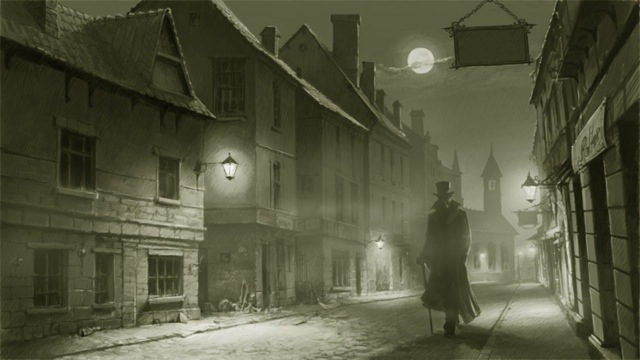
The top hat silhouetted against the gaslight. The shadowy figure gliding through the pea-soup fog of Victorian London. The single, brilliant, monstrous mind behind the most infamous killing spree in history. It’s a story etched into our collective psyche, a tale of terror that has haunted us for over a century.

But what if it’s all a lie?

What if the British nation’s most notorious serial killer… never existed?

This isn’t just a wild theory whispered in the dark corners of the internet. This is a bombshell conclusion from a man who spent over a decade applying modern police techniques to this coldest of cold cases. A man who looked at the evidence not as a historian, but as a murder squad detective. And his findings don’t just question the Ripper legend. They shatter it into a million pieces.

Prepare yourself. The truth about the Whitechapel murders is far stranger, and far more cynical, than any Hollywood script ever dared to imagine.

20131225-153312.jpg

A Modern Detective Walks into 1888

For 11 exhaustive years, Trevor Marriott, a seasoned ex-detective from the Bedfordshire police murder squad, buried himself in the Ripper case. He wasn’t looking for fame or a book deal. He was a cop doing what cops do: looking for facts. He requested access to the original Scotland Yard files. He applied modern-day investigative logic, forensic analysis, and criminal profiling to the brittle, yellowed pages of history.

And what he found was… nothing. Or rather, not the “nothing” of a dead end, but the “nothing” of a phantom suspect. There was no consistent pattern. No single, unifying thread. Just chaos.

“The facts of this case have been totally distorted over the years,” Marriott stated, cutting through more than a century of myth-making. “The general public have been completely misled by any number of authors and publishers.”

Think about the sheer madness of the suspect list. It’s a who’s who of Victorian England, a bizarre lineup that defies all logic. We’re told to consider Queen Victoria’s own grandson, the Duke of Clarence. A royal prince stalking the slums? We’re told to suspect Lewis Carroll, the whimsical author of Alice in Wonderland. We’re even pointed towards Dr. Barnardo, a man famous for helping destitute children.

It gets weirder. Some theories have even suggested a Sioux warrior named Black Elk, who was in London with Buffalo Bill’s Wild West Show, was the killer. The list is endless because the evidence for any single suspect is practically non-existent. It’s a narrative black hole, pulling in any and every name that comes near it.

Marriott saw this for what it was. A smokescreen. A distraction from a much simpler, more disturbing truth.

The Birth of a Boogeyman: A Drunken Journalist’s ‘Scoop’

So if there was no single killer, where did the name—the very idea of “Jack the Ripper”—come from?

The answer is as sordid as the crimes themselves. It came from a bottle of cheap booze and the desperate ambition of a down-on-his-luck journalist.

His name was Thomas Bulling. In 1888, Bulling worked for the London-based Central News Agency. His job was to feed crime stories to the ravenous press. Competition was savage. To get noticed, you needed a story with legs. You needed a story with a villain.

In the autumn of 1888, a series of brutal, unsolved murders of women in the poverty-stricken Whitechapel district was big news. But it was messy news. Disconnected. Frightening, yes, but without a central character. Bulling, an alcoholic with deep police contacts, saw an opportunity. He decided to give the story what it was missing: a monster.

He sat down and penned a letter. A letter allegedly from the killer himself. It was taunting, arrogant, and dripping with theatrical evil. He signed it with a name that would echo through eternity.

Jack the Ripper.

He sent it to Scotland Yard, knowing full well his contacts would leak it to the press. It was a masterstroke of ghoulish marketing. Overnight, a series of tragic, disparate crimes were transformed into a singular campaign of terror orchestrated by a mastermind. The name exploded across the front pages. It created a legend. And it sold a staggering number of newspapers.

“It was the most ingenious piece of journalism that has kept this mystery alive for 125 years,” Marriott explains. “Police got a letter that Bulling had written about the murders which he signed ‘Jack the Ripper’.”

That name became a brand. A terrifying, unstoppable brand. Even today, any serial killer is immediately dubbed a “Ripper.” That’s the power of Bulling’s invention. He didn’t just report the news. He created the main character, a ghost made of ink and desperation.

Debunking the Ripper Mythos, One Lie at a Time

Once you accept that the name “Jack the Ripper” was a media fabrication, the other pillars of the legend begin to crumble. Marriott, using his cold-case methodology, knocked them down one by one.

Deep Dive: The “Canonical Five” is a Lie

We’re always told Jack the Ripper had five victims: Mary Ann Nichols, Annie Chapman, Elizabeth Stride, Catherine Eddowes, and Mary Jane Kelly. This is the “canonical five.” But why only five?

Marriott’s research revealed this to be an arbitrary, almost random grouping created long after the fact. In reality, the Whitechapel police files contain at least 17 unsolved murders of a similar nature, stretching from 1863 all the way to 1894. Murders happened before the “canonical five” and after. Some were even more brutal. So why aren’t they part of the legend?

Because they don’t fit the neat narrative. A single killer who strikes five times in a few weeks and then vanishes is a terrifying story. A two-decade-long series of unconnected, random acts of violence by multiple assailants in a high-crime area is just a grim, depressing reality. One is a legend; the other is a statistic.

The Killer with “Surgical Skill”? A Vicious Rumor.

One of the most enduring parts of the myth is that the killer had expert anatomical knowledge. He removed organs with surgical precision, leading to theories that he was a doctor or a butcher. This, Marriott argues, is perhaps the biggest falsehood of all.

So where did the story of missing organs come from? It was true that some organs were taken from the victims. But not at the crime scene.

Marriott’s investigation points to a grim practice of the time. In the chaos of the mortuary, poorly paid attendants often removed organs to sell to medical schools. It was a macabre, illegal side-hustle. The idea that a killer was performing complex surgery in a dark, filthy alley in a matter of minutes, without being seen, is pure fantasy. The organs were likely removed later, by mortuary staff, under the cover of an official autopsy.

With that single fact, the entire profile of the killer as a demented, educated gentleman collapses.

20131225-153522.jpg

That Top Hat and Cape? Hollywood Nonsense.

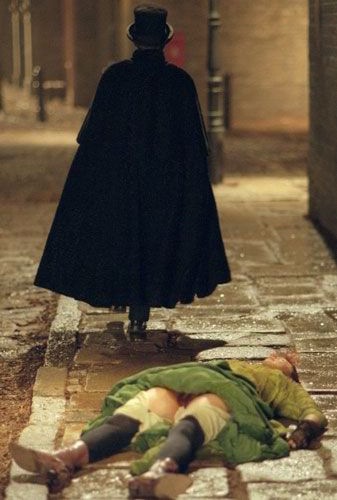
“You have to ask yourself if ‘Jack’ is an urban myth,” Marriott says. “Around 80 per cent of the books about him have a picture of a chap on the front stalking the streets of London in a long black cape and a top hat.”

Let’s be brutally honest about 1888 Whitechapel. It wasn’t a spooky movie set. It was one of the most dangerous, crime-infested slums on Earth. It was a labyrinth of unlit alleys, gin-soaked pubs, and desperate people. A man dressed as a wealthy gentleman, in a top hat and fine cloak, wouldn’t have been an anonymous predator.

He would have been a victim. He wouldn’t have lasted five minutes before being robbed and beaten. The iconic image of the Ripper is a total fabrication, a character designed to add a touch of gothic class to a series of squalid, pathetic murders. The real killers of Whitechapel were likely as poor and desperate as their victims.

If Not Jack, Then Who? Meet the Real Killer(s)

So if Jack was a fiction, who actually committed these horrible crimes? Marriott believes the 17 murders on his list were the work of several different people. But he did zero in on one particularly strong suspect for some of them. A man far more plausible than any royal prince.

His name was Carl Feigenbaum, a German merchant seaman.

Think about it. A merchant seaman fits the profile perfectly. He’s a transient, in port for a few days or weeks, then gone. He has no ties to the community. He can kill and then simply vanish across the ocean, making him an impossible suspect for the local police to track. Feigenbaum’s shipping line regularly docked in the London ports, a short walk from Whitechapel.

The dates line up. He was in town during some of the murders. But here’s the clincher.

In 1896, Carl Feigenbaum was executed in New York. He was sent to the electric chair for murdering his landlady in a brutal, frenzied attack. The crime scene was eerily similar to the Whitechapel killings—a slashed throat and horrific mutilations. His own lawyer was so convinced of his client’s guilt in a wider spree that he went public, claiming Feigenbaum had confessed to a hatred of women and a desire to kill and mutilate them.

Feigenbaum wasn’t “Jack the Ripper,” the single, unified killer. But he was almost certainly *a* Whitechapel killer. A real, flesh-and-blood monster who drifted in and out of London on the tide, leaving terror in his wake. He was likely one of several.

A Conspiracy of Convenience

The final, chilling question is this: Why did the myth persist? Why did Scotland Yard, the press, and generations of “Ripperologists” cling to the story of a single killer?

For the police, it may have been a matter of public relations. It’s far easier to tell a panicked public you’re hunting for one elusive genius than to admit you have no control over the random, brutal violence endemic to the city’s poorest district. Hunting one man gives the illusion of a solvable case. Hunting a dozen ghosts is an admission of failure.

For the press, the reason is obvious. The story was simply too good. “Jack the Ripper” was a cash cow. It sold papers in 1888, and it continues to sell books, fuel documentaries, and inspire blockbuster movies today. The Ripper industry is a multi-million-dollar machine, and it runs on the fuel of the single-killer myth.

And for us, the public? Maybe, just maybe, we *want* to believe in the monster. A single, supernatural evil is somehow less terrifying than the alternative: that we live in a world of random, meaningless violence, where anyone can be a victim and anyone can be a killer. The Ripper legend gives a face to the darkness. But Trevor Marriott’s investigation suggests the real darkness has no face at all.

The truth is, there was no Jack. There was only the squalor, the poverty, and the forgotten women who died in the filth of Whitechapel. Their killers were likely as anonymous and desperate as they were. Their stories were stolen and twisted into a ghost story by a journalist looking for a headline.

The Ripper was never a man. He was a brand. The most successful, most terrifying, and most enduring lie in the history of crime.

Originally posted 2013-12-25 14:37:13. Republished by Blog Post Promoter