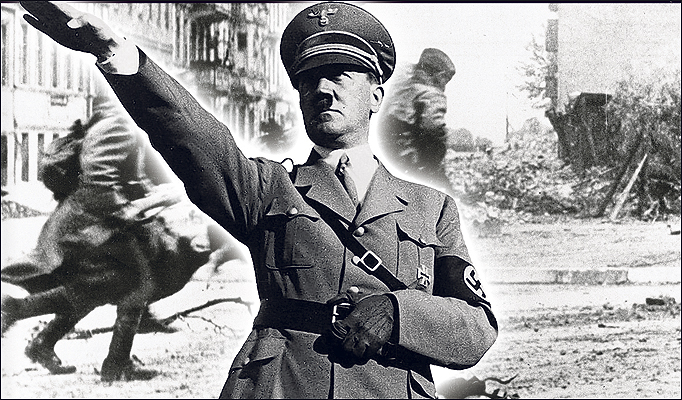
Did Hitler Escape? The Unbelievable Story of the Priest in Ecuador
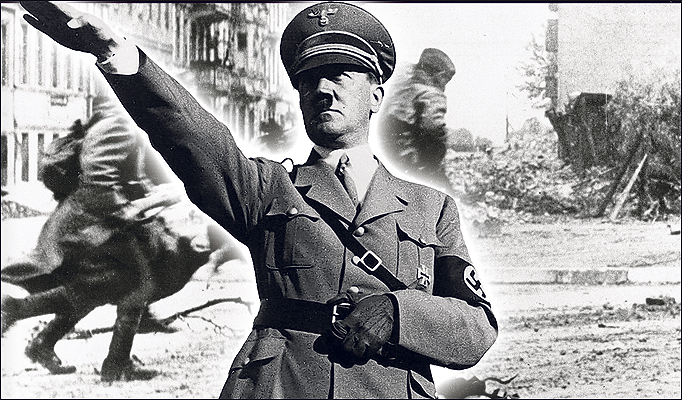
The official story is sealed in concrete and ash. April 30, 1945. Berlin is a hellscape of fire and ruin. The Red Army is blocks away. In the subterranean gloom of the Führerbunker, Adolf Hitler, the architect of a world war and unimaginable horror, takes his own life. A gunshot. His body, along with that of Eva Braun, is carried upstairs, doused in petrol, and set ablaze in a shallow crater. Case closed. History written.
But what if that’s not the end of the story?
What if it’s just the end of the first act?
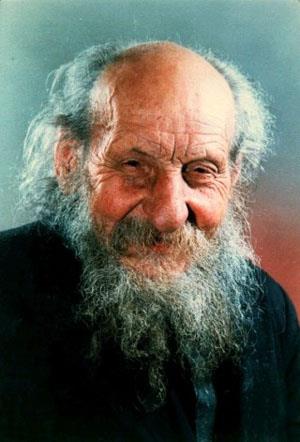
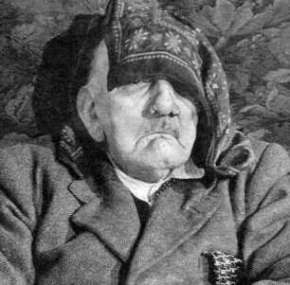
For decades, whispers have slithered through the dark corners of history, rumors of a great escape. Of U-boats slipping into the night. Of secret routes through sympathetic countries. Of a new life, hidden in plain sight. Most are dismissed. Fringe theories. But one story, one particular legend, refuses to die. It’s the story of a quiet, reclusive priest in a remote Ecuadorian town. A man known as Father Krespi. A man some believe was Adolf Hitler himself, living out his final days under the cover of God.
Forget what you’ve been told. The truth might be far, far stranger.

The Official Story: A Tale Written in Ash and Lies
To understand the escape, you first have to understand the gaping holes in the official narrative of Hitler’s death. The scene in that Berlin garden was one of pure chaos. Soviet soldiers, desperate to claim their prize, secured the area. What they found were two badly burned, unrecognizable corpses. The proof? The verification? It all came down to teeth.
There was just one problem. The Nazis, in their fanatical last days, had systematically destroyed nearly all of Hitler’s medical and dental records. The doctors who had treated him? Vanished. Dead. Wiped from the map. The Soviets were left with a charred jawbone and no way to definitively prove it belonged to their nemesis.
A Dentist’s Sketch and Stalin’s Doubt
Their solution was desperate. They tracked down a young dental assistant, Käthe Heusermann, who had helped a dentist clean the Führer’s teeth on a couple of occasions. Under intense interrogation—days of it, a process many would call torture—she was forced to draw Hitler’s dental structure from memory. A vague memory, under unimaginable duress.
The Soviets held up her crude drawing next to the scorched jawbone. Close enough. That became the official proof. The linchpin of the entire story. A match was declared, the case was closed for public consumption, and the world breathed a collective sigh of relief.
But behind the iron curtain, Josef Stalin wasn’t buying it. Not for a second. Publicly, he celebrated victory. Privately, he was consumed by the belief that Hitler had escaped. He voiced his deep skepticism to Allied leaders, convinced the West had somehow spirited him away. He could never allow the world to think the Red Army had let the ultimate prize slip through its fingers, but the doubt poisoned everything. He knew how flimsy the evidence was. A story built on a tortured memory and a pile of ashes.
The Secret Highway to South America: Understanding the Ratlines
If Hitler were to escape, how could it even be possible? The world was hunting for Nazis. Every border was on high alert.
The answer lies in the “ratlines.” This wasn’t a fringe conspiracy; it was a very real, highly organized network of escape routes. These secret paths snaked from Germany, through Austria and Italy, leading to ports where ships waited to carry the Third Reich’s worst criminals to sanctuary. And where was the most common destination? South America. Specifically, countries like Argentina, Paraguay, and, yes, Ecuador.
High-ranking officials within the Vatican, most notably Bishop Alois Hudal, were sympathetic to the Nazi cause and actively helped fugitives obtain false papers and passage. They saw it as a crusade against godless communism. Men like Adolf Eichmann, the architect of the Holocaust, and Josef Mengele, the Angel of Death from Auschwitz, walked these very paths to freedom. They lived for decades in South America under new names. It’s not a theory. It’s a historical fact. If they could do it, why not their leader?
A Ghost in the Andes: Who Was Father Krespi?
Now, let’s travel forward in time, to 1956. The location: Cuenca, a sleepy town nestled high in the mountains of Ecuador. It’s a place known to intelligence agencies as a potential hideout for escaped Nazis, including the infamous Martin Bormann.
A new priest arrives in town. Father Krespi. His background is a complete mystery. He claimed to be of Italian-Austrian heritage, but his German accent was thick and unmistakable. Locals said he appeared as if from nowhere, a man with no past.
The story he told was bizarre. He said he arrived at the Vatican in the fall of 1943, right in the thick of the war. There, behind the sovereign city-state’s impenetrable walls, he was allegedly fast-tracked through the seminary and ordained into the priesthood. This was completely unheard of. A process that should take years was completed in secret. During this time, he never once set foot outside Vatican City, which enjoys the diplomatic immunity of its own nation.
More strangely, this lowly novitiate was given an impossibly high-ranking position: Curator of Art for the Vatican Archives. This put him in charge of cataloging and managing one of the world’s most priceless collections. It also put him in the perfect position to receive and hide the billions of dollars worth of art looted by the Nazis, much of which was rumored to have found its way into the Vatican’s hands after the war.
Then, in 1956, he was sent to the quietest, most remote corner of the world. In Cuenca, he lived a reclusive life. He was known for his strange acts of generosity, often handing out money to his entire congregation after services. He paid local villagers handsomely, some said it was for protection. And throughout his decades there, a steady stream of German-speaking men made pilgrimages to his secluded mission. Who were they? Old comrades paying their respects? A security detail ensuring the secret was kept?

The Colonel Who Saw a Monster
The story might have died there, a local curiosity. But in 1981, a retired US Army Colonel named Wendell Stephens was traveling through Ecuador. Stephens was a career military man, trained in observation, a man who paid attention to details. During his trip, he found himself in Cuenca, where he met the enigmatic village priest.
Stephens was shaken to his core. He was convinced that the man behind the priest’s collar, the man they called Father Krespi, was Adolf Hitler. It was in the eyes, he said. The piercing, unforgettable eyes. The mannerisms. The cadence of his German-accented speech.
He returned to the United States and began a frantic, one-man investigation. He poured over thousands of photographs of Hitler, comparing them to his memory of the priest. The more he looked, the more certain he became. He tried to tell people, to warn the authorities, to get someone, anyone, to listen. But he was dismissed as a crank. An old soldier spinning wild tales. He even described the incredible collection of priceless European artwork the priest kept in his home. No one listened.
Hitler’s Lost Fortune? The Mystery of the Krespi Collection
Colonel Stephens’s claims about the art were not an exaggeration. Father Krespi, the humble mountain priest, possessed a treasure trove of art worth millions, perhaps even billions.
This is where the story gets truly chilling. Adolf Hitler was not just a dictator; he was a failed artist obsessed with art. He had a massive private collection, separate from the art plundered for his planned *Führermuseum*. After the war, much of the looted art was recovered by the Monuments Men. But Hitler’s personal, private collection? Most of it was never found. It simply vanished.
Locals in Cuenca, and later, other witnesses, claimed that the art in Father Krespi’s possession was unmistakably European and of the highest quality. After the priest died, people who were familiar with Hitler’s tastes later identified pieces from Krespi’s collection as belonging to the Führer’s lost private gallery.
And then there’s the matter of what happened after his death.
The Midnight Cargo Jets
Father Krespi died in 1993, reportedly at the age of 90. Immediately after his passing, something extraordinary happened. The chief of police for Cuenca reported that what he called “teams of European men” descended upon the small town. They were organized, professional, and secretive.
Witnesses say that on May 16, 1993, shortly after the funeral, two large cargo jets—unmarked and of unknown origin—landed at the small local airfield. Under the cover of darkness, these European teams loaded the entirety of Father Krespi’s massive art collection onto the planes. Then, as quickly as they arrived, they took off and vanished into the night.
The art has never been seen again.
A Funeral Fit for a Führer
The priest’s funeral was an event of staggering scale for a small-town clergyman. More than 2,000 people attended. It was a ceremony, onlookers noted, that rivaled the funeral of a king. Many of the attendees were German, and several were accompanied by armed bodyguards.
Armed guards. At a priest’s funeral.
The question is unavoidable: Who were they protecting? The mourners? Or the secret of the man they were burying?
Father Krespi was laid to rest in a magnificent white marble sepulcher. To this day, it is reportedly cleaned weekly and always adorned with fresh flowers. The upkeep is paid for by a fund of anonymous, wealthy admirers. Who are these devoted benefactors, still honoring a humble priest decades after his death?

What Do the Debunkers Say? (And Why They Might Be Wrong)
Of course, there is an official story for Father Krespi, too. Historians will tell you his real name was Carlo Crespi Croci, an Italian missionary who arrived in Ecuador in the 1920s, long before Hitler could have escaped. They say his “art collection” was actually a jumble of ancient local artifacts given to him by the indigenous Shuar people, not priceless European masterpieces.
It’s a neat, tidy explanation. But it doesn’t quite fit.
The story of the Italian missionary doesn’t account for Colonel Stephens’s chilling 1981 encounter. It doesn’t explain the thick German accent or the constant German visitors. And it certainly doesn’t explain the professional teams, the armed guards, and the cargo jets that reportedly spirited his collection away. Were they flying out ancient pottery? Or was the story of the benevolent Italian missionary the “second level” of the cover-up, a plausible identity created to mask an unthinkable truth?
Could there have been two men? Was the identity of the real, kind Father Crespi co-opted after his death, or perhaps was he replaced entirely? The timeline has just enough fog, just enough contradiction, to make you wonder.
The Question That Won’t Die
The history books tell us the most evil man of the 20th century died in a ditch in Berlin. They present a story built on the shaky foundation of a burned corpse and a forced confession from a dental assistant.
But the whispers from the Andes tell a different tale. A story of a secret escape through Vatican-sanctioned ratlines. A story of a reclusive priest with a German accent and a fortune in missing art. A story of a U.S. Colonel who saw a ghost and was ignored. A story that ends with a royal funeral and a disappearing treasure trove.
Is it possible? Could the ultimate act of evil have been followed by the ultimate act of deception? Did Hitler escape justice, living out his days in peace and prayer, posing as a man of God?
We may never know for sure. The cargo jets are long gone. The witnesses are fading away. But the white marble tomb remains in Ecuador, a silent monument to a mystery that refuses to be buried. The official story is written in ink, but the real story may have been written in the shadows.
Originally posted 2016-03-13 16:28:19. Republished by Blog Post Promoter
![Hitlers-Escape1[1]](https://coolinterestingnews.com/wp-content/uploads/2012/07/hitlers-escape11.webp)