The Greatest Cover-Up in Music History? The Chilling Case of Paul McCartney’s “Death”
You think you know The Beatles. Four lads from Liverpool who changed the world forever. John, George, Ringo… and Paul. Their music is the soundtrack to our lives. Their faces are as familiar as our own family’s. But what if I told you that one of those faces is a lie? What if the man we’ve called Paul McCartney for over fifty years isn’t Paul McCartney at all?
It sounds insane. It sounds impossible. But this isn’t just some fringe internet rumor. This is the enduring, unnerving, and shockingly detailed conspiracy theory known simply as “Paul is Dead.” It’s a story that claims the real Paul McCartney died in a horrific car crash in 1966, and to prevent global chaos, the British government and the remaining Beatles secretly replaced him with a lookalike.
A double. An imposter.
And the most disturbing part? The band themselves, wracked with guilt, began hiding clues about the cover-up in their music, their lyrics, and their album art. A breadcrumb trail for the truth-seekers. A puzzle box of grief hidden in plain sight.
Forget everything you think you know. We’re going down the rabbit hole. And you might not like what we find.
The Day the Music Died: Wednesday, 9 November 1966
The official story is simple. The Beatles, exhausted from relentless touring, had just retired from live performances in August 1966. They took a few months off to recharge. Paul went on a holiday, John filmed a movie, George went to India. They regrouped in late November to begin recording their masterpiece, Sgt. Pepper’s Lonely Hearts Club Band.
But the whispers tell a different story. A much darker one.
According to the theory, in the pre-dawn hours of Wednesday, November 9th, 1966, Paul McCartney stormed out of a tense recording session at Abbey Road Studios after an argument with the other Beatles. He got into his Austin-Healey and sped off into the rainy London night. Distracted and angry, he supposedly failed to notice the traffic lights had changed. Some versions of the story say he was distracted by a lovely meter maid named Rita, a face that would later appear in song. He swerved to avoid another car and crashed. The impact was catastrophic. The crash was so violent, he was instantly killed and decapitated.
Silence.
Imagine the scene. Brian Epstein, their manager, gets the call. The remaining Beatles are woken from their beds. The world’s biggest star is dead. Not just dead. Horrifically killed. What happens next? The government, possibly MI5, steps in. They understand the stakes. The Beatles aren’t just a band; they are a cultural and economic engine. News of Paul’s death could trigger mass hysteria, a wave of fan suicides that would dwarf the reaction to Rudolph Valentino’s death decades earlier. The world was already a powder keg. This could be the match.
So, a decision is made. A terrible, audacious decision. The death will be covered up. The band must go on. But how? How do you replace the irreplaceable?
Finding “Faul”: The Audition for a New Paul
The plan was as bold as it was macabre. They would find a double. A stand-in. The story goes that a nationwide, top-secret Paul McCartney look-alike contest was held. The winner was a man named William Shears Campbell. Sometimes he’s called William Sheppard. To the true believers, he’s known as “Faul.” Fake Paul.
This William Campbell wasn’t just a random guy. He had the look. He had the build. And, with a little help, he could have the voice. The theory insists he underwent extensive plastic surgery to refine his features to match Paul’s exactly. He was given vocal coaching to mimic Paul’s singing and speaking voice. He even had to learn to play bass left-handed, a notoriously difficult feat.
The “new” Paul was introduced to the band. And the show went on. From late 1966 forward, every song you’ve heard, every interview you’ve seen, every concert you’ve watched… that was Faul. Not Paul.
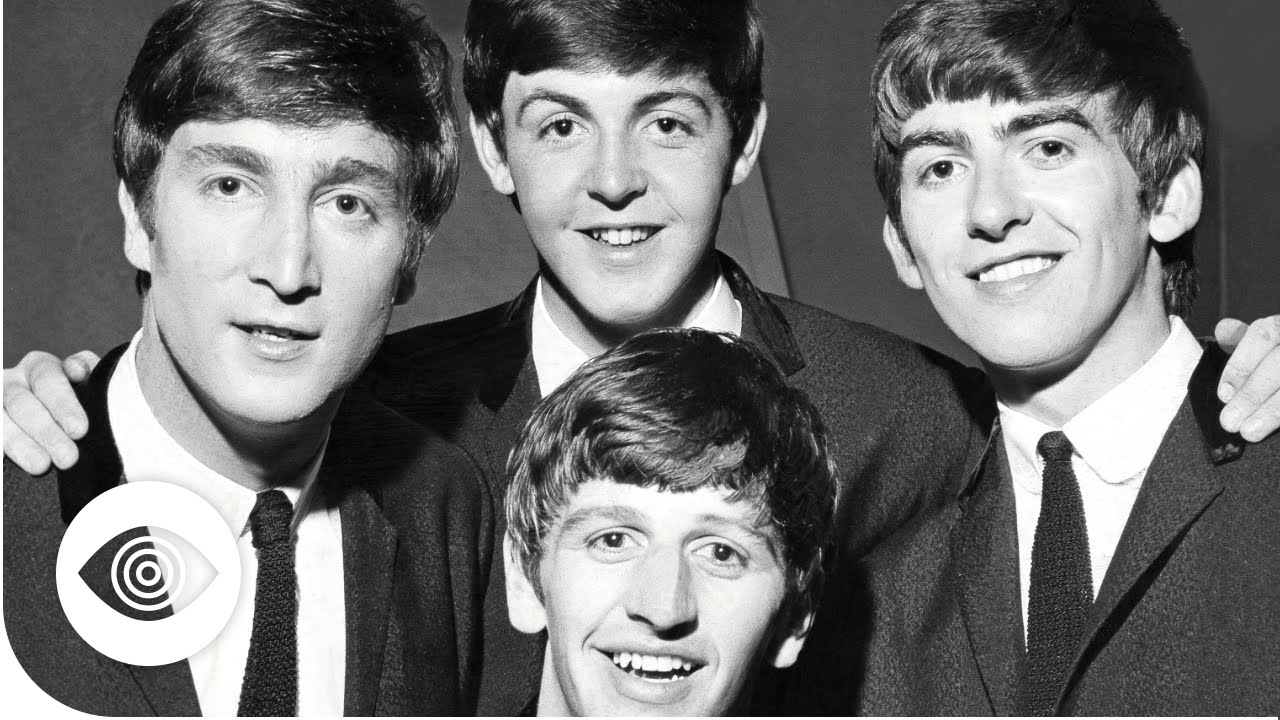
The physical “evidence” is what keeps this theory alive for so many. Devotees have spent decades poring over photographs, pre- and post-1966. They claim the man after the “accident” is taller. His face is longer. The shape of his ears is different. His eye color seems to change from brown to green. Could this all be tricks of the light, different camera lenses, the natural effects of aging? Or is it proof of a surgically altered doppelganger?
Deep Dive: The Facial Recognition Controversy
This isn’t just about fans with magnifying glasses anymore. In 2009, two Italian forensic scientists, Gabriella Carlesi and Francesco Gavazzeni, published a stunning analysis. They used modern biometric techniques to compare photos of McCartney from before the alleged crash and after. Their conclusion? The facial structures didn’t match. Key points like the curve of the jaw, the shape of the palate, and the position of the ears were fundamentally different. “The results of the comparison,” they wrote, “showed that the two faces do not belong to the same person.” The mainstream media barely touched it. Was it a flawed study? Or a bombshell that was too big to report?
The Guilt-Ridden Clues: A Confession in Code
Here’s where the story gets truly chilling. The remaining Beatles—John, George, and Ringo—couldn’t live with the secret. They were trapped. They couldn’t tell the world the truth, but they couldn’t keep it buried either. So they began a campaign of dropping clues. Subtle at first, then increasingly blatant. They were trying to tell us. They were begging us to figure it out.
Sgt. Pepper’s Lonely Hearts Club Band (1967): A Floral Funeral
The first album released after the “accident” is considered by many to be the Rosetta Stone of the entire conspiracy. The cover art isn’t a celebration; it’s a funeral.
Look closely. The Beatles, dressed as a strange marching band, stand before a crowd of famous figures. But in front of them is what appears to be a freshly dug grave. Yellow flowers, hyacinths, are arranged in the shape of a left-handed bass guitar—Paul’s instrument. Some people see the flowers spelling out the word “PAUL?” with a question mark. To the right, a doll wears a sweater that says “Welcome The Rolling Stones,” supposedly a nod to the band set to take The Beatles’ place at the top.
Above the “dead” Paul’s head, an open hand is held by one of the figures. In some Eastern cultures, this is a symbol of death. On the famous drum kit, if you hold a mirror horizontally across the middle of the words “LONELY HEARTS,” it reveals a hidden message: “1 ONE 1 X HE DIE.” The “1 ONE 1” supposedly refers to the three remaining Beatles, and the X refers to the one who is gone. And who is the new leader of this lonely hearts club band? A fictional character named Billy Shears—the supposed real name of Paul’s replacement.
Turn the album over. On the back cover, John, George, and Ringo face forward. Paul is the only one with his back to the camera, a finger pointing to the lyric “Wednesday morning at five o’clock,” the alleged time of the fatal crash from the song “She’s Leaving Home.” It’s all there, they say. If you just know how to look.
The Magical Mystery Tour (1967): The Black Walrus
The clues continued, becoming stranger and more direct. The film and album Magical Mystery Tour is a psychedelic playground of morbid hints.
During the performance of “I Am the Walrus,” the band is dressed in animal costumes. John is the walrus, but Paul is too… or is he? The cover art clearly shows Paul in the walrus costume. Why is that important? Because believers claim that in some Norse or Viking cultures, the walrus is a harbinger of death. John Lennon himself seemed to stoke this fire. In the song “Glass Onion” on the White Album a year later, he sings, “Here’s another clue for you all / The walrus was Paul.”
In another scene, for the song “Your Mother Should Know,” the four Beatles dance in white tuxedos. Each wears a red carnation in his lapel. Except for Paul. His is black.
Perhaps the most blatant clue is found in the accompanying booklet. On one page, Paul sits at a desk, a British flag behind him. In front of him is a sign that reads, simply, “I WAS.”
The White Album (1968): Voices from Beyond the Grave
If the visual clues weren’t enough, the next album brought audio “proof” that sent shivers down the spines of fans everywhere. This was the era of backmasking—hiding messages in songs that can only be heard when the record is played backward.
At the end of “I’m So Tired,” a strange mumble from John, when reversed, seems to say, “Paul is a dead man, miss him, miss him, miss him.”
It gets weirder. The chaotic sound collage “Revolution 9” is a treasure trove for clue-hunters. Play it backward, and a robotic voice seems to repeat the phrase, “Turn me on, dead man.” The sound of a car crash and fire can also be heard. Another line, played forward, has a voice crying out, “Let me out! Let me out!” Was this the band’s subconscious screaming to be free of the lie?
Abbey Road (1969): The Final Procession
This is it. The big one. The album cover that convinced millions that something was terribly wrong. It looks simple: the four Beatles walking across a zebra crossing outside their recording studio. But to believers, it is a symbolic funeral procession, and every single detail is a clue.
- John Lennon: Dressed in all white, he leads the procession. He represents the priest or a divine, angelic figure.
- Ringo Starr: Following John, he is dressed in a formal black suit. He is the undertaker or pallbearer.
- Paul McCartney: He is the corpse. He is out of step with the others. His eyes are closed. He is barefoot, as many cultures bury their dead without shoes. And critically, he is holding a cigarette—in his right hand. The real Paul McCartney was famously a lefty.
- George Harrison: Last in line, dressed in rugged denim jeans and a work shirt. He is the gravedigger.
The evidence doesn’t stop there. Parked on the left side of the street is a Volkswagen Beetle. Its license plate reads “LMW 28IF.” Theorists immediately decoded this: Paul would have been 28 years old IF he had lived. (Technically he would have been 27 when the photo was taken, but followers argue his age would be counted from conception or that 28 was his “next” age). “LMW” has been interpreted to mean “Linda McCartney Weeps.” In the background, a police van is parked, representing the authorities who helped orchestrate the cover-up.
This wasn’t an accident. This was a statement. A final, beautiful, and heartbreaking confession painted on an album cover for the entire world to see.
The Skeptic’s View: Coincidence or Collective Hysteria?
Of course, there is another side to this story. A much simpler, less exciting one. For every “clue,” there is a rational explanation.
The “funeral” on the Sgt. Pepper cover? It was just the zeitgeist of 1960s psychedelic art. The “open hand” over Paul’s head? It’s just a hand. The “clues” on the Abbey Road cover? It was a hot day, and Paul kicked off his sandals for a few minutes. He often smoked with his right hand. The “28IF” license plate was a complete coincidence. The backmasked messages? Auditory pareidolia—the human brain’s tendency to find patterns in random noise.
John Lennon, before his own tragic death, was openly annoyed by the theory. He explained that the “walrus was Paul” line was written specifically to confuse the people who read too much into their lyrics. He said the mumbles at the end of “I’m So Tired” were just gibberish.
And then there’s the man himself. Paul McCartney has lived a very public life for more than half a century. He has been photographed and filmed millions of times. He has performed thousands of concerts. He has given countless interviews. Could an imposter really fool his family, his friends, his bandmates, and the entire world for this long without a single slip-up? It strains credibility to its breaking point.
But What If…
Let’s dismiss the easy answers for a moment. Let’s entertain the possibility. What if it’s true?
The implications are staggering. It would mean that some of the most beloved songs in human history—”Hey Jude,” “Let It Be,” “Blackbird,” “Yesterday” (if the timeline is pushed back)—were not written by the man we thought. It would mean that William “Faul” Campbell is arguably the greatest, most successful ghostwriter and performer who ever lived. An artist of genius-level talent in his own right, forced to live his entire life in another man’s shadow. The ultimate prisoner in a gilded cage.
It would also represent the most successful, long-running conspiracy in modern history. A secret kept for over 50 years by hundreds of people, from government agents to sound engineers to the band members themselves. A lie so profound it has reshaped our cultural DNA.
So, who is the man we see today? Is he the musical genius from Liverpool who helped change the world? Or is he a phantom, a remarkably talented actor who stepped into a dead man’s shoes on a rainy November morning in 1966?
The clues are there. The denials are there. The endless debate rages on in the dark corners of the internet. The next time you put on a Beatles record, listen a little closer. Look a little deeper. The truth, whatever it may be, is hiding in plain sight. And the final question is not whether Paul is dead, but whether you are willing to believe it.