You have been lied to. Well, maybe not lied to, but the story you were told in high school science class? It’s crumbling. Right now.
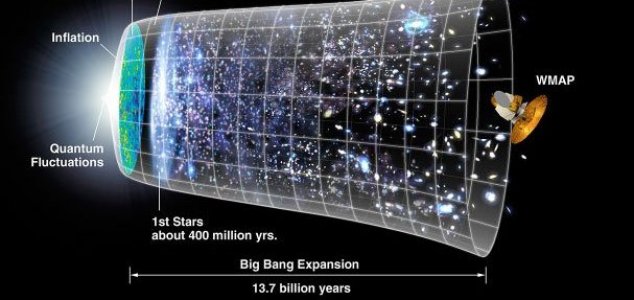
For decades, we’ve clung to a single, comforting narrative about our origins. It’s the “Standard Model.” It’s the safe bet. It tells us that once upon a time, there was nothing. Then, in a violent, blinding flash of cosmic brilliance, there was everything. We call it the Big Bang. It’s the ultimate creation story for the secular age.

The standard model of the universe based on the Big Bang is neat. It’s tidy. It fits on a T-shirt. But what if it’s wrong?
What if the universe never started? What if it never ends? What if time itself is an infinite loop, a serpent eating its own tail, stretching back into an eternity that the human brain can’t even begin to process?
Scientists have recently put forward a theory suggesting exactly that: The universe may have never had a beginning.
The Cracks in the Cosmic Foundation
Before we get to the mind-melting new physics, we have to look at how we got here. Why do we believe in the Big Bang at all? It wasn’t a guess. It was evidence. Hard, cold data gathered by the most important metal eye we’ve ever shot into the void.
The Hubble Space Telescope.
You know the name. You’ve seen the desktop wallpapers. But the history of this machine is riddled with delays, disasters, and a fight to reveal the truth that almost didn’t happen. To understand why the “No Big Bang” theory is so shocking, you have to understand the tool that built the original theory.
1. The Man Who Broke the Sky
The Hubble Space Telescope takes its name from Edwin Hubble, an American astronomer who didn’t just change astronomy; he broke it. Before Hubble, we thought the Milky Way was it. The whole show. Just us, floating in a static void.
Then came 1923. While working at the Mount Wilson Observatory, peering through the smog and the atmosphere, Hubble looked at a smear of light called Andromeda. Everyone thought it was a nebula—a cloud of gas nearby. Hubble realized it wasn’t a cloud. It was a city of stars. A separate galaxy.
He pushed the walls of the universe out by hundreds of thousands of light-years in a single night. But he didn’t stop there. In 1929, he dropped the hammer. He helped quash the “static universe” theory by finding evidence that galaxies move away from one another at a constant rate. They were fleeing. The universe was expanding.
If it’s expanding, you can run the tape backward. If you go back far enough, everything smashes into a single point. That was the birth of the Big Bang idea. Hubble died in 1953, never knowing that the telescope bearing his name would one day confirm—and then potentially complicate—his life’s work.
2. A Dream Deferred: The Long Road to Launch
We take space photos for granted now. But the idea of putting a telescope in orbit was once seen as insanity. Hubble’s early origins date back as far as 1946—more than 10 years before NASA was even established.
That was the year astrophysicist Lyman Spitzer Jr. penned an influential paper. He was a visionary. He argued that an in-orbit telescope could view the heavens unhindered by the Earth’s atmosphere. Think about it. Looking at stars from the ground is like trying to birdwatch from the bottom of a swimming pool. The air ripples and blurs everything.
Spitzer wanted to get out of the pool. He was later instrumental in developing the Orbital Astronomical Observatories, four unmanned satellites that NASA launched between 1966 and 1972. But he wanted the big one. He tirelessly lobbied the government to create a bigger, badder space telescope. The project’s massive costs proved a major stumbling block, however. Politicians don’t like spending billions on “looking at stuff.” It wasn’t until 1977 that the U.S. Congress finally appropriated funding for what would become Hubble.
3. Tragedy and the Challenger Connection
This is the part of history people forget. The Hubble didn’t just fly up there. It was grounded by death.
The fledgling Hubble program suffered a massive blow in 1986. The space shuttle Challenger exploded during liftoff. Seven astronauts were gone in seconds. It was a national trauma. NASA grounded its space fleet in the wake of the tragedy, leaving Hubble—which depended on the shuttle for its transport and maintenance—without a ride into orbit.
For years, the most advanced piece of technology ever built sat in a warehouse. A high-tech prison. Scientists made good use of the delay by upgrading the sensitivity of the telescope’s instruments and refining its ground control software, but the added years of servicing and storage in a clean room sent costs soaring.
By the time the space shuttle Discovery finally lifted off in 1990 with Hubble tucked into its cargo bay, the project was seven years behind schedule and more than $1 billion over budget. It was late. It was expensive. And initially, it had a flawed mirror. But eventually, it showed us the deep past.
It showed us a universe that was 13.8 billion years old.
The Singularity Problem: Why Physics Broke Down
So, Hubble proved the universe is expanding. We rewound the clock. We arrived at the Big Bang.
The current most widely accepted model of the universe’s birth suggests that it came into being when everything in existence, which at that time occupied a single point of infinite density, began to expand at an exponential rate.
But there is a problem. A big one.
It’s called the Singularity.
In physics, a “singularity” is basically code for “our math stopped working.” According to General Relativity (Einstein’s rules), if you squash the whole universe into a dot, density becomes infinite. Temperature becomes infinite. When you have “infinite” in an equation, the laws of physics shatter. You can’t calculate anything. It’s like trying to divide by zero on a calculator. The universe basically throws an error message.
“The Big Bang singularity is the most serious problem of general relativity because the laws of physics appear to break down there,” said study co-author Ahmed Farag Ali.
For decades, scientists just shrugged. They said, “Well, the math breaks, but it’s the best we’ve got.”
Until now.
The “Eternal Universe” Theory
Now, scientists have put forward a radical new model in which they predict that the universe has no beginning or end at all and has instead existed for all of eternity.
This isn’t just a hunch. It is a new way of doing the math. This highly complex theory combines elements of both quantum mechanics and General Relativity. It’s called Quantum Correction.
Think of it like this: General Relativity is great for big things (planets, stars). Quantum Mechanics is great for tiny things (atoms, particles). Usually, they hate each other. They don’t mix. But this new model uses something called “Bohmian trajectories” to apply quantum corrections to the path of the universe.
When you apply these corrections, the “Singularity” vanishes.
No Beginning. No End. No Crunch.
The new model does away with the idea of singularities altogether. It eliminates the concept of the world coming into being from a single point. But here is the kicker: it also suggests that the universe could never collapse back down in a “big crunch” event either.
In the old model, we thought the universe might eventually stop expanding and snap back like a rubber band, crushing us all into oblivion. The new math says: No.
If the universe has no beginning, it was never a dot. It was always… this. Maybe smaller, maybe denser, but never a singularity. It implies that the universe might be a fluid, ever-changing entity that simply is.
Solving the Dark Mystery
This isn’t just about killing the Big Bang. This new theory actually solves the biggest mysteries in space today: Dark Matter and Dark Energy.
Right now, standard science is embarrassed. They can only see about 5% of the universe. The rest? They call it “Dark Energy” (which pushes things apart) and “Dark Matter” (which holds galaxies together). They have no idea what this stuff is. It’s invisible. It’s a placeholder name for “we don’t know.”
But this new Eternal Universe model takes into account dark matter and dark energy naturally. In theoretical terms, the “quantum potential” generated by this new math creates a pushing force. This force acts exactly like the cosmological constant—what we call Dark Energy.
It means we don’t need to invent invisible monsters to explain why the universe is expanding. The math of an eternal universe does it for us.
The Deep Dive: What Does Infinity Mean for You?
Let’s get weird for a second. If the universe is eternal, the philosophical implications are terrifying and beautiful.
If time is infinite, and matter is finite, then eventually, arrangements of atoms must repeat. It’s the “infinite monkey theorem” but with reality itself. In an eternal universe, have you read this article before? A trillion years ago? Will you read it again a trillion years from now?
The Big Bang gave us a linear story. Start. Middle. End. It feels human. It feels like a life. An eternal universe is cold, vast, and uncaring. It suggests we are just a fleeting ripple on a pond that has no shore.
Is the Big Bang dead? Not yet. The scientific community is a battleship; it takes a long time to turn. People have built careers on the Big Bang. Textbooks are written. Nobel prizes have been awarded. They won’t give it up without a fight.
But the door is open. The singularity has been challenged. And for the first time in a century, we have to look at the stars and ask: Have you been there forever?
The Hubble showed us the expansion. The math showed us the glitch. Now, the new generation of physicists is showing us the potential for an eternity we never dared to imagine.
Originally posted 2015-11-09 15:29:14. Republished by Blog Post Promoter