Sunday, June 14, 2026
HomeWeird WorldStrange Storiesaeroplane crashes where everyone survived

aeroplane crashes where everyone survived

Imagine the silence. That is the first thing that hits you.

Not the wind howling through the broken fuselage. Not the creaking of rusted aluminum as it expands in the summer heat or contracts under the biting winter frost. It’s the silence of a story that stopped dead in its tracks. A freeze-frame in history.

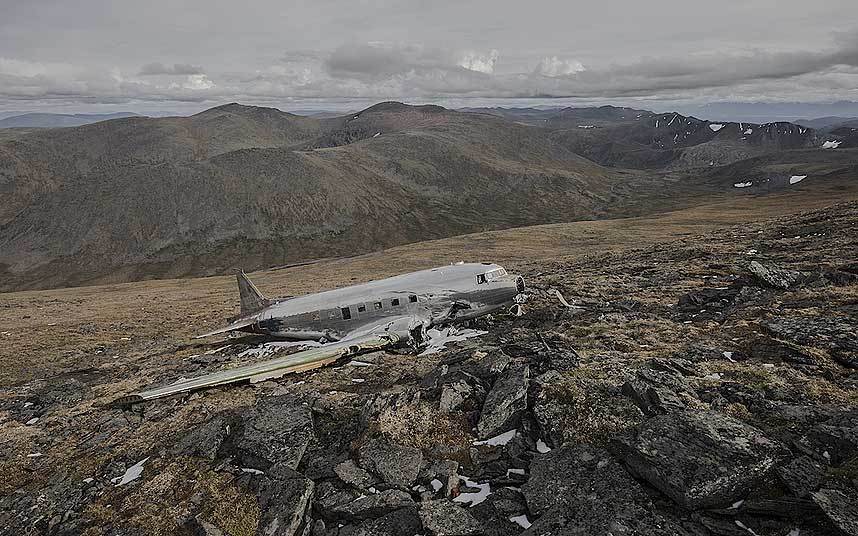
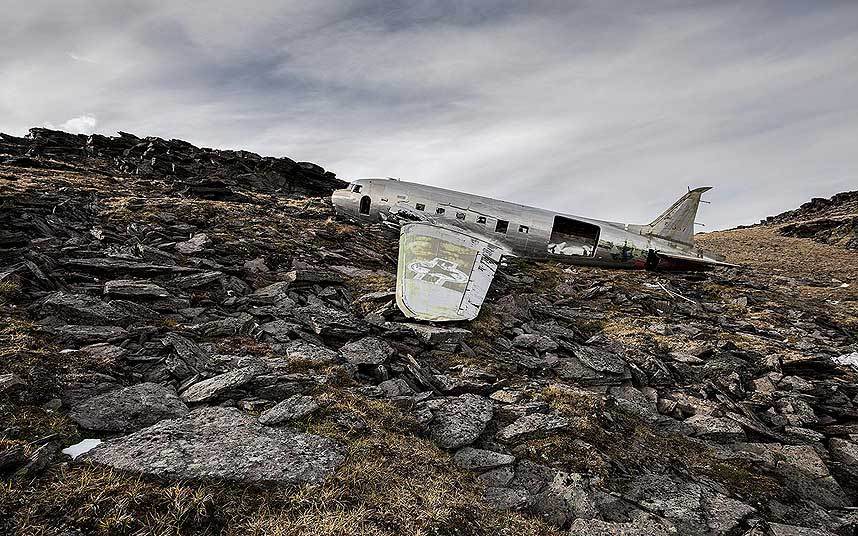
You are looking at a graveyard. But here is the twist. There are no bodies.

The Yukon Anomaly: February 7th, 1950

Let’s rewind. Picture the scene. It’s February 7th, 1950. The Cold War is just starting to freeze over. We are in the hostile, unforgiving mountains of western Canada, near Haines Junction, Yukon. The terrain here doesn’t care if you live or die. It is jagged rock, deep snow, and temperatures that can snap steel.

A US Air Force Douglas C47D is screaming through the valleys. This isn’t a joyride. The engines are roaring, echoing off the canyon walls. They are flying low. Too low. Why? Because they are hunting for a ghost.

The pilot, First Lieutenant Donald King, and his nine-man crew are on a desperate search and rescue mission. Another plane has vanished in this white void. They are the eyes in the sky, scanning the frozen world below for a glimmer of metal, a signal flare, anything.

The C47D is a beast. A workhorse. It’s the military version of the DC-3, the plane that practically built the modern airline industry. It’s tough. Rugged. But physics? Physics is tougher.

The Invisible Hand of God

You can be the best pilot in the world. You can have the best machine. But when the mountain wants you, it takes you.

Without warning, the air simply disappears. A downdraft. A massive, invisible column of sinking air slams into the top of the aircraft. It’s like a giant hand swatting a fly. The altimeter spins crazy. The stomach drops out of every man on board.

King fights the stick. He tries to pull up. The engines whine in protest, pushing maximum power. But the mountains are rising up to meet them. The trees are getting bigger. Fast.

Impact.

The noise must have been deafening. Metal tearing against rock. Trees snapping like matchsticks. The fuselage groaning as it plowed into the mountainside. And then? Silence.

King opens his eyes. He checks his limbs. He looks around. The cockpit is a mess, but he is breathing. He turns to his crew. One by one, they check in. Battered? Yes. Bruised? Definitely. Shaken to their very core? You bet.

But they are alive. All of them.

The snow saved them. A massive, deep blanket of fresh powder acted like a giant cushion, absorbing the fatal energy of the crash. It is a statistical impossibility. A crash like that, in terrain like that, is usually a death sentence. But not today.

The Mystery of the “Happy End”

This brings us to a fascinating question. Why are we so obsessed with plane crashes? Usually, it’s the morbid curiosity. The tragedy. The “what went wrong.” We watch documentaries about black boxes and pilot error. We look for the sad ending.

But what if the ending is… happy?

German photographer Dietmar Eckell spent three years of his life chasing this exact question. He didn’t want the tragedy. He didn’t want the bodies. He wanted the miracles.

His project, aptly titled Happy End, is a visual journey through the impossible. He traveled to four continents. He hacked through jungles. He crossed burning deserts. He waded through swamps. He hired bush pilots to drop him in the middle of nowhere.

His target? 15 specific aircraft.

15 planes that fell from the sky. 15 heaps of scrap metal left to rot in the wilderness. And 15 crews that walked away without a scratch. It is the ultimate anti-disaster story.

The Ghost of the North: The C-46 Commando

Let’s move east. We leave the jagged peaks of the Yukon and head to the flat, frozen expanse of Manitoba. Here lies another beast. The Curtis C-46 Commando.

This isn’t just any plane. This is “Miss Piggy.”

That is the local nickname for this wreck located near Churchill, Manitoba. Why “Miss Piggy”? Because the C-46 was a fat plane. It could haul a massive amount of cargo. It was the bigger, stronger brother of the C-47. But it had a reputation.

It was tricky to fly. It had hydraulic issues. It was temperamental.

On November 13, 1979, this specific bird was overloaded. It was hauling a frantic cargo of soda pop (yes, really) and a snowmobile. It took off from Churchill airport, climbing into the grey sky. But one engine decided it had enough. It quit.

The pilot tried to turn back. The plane was heavy. It was dropping like a stone. He couldn’t make the runway. He had to put it down on the rocks and scrub brush.

Crunch.

The landing gear sheared off. The belly of the plane skidded across the uneven ground, sparks flying, metal screaming. It came to a rest on a rocky outcrop. The silence returned.

Three men were on board. Three men climbed out. They had bumps and bruises, but they were alive. Today, “Miss Piggy” still sits there. Graffiti covers the inside. Tourists take selfies by the propeller. But if you stand there alone, with the wind whipping off Hudson Bay, you can feel it. The proximity of death. And the sheer luck of survival.

The Psychology of Rust: Why Do We Stare?

Look at the photos again. There is something hauntingly beautiful about them, isn’t there? The way the aluminum oxidizes into a dull white powder. The way the moss creeps over the wings. The way the trees grow through the cockpit windows.

It’s nature reclaiming its territory. It is a slow-motion battle between man-made engineering and the relentless force of the wild. And the wild always wins. Eventually.

Eckell’s photos capture a concept the Germans call Ruinenlust. The joy of ruins. We love to see the decay of our own creations. It reminds us that we are temporary. Our machines, our wars, our technology—it all eventually goes back to the dirt.

But in these specific cases, the decay isn’t sad. It’s a trophy.

Every rusted rivet on that C47D in the Yukon is a medal of honor. It says: “We crashed here, and we beat the odds.” The plane died so the men could live. It sacrificed itself.

Deep Dive: The Bermuda Triangle of the North?

We need to talk about the location. Why are there so many wrecks in the North? Is it just the weather?

Internet theorists have been buzzing about this for years. They call it the “Alaska Triangle” or the frozen Bermuda Triangle. From Juneau to Barrow to Anchorage, planes vanish at a rate higher than almost anywhere else on Earth.

Some blame magnetic anomalies. They say the compasses spin freely up here, confusing pilots and leading them off course. Others talk about the “vile vortices”—areas of the planet where electromagnetic energy is warped.

Is that what happened to Donald King in 1950? Was it just a downdraft? Or was it something else?

Consider the context. He was looking for a missing plane. A plane that had already vanished. It’s a chain reaction of disappearances. The North eats aircraft. It swallows them whole. For King to crash and stay on the surface—to stay visible and alive—is a glitch in the matrix. The North tried to eat him, and he stuck in its throat.

The Logistics of Survival

Let’s get practical. You survive the impact. Great. Now what?

It’s 1950. No GPS. No satellite phones. You are in a cotton t-shirt and a flight jacket, and it is 40 degrees below zero. The adrenaline wears off in about 20 minutes. Then the cold sets in.

How did they do it? How did they wait for rescue without freezing to death?

They turned the fuselage into a fortress. They used engine covers as blankets. They likely burned oil or whatever flammable material they could scavenge to create heat. They huddled together, sharing body heat. The psychological strain must have been immense. Every hour that passes, the hope of rescue fades. The snow covers the wreck, making it invisible from the air.

But they were spotted. The rescue teams broke through. They were hauled out of that white hell.

Eckell’s Journey: A Modern Treasure Hunt

Dietmar Eckell is not your average photographer. He didn’t just stumble upon these. He hunted them. He used Google Earth, scouring satellite imagery for pixelated shapes that didn’t belong in the forest. He crawled through aviation forums, talking to old pilots, reading accident reports from the 1940s and 50s.

This is modern archaeology. Instead of digging for Roman coins, he is trekking for aluminum skeletons.

His book, Happy End, is sold out. It’s a collector’s item. Why? Because it touches a nerve. We are tired of bad news. We are flooded with disaster every time we open our phones. We want to know that sometimes, just sometimes, the plane falls out of the sky and everyone goes home to their families.

The Final Verdict

These planes are still out there. Right now. As you read this, the snow is falling on the C47D in the Yukon. The wind is whistling through the ribs of the C-46 in Manitoba.

They are monuments. Not to death, but to life. They are the empty cocoons left behind after the butterfly has flown away.

So, the next time you fly, and you look out the window at the endless landscape below, remember this: Down there, hidden in the trees, are the ghosts of flights that ended abruptly. But don’t be afraid. Sometimes, the ghosts are friendly. Sometimes, the story has a happy ending.

And if you ever find yourself hiking near Haines Junction or Churchill, keep your eyes peeled. You might just stumble upon a miracle made of metal.

Arindam Mukherjee
Arindam Mukherjee
Arindam loves aliens, mysteries and pursing his interest in the area of hacking as a technical writer at 'Planet wank'. You can catch him at his social profiles anytime.
RELATED ARTICLES
- Advertisment -

Most Popular

Recent Comments

Warren Pan Abbott on The legend of the Devil Monkey !
chris davies on The McPherson Tape Mystery
Reed Reedly on ET has Internet!
Bea Houseoffashion on Proof Of Time Travellers – Gallery
Marcus2012 on ET has Internet!
Reed Reedly on ET has Internet!
LaughsAtConspiracyNuts on The 9/11 Conspiracy – Myths and Facts
Alex Sliverman on Did the ancients fly?
Doctor Wholigan on Time Traveler in 1938 film
chris davies on The McPherson Tape Mystery
Archie1954 on 10 secret UFO hideouts
chris davies on Ghosts of flight 401
Marcus2012 on ET has Internet!
jason Macdonald on Proof of Time Travel? – China
chris davies on Long-Lost Pyramids Found?
Reed Reedly on ET has Internet!
Milkman on Connected Universe
Tenmiles on Baigong Pipes Mystery
Simon Foster on Sirius – The Documentary
From the 1st April on 2013 – Alien Contact date ?
SkyWatcher on Is ET ignoring us?
I Come From The Future on Obama to make UFO Alien disclouser soon ?
ÛñK?øWn on 2013 – Alien Contact date ?
Just another person on 2013 – Alien Contact date ?
Malcolm Windowcleaner on The strange case of Rudolph Fentz
Mason Servio on Strange Things on Mars
Marke Wisdom Seeker on What will we find as arctic melts?
Andrea A Elisabeth Levyne on Aliens Captured in Varginha, Brazil
Mitch Grouyeki on Amazing Space Shuttle pictures