Home Weird World Strange Places Unexplained incident of Bermuda Triangle

Unexplained incident of Bermuda Triangle

0
82

The Devil’s Triangle: Diving Headfirst into the Ocean’s Greatest Mystery

There’s a patch of ocean that doesn’t play by the rules. A hungry, haunted stretch of water where the laws of physics seem to bend and sometimes… break. Ships sail into its calm waters and are never seen again. Planes fly across its clear blue skies and vanish from radar. No wreckage. No survivors. Just silence.

You know its name.

The Bermuda Triangle.

For decades, this loosely-defined area between Bermuda, Florida, and Puerto Rico has been a graveyard for the unexplained. A dark corner of the map whispered about by sailors and pilots. Some call it a myth. A collection of tall tales and coincidences. But for others, it’s a very real phenomenon, a place where something ancient, alien, or just plain angry resides. The official sources will give you neat, tidy explanations. They’ll talk about weather and human error. But are those explanations enough? Do they account for the sheer strangeness of the stories? The bizarre radio transmissions? The disappearances in perfect weather?

Today, we’re not just looking at the official story. We’re peeling back the layers of denial and digging into the theories that the mainstream wants you to forget. We’re going deep. So grab a life vest. This is going to be a bumpy ride.

The Legend is Born: The Ghost Flight That Started It All

Every great mystery needs a Ground Zero. For the Bermuda Triangle, that event was the vanishing of Flight 19.

December 5, 1945. Five TBM Avenger torpedo bombers lift off from the Naval Air Station in Fort Lauderdale, Florida. It’s a routine training mission. A simple navigational exercise. Fourteen men, all seasoned airmen or promising cadets, soaring into a clear afternoon sky. They were supposed to fly east, conduct bombing runs, then head north before turning back to base. A simple triangle pattern. How ironic.

Hours later, the control tower picks up a frantic radio call. It’s the flight leader, Lieutenant Charles Taylor. His voice is laced with confusion. Panic.

“Both my compasses are out,” he says. “I am trying to find Fort Lauderdale, Florida. I am over land, but it’s broken.”

Over land? That was impossible. They should have been far out over the Atlantic. The tower tries to guide them back, but the radio chatter grows more and more bizarre. The pilots seem disoriented, lost in a world that doesn’t match their maps. Other pilots in the flight are heard saying their compasses are also “going crazy.” They can’t see the sun. The ocean looks wrong.

Then, as dusk falls and radio contact fades, Taylor is heard making a final, chilling decision. “All planes close up tight… we’ll have to ditch unless landfall… when the first plane drops below ten gallons, we all go down together.”

And then… nothing.

Five US Navy bombers, gone. Poof.

But the nightmare wasn’t over. A Martin Mariner flying boat, a massive rescue plane with a 13-man crew, was dispatched immediately to search for the lost flight. Twenty minutes after takeoff, it too vanished from radar. Gone. An oil tanker in the area later reported seeing a massive explosion in the sky, a brilliant fireball, but no wreckage of the Mariner was ever conclusively found. In a single afternoon, six aircraft and 27 men were wiped from the face of the Earth.

The official Navy report could find no explanation. It was, they wrote, “as if they had flown to Mars.” That single, terrifying event cemented the Bermuda Triangle in the public consciousness. It was no longer just a place. It was a predator.

Echoes of a Drowned Kingdom: The Atlantis Connection

So, what’s really going on out there? If it’s not just bad luck, what is it? For some, the answer lies not in the sky, but buried deep beneath the waves. The answer, they say, is Atlantis.

Think about it. A mythical, highly-advanced civilization that supposedly sank beneath the ocean thousands of years ago. What if they weren’t entirely gone? What if their power source, their incredible technology, is still active on the seabed, deep within the Bermuda Triangle?

This idea was supercharged by the “Sleeping Prophet,” Edgar Cayce. Decades before it became a popular theory, Cayce predicted that evidence of Atlantis would be discovered off the coast of Bimini in 1968 or 1969. And right on cue, in 1968, divers discovered a strange, underwater rock formation. They called it the Bimini Road.

The Bimini Road: A Pavement to a Lost World?

It’s an incredible sight. A half-mile-long, perfectly linear arrangement of massive, flat-topped limestone blocks. It looks like a road. Or the foundation of a massive sea wall. It looks… man-made.

Geologists are quick to dismiss it. They call it “beachrock,” a natural formation of shell and sand that can fracture into straight, block-like patterns. A trick of nature. Nothing more.

But is it? The stones are enormous. They fit together with an eerie precision. Could a natural process really create something that looks so much like ancient megalithic architecture? Believers say no. They claim this is the physical proof Cayce predicted. This is a remnant of Atlantis.

The theory goes that the great power crystals of the Atlanteans are still down there. Periodically, these crystals activate, sending out tremendous bursts of energy that disrupt electromagnetic fields, scramble compasses, and literally pull ships and planes out of our dimension. A tragic, technological haunting. Is that what happened to Flight 19? Did they fly over an active Atlantean power station that sent their instruments haywire and opened a doorway they could never return from?

Eyes in the Sky: Are We Being Watched?

If ancient super-science isn’t your thing, how about something a little more… out of this world? Another popular theory points not down, but up. To UFOs.

The Triangle is a hotspot for strange aerial phenomena. For decades, pilots and sailors have reported seeing bizarre lights, objects moving at impossible speeds, and craft that can seamlessly fly from the sky into the ocean. They call them USOs. Unidentified Submerged Objects.

Is the Bermuda Triangle a portal? An inter-dimensional highway for extraterrestrial visitors? Or perhaps an underwater alien base, hidden from prying human eyes in the deep trenches of the Atlantic?

This idea exploded into pop culture with Steven Spielberg’s classic film, *Close Encounters of the Third Kind*. In the movie’s stunning conclusion, the hatch of the massive alien mothership opens, and who walks out? The smiling, un-aged pilots of Flight 19, returned to Earth after decades of being abducted.

It was fiction, of course. But it planted a powerful seed in the public imagination. It provided a neat, if terrifying, answer to the question: where did they *go*? They were taken. Proponents of this theory point to the scrambled communications and malfunctioning instruments as evidence of advanced alien technology interfering with our primitive machines. They argue that the complete lack of wreckage is because the ships and planes weren’t destroyed—they were teleported aboard an alien craft. It’s a wild idea. But in a mystery this deep, can any idea truly be dismissed?

Modern internet forums buzz with these theories. People share satellite photos of strange shapes on the ocean floor, analyze old naval reports for mentions of “fastwalkers” on radar, and connect the dots between disappearances and spikes in UFO sightings. For them, it’s not a question of *if* aliens are involved, but *why* they chose this specific patch of ocean as their stomping ground.

The Ocean’s Fury: When Nature Becomes the Monster

Okay. Let’s pull back from the fringes for a moment. Let’s say the answer isn’t aliens or ancient crystals. What if the real monster has been right in front of us the whole time? What if the monster… is the ocean itself?

Skeptics and scientists offer a battery of natural explanations for the Triangle’s mysteries. But don’t let the word “natural” fool you. These forces are just as terrifying, and just as deadly, as any supernatural beast.

When North Deceives You: The Compass Conundrum

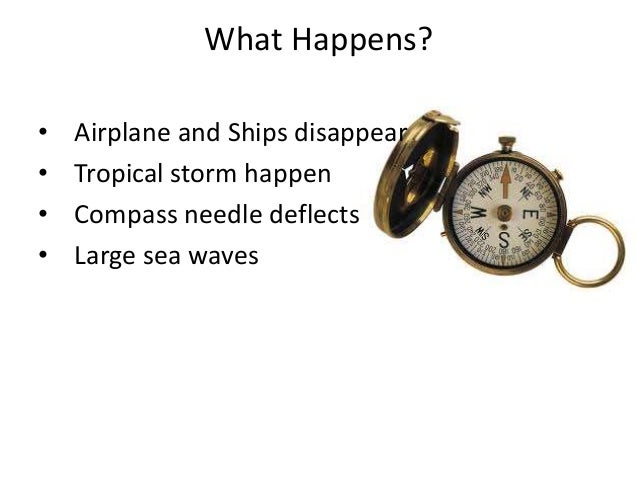
You’re flying a plane. You trust your compass. It points North. But what if I told you there are two Norths? There’s the geographic North Pole (True North), the spot at the top of the globe. And then there’s the magnetic North Pole, the spot your compass needle actually points to, which is hundreds of miles away and constantly shifting.

Usually, navigators have to account for this difference, called magnetic variation. But the Bermuda Triangle is one of the few places on Earth where, for a time, True North and Magnetic North lined up perfectly. This is called the agonic line. Legend says this unique magnetic property could confuse instruments and send people off course.

While the agonic line has since shifted, the idea of magnetic anomalies persists. Some theories propose massive, localized magnetic fields on the seafloor that can spin compasses wildly. Others talk of “electronic fog,” a bizarre atmospheric phenomenon where the air becomes ionized, instruments fail, and time itself seems to warp. Is this a natural fluke, or something else entirely?

The River in the Sea: The Gulf Stream’s Deadly Grip

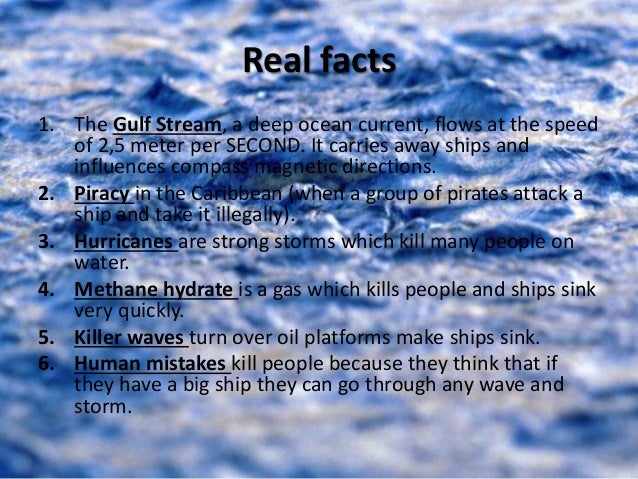
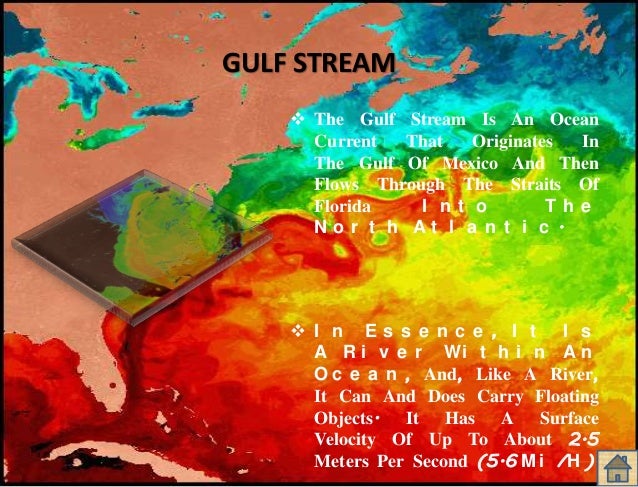
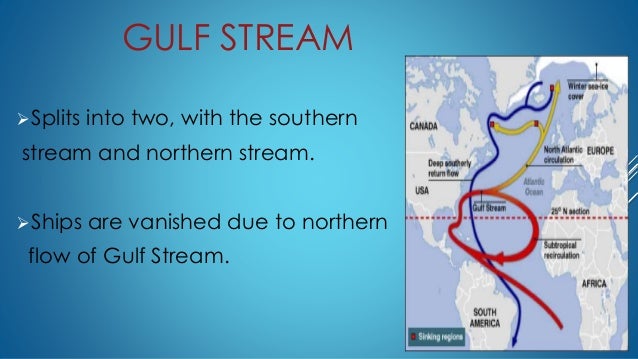
Imagine a river flowing through the ocean. A river hundreds of miles wide and thousands of feet deep, moving at nearly six miles per hour. That’s the Gulf Stream. And it flows directly through the Bermuda Triangle.

This immense current is one of the most powerful forces on the planet. Its speed is relentless. Now, picture a small plane that has to ditch in the water, or a boat that loses engine power. Within hours, the Gulf Stream can carry it—or its debris field—dozens of miles away from its last known position.

This single factor could explain one of the Triangle’s most enduring mysteries: the lack of wreckage. Search parties might be looking in the right area, but the evidence has already been swept away, carried off by an oceanic conveyor belt, destined to sink into some of the deepest trenches in the Atlantic. The victims aren’t vanished; they’re just lost in a way that makes finding them almost impossible.

The Simplest, Scariest Answer: Human Error

Sometimes the most terrifying explanation is the most mundane. What if the fault lies not in the stars, or under the sea, but in ourselves?

Official inquiries often conclude with two simple words: human error. A pilot misreads a gauge. A captain misjudges a storm. Stubbornness. Pride. Inexperience. The ocean doesn’t forgive mistakes.

Take the story of Harvey Conover, a seasoned businessman who lost his yacht, the *Revonoc*, on January 1, 1958. He was a great sailor, but he was also stubborn. He sailed directly into the teeth of a hurricane-force storm south of Florida. He was warned. He didn’t listen. He and his yacht were never seen again. Was it the Triangle? Or was it one man’s fatal decision to challenge a storm he could never beat?

Rogue Waves and Sudden Storms: The Sky’s Ambush

The weather in the Triangle region is notoriously violent and unpredictable. You can go from sunny skies to a tropical storm in a matter of minutes. Hurricanes born in these waters are some of the most destructive on Earth.

These storms are a known killer. The Spanish fleet of Francisco de Bobadilla was wiped out by a hurricane here in 1502, one of the earliest recorded disasters. But it’s not just the big storms you have to worry about. There are stranger, more sudden weather events.

Sailors speak of “white squalls,” sudden, incredibly violent microbursts that drop from the sky without warning on a clear day. The wind can instantly jump from a calm 20 mph to a destructive 90 mph. One minute you’re sailing on calm seas; the next, a bomb of cold air explodes from the clouds, flipping your boat before you even know what hit you.

And then there are the rogue waves. For centuries, they were thought to be a myth. A sailor’s yarn. Now we know they are real. A single, monstrous wall of water, sometimes over 100 feet high, that can form spontaneously in the open ocean. A wave like that could swallow a massive freighter whole, sending it to the bottom in seconds. No time for a distress call. No survivors. Just another ghost ship claimed by the sea.


The Sea That Burps: Methane Hydrates

This might be the most bizarre natural theory of all. Deep beneath the seabed, under immense pressure, vast quantities of methane gas are trapped in an ice-like substance called methane hydrate.

What happens if that pressure is released? A landslide on the continental shelf, for example? The result would be a cataclysmic eruption of gas. A “mud volcano.” Billions of cubic feet of methane would rocket to the surface, turning the ocean into a frothy, churning cauldron.

The problem for any ship floating above is that this foamy, gas-filled water would lose its density. It would no longer be able to provide buoyancy. The ship would, in effect, drop like a rock into a hole in the ocean, sinking in seconds without a trace. Any wreckage would then be scattered by the currents.

The U.S. Geological Survey confirms there are huge deposits of these hydrates off the U.S. coast. They also say a major release hasn’t happened in the last 15,000 years. But… how can they be so sure? What if small, localized eruptions are happening all the time? A silent, deadly burp from the seafloor, claiming victims without ever being detected.

So, What’s the Truth?

The U.S. Coast Guard and other official bodies do not recognize the Bermuda Triangle as a specific hazard to ships or planes. They point out that the area sees a huge amount of traffic and that, statistically, the number of disappearances is not unusually high. They argue that authors and mystery-mongers have exaggerated tales, combined unrelated incidents, and even invented stories to sell books.

And maybe they’re right.

Maybe there is no single, overarching mystery. Maybe it’s just a combination of a powerful ocean current, violent weather, human fallibility, and a legend that has grown far beyond the facts.

But that explanation feels… incomplete. It doesn’t account for the sheer strangeness of the best-documented cases. The spinning compasses of Flight 19. The reports of electronic fog. The pilots who report losing time. The ships found completely empty, with food still on the table, as if the crew simply evaporated.

Even if 99% of the incidents can be explained away by science, what about that last 1%? The cases that still leave investigators scratching their heads. The ones that defy logical explanation. Perhaps the truth is that the Bermuda Triangle is not a place, but a question. And it’s a question the ocean is in no hurry to answer.

Originally posted 2015-09-13 07:31:19. Republished by Blog Post Promoter