Monday, July 13, 2026
HomeUnexplained MysteriesModern MysteriesTransAsia plane crash in Taipei revisits Bermuda Triangle dilemma

TransAsia plane crash in Taipei revisits Bermuda Triangle dilemma

The Dragon’s Triangle: Is the South China Sea a New Bermuda Triangle?

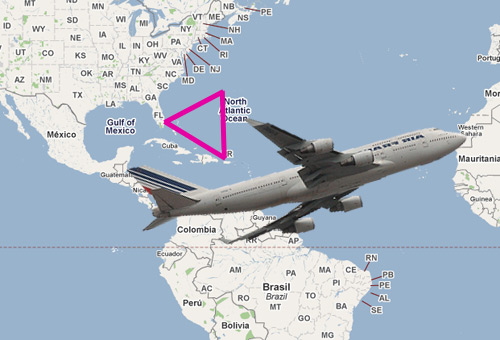
There are places on this planet that seem to swallow secrets. Dark patches on the map where the laws of physics and probability get twisted. For decades, we’ve whispered about the Bermuda Triangle, a hungry stretch of the Atlantic that has claimed countless ships and planes. But what if there’s another? A new vortex of vanishing acts and horrifying disasters? Look east. Look to the turbulent, contested waters of the South China Sea.

Something is wrong there.

A string of fatal air crashes, shocking disappearances, and chilling near-misses have painted a terrifying pattern across the region. It’s a pattern that goes beyond simple mechanical failure or bad weather. It feels like a curse. A cluster of tragedies so dense, so statistically improbable, that even the most hardened skeptics are forced to ask the question: has this vital waterway become as dangerous as its infamous Atlantic cousin?

The alarm bells didn’t just start ringing. They screamed. And the sound that woke many people up was the horrifying shriek of metal as a passenger plane cartwheeled into a river in the heart of a bustling city.

The Crash That Horrified the World

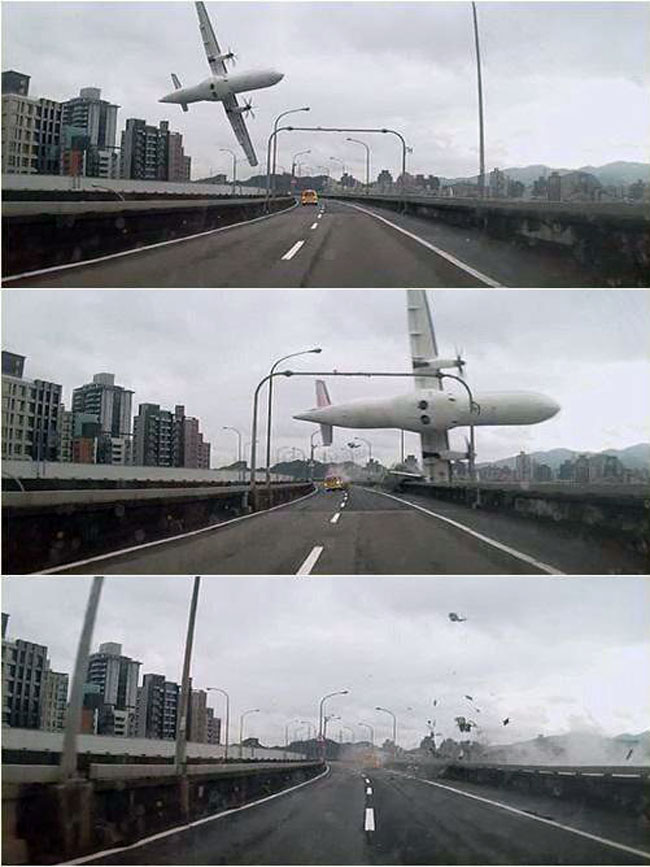
February 4, 2015. A clear day in Taipei. TransAsia Airways Flight GE235, a twin-engine turboprop, lifted off the runway bound for the Kinmen Islands. On board, 58 souls—passengers and crew. Just moments into its flight, the unthinkable happened. The plane banked sharply, impossibly low over the city. Dashcams in cars on the elevated motorway captured a scene straight out of a disaster movie. The aircraft, tilted almost 90 degrees, clipped the roadway with its wing, shattering a taxi before plunging violently into the shallow Keelung River below.

It was a moment of pure chaos, broadcast to the world in real-time.

Brave rescuers scrambled, pulling survivors from the submerged fuselage. Passengers in life jackets waded through the murky water, their faces a mask of shock and disbelief. But the toll was heavy. So heavy. Despite the heroic efforts, many lives were lost in the cold river. The official investigation would later point to a horrifying sequence of pilot errors: one engine failed, and in the confusion, the pilot mistakenly shut down the *other*, working engine. A catastrophic, yet human, mistake.

But for those watching the growing list of disasters in the region, “pilot error” felt too simple. Too convenient. Because this wasn’t an isolated event. It was just the latest, most visible piece of a much darker puzzle. It was a terrifying echo of another TransAsia flight, GE222, which had crashed just seven months earlier while trying to land at Penghu Island, claiming 48 lives. Two planes from the same airline, gone in less than a year. Coincidence? Or a symptom of something bigger?

Deep Dive: The Ghost Flight of MH370

Of all the mysteries tied to this region, one name hangs heavier than any other. A name that has become synonymous with the unknown, a modern legend whispered by everyone from airline pilots to internet sleuths.

MH370.

On March 8, 2014, a state-of-the-art Boeing 777 operated by Malaysia Airlines vanished from the sky. It wasn’t just a crash. It was an erasure. The plane, with 239 people on board, departed Kuala Lumpur for Beijing on a routine overnight flight. At 1:19 AM, as it prepared to leave Malaysian airspace, co-pilot Fariq Hamid transmitted the flight’s last, chillingly normal, message: “Good night, Malaysian three seven zero.”

Then, silence.

Moments later, the plane’s transponder, the device that communicates its identity and altitude to air traffic control, went dark. It simply ceased to be. Military radar, however, told a different story. A ghost story. The radar track showed the plane deviating wildly from its flight path, making a sharp, deliberate turn back across the Malay Peninsula before heading out over the vast, empty expanse of the Indian Ocean. It was flying blind. A ghost ship in the sky.

For hours, it flew on. A British satellite company, Inmarsat, detected a series of automated “handshakes” or pings from the aircraft, faint electronic whispers that confirmed it was still powered up, still moving through the darkness. The final ping came more than seven hours after its last voice contact. Then, nothing. Forever.

The Theories That Keep Us Up at Night

The search for MH370 became the largest and most expensive in aviation history, scouring millions of square miles of ocean floor. They found almost nothing. A few scattered pieces of debris washed up on distant shores years later, confirming the plane went down in the water. But it didn’t answer the two questions that haunt us all: Where is it? And what happened in that cockpit?

The void of information has been filled with a universe of theories, ranging from the plausible to the outright paranormal.

Mass Murder-Suicide: The lead theory for many investigators is that the captain, Zaharie Ahmad Shah, deliberately depressurized the cabin, incapacitating everyone on board, and flew the plane to its doom in a remote corner of the world. But why? His family and friends insist he was a stable, happy man. There was no note, no motive. Just a terrifying theory.

A Ghost Flight Gone Wrong: Another possibility is a catastrophic event, like a fire or rapid decompression, that disabled the crew. This would turn the 777 into a “ghost flight,” flying on autopilot until its fuel tanks ran dry and it spiraled into the sea. This explains the long flight, but not the deliberate turn. Why would a malfunctioning plane make such a precise, calculated change in direction?

A Covert Military Action: This is where things get murky. The South China Sea is a geopolitical powder keg, bristling with advanced military hardware from multiple world powers. Did MH370 see something it shouldn’t have? A secret military exercise? Was it accidentally—or intentionally—shot down, and its disappearance staged to cover up an international catastrophe? Some theorists point to sensitive cargo supposedly listed on the manifest as a potential reason for an intercept.

Cyber-Hijacking: In our hyper-connected world, could someone have seized control of the plane not from the cockpit, but from the ground? Modern theories suggest that a plane’s flight management system could be vulnerable to remote hacking. Was MH370 the first victim of a new kind of airborne terror, flown like a drone to its watery grave?

The official declaration came on January 29, 2015: MH370 was declared an accident, and all on board were presumed dead. But for the families, and for the world, that’s not an answer. It’s an admission of defeat. The plane is still out there, a multi-million-dollar tomb at the bottom of the ocean, holding its secrets tight.

A Chilling Calendar of Calamity

While MH370 is the most famous enigma, it’s far from the only one. When you zoom out and look at the timeline, the cluster of disasters in and around the South China Sea in such a short period is genuinely unsettling. It paints a picture not of isolated accidents, but of a region with a dark and hungry appetite.

Let’s map out this timeline of terror:

  • March 8, 2014: Malaysia Airlines Flight 370 vanishes. 239 lives lost.
  • July 17, 2014: Malaysia Airlines Flight 17 is shot down over Ukraine. While not in the same region, it’s a devastating second blow to the same airline in five months, with 298 lives lost, adding to the sense of a cursed carrier.
  • July 23, 2014: TransAsia Airways Flight 222 crashes in the Penghu Islands, just off the coast of Taiwan. 48 lives lost.
  • December 28, 2014: AirAsia Flight 8501, flying from Surabaya, Indonesia, to Singapore, crashes into the Java Sea after flying through a massive storm. All 162 people on board are killed.
  • February 4, 2015: TransAsia Airways Flight 235 crashes into the Keelung River in Taipei. 43 lives lost.

Look at those dates. Five major air disasters, with a combined loss of over 1,000 lives, all connected to the same small corner of the world in less than a year. It’s a statistical anomaly so profound that it defies easy explanation. Is it simply a case of rapidly expanding air travel in a region with unpredictable weather and some struggling airlines? Or are we ignoring a bigger, more frightening variable?

The Bermuda Connection: Welcome to the Dragon’s Triangle

The comparison to the Bermuda Triangle isn’t just sensationalism. It’s rooted in a much older, darker legend from this very part of the world: The Dragon’s Triangle.

Also known as the Devil’s Sea or the Formosa Triangle, this is a patch of ocean south of Tokyo that has its own terrifying folklore. For centuries, Japanese fishermen have told tales of ships vanishing without a trace, of ghost ships crewed by the dead, and of a sea dragon that pulls vessels beneath the waves. The legend grew so powerful that in the 1950s, the Japanese government allegedly sent a research vessel, the Kaio Maru No. 5, to investigate the area. It, too, disappeared without a trace, along with its 31 crew members.

Could the South China Sea be an extension of this paranormal zone? Are there natural phenomena at play that we don’t fully understand?

Deep Dive: The Science of “Vile Vortices”

Skeptics will rightly point out that the Bermuda Triangle’s reputation is overblown, a collection of unrelated incidents, many of which have been solved. But what if the core idea—that certain spots on Earth are uniquely dangerous—has some merit?

Geomagnetic Fields: Some theories suggest these “triangles” are areas where the Earth’s magnetic field is unusually weak or volatile. This could, in theory, wreak havoc on navigational instruments, both old-fashioned compasses and modern digital systems. Could pilots and captains become so disoriented that they fly or sail into oblivion?

Methane Eruptions: A more compelling scientific theory involves methane hydrates. The ocean floor in certain areas is rich with frozen pockets of methane gas. An underwater landslide or seismic event could cause a massive, catastrophic release of this gas. The resulting plume of bubbles would drastically lower the density of the water, causing any ship floating above to sink almost instantly, without warning. Some even speculate that if the plume were large and dense enough, it could stall the engines of a low-flying aircraft or even cause an explosion.

Rogue Waves and Extreme Weather: The South China Sea is notorious for its typhoons and volatile weather. Modern science is just beginning to understand phenomena like “rogue waves,” monstrous walls of water that can appear without warning and are capable of swamping even the largest ships. Similarly, aircraft face dangers from violent, unpredictable microbursts and severe icing conditions that can form in an instant. Could these “unexplained” disappearances simply be the result of nature’s most extreme and least-understood forces?

The problem is, these scientific explanations don’t fit all the facts. They don’t explain the deliberate, controlled turn of MH370. They don’t explain why transponders would suddenly and cleanly go silent. Science can explain some of the puzzle, but huge, gaping pieces are still missing.

The Human Factor: A Sea of Spies and Secrets

Perhaps the most terrifying explanation has nothing to do with sea monsters or magnetic fields. Perhaps the danger in the South China Sea is entirely man-made.

This is one of the most strategically important and fiercely contested bodies of water on the planet. Its shipping lanes are the lifeblood of global commerce. Beneath its waves are vast, untapped reserves of oil and gas. And multiple nations—China, Vietnam, the Philippines, Malaysia, Taiwan—are locked in a tense, often hostile, standoff over who controls it. China has been aggressively building artificial islands, turning reefs and atolls into fortified military bases. The United States Navy, in turn, conducts constant “freedom of navigation” patrols, sailing its warships right through the disputed waters.

This entire region is a high-stakes chessboard, saturated with the most advanced surveillance technology, electronic warfare systems, and weaponry known to man. In an environment this tense, accidents—and cover-ups—are not just possible; they’re probable.

Think about it. What if a new type of electronic warfare weapon was being tested and it inadvertently scrambled the systems of a passenger jet? What if a stray missile from a military exercise found the wrong target? The international fallout would be catastrophic. The incentive to erase the evidence, to create a “mystery,” would be immense.

When you look at the disappearance of MH370 through this lens, the bizarre flight path and the silent transponder suddenly look less like a random malfunction and more like a carefully managed event. It feels less like an accident and more like a secret being buried in the deepest part of the ocean.

What Are They Hiding From Us?

The crashes, the disappearances, the chilling coincidences. When you put it all together, the conclusion is unavoidable: we are not being told the whole story.

The skies and seas of Southeast Asia have become a graveyard. The official explanations—pilot error, bad weather, mechanical failure—feel like flimsy excuses designed to calm the public and protect the industry. They fail to account for the sheer statistical improbability of it all. They ignore the strange data, the missing evidence, and the deafening silence from governments who surely know more than they’re letting on.

Is the South China Sea a new Bermuda Triangle, a place where the laws of nature bend and break? Or is it something more modern, and more sinister? A place where human conflict and secret technologies have created a vortex of death, hidden in plain sight.

The families of the lost deserve answers. We all do. But the truth, like the wreckage of MH370, remains lost in the crushing blackness of the deep. And you have to wonder, what other secrets is the ocean keeping for us?

Arindam Mukherjee
Arindam Mukherjee
Arindam loves aliens, mysteries and pursing his interest in the area of hacking as a technical writer at 'Planet wank'. You can catch him at his social profiles anytime.
RELATED ARTICLES
- Advertisment -

Most Popular

Recent Comments

Warren Pan Abbott on The legend of the Devil Monkey !
chris davies on The McPherson Tape Mystery
Reed Reedly on ET has Internet!
Bea Houseoffashion on Proof Of Time Travellers – Gallery
Marcus2012 on ET has Internet!
Reed Reedly on ET has Internet!
LaughsAtConspiracyNuts on The 9/11 Conspiracy – Myths and Facts
Alex Sliverman on Did the ancients fly?
Doctor Wholigan on Time Traveler in 1938 film
chris davies on The McPherson Tape Mystery
Archie1954 on 10 secret UFO hideouts
chris davies on Ghosts of flight 401
Marcus2012 on ET has Internet!
jason Macdonald on Proof of Time Travel? – China
chris davies on Long-Lost Pyramids Found?
Reed Reedly on ET has Internet!
Milkman on Connected Universe
Tenmiles on Baigong Pipes Mystery
Simon Foster on Sirius – The Documentary
From the 1st April on 2013 – Alien Contact date ?
SkyWatcher on Is ET ignoring us?
I Come From The Future on Obama to make UFO Alien disclouser soon ?
ÛñK?øWn on 2013 – Alien Contact date ?
Just another person on 2013 – Alien Contact date ?
Malcolm Windowcleaner on The strange case of Rudolph Fentz
Mason Servio on Strange Things on Mars
Marke Wisdom Seeker on What will we find as arctic melts?
Andrea A Elisabeth Levyne on Aliens Captured in Varginha, Brazil
Mitch Grouyeki on Amazing Space Shuttle pictures