Home Conspiracies Did the Russians shoot down Meteor?

Did the Russians shoot down Meteor?

0
56

The Chelyabinsk Event: Was the Meteor That Rocked Russia Shot Out of the Sky?

February 15, 2013. A quiet Friday morning in the Russian city of Chelyabinsk.

People were driving to work. Kids were in school. The world was turning, just like any other day. Until it wasn’t.

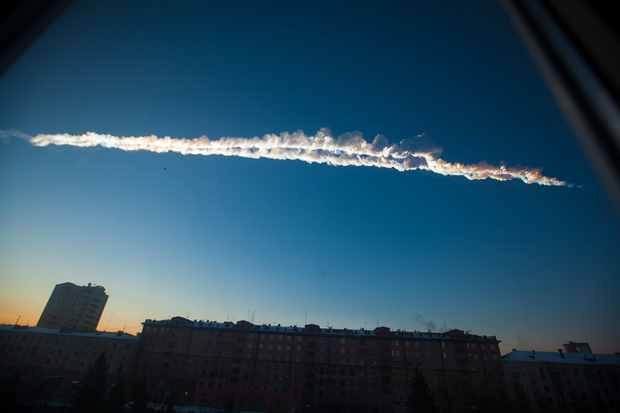
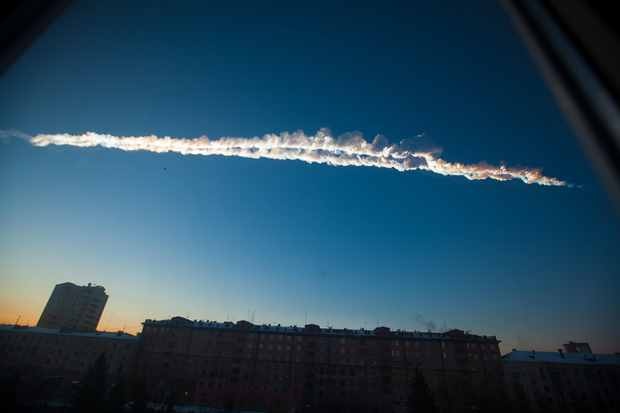
At 9:20 AM local time, the sky ripped open.

A light brighter than the sun itself blazed a trail across the heavens, a terrifying, silent streak of impossible speed. For a few seconds, day became super-day. Shadows sharpened. The world held its breath. People stared, confused, shielding their eyes from the alien sun that had just been born in their atmosphere.

And then, after the flash… came the boom.

A shockwave of biblical proportions slammed into the city. It wasn’t just a sound; it was a physical force. Windows in over 7,000 buildings didn’t just crack—they exploded inward, spraying glass like shrapnel. The roof of a zinc factory collapsed. Doors were blown from their hinges. Over 1,500 people were injured, not by direct impact, but by the sheer, raw power of the atmospheric blast.

The official story was assembled quickly. A space rock. A meteor, roughly 20 meters in diameter and weighing more than the Eiffel Tower, had entered the atmosphere at over 40,000 miles per hour. It had detonated in an air burst 18 miles above the ground with the force of 30 Hiroshima bombs. A freak cosmic accident. A terrifying, but ultimately natural, event.

Case closed. Right?

Wrong. Because as the dust settled and the world’s dashcams uploaded their terrifying footage to the internet, a different story began to emerge. A story hidden in plain sight. A story the authorities refuse to acknowledge.

A story that suggests the Chelyabinsk meteor didn’t just explode. It was attacked.

20130215-235054.webp

The Official Narrative Takes a Nosedive

Almost immediately, the official explanation felt… incomplete. Too neat. Too simple for an event of this magnitude. And the Russian people, long accustomed to reading between the lines of government statements, started asking questions.

Those questions found a voice in, of all places, Russian state-controlled media. In a stunning break from the norm, outlets like Russia Today began reporting on a strange rumor that was catching fire online and in local papers like Znak. The rumor was explosive: a Russian air defense unit stationed near the settlement of Urzhumka had fired a missile, blowing the meteor to pieces before it could cause catastrophic damage on the ground.

Think about that. They weren’t just reporting on a rock. They were reporting on a military intervention against an object from outer space.

The story wasn’t just pulled from thin air. The Znak newspaper cited an anonymous military source. This source claimed that the vapor trail left by the meteor—the very smoke trail seen in hundreds of videos—was the key. It wasn’t a solid, continuous line. It was broken. Interrupted. The source insisted this pattern showed the exact moment a missile had intercepted and shattered the primary object.

The reaction from the authorities was, to put it mildly, bizarre. The regional Emergency Ministry came out with a swift denial. Of course they did. But then, things got weird. Instead of shutting the story down, they publicly announced they were handing all investigations over to the “space department.” A strange and evasive move. If it was just a rock, why the bureaucratic hot potato? Why not just release the scientific data and put the rumors to bed?

The silence was deafening. And into that silence, the internet poured its evidence.

Deep Dive: The “Smoking Gun” Dashcam Footage

This is where it gets chilling. The theory isn’t just based on whispers. It’s based on something you can see with your own eyes.

Scour the endless dashcam compilations of the Chelyabinsk event. Watch them frame-by-frame. In several clips, as the main fireball—the bolide—streaks across the sky, something else appears. Something small, fast, and seemingly purposeful.

It emerges from behind the meteor, moving at a speed that almost defies belief. It appears to close the distance, catch up to the city-killer rock, and slam directly into its rear. At the precise moment of this apparent impact, the meteor violently explodes into a shower of smaller fragments, releasing that monstrous energy high in the atmosphere instead of upon the city below.

Skeptics immediately cried “lens flare!” or “digital artifact!” Others suggested it was just a small piece of the meteor flaking off and burning up. But the object’s trajectory doesn’t support that. It doesn’t travel parallel to the meteor; it appears on a clear intercept course. It seems to come from behind and below, striking with an intelligence that a random fragment simply wouldn’t have.

It looked less like a piece of cosmic shrapnel and more like a cosmic sniper round. A kill shot. A deliberate, targeted strike that saved thousands of lives.

If it was a missile, it was a feat of engineering so advanced it borders on science fiction. Hitting a target moving at Mach 60 is a monumental challenge. But if it wasn’t a missile… what was it?

What If? Russia’s Secret Sky Shield

Let’s play devil’s advocate and assume the military source was telling the truth. Russia shot it down. The obvious question is: with what?

The nation’s premier air defense system is the formidable S-400 Triumf, with rumors of the even more advanced S-500 Prometheus in development. These systems are designed to take down stealth bombers, ballistic missiles, and enemy satellites. They are the best of the best.

But are they good enough to hit a hypersonic target from deep space?

The official specifications say no. The engagement ceiling and target speed for these systems, while impressive, are likely not sufficient to take on a meteor of Chelyabinsk’s velocity and trajectory. But “official” specifications are what countries *want* their enemies to know. Could a classified, next-generation missile have been secretly deployed and tested in a live-fire exercise that no one could have ever planned?

It’s a tantalizing thought. An unacknowledged test of a planetary defense system. A demonstration of a capability so profound it would instantly change the global balance of power. If Russia possesses the technology to shoot down meteors, it possesses the technology to defeat any hypersonic weapon an adversary could ever dream of building.

This raises a critical question: Why keep it a secret? A successful planetary defense would be the greatest PR victory in human history! It would be a source of immense national pride and a powerful tool of diplomacy.

Unless… the secret itself is more valuable than the praise. Revealing such a weapon would kick off a new, terrifying arms race. It would show their hand to the West, forcing them to develop countermeasures. By staying silent, by allowing the world to believe it was a natural event, they protect their strategic ace in the hole. They let the world sleep, safe in the knowledge that Russia has a silent guardian in the sky.

A Cosmic Coincidence? The G20 Connection

The timing of the Chelyabinsk event adds another layer of thick, conspiratorial fog. The meteor didn’t just fall on any random day.

It struck Russia on the very same morning that the G20 finance ministers were gathering in Moscow. The world’s economic leaders, the architects of global power, were all assembled in one country, roughly a thousand miles away, to discuss the planet’s most pressing conflicts and financial issues.

What are the odds?

A spokesperson who contacted our site back in 2016 put it perfectly: “So what are the odds that an extraterrestrial object will hit Earth only some 1,060 miles east of the city where 20 of the biggest world leaders are gathering on exactly the same morning as they kick off their discussions on world conflict?”


When you look at it that way, the word “coincidence” starts to feel woefully inadequate.

A Message to the World’s Elite?

If you don’t believe in coincidences, you’re left with only one conclusion: it was a message. But who was sending it, and what were they trying to say?

The theories split into several frightening paths.

Was this a Russian “false flag” operation? Did they use a new weapon to destroy the meteor and send a not-so-subtle message of technological supremacy to the G20 leaders? A message that said, “While you debate with money and words, we control the heavens.” It was a demonstration of force disguised as a miracle.

Or was it something more sinister? Could a rival superpower, like the United States or China, have used a secret space-based weapon to target the meteor over Russian soil? A test of their own capabilities in a way that offered plausible deniability. A high-stakes game of geopolitical chess played with asteroids and directed-energy weapons, sending a clear signal to the Kremlin: “We can touch you, anywhere, anytime.”

The event happened. The G20 meeting happened. The connection is there. The motive is the only thing missing.

The Ultimate Wildcard: An Alien Guardian Angel?

And then there is the theory that pushes the boundaries of belief. The theory that the small, fast-moving object in the dashcam videos wasn’t a missile at all.

What if it wasn’t human?

For decades, UFO researchers have documented sightings of strange craft near nuclear facilities, military bases, and during natural disasters. The theory of an overseeing, sometimes intervening, extraterrestrial presence is as old as the UFO phenomenon itself.

Could the Chelyabinsk interceptor have been one of these craft? A UFO. An unknown entity performing a single, decisive act to prevent a catastrophe. Not a Russian missile, but a guardian angel from another world, ensuring a city-killer rock was rendered harmless before it could wipe a city off the map.

It sounds like pure science fiction. But look at the footage again. The object’s speed, its maneuverability, its precise strike… it fits the profile of advanced, non-human technology described by countless witnesses and even government reports.

If this is true, it changes everything. It means we are not alone. It means we are being watched. And, in this one incredible instance, it means we were protected. The Russian government’s silence, in this context, makes perfect sense. How could any world power admit that their national security, and the lives of their citizens, were dependent on the whims of an unknown, untouchable alien intelligence? They couldn’t. They would have to stay silent.

The Wall of Silence Endures

Years have passed. The broken glass has been swept away, the buildings repaired. Chelyabinsk has returned to normal. But the questions remain, hanging in the air just as the meteor’s smoke trail once did.

The official story remains unchanged: a rock from space got lucky.

But the evidence, the eyewitness accounts, the strange official behavior, and the chilling video footage all point to something more. Something deliberate.

Was it a secret Russian super-weapon, a guardian of the motherland revealed for a split second? Was it a geopolitical power play, a warning shot fired during the G20 summit? Or was it something not of this Earth, a silent protector making its presence known in the most dramatic way imaginable?

Every piece of the puzzle just creates a bigger, more confusing picture. The truth is out there, locked away in classified military reports or perhaps light-years away in the cosmos. All we know for sure is that on a cold February morning, the sky fell over Russia. And whether by chance, by design, or by miracle, a city was saved.

The question you have to ask yourself is: Do you believe in miracles?

Originally posted 2016-04-26 08:28:01. Republished by Blog Post Promoter