Home Weird World Paranormal Top 5 Real Ghosts Pictures

Top 5 Real Ghosts Pictures

0
66

The Camera Doesn’t Lie: 5 Ghost Photos That Defy All Explanation

They say the camera never lies. A simple machine. It captures light. It freezes a moment in time. What you see is what you get. Right?

Wrong.

Sometimes, the camera sees what our eyes can’t. It peers through the veil, just for a fraction of a second, and brings something back with it. A shadow in an empty room. A face in a window. A figure standing where no one should be.

For over a century, we’ve been obsessed with these “spirit photographs.” Most are fakes. Obvious, clumsy hoaxes. But some… some are different. They get under your skin. They defy the easy answers. Experts study them, skeptics tear them apart, and yet they remain. Unexplained. Unsettling. Lingering questions captured on film.

We’re not just talking about blurry blobs or strange orbs of light. We’re talking about the A-listers of the paranormal world. The photographs so famous, so chilling, they’ve become legends in their own right. Today, we’re going on a deep dive into five of the most compelling ghost photos ever taken. We’ll strip back the history, dissect the legends, and examine the evidence. But be warned. Once you see them, you can’t unsee them.

The Eternal Prisoner of Raynham Hall

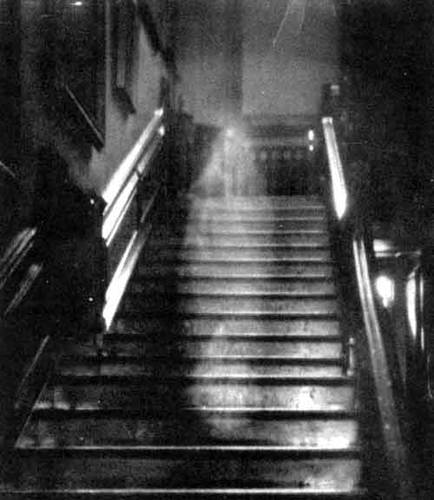
First up is the undisputed queen of all ghost photos. The icon. The one that even hardened skeptics have trouble dismissing. Say hello to the Brown Lady of Raynham Hall.

The Brown Lady Ghost

This image wasn’t taken by a ghost hunter on a weekend trip. It was captured in 1936 by professional photographers on assignment for *Country Life* magazine, a prestigious publication. They were there to photograph the grand architecture of Raynham Hall in Norfolk, England. They got more than they bargained for. A lot more.

A Scandalous Past, A Brutal End

To understand the photo, you have to understand the story. The ghost is believed to be Lady Dorothy Walpole, born in 1686. She was the sister of the first Prime Minister of Great Britain. She was high society. But she had a past. Before marrying the volatile and powerful Charles Townshend, she was allegedly the mistress of a notorious rake, Lord Wharton.

The marriage to Charles was rocky from the start. He was known for his violent temper. When he discovered his wife’s past—or perhaps a current infidelity, the stories are murky—his fury was absolute. He didn’t divorce her. That would have been too public, too messy. Instead, the legend says he staged her death.

A fake funeral was held in 1726. The world was told that Lady Dorothy had died of smallpox. But the truth, whispered by servants and locals for centuries, was far darker. Charles had locked his wife away in a remote part of the massive Raynham Hall. She became a prisoner in her own home, forbidden from seeing her own children, left to waste away until her real death years later from loneliness and a broken heart.

A tragic story. A perfect recipe for a haunting.

The Whispers in the Walls

Long before a camera ever entered the hall, people saw her. They saw the “Brown Lady,” named for the brown brocade dress she was often seen wearing. The sightings were credible, reported by aristocrats and military men, not people prone to flights of fancy.

In the 1830s, at a Christmas party, a guest named Colonel Loftus saw a strange woman in a brown dress. He was drawn to her, but when he approached, she vanished, leaving behind empty eye sockets in a glowing face. The next night, he saw her again, this time showing the terrifying figure to another guest who confirmed the vision.

Perhaps the most famous early account came from Captain Frederick Marryat in 1849. He was a friend of the family and a famous author who deliberately slept in the “haunted room” to prove it was all nonsense. One night, he and two of the Townshend family’s young men saw a figure gliding down the hallway towards them, carrying a lamp. As she passed, Marryat wrote, she gave them a “diabolical grin.” Instinctively, he drew a pistol and fired point-blank at the apparition. The bullet passed straight through and lodged in the door behind her. The figure simply vanished.

The Click Heard ‘Round the World

Fast forward to September 19th, 1936. Photographers Captain Hubert C. Provand and his assistant, Indre Shira, are setting up their equipment. Their goal is to capture the beauty of Raynham Hall’s grand staircase for *Country Life* magazine. It’s late afternoon. Shira is under the black cloth, preparing the shot, while Provand directs him.

Suddenly, Provand shouts. He sees it. A vaporous, veiled form, slowly descending the staircase. “Quick! Get it!” he yells. Shira, who sees nothing, obediently uncaps the lens. As the flashbulb explodes, bathing the hall in magnesium light, Provand watches the ethereal figure continue its descent before disappearing.

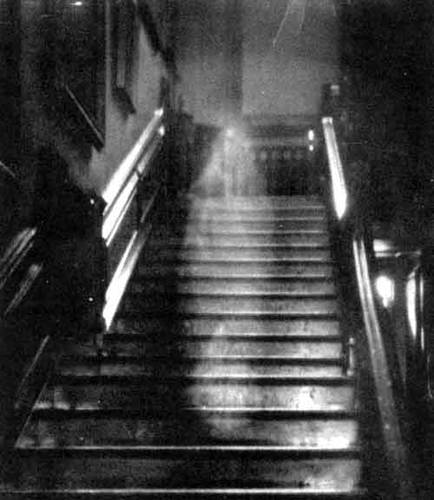
They developed the plate, hearts pounding. And there she was. A shimmering, semi-transparent form, unmistakably human in shape, floating down the very stairs where so many had seen her before. The magazine published the photo. The world went insane. It remains, nearly a century later, the most famous ghost photograph ever taken.

Skeptics immediately cried “double exposure!” or claimed a smudge of grease on the lens created the shape. But Shira and Provand were seasoned professionals who swore on their reputations that nothing was faked. Modern analysis has only deepened the mystery. Experts who have studied the negative point out that the light and shadows on the figure seem to correspond correctly with the light from the flash, something incredibly difficult to fake in the 1930s. The Brown Lady remains, a ghostly prisoner not only of Raynham Hall, but of a single, chilling frame of film.

The Gunslinger Beyond the Grave

From the stately homes of England, we travel to the dusty, blood-soaked ground of the American Wild West. Welcome to Tombstone, Arizona. A town where legends were born and lives were ended with a flash of gunpowder. And in its most famous cemetery, one man took a picture that seems to show that not all of its residents are resting in peace.

The Ghost of Boothill Cemetery

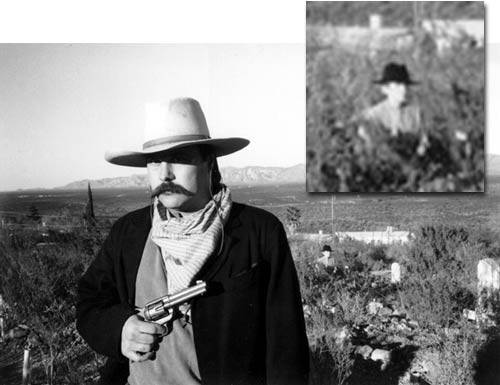
This photo was taken by Terry Ike Clanton. If that name sounds familiar, it should. He’s a descendant of the infamous Clanton Gang, the cowboys who shot it out with Wyatt Earp and Doc Holliday at the O.K. Corral. History runs in his blood.

A Picture in Tombstone

Clanton was visiting Boothill Graveyard, the final resting place for outlaws and pioneers. He wanted a photo of his friend, dressed in period cowboy gear, posing among the old wooden grave markers. He framed the shot, his friend leaning against a post, and took the picture. It was a simple holiday snap.

But when the film was developed, they saw something impossible. In the background, just over his friend’s shoulder, was another figure. A man who wasn’t there when the photo was taken.

The Man with No Legs

Look closely. The figure is thin, almost skeletal. He’s wearing a dark hat. And he appears to be holding something long and thin in his right hand. A knife? A Bowie knife, maybe? But the most disturbing part is what isn’t there. His legs. From the waist down, the figure fades into nothing, as if he is rising directly out of the hard-packed desert ground. He’s there, but he’s not. A ghost in a ghost town.

Clanton swears there was no one else in the background. No tourists, no actors, nothing. Just his friend and the silent graves. The photo quickly became a paranormal sensation, especially because of his family connection to the place. Was this an ancestor? A rival of the Earps? Was it Tom McLaury, shot down at the Corral and buried just feet from where the photo was taken?

A Cactus, a Shadow, or a Cowboy’s Curse?

The internet, of course, has theories. Many believe it’s a classic case of pareidolia—our brains creating a familiar pattern out of random shapes. They argue the “ghost” is just a strange shadow playing on a weathered tombstone or a uniquely shaped piece of desert scrub brush. It’s plausible. It’s the logical answer.

But it’s not a satisfying one. The shape is so distinct. The hat, the thin frame, the object in his hand. Could a simple plant and a shadow really line up so perfectly to create such a convincing human form? Terry Ike Clanton doesn’t think so. To him, it’s proof that the violent spirits of Tombstone are still wandering the boneyard, waiting for a final showdown that will never come.

The Nine-Foot Monk Who Posed for a Picture

Some hauntings are famous. The ghosts have names, backstories, centuries of sightings. Others come out of nowhere. A terrifying anomaly in a place that’s supposed to be peaceful. That’s the story of the Specter of Newby Church.

Specter of Newby Church

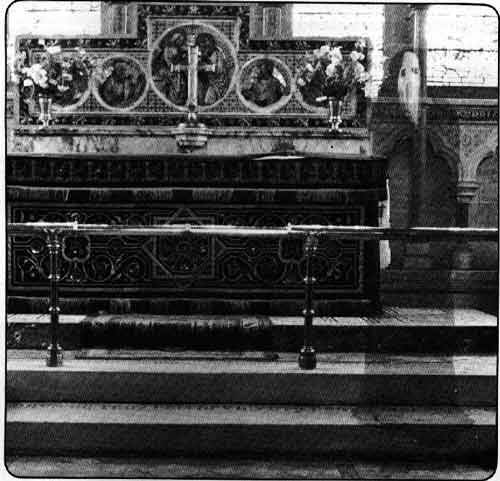
This photograph is, to be blunt, creepy as hell. It’s also controversial for one big reason: it’s just *too good*. The shrouded face seems to be looking directly at the camera. It’s perfectly framed. It looks posed. It looks like a deliberate, clever fake. And yet, for over 60 years, no one has been able to prove it.

A Church Without a Ghost

The photo was taken in 1963 by the Reverend K. F. Lord at his church in North Yorkshire, England. The Newby Church wasn’t old and spooky; it was built in 1870. As far as anyone knew, it had no ghosts, no strange legends, no dark history whatsoever. It was just a quiet country church. This is important. Reverend Lord wasn’t a ghost hunter looking for a spirit. He was simply taking pictures of his church interior.

“It Was Looking Right at Me”

Reverend Lord set up his camera, aimed it at the altar, and took a picture. He insisted, until the day he died, that nothing was visible to his naked eye. The church was empty. It was only when the film was developed that the terrifying figure appeared. Standing there, next to the altar, was a tall, shrouded entity. Its face is obscured by a white cowl, but you can make out two dark eyes staring directly into the lens. It’s a bone-chilling gaze.

The immediate reaction was that it had to be a double exposure. Someone in a costume—maybe a sheet with eyeholes cut out—was photographed, and then the image was superimposed onto the photo of the empty altar. But photographic experts who examined the picture in the 1960s were stumped. They could find no evidence of double exposure. The figure seemed to be genuinely part of the original shot. The lighting and shadows were consistent. Reverend Lord, a respected man of the community, had no apparent motive to create such an elaborate hoax.

Fact, Fake, or Something Else Entirely?

The real mind-bender came when analysts tried to calculate the figure’s height based on its position relative to the altar. Their conclusion? The specter was approximately nine feet tall. Nine feet. What on earth is nine feet tall and haunts a quiet English church? Some have speculated it’s the ghost of a 16th-century monk, when people were known to be much shorter, which makes the height even more bizarre. Others point to the strange mask-like quality of the face, suggesting it could be a “plague doctor” spirit from the time of the Black Death.

Is it a prank? A flaw in the film? A person in a costume? Or did Reverend Lord accidentally photograph something ancient and impossibly tall, a silent guardian of the church that had never been seen before and has never been seen since?

The Ghostly Grab in Manila

Not all ghosts are historical figures in old castles. Sometimes, they show up in the most ordinary places. In the background of a happy picture. In the bright light of day. And sometimes, they seem to reach out and touch you.

This interesting photo was taken sometime around the year 2000 in Manilla

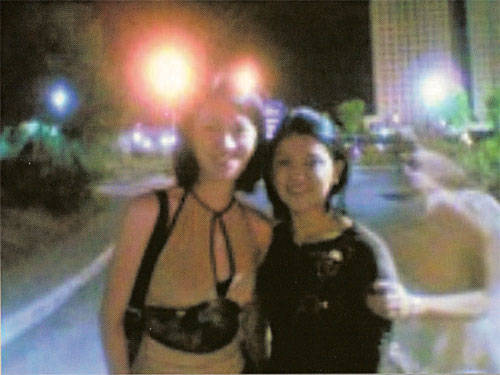
This photo surfaced on the internet in the early 2000s, reportedly taken in Manila in the Philippines. It shows two young women smiling for the camera on a sunny day. It’s the kind of picture everyone has in their phone. Except for one horrifying detail.

The Third Wheel from Beyond

Look to the right. A third figure is there. A tall, translucent man is walking beside one of the girls. But he’s not just walking. His arm is outstretched, and his ghostly hand is clearly gripping her right arm. This isn’t a case of a background shadow looking like a person. This is an apparition that appears to be physically interacting with the living.

The picture went viral long before “going viral” was even a common phrase. Early internet forums and paranormal websites exploded. Was it one of the first clever examples of Photoshop, which was still a relatively new tool for the public? Or was it something more?

A Digital Glitch or a Filipino Omen?

Skeptics point to the possibility of a camera glitch. A slow shutter speed could have caught a real person walking by, creating a transparent “motion blur” effect. It’s a solid theory. But it doesn’t quite explain why the figure is so well-defined or why his hand seems so deliberately placed on the girl’s arm.

This is where local folklore adds a terrifying layer to the story. In the Philippines, there is a belief in the “Sundo.” The Sundo is a spirit, an emissary from the afterlife, who appears to fetch the soul of a person who is about to die. They are often described as being visible only to the person they have come for, or sometimes, they appear in photographs as a dark omen. Rumors spread online that the girl who was being touched in the photograph died in an accident not long after the picture was taken. While that has never been confirmed, it turned an already creepy photo into a horrifying tale of a supernatural warning, captured forever by a digital camera.

The Boy in the Barn

Our final photo brings us back to England, and it’s a modern classic. It’s powerful because of the story behind it, a story with multiple witnesses that turns a strange anomaly into a confirmed haunting.

tewin-bury-farm-ghost

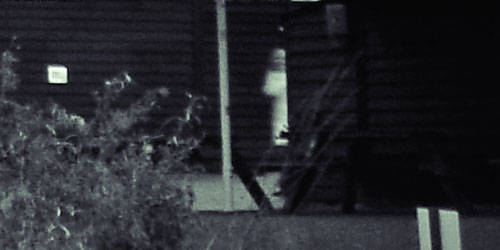
This incredible picture was taken in 2008 by a professional photographer named Neil Sandbach. He wasn’t ghost hunting. He was working. He was scouting a beautiful old farm in Hertfordshire, a place a young couple had chosen for their wedding.

A Wedding and a Warning

Sandbach was taking scenic shots of the property for the wedding invitations. The atmosphere was joyful, full of promise. He took dozens of photos of the buildings and the landscape. As he was packing up, he took one last shot of the old barns. He didn’t notice anything unusual at the time.

It was only later, back at his computer, that he saw it. Peeking around the corner of a brick building was a small figure. A child, dressed in what looks like a white nightgown or old-fashioned clothes. The child is glowing, ethereal, and seems to be looking directly at the camera. Sandbach was stunned. He reviewed his other photos. The child wasn’t there. He was certain he had been alone.

The Chilling Confirmation

This is where a good ghost photo becomes a great one. Shaken, Neil Sandbach showed the picture to the engaged couple. Before their wedding, the couple casually asked the staff at the farm if they’d ever experienced anything… strange. They didn’t mention the photo. They just asked.

The staff’s reply sent a shiver down their spines. Oh yes, they said. The figure of a young boy, dressed in white night clothes, had been seen many times around that very barn. He was a known entity. A local legend. Neil Sandbach, a man who didn’t even believe in ghosts, had accidentally captured the farm’s resident spirit on camera.

So who is this boy? Local lore has yet to provide a definitive answer. Was he the son of a farmer who died in a tragic accident? A victim of some long-forgotten sickness? We don’t know. All we know is that he waits, he watches, and on one particular day, he decided to peek out and get in the picture.

Are They Real? Does It Even Matter?

So, what do we make of these images? Are they incontrovertible proof of an afterlife? Or are they just a collection of clever hoaxes, optical illusions, and wishful thinking? The truth is, we may never know for sure. Each photo exists in a grey area between belief and skepticism. For every expert who validates them, another one cries foul.

But maybe the proof isn’t the point. The power of these photographs lies in the questions they force us to ask. They challenge our comfortable reality. They remind us that there may be more to this world than what we can see with our own two eyes. They tap into a deep, primal part of us that wonders what comes next.

These images are more than just pictures. They are stories. They are mysteries. They are windows into the unknown. So the next time you’re flicking through old photos, or taking a new one in a quiet place… zoom in. Look closer. You never know who, or what, might be smiling back at you from the shadows.

Originally posted 2013-10-15 18:20:06. Republished by Blog Post Promoter