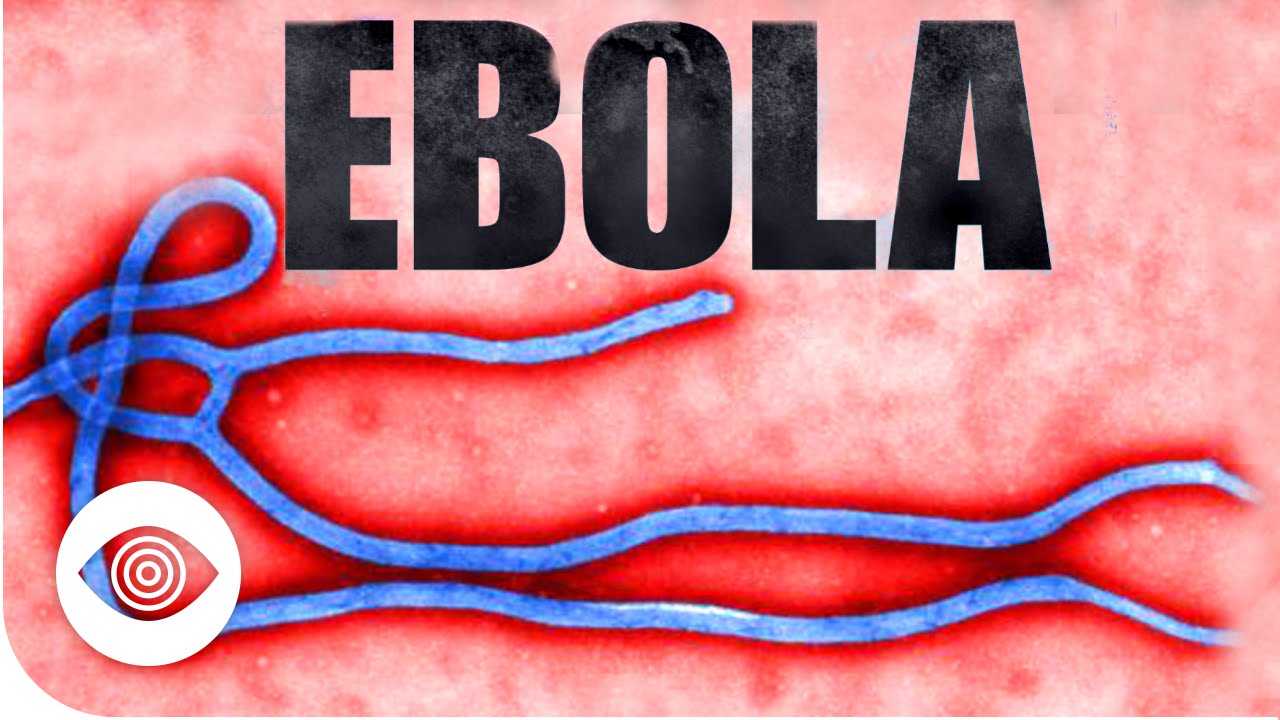
It starts with a fever. Then the headache. Your muscles ache, your throat feels like sandpaper. You think it’s the flu. A bad one, sure, but just the flu.
You’re wrong.
Soon, the vomiting begins. Diarrhea. A rash spreads across your skin. And then, the bleeding starts. From your eyes, your nose, your gums. Your internal organs are liquefying. You are being eaten alive from the inside out by an invisible monster.
This is Ebola.
The official story tells us it’s a tragic, but natural, part of our world. A deadly virus that jumps from fruit bats to other animals, and then, tragically, to a human. A random, horrifying act of nature.
But what if that’s a lie?
What if the most terrifying plague of the modern era wasn’t an accident? What if it was designed? A weapon. A product. What if Ebola is a man-made nightmare, unleashed on the world for reasons so dark they defy imagination? The whispers started years ago, but now they’re a roar. And the evidence is more chilling than you think.
The Story They Want You to Believe
Let’s get the official version out of the way. The one you’ll read in textbooks and hear on the evening news. Sometime in late 2013, in a small village in Guinea, a young boy named Emile Ouamouno was playing near a hollow tree. This tree, scientists say, was home to a colony of Angolan free-tailed bats.
They tell us one of these bats, carrying the Zaire ebolavirus, infected the boy. Patient Zero. From that single, tragic point of contact, the virus exploded. It tore through Emile’s family, then his village, then across borders into Sierra Leone and Liberia. The 2014-2016 West African Ebola epidemic became the largest in history, killing over 11,300 people. A heartbreaking story of nature’s fury.
It’s a neat story. Simple. Plausible. It absolves everyone of responsibility. It’s just… bad luck.
But for a growing number of people, it’s a little too neat. Too simple. And it conveniently ignores some very, very uncomfortable facts.
Cracks in the Narrative: A Virus “Too Perfect” to Be Natural?
Look at Ebola not as a biologist, but as a military strategist. If you wanted to design a weapon to cause maximum panic, destabilize a region, and terrify the world, you’d be hard-pressed to invent something better. It has a high mortality rate, a terrifying set of symptoms, and it spreads through direct contact with bodily fluids—making every sick loved one a potential biological time bomb.
Could nature really cook up such a monstrously effective killer on its own? Or did it have help?
The Patent That Changes Everything
This is where the rabbit hole gets deep. Prepare yourself. In 2010, four years *before* the massive West African outbreak, the United States government was granted a patent for the Ebola virus.
Let that sink in.
The patent, number CA2741523A1, was awarded to… The U.S. Department of Health and Human Services. The CDC. You can look it up yourself. The inventors listed are government scientists. They claim to have “invented” a specific human Ebola virus strain, the “EboBun.”
Wait a second. How can you patent a life form that exists in nature? You can’t. According to patent law, you can only patent something you have invented or significantly modified. So, which is it? Is Ebola a natural organism that the US government is illegally claiming ownership of? Or did they modify it, creating a new version? Either answer is terrifying.
Why would they do this? The patent gives them control. It means they own the rights to that specific strain. Any company wanting to develop a vaccine or a treatment would have to work with them, pay them royalties. It turns a plague into a potential profit center. They saw the storm coming, and they secured the rights to sell the umbrellas.
The Strange Geography of Fear
Have you ever noticed *where* major Ebola outbreaks happen? They don’t just pop up randomly. The “Ebola Belt” in Africa—countries like Sierra Leone, Liberia, Guinea, the Democratic Republic of Congo—are not just hotbeds for the virus. They are also sitting on some of the world’s most valuable natural resources. Diamonds. Gold. Coltan. Oil.
Is it just a coincidence that a destabilizing, population-decimating virus keeps appearing in regions rich with resources that powerful nations and corporations might want to control? An epidemic grinds a country to a halt. It shatters economies. It creates chaos. And chaos… chaos is a ladder for those who know how to climb it. It’s the oldest trick in the book: create a crisis, then ride in as the savior, all while your corporations secure mining rights and other lucrative contracts in the ensuing turmoil.
Deep Dive: The West’s Secret Love Affair with Bioweapons
To understand why the Ebola-as-a-bioweapon theory isn’t so crazy, you have to understand the history. Governments have been weaponizing diseases for a very, very long time. This isn’t science fiction. It’s documented, historical fact.
Fort Detrick: America’s Darkest Laboratory
Nestled in the quiet hills of Maryland is Fort Detrick, the historic center of the U.S. biological weapons program. From the 1940s to the late 1960s (when it was officially “disbanded”), this is where scientists worked to turn the world’s deadliest pathogens into weapons of war. Anthrax, botulism, tularemia—they weaponized them all.
The program was supposedly shut down by President Nixon in 1969. But the high-level research didn’t stop. The facility was rebranded. It’s now the U.S. Army Medical Research Institute of Infectious Diseases (USAMRIID). Its official mission is “biodefense.” They study deadly viruses, like Ebola, to figure out how to protect people from them.
But here’s the thing about biodefense: to learn how to defend against a weaponized virus, you first have to figure out how to weaponize it. You have to understand how to make it more transmissible, more lethal, more resilient. It’s a razor-thin line between “defense” and “offense.” And a place like Fort Detrick, with its long, dark history and its stores of apocalyptic germs, has always been at the center of dark speculation.
The Soviet Program: Biopreparat
And the Americans weren’t alone. The Soviet Union ran a program called Biopreparat that was staggering in its scale. It employed tens of thousands of scientists across dozens of secret facilities. Their goal? To create superbugs. They engineered antibiotic-resistant anthrax and genetically modified smallpox. They even had an Ebola program, seeing its potential as a strategic weapon. When the Soviet Union collapsed, many of these scientists, and the knowledge they held, disappeared. Where did they go? Who did they start working for?
The history is clear: the world’s superpowers have never been shy about turning disease into a weapon. To think they all just stopped, all at once, is dangerously naive.
The Kenema Lab: Ground Zero?
Now, let’s go back to the 2014 outbreak. Right at the epicenter, in Kenema, Sierra Leone, was a very interesting facility. It was a high-security U.S. government-funded biolab. A Biosafety Level 2 lab run by Tulane University, receiving millions of dollars from the U.S. National Institutes of Health.
And what were they studying there? Hemorrhagic fevers. Like Ebola and Lassa fever.
So let’s connect the dots. The biggest Ebola outbreak in human history starts in the exact same region where a U.S.-backed lab is studying… Ebola. The local population grew so suspicious that they rioted, accusing the lab of being the source of the plague. Nurses at the hospital complained that Tulane researchers were keeping sick patients in the lab for their own research rather than treating them.
Was it an accidental leak that was covered up? A horrific mistake that they tried to pin on a little boy and a bat-infested tree? Or was it something more deliberate? A field test of a newly modified strain, using a vulnerable population as unwitting lab rats? The official reports dismiss these claims as the paranoia of a panicked, uneducated populace. But what if the locals knew exactly what they were seeing?
Following the Money: Who Gets Rich from a Plague?
Whenever a crisis hits, you have to ask the most important question: *Cui bono?* Who benefits?
A global pandemic is a multi-billion dollar business. First, you have the pharmaceutical giants. As soon as the Ebola panic hit a fever pitch in the media, the race was on. Companies like GlaxoSmithKline and Johnson & Johnson scrambled to push their experimental vaccines through trials. Their stock prices soared on the news. Fear is a powerful market driver.
Then there’s the entire biodefense industry. Government contracts worth billions are handed out to research labs, defense contractors, and biotech firms to develop countermeasures. The more threats there are, real or perceived, the bigger the budgets get. A new, terrifying outbreak is fantastic for business. It guarantees funding for years to come.
Could the patent, the suspicious location of the lab, and the ensuing financial gold rush all be connected? It paints a picture not of a random act of nature, but of a carefully managed crisis. Or perhaps, a crisis that was created for the sole purpose of solving it for a massive profit.
The Final Verdict Is Yours
They tell you it was a bat.
A single, unfortunate interaction in a remote village that spiraled into a global health emergency. It’s a story that asks nothing of us. It requires no accountability, points no fingers, and keeps the dark history of bioweapons research safely in the past.
But the questions refuse to go away.
Why did the U.S. government patent a deadly African virus years before the worst outbreak? Why was a U.S.-funded lab studying that exact type of virus at the epicenter of the outbreak? Why do these outbreaks consistently happen in resource-rich, politically fragile nations?
Maybe it’s all a string of wild coincidences. The biggest, most statistically improbable series of coincidences in modern medical history.
Or maybe, just maybe, we were sold a lie. Maybe the monster wasn’t found in a cave. Maybe it was made in a lab. Unleashed for power, for profit, or for reasons we can’t even begin to fathom. The official story is comfortable. The alternative is a terrifying look into the heart of what humanity is capable of. The truth is out there. They’re just counting on you to be too scared to look for it.