Saturday, May 9, 2026
HomeUnexplained MysteriesCrime MysteriesThe unexplained death of Michael Faherty, Spontaneous Human Combustion

The unexplained death of Michael Faherty, Spontaneous Human Combustion

Michael Faherty, spontaneous human combustion

The Impossible Death of Michael Faherty

It sounds like something out of a cheap sci-fi novel. Or a Victorian ghost story. But this happened in 2010. In the modern world. In a quiet living room in Galway, Ireland.

Michael Faherty. A 76-year-old man. Found burned to death.

But “burned to death” doesn’t even begin to cover it. That implies a house fire. A tragedy where smoke inhalation gets you, or the roof collapses. That is normal. That makes sense. What happened to Michael Faherty makes absolutely no sense at all.

His body was nearly incinerated. Reduced to ash and charred bone. The damage to his corpse was catastrophic. It was the kind of destruction you usually see inside a commercial crematorium, where temperatures scream past 1,800 degrees Fahrenheit.

Here is the kicker.

The rest of the room? Fine. Almost untouched.

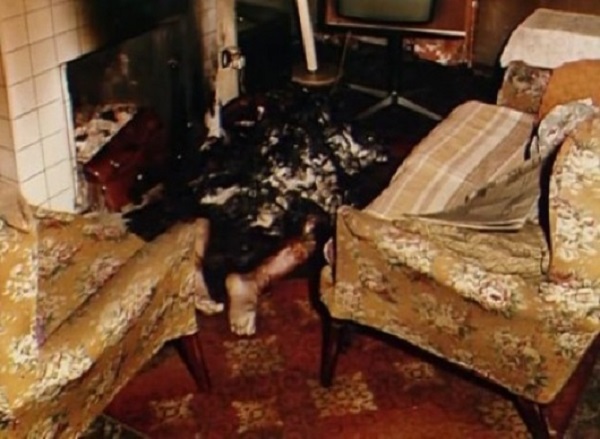
There was a fire in the grate nearby, sure. But the flames hadn’t jumped out. The floor under Michael’s body was destroyed, and the ceiling directly above him was scorched by an intense, rising column of heat. But a few feet away? Virgin territory. Not a singe mark.

How do you explain that? How does a human body generate enough thermal energy to turn itself into dust without burning down the house around it? The investigators were stumped. The police were baffled. And the coroner? He did something that hadn’t been done in the history of the Irish state.

He didn’t rule it an accident. He didn’t rule it homicide.

He wrote down three words that sent a chill through the entire world: Spontaneous Human Combustion.

The Morning of December 22, 2010

Let’s go back to the scene. It’s three days before Christmas. Clareview Park, Ballybane. A frosty, quiet morning in the West of Ireland. Neighbors are getting ready for the holidays.

Then, the smoke alarm goes off.

It wasn’t a raging inferno. A neighbor, Tom Mannion, heard the alarm screaming from Faherty’s house. He didn’t see billowing black clouds pouring from the windows. He didn’t see flames licking the roof. Just the alarm.

Mannion banged on the door. No answer. He checked the back. Locked. Worried, he called the authorities. When the Gardaí (Irish police) and the fire brigade arrived, they broke in.

The air inside was thick. Heavy with soot. But there was no roaring fire to fight. The fire, whatever it was, had already done its work and died out.

They moved into the sitting room. That’s where they found him. Michael Faherty was lying on his back. His head was near the open fireplace. But what they saw on the floor defied physics.

The Anatomy of an Anomaly

The fire in the fireplace was just embers. It hadn’t spread. There was no trail of accelerant. No smell of gasoline. No overturned paraffin heater.

Yet, Michael’s body was… gone. Mostly.

Forensic experts later detailed the damage. The fire had been so intense that it had burned through the floorboards and the joists underneath the body. The ceiling above had soot marks. But the damage was hyper-localized. It was a vertical column of destruction.

Objects sitting on the mantelpiece, just an arm’s length away, were not melted. There were newspapers nearby. Paper. The most flammable thing in the house. They weren’t ash. They weren’t even brown.

If this was a normal fire, the heat radiation alone should have flash-overed the room. The curtains should have gone up. The furniture should have been ablaze. Instead, the fire seemed to have a mind of its own. It wanted Michael, and nothing else.

The Investigation Hits a Wall

Forensics teams tore that room apart. They were looking for the spark. The cause. The “reason.”

They checked the chimney. Was there a downdraft? Did a stray ember pop out and land on his sweater? Maybe. But an ember burns a hole in a sweater. It might cause second-degree burns. It doesn’t turn a 160-pound man into calcium powder.

They looked for foul play. Did someone douse him in chemicals and light a match? No trace evidence. No struggle. No forced entry (other than the fire brigade). The door was locked from the inside.

They looked at Michael’s health. Did he have a heart attack and fall into the fire?

This was the most plausible theory initially. But the position of the body didn’t match. He wasn’t in the fireplace. He was near it. And even if he had fallen, a domestic fireplace cannot generate the sustained, consistent heat needed to consume a body so thoroughly. Bones are hard to burn. Ask any funeral director. It takes gas jets and hours of sustained pressure.

The experts were left with a puzzle pieces that didn’t fit. You have a body that burned hotter than a kiln, in a room that didn’t catch fire.

The Coroner’s Historic Ruling

Dr. Ciaran McLoughlin was the coroner for West Galway. He had been on the job for 25 years. He had seen it all. Car crashes, drownings, heart attacks, murders.

But he had never seen this.

McLoughlin is a man of science. He doesn’t believe in ghosts. He deals in facts. For months, he sat on the evidence. He brought in specialists. He consulted the rule books. He looked for any logical explanation that would allow him to write “Accidental Death” on that death certificate.

He couldn’t find one.

During the inquest, Dr. McLoughlin admitted that he had consulted medical texts from the 1800s to the present day. He was looking for a precedent.

“This fire was thoroughly investigated,” he told the court. The fire officers were clear: the chimney drew well. The fire didn’t spread. There was no accelerant.

So, in September 2011, Dr. McLoughlin made history. He ruled that Michael Faherty’s death was caused by Spontaneous Human Combustion (SHC).

It was the first verdict of its kind in Ireland. It might be one of the only modern legal rulings of SHC in the world.

Think about the weight of that. A court of law, a government official, effectively shrugged and said, “He just burst into flames.”

Deep Dive: What is Spontaneous Human Combustion?

For centuries, SHC has been the boogeyman of the medical world. It’s the phenomenon where a living human body supposedly ignites without an apparent external source of ignition.

The lore goes back hundreds of years.

In the 1600s and 1700s, it was often blamed on alcohol. The idea was that if you drank enough brandy or whiskey, your cells became saturated with alcohol, and eventually—poof. You’d catch fire like a lantern.

Charles Dickens made it famous in his novel Bleak House (1853), where the character Krook, a gin-soaked rag-and-bone man, ends up as a pile of greasy ash. Critics hated it. They told Dickens it was scientifically impossible. Dickens fought back, citing 30 cases on record at the time.

But the alcohol theory has been debunked. You can marinade a steak in vodka for a week; it won’t explode. Even if you are drunk, your body is mostly water. Water puts out fires; it doesn’t start them.

The “Cinder Lady” Connection

Michael Faherty isn’t alone. The most famous case in history is probably Mary Reeser.

Florida, 1951. Mary Reeser, a 67-year-old woman, was found in her apartment. Or rather, her remains were found. All that was left of her was a pile of ash, a skull that had shrunk to the size of a teacup (which implies unbelievable heat), and one pristine foot still wearing a slipper.

Just like Faherty, her apartment was fine. The chair she sat on was gone. The ceiling was sooted. But the rest of the room was intact. The FBI investigated. They blamed a cigarette and a sleeping pill. But the “shrunken skull” detail has kept conspiracy theorists awake for decades. Fire expands gases; it explodes skulls. It doesn’t shrink them. Shrinking requires slow, baking heat that removes moisture evenly.

The Skeptics Strike Back: The Wick Effect

Of course, science hates a vacuum. If you say “Spontaneous Combustion,” a physicist will scream “Wick Effect!”

This is the leading rational explanation. And it is gruesome.

The Wick Effect theory suggests the human body acts like an inside-out candle. A candle has a wick (string) on the inside and wax (fuel) on the outside.

In the Wick Effect, the victim’s clothing is the wick. The victim’s body fat is the wax.

Here is the scenario: The person has a heart attack or a stroke. They die, or fall unconscious. A cigarette or a stray ember lights their clothes. The skin burns. The fat renders (melts). The liquid fat soaks into the clothing. The clothing burns like a wick, drawing up more liquid fat.

It creates a slow, low-burning, localized fire. It doesn’t roar. It smolders. It can burn for hours and hours, slowly vaporizing the body while leaving the rest of the room relatively cool.

This explains the lack of room damage. It explains the greasy soot often found on ceilings (fatty smoke).

Why the Wick Effect Fails in the Faherty Case

Dr. McLoughlin knew about the Wick Effect. He isn’t an amateur. So why did he reject it?

Time.

The Wick Effect is slow. Agonizingly slow. To reduce a body to ash using a smoldering fat fire takes a long time. 10 hours. 12 hours. Maybe more.

Michael Faherty was seen alive relatively recently before the fire was discovered. The timeline was tight. There wasn’t enough time for a slow-burn candle effect to turn a large man into a pile of minerals.

Furthermore, the Wick Effect usually leaves more debris. Faherty was utterly consumed. The damage to the floor and ceiling suggested a heat intensity that was violent and fast, not slow and low.

Modern Theories: The Weird and the Wild

If it wasn’t a cigarette, and it wasn’t the Wick Effect, what are we left with? The internet has some ideas. Since the 2010 verdict, forums have lit up with alternative theories trying to explain the unexplainable.

1. Subatomic Particle Explosion (Internal Ketosis)

Some researchers suggest that under extreme stress or specific dietary conditions (like ketosis), the body produces highly flammable acetone. If a static spark ignites this internal gas, could you burn from the inside out? It’s biochemically unlikely to reach “bomb” levels, but it’s a favorite theory among fringe biologists.

2. Ball Lightning

Ireland gets storms. Could a rogue ball of plasma—ball lightning—have entered the house? Ball lightning is rare, unpredictable, and incredibly hot. It moves erratically. It could float down a chimney, strike a person, incinerate them in seconds, and vanish. It leaves no chemical trace. It explains the speed and the heat.

3. The Microbiome Bomb

A newer, stranger theory involves the methane in our gut. We all carry bacteria. We all produce gas. Is there a one-in-a-billion genetic quirk where the gut microbiome produces an unstable compound instead of regular methane? A biological weapon hiding in the intestines?

The Verdict Stands

Years have passed since Michael Faherty died. The case is officially closed.

The ruling remains: Spontaneous Human Combustion.

It is a thorn in the side of modern forensics. It is a terrifying thought for the rest of us. We walk around thinking we are safe in our living rooms. We trust that physics works the way it’s supposed to. We trust that people don’t just catch fire.

But in a small coroner’s court in Galway, the law decided otherwise. They looked at the impossible and said, “Yes, this happened.”

Next time you are sitting by the fire on a cold winter night, wrapping up warm, maybe check the smoke alarm. Not that it would help. If the fire comes from inside you, the alarm is just the soundtrack to the mystery.

Michael Faherty’s death reminds us that for all our technology, all our science, and all our knowledge, the world—and the human body—still holds secrets that can burn us to the ground.

Originally posted 2015-07-20 06:23:17. Republished by Blog Post Promoter

Arindam Mukherjee
Arindam Mukherjee
Arindam loves aliens, mysteries and pursing his interest in the area of hacking as a technical writer at 'Planet wank'. You can catch him at his social profiles anytime.
RELATED ARTICLES
- Advertisment -

Most Popular

Recent Comments

Warren Pan Abbott on The legend of the Devil Monkey !
chris davies on The McPherson Tape Mystery
Reed Reedly on ET has Internet!
Bea Houseoffashion on Proof Of Time Travellers – Gallery
Marcus2012 on ET has Internet!
Reed Reedly on ET has Internet!
LaughsAtConspiracyNuts on The 9/11 Conspiracy – Myths and Facts
Alex Sliverman on Did the ancients fly?
Doctor Wholigan on Time Traveler in 1938 film
chris davies on The McPherson Tape Mystery
Archie1954 on 10 secret UFO hideouts
chris davies on Ghosts of flight 401
Marcus2012 on ET has Internet!
jason Macdonald on Proof of Time Travel? – China
chris davies on Long-Lost Pyramids Found?
Reed Reedly on ET has Internet!
Milkman on Connected Universe
Tenmiles on Baigong Pipes Mystery
Simon Foster on Sirius – The Documentary
From the 1st April on 2013 – Alien Contact date ?
SkyWatcher on Is ET ignoring us?
I Come From The Future on Obama to make UFO Alien disclouser soon ?
Just another person on 2013 – Alien Contact date ?
Malcolm Windowcleaner on The strange case of Rudolph Fentz
Mason Servio on Strange Things on Mars
Marke Wisdom Seeker on What will we find as arctic melts?
Andrea A Elisabeth Levyne on Aliens Captured in Varginha, Brazil
Mitch Grouyeki on Amazing Space Shuttle pictures