Saturday, September 5, 2026
HomeWeird WorldStrange PlacesThe strange ghost town of Kantubek

The strange ghost town of Kantubek

The Island of Death: Uncovering the Horrors of Kantubek, the Soviets’ Forbidden Plague Kingdom

Some ghost towns are haunted by spirits. Whispers in the dark. A flicker of movement in a dusty window. But some places… some places are haunted by something far worse. Something real. Something you can’t see, but something that can most definitely kill you.

This is the story of one of those places.

It goes by the name Kantubek. On paper, it’s just a collection of shabby, sun-blasted buildings in Uzbekistan, once part of the mighty USSR. You can find it on Google Earth, a skeletal outline of streets and structures in the middle of a vast, featureless desert. A ghost town. But Kantubek wasn’t just any town. And the desert it sits in wasn’t always a desert.

This was once an island. Vozrozhdeniya Island. And it was the beating, black heart of the Soviet Union’s most terrifying secret: the world’s largest and most advanced biological weapons testing facility.

This isn’t a story about ghosts. It’s a story about anthrax, smallpox, and weaponized plague. It’s a story of a sea murdered by human ambition and a town abandoned to its toxic legacy. Forget Chernobyl. What happened here was, in some ways, so much worse. Because the poison they cooked up in Kantubek doesn’t have a half-life. It just waits.

20140308-022148.webp

The Sea That Was Murdered

You can’t understand the horror of Kantubek without first understanding the tragedy of the Aral Sea. Because before it was a desert, it was paradise.

For centuries, the Aral Sea was the fourth-largest lake in the world. A vast inland ocean of blue, teeming with life. They called it the Blue Sea. It supported a thriving fishing industry, with towns and villages dotting its shores. It was an oasis, a source of life and prosperity in the arid plains of Central Asia. A beautiful, massive body of water.

Then the Soviets came.

In the 1960s, Soviet planners, driven by an insatiable hunger for cotton production, decided to reshape nature itself. They devised a colossal irrigation project to divert the two mighty rivers that fed the Aral—the Amu Darya and the Syr Darya—and channel their water into the desert to grow cotton fields. It was a project of breathtaking arrogance.

And it worked. For a while. The cotton bloomed.

But the sea began to die. Starved of its lifeblood, the Aral began to shrink. And it didn’t just shrink. It evaporated at a terrifying rate. The shoreline receded, not by feet, but by miles. Fishing boats that once bobbed in the harbor were soon stranded in the middle of a sandy wasteland, rusting monuments to a colossal mistake. The water that remained grew saltier and saltier, poisoned by fertilizer and pesticide runoff. The fish died. The industry collapsed. The people were left with nothing but a toxic dustbowl where their beautiful sea once was.

This ecological apocalypse created something the Soviet war machine found very, very useful. An island. An island that was becoming more and more isolated from the world with each passing year. A perfect place to hide a secret.

Aralsk-7: The Birth of a Poison Paradise

They called the island Vozrozhdeniya. In Russian, it means “Rebirth.” The irony is so thick you could choke on it.

Because this was not a place of rebirth. It was a place of engineered death. In 1948, the Soviet military established a top-secret biological weapons laboratory here. The facility was given a code name: Aralsk-7. The town built to house the scientists, soldiers, and their families was Kantubek.

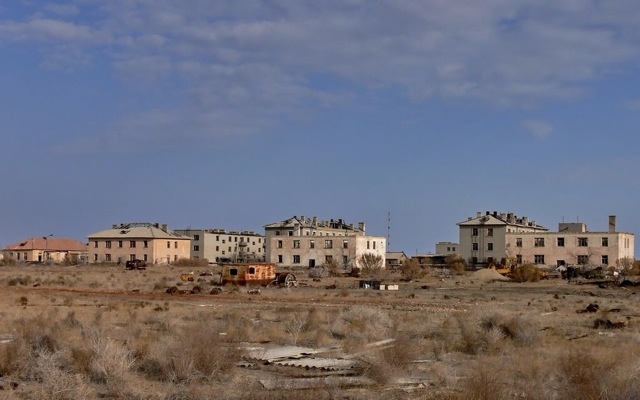
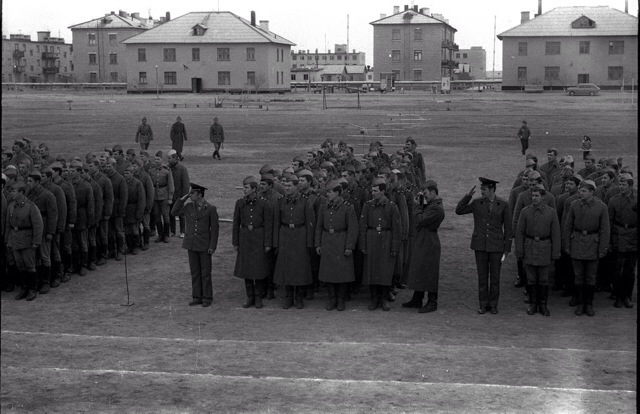
Think about that for a second. This wasn’t just a grim military barracks. It was a community. A town of about 1,500 people. They had schools, a cinema, a parade ground, apartment blocks. Children played in the streets. Families had picnics. They lived a strangely normal life, all while just a few miles away, their colleagues and neighbors were testing the most horrific diseases known to man on caged animals.

They chose Vozrozhdeniya Island for its isolation. It was a fortress. A natural quarantine zone. Anything they unleashed here, they believed, would stay here, contained by the vast waters of the Aral Sea. A fatal miscalculation, as we would later find out.

Deep Dive: Inside the Devil’s Laboratory

So what exactly were they doing at Aralsk-7? They were taking the world’s most feared diseases and making them stronger, deadlier, and more resistant to treatment. This was the work of Biopreparat, the Soviet Union’s secret and sprawling biological weapons agency. Aralsk-7 was their premier open-air testing ground.

Their specialty was anthrax. Not just any anthrax, but a weaponized, hyper-virulent strain designed to be sprayed from bombers or missile warheads. They would bring in hundreds of monkeys, tie them to posts in grid patterns across the island, and then release a cloud of anthrax spores into the air. Then they would watch. And wait. And take notes as the animals suffered agonizing deaths.

But it wasn’t just anthrax.

Declassified reports and testimony from defectors paint a chilling picture. They worked with:

  • Smallpox: A disease officially eradicated from the planet. The Soviets kept massive stockpiles and were working on weaponizing it, creating a doomsday weapon against which the world would have no defense.
  • Plague: Yes, the Black Death. They experimented with bubonic and pneumonic plague, turning an ancient killer into a modern terror.
  • Tularemia, Brucellosis, Q fever: Vicious diseases that could incapacitate entire armies.

The scale was industrial. The experiments were relentless. For over 40 years, they saturated this island with death, turning the soil itself into a biological time bomb.

20140308-022405.webp

The Empire Crumbles, The Nightmare Leaks

In 1991, the Soviet Union collapsed. The Evil Empire imploded. And in the chaos, Aralsk-7 was abandoned.

The evacuation was sudden. Hasty. The scientists and soldiers packed up and left, leaving behind a ghost town full of secrets. But what did they do with all the bioweapons? The tons and tons of live anthrax spores?

They buried them. In a desperate, panicked cleanup effort in 1988, they dumped hundreds of tons of anthrax slurry into massive pits in the ground, poured bleach on top, and just… left. They hoped the harsh desert climate would bake the spores into oblivion. They were wrong.

And then the ultimate nightmare scenario came true.

By 2001, the Aral Sea had shrunk so much that Vozrozhdeniya Island was no longer an island. The receding waters had exposed a land bridge, connecting the “Island of Death” to the mainland of Uzbekistan. The natural quarantine was gone. Anything on that island—infected rodents, birds, even contaminated dust carried by the wind—could now cross over. The Pandora’s Box the Soviets had built now had its lid blown clean off.

20140308-022412.webp

Operation Crimson Viper: The Terrifying Cleanup

The world started to panic. The thought of the world’s largest anthrax dump being unsecured, potentially accessible to terrorists or rogue states, was a geopolitical horror story. So, in 2002, the United States stepped in. A team, led by biological threat-reduction expert Brian Hayes, was sent to Uzbekistan to do the impossible: clean up the anthrax pits of Vozrozhdeniya.

It was a mission straight out of a thriller. The team worked in blistering heat, wearing heavy protective suits. They had to excavate eleven massive burial pits, knowing that a single misplaced shovel-full could release a lethal cloud of weaponized anthrax. For three months, they dug up the toxic slurry, mixed it with hundreds of tons of powerful chemicals, and neutralized it in the pits. The operation cost millions of dollars and was, by all official accounts, a success.

They cleaned up the known anthrax dumps. They secured the main threat.

But here’s the question that keeps people up at night.

Did they get it all?

20140308-022419.webp

What If? The Chilling Theories From The Web

The official story is that the island is safe. But on internet forums and in whispered conversations among researchers, the doubts linger. The Soviet records were notoriously shoddy. The 1988 burial was a panicked, chaotic affair. This has led to some terrifying “what if” scenarios.

What if they missed a pit?

The cleanup team relied on records provided by former Soviet scientists. What if their memories were faulty? What if a pit was mislabeled, or simply forgotten? What if there’s still a massive cache of live, weaponized anthrax buried somewhere under the sand, a biological landmine waiting for an unsuspecting metal scrapper or a shifting sand dune to uncover it?

What about the Smallpox?

The 2002 operation focused on anthrax. But we know they worked with smallpox. Where did it go? Was it all destroyed? Shipped back to labs in Russia? Or was some of it buried in a different location on the island? The idea of a forgotten cache of weaponized smallpox, the world’s most feared historical killer, sitting in a shallow grave is the stuff of nightmares.

What about the contaminated ground itself?

For decades, they tested these agents in the open air. The spores settled into the very soil of the island. While direct sunlight can kill many pathogens, spores are hardy. They can survive for decades, even centuries, in the right conditions. Urban explorers and journalists who have visited the ruins of Kantubek talk about the eerie silence, but the real danger is the dust itself. Every gust of wind could be stirring up a microscopic killer from the 1970s.

Kantubek Today: A Scar on the Face of the Earth

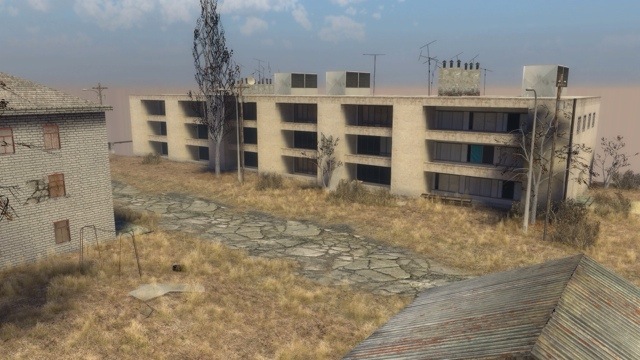
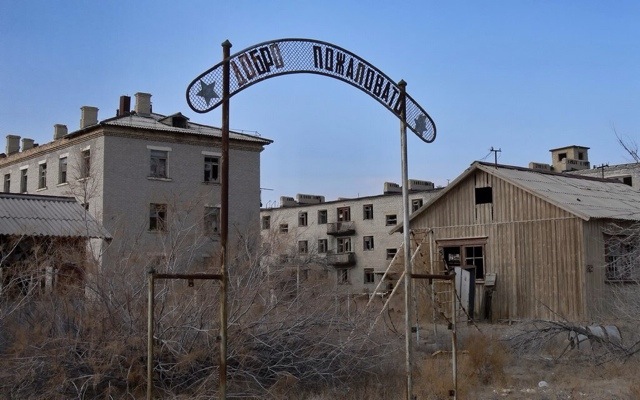
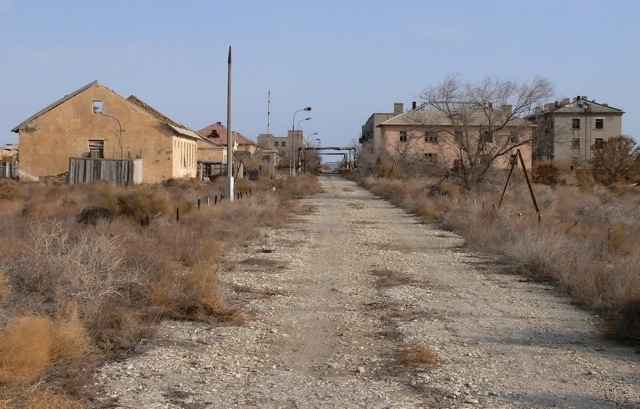
Today, Kantubek is beyond a ghost town. It is a monument to decay. The buildings are crumbling, their windows like hollow eye sockets staring out at a dead sea. Rusting metal litters the landscape. The desert is slowly, relentlessly swallowing it whole.

The Aral Sea is a fraction of its former self, two small, hypersaline lakes in a vast, salty desert. The environmental destruction has completed the work the military started. There is no water, no life. No one in their right mind would ever want to live here.

The ruins of Kantubek will continue to decay over the decades until there’s little left but a few pieces of rusty metal sticking out of the sand. But the story isn’t over. The town is dead. The sea is dead. But the things they created here? The enhanced, weaponized pathogens?
They might not be dead. They could just be sleeping.

The buildings are turning to dust, but the questions they raise are more alive, and more dangerous, than ever. What other secrets are still buried beneath the sands of the old empire?

Amit Ghosh
Amit Ghoshhttps://coolinterestingnews.com
Aloha, I'm Amit Ghosh, a web entrepreneur and avid blogger. Bitten by entrepreneurial bug, I got kicked out from college and ended up being millionaire and running a digital media company named Aeron7 headquartered at Lithuania.
RELATED ARTICLES
- Advertisment -

Most Popular

Recent Comments

Warren Pan Abbott on The legend of the Devil Monkey !
chris davies on The McPherson Tape Mystery
Reed Reedly on ET has Internet!
Bea Houseoffashion on Proof Of Time Travellers – Gallery
Marcus2012 on ET has Internet!
Reed Reedly on ET has Internet!
LaughsAtConspiracyNuts on The 9/11 Conspiracy – Myths and Facts
Alex Sliverman on Did the ancients fly?
Doctor Wholigan on Time Traveler in 1938 film
chris davies on The McPherson Tape Mystery
Archie1954 on 10 secret UFO hideouts
chris davies on Ghosts of flight 401
Marcus2012 on ET has Internet!
jason Macdonald on Proof of Time Travel? – China
chris davies on Long-Lost Pyramids Found?
Reed Reedly on ET has Internet!
Milkman on Connected Universe
Tenmiles on Baigong Pipes Mystery
Simon Foster on Sirius – The Documentary
From the 1st April on 2013 – Alien Contact date ?
SkyWatcher on Is ET ignoring us?
I Come From The Future on Obama to make UFO Alien disclouser soon ?
ÛñK?øWn on 2013 – Alien Contact date ?
Just another person on 2013 – Alien Contact date ?
Malcolm Windowcleaner on The strange case of Rudolph Fentz
Mason Servio on Strange Things on Mars
Marke Wisdom Seeker on What will we find as arctic melts?
Andrea A Elisabeth Levyne on Aliens Captured in Varginha, Brazil
Mitch Grouyeki on Amazing Space Shuttle pictures